


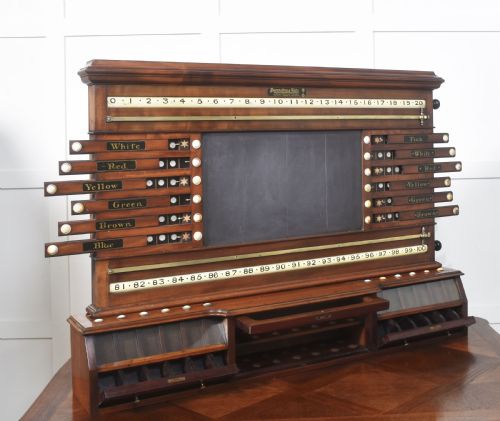

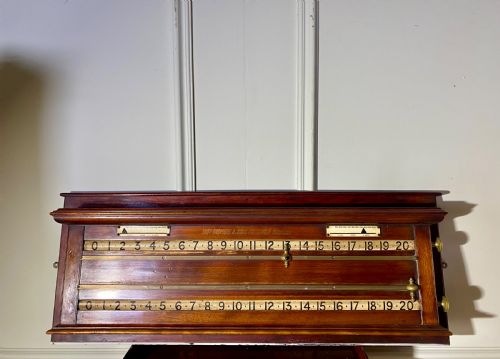

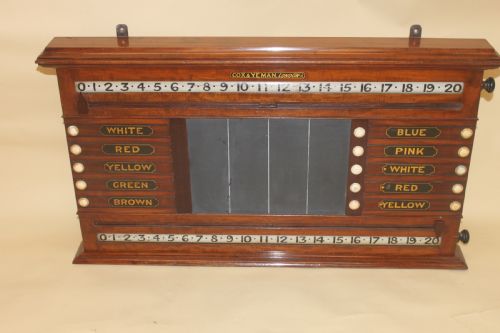
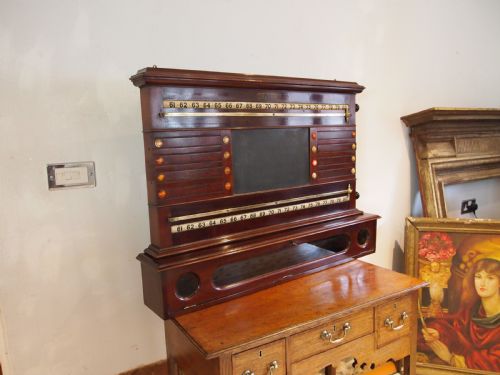
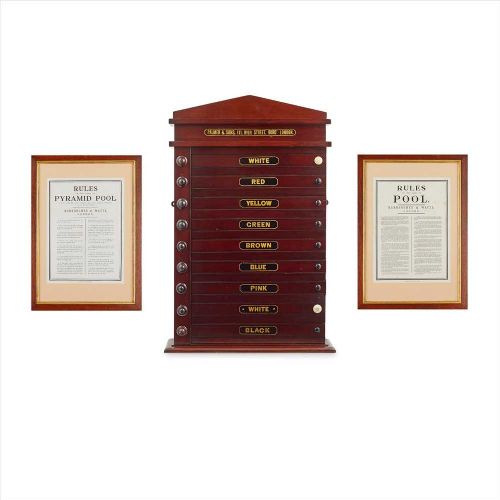
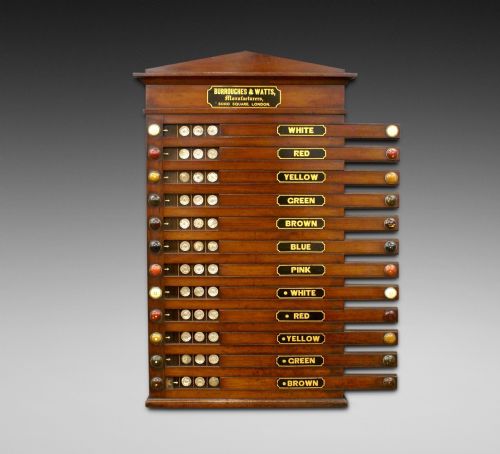
Mahogany Pool Scoreboard
These mahogany pool scoreboards are practical games room accessories from the nineteenth century that bring period character to a modern interior.
Mahogany Pool Scoreboard
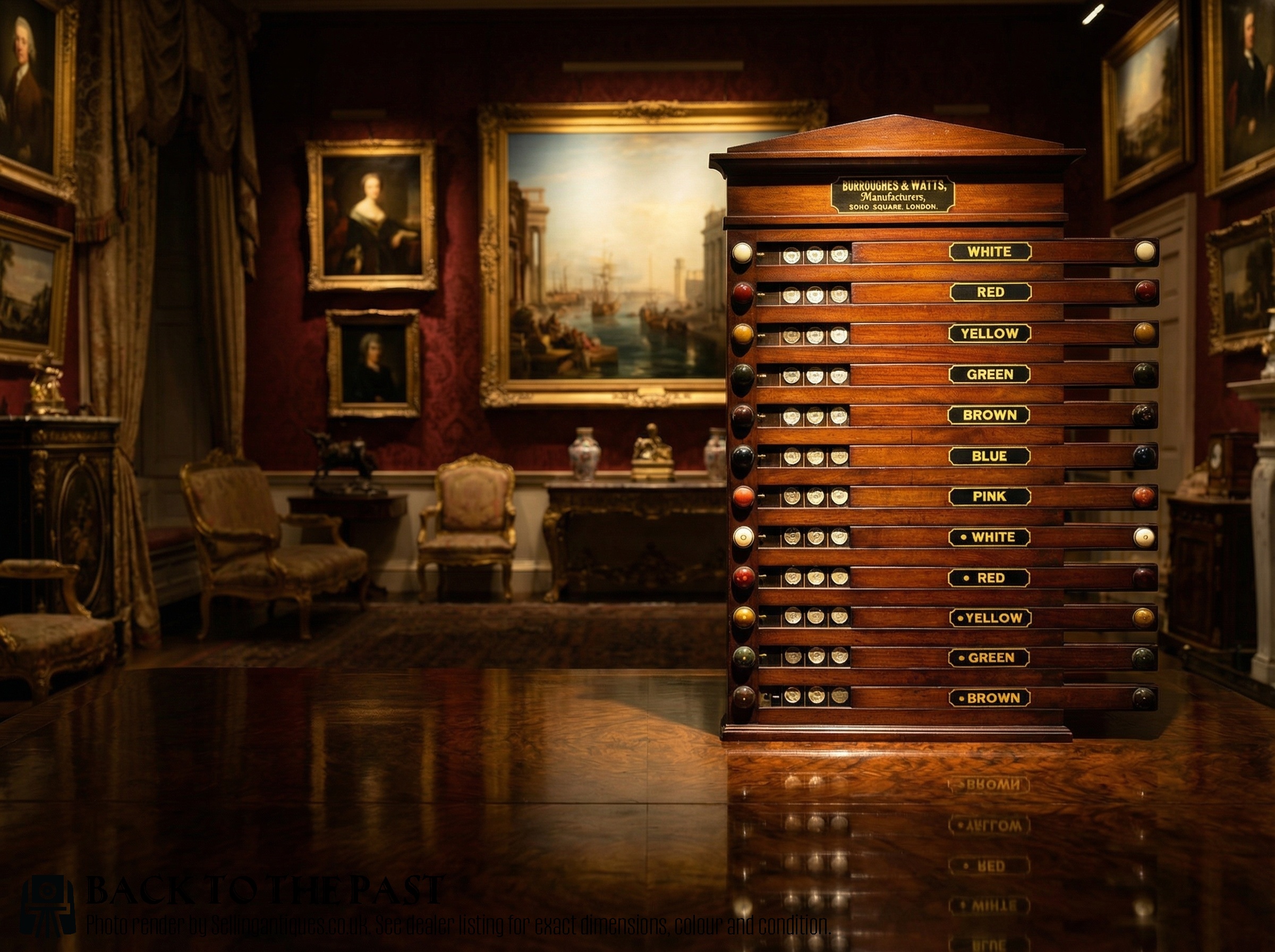
A mahogany pool scoreboard is a wall-mounted wooden frame designed to tally scores during billiards, snooker and life pool matches. Most examples on this page date from the Victorian era, spanning the decades between eighteen sixty and nineteen hundred.
The form typically comprises a polished timber backboard fitted with sliding indicators, revolving wooden cylinders or rotating dials. Many integrate slate panels for chalk writing alongside brass pointers and bone or ivory markers.
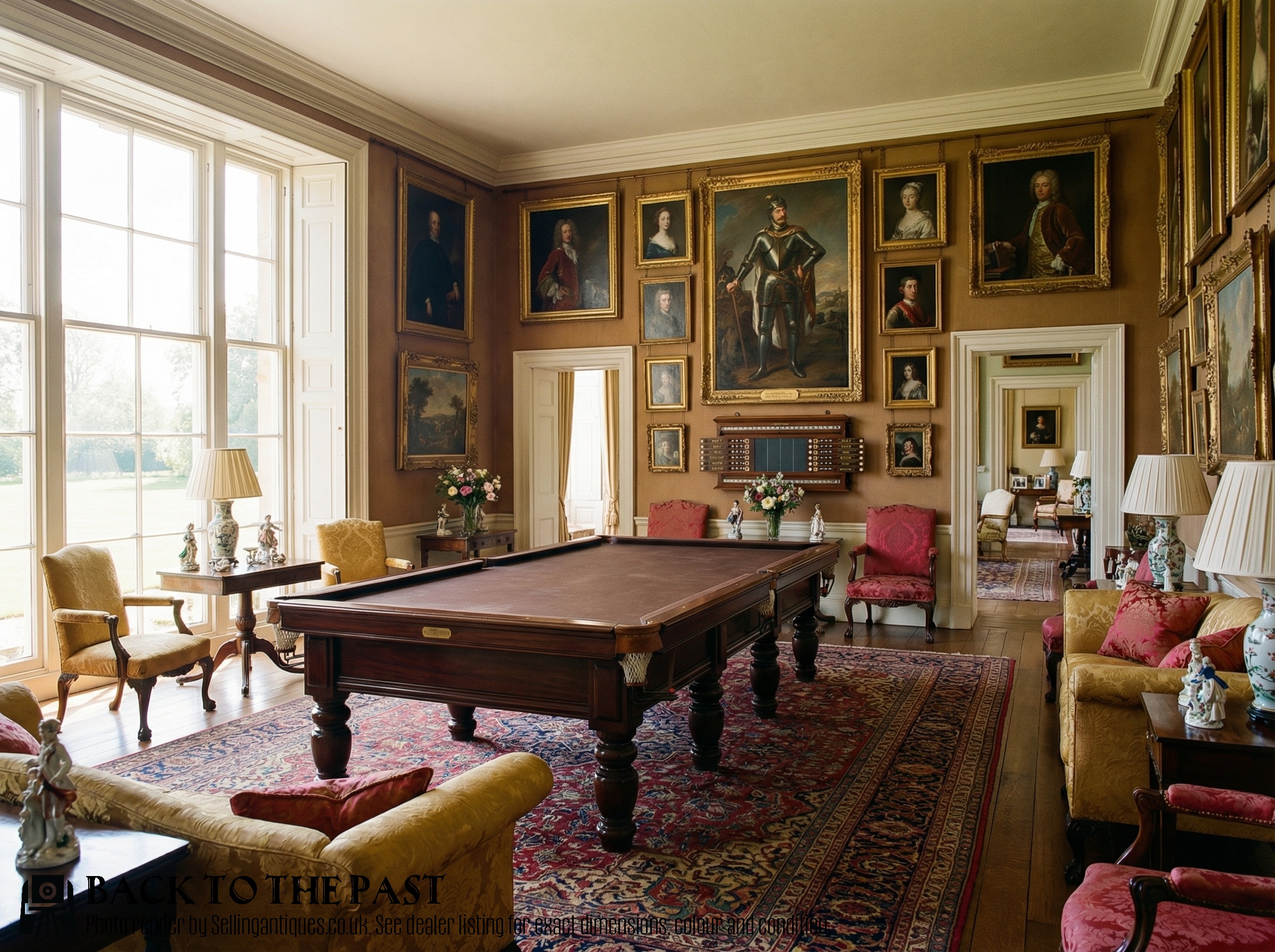
These scoreboards originated as essential equipment for gentlemen's clubs, public houses and private country house billiard rooms. Collectors and players acquire them today to restore authentic functionality to period games rooms.
How they were made
The primary structural material is mahogany, chosen for its rich grain and stability, joined with brass fittings and hinges. Cabinetmakers mounted sliding wooden markers within recessed channels alongside hand-carved numbers and calibration scales.
Many boards incorporate inset slate panels for chalk scoring, alongside turned wooden rollers and glazed compartments. Individual components utilise traditional woodworking joinery to withstand the frequent manipulation of scoring markers during a game.
All listed scoreboards incorporate solid mahogany and date from the nineteenth-century Victorian period.
What varies in quality
Quality depends upon the complexity of the scoring mechanism and the refinement of the cabinetwork. Simpler boards feature straightforward sliding wooden pointers, whereas superior examples include revolving cylinders, integrated slate panels and multiple scoring tiers for life pool.
Maker attribution elevates an example significantly, particularly when bearing the signature of prominent nineteenth-century billiard table manufacturers. The crispness of the timber moulding, the retention of original brass hardware and the legibility of painted numerals further distinguish finer pieces.
Orme and Sons Manchester·Thurston and Co Ltd·Cox and Yeman London·Burroughes and Watts·Palmer and Sons
The Mahogany Pool Scoreboard Glossary
- Mahogany
- A durable tropical hardwood prized for its deep reddish-brown colour and stable grain. It forms the solid body and backboard of Victorian scoreboards.
- Life pool
- A traditional cue sport variation where players take lives and score points incrementally. Scoreboards built for this game feature specialised dials and multiple rows of markers.
- Slate
- A fine-grained metamorphic rock used historically for blackboards and writing surfaces. Scoreboards often include a central slate panel for chalk annotations.
- Victorian
- The period spanning the reign of Queen Victoria from eighteen thirty-seven to nineteen oh one. Most surviving scoreboards originate from the latter half of this era.
Mahogany Pool Scoreboard: Frequently Asked Questions
How do you mount a mahogany pool scoreboard?
These boards are heavy timber objects designed to hang securely on a wall using integrated hanging brackets or sturdy screw fixings through the backboard. Install them at a comfortable eye level near the billiard table for easy access during play.
Ensure the wall construction can support the combined weight of the mahogany frame, slate panels and brass hardware before mounting.
What is the difference between snooker and pool scoreboards?
Snooker and pool scoreboards both track scores using sliding markers or rollers, but life pool and multi-game boards often feature extra dials and rows. These accommodate the complex scoring rules required for different cue sports played in Victorian rooms.
Most surviving nineteenth-century boards are versatile enough to track various cue sports simultaneously.
How should I clean the mahogany frame?
Dust the timber regularly with a soft, dry cloth to prevent dirt accumulation in the carved channels and around the sliders. Avoid harsh chemical cleaners or excessive moisture which can damage the polish and affect the wooden markers.
Apply a traditional beeswax polish occasionally to nourish the mahogany and maintain its natural lustre.
Can these scoreboards still be used for games?
Most antique scoreboards remain fully operational with sliding pointers and rotating dials that function just as they did in the nineteenth century. Gentle handling ensures the original wooden mechanisms and brass fittings suffer no undue wear.
They serve as both working scoring aids and decorative wall hangings in modern billiard rooms.