




Billiard Room Wall Board
A billiard room wall board is a functional games room fixture that keeps track of frames and pools, bringing authentic period character to a home.
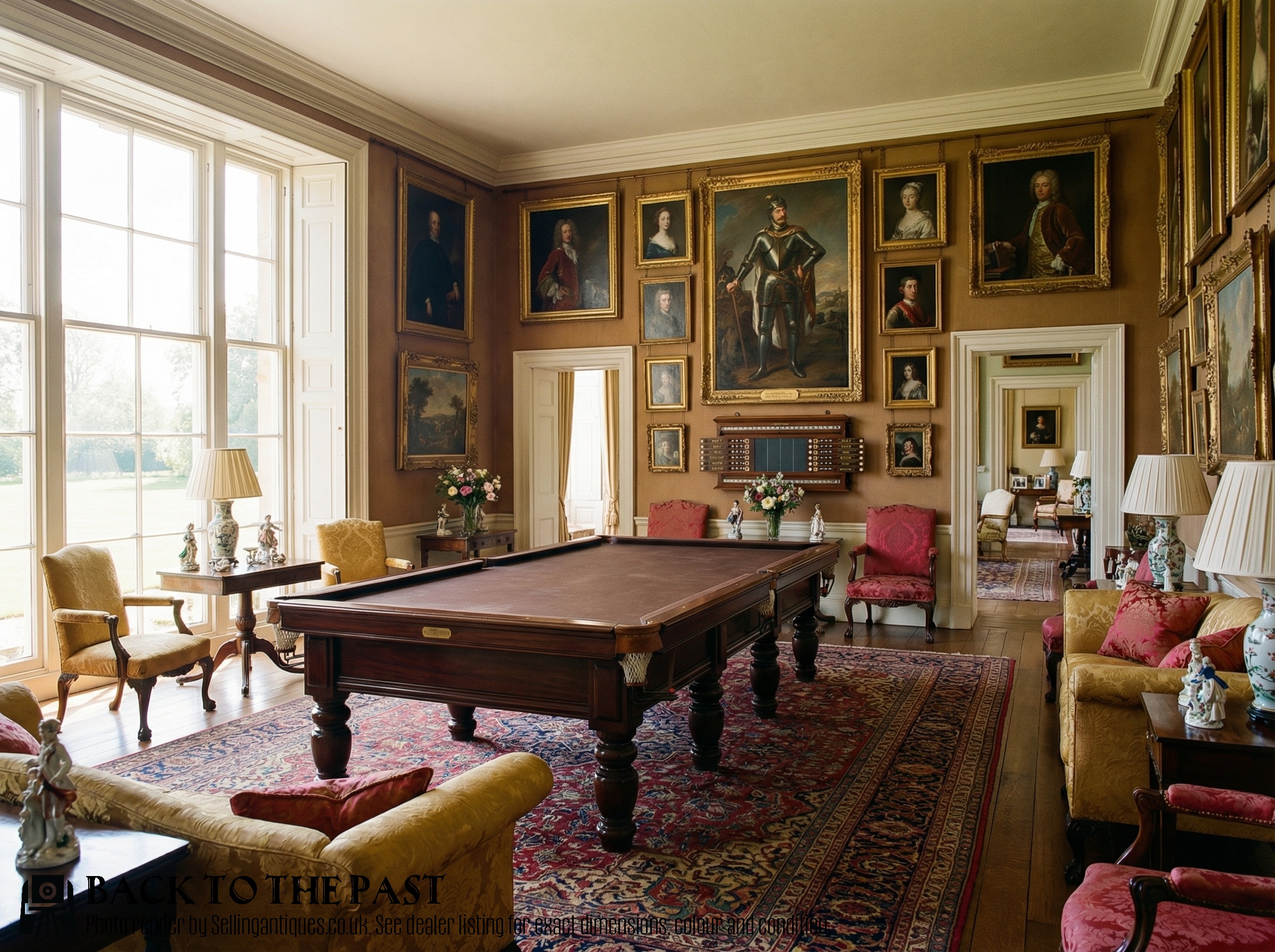
Billiard Room Wall Board
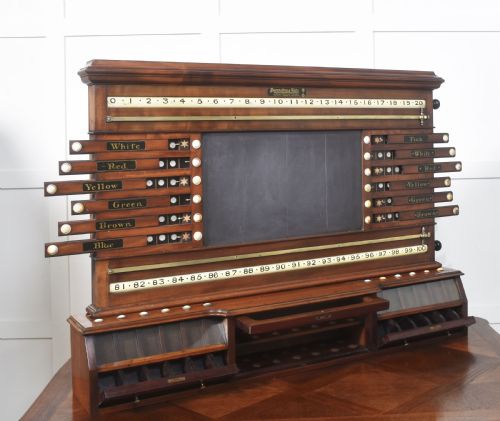
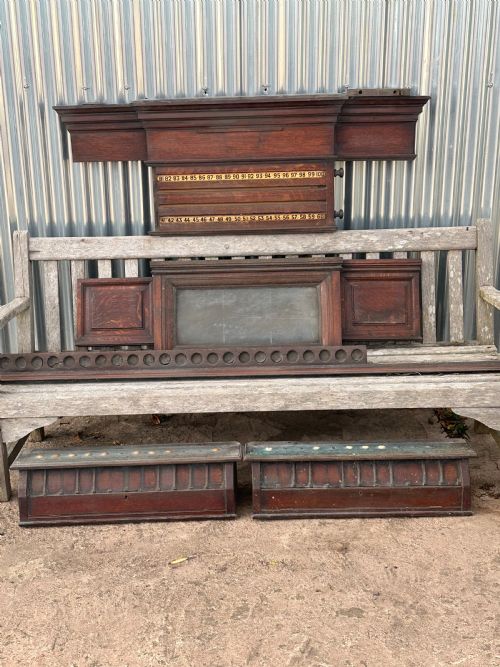
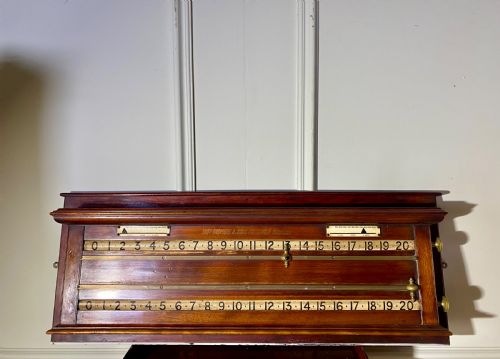
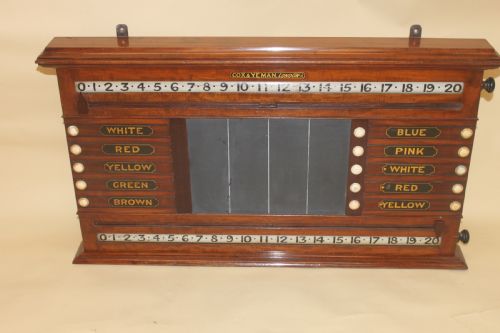
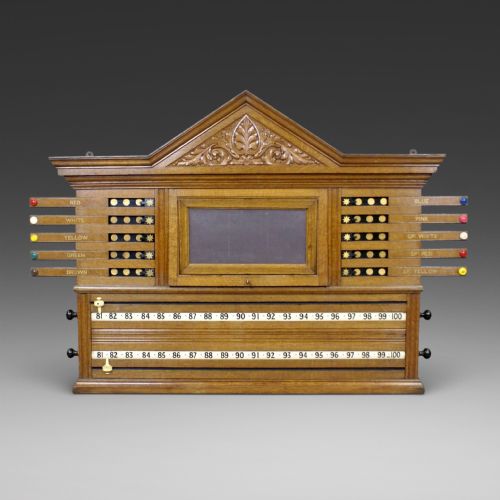
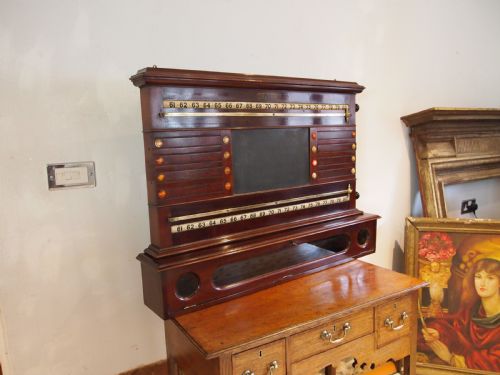
When you search for a billiard room wall board, you are looking at nineteenth century timber scoreboards designed for games rooms, primarily dating from the Victorian era. These pieces record scores for snooker, billiards, and life pool using sliding markers set into wooden frames.
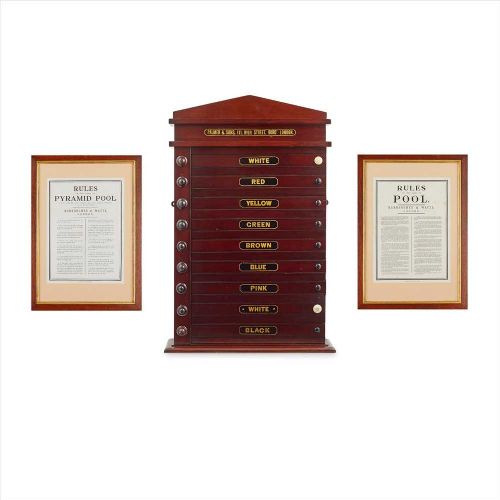
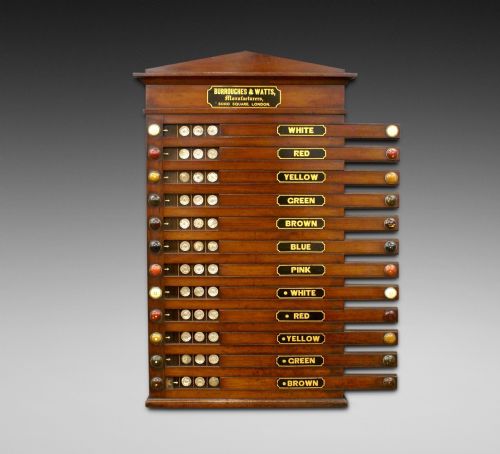
The versions you are most likely to meet on this page are constructed from mahogany or oak, often bearing the names of prominent makers such as Orme and Sons, Thurston and Co, Cox and Yeman, or Burroughes and Watts. They survive from the 1860s through to 1900, reflecting the popularity of cue sports in nineteenth century houses.
These scoreboards range from simple wall-mounted panels to large boards incorporating brass pointers, slate details, bone indicators, and occasionally glass or paper elements. Each piece serves as both a practical tally counter and a decorative feature for a games room.
How they were made
Cabinet makers built these scoreboards using dense hardwoods, predominantly mahogany and oak, which were selected for stability and durability in domestic games rooms. Timber panels were planed and joined to house the sliding tracks and numbering scales required for keeping score.
Detailing was achieved through contrasting materials, incorporating brass for pointers and hinges, bone for markers, and slate or glass in specific sections. Makers applied polished finishes to the timber to highlight the grain and protect the surface from the wear of a busy billiard room.
Listings feature nineteenth century pieces spanning the Victorian era, utilising materials such as brass, mahogany, slate, bone, glass, oak, and paper.
What varies in quality
The distinction between standard boards and superior examples lies in the presence of maker signatures, such as Thurston and Co or Burroughes and Watts, which indicate workshop provenance. Finer boards display thoughtful timber selection, such as pale oak or well-figured mahogany, alongside robust construction methods.
Quality also shows in the integration of secondary materials like brass runners, bone indicators, and sliding tracks that operate smoothly within the timber frame. Boards with complete, original scoring mechanisms and associated prints hold greater visual presence than simpler, unmarked wall boards.
Orme and Sons Manchester·Thurston and Co of London·Cox and Yeman London·Burroughes and Watts
The Billiard Room Wall Board Glossary
- Scoreboard
- A wall-mounted board featuring sliding pointers or rollers to track points in cue sports. These panels formed essential furniture in nineteenth century billiard rooms.
- Life Pool
- A variation of pool where players lose lives rather than accumulate standard points, requiring specialised scoring rows on the board. Scoreboards built for this game often feature dedicated sections for tracking individual player lives.
- Mahogany
- A durable tropical hardwood utilised extensively in Victorian cabinet making for its rich colour and fine grain. It remains the most common timber found on these boards.
- Brass
- A copper and zinc alloy used for indicator pointers, marker arrows, and mounting brackets on nineteenth century scoreboards. It provides a bright contrast against dark oak and mahogany.
Billiard Room Wall Board: Frequently Asked Questions
What is a billiard room wall board?
A billiard room wall board is a nineteenth century wooden panel fitted with sliding markers to keep score during games of snooker, billiards, and pool.
These boards hung on the walls of Victorian homes and clubs, combining practical game tracking with substantial timber cabinet work.
How were these scoreboards used?
Players or markers moved brass pointers along wooden tracks or sliding slots to record points as frames progressed.
Different rows on the board accommodated various games, including standard billiards, snooker, and life pool.
What materials are used in these boards?
The primary structure is built from dense hardwoods like mahogany and oak, shaped into wall-hanging panels.
Fittings typically include brass for pointers and tracks, alongside bone or wood markers and occasionally slate or glass.
How can I identify the maker?
Many nineteenth century boards bear the name of the workshop stamped, painted, or carved directly into the timber frame or scoring plate.
Prominent firms like Thurston and Co or Burroughes and Watts often marked their pieces clearly to denote quality.
How do I hang a heavy wooden scoreboard?
These Victorian boards are constructed from solid hardwoods and require secure fixings into wall studs or solid masonry.
Due to the weight of mahogany and oak panels, appropriate wall brackets or heavy-duty mounting plates ensure safe placement.