





Life Pool Scoreboard
A life pool scoreboard is the essential timber tally board for tracking complex multi-player cue sports, prized for brass markers and handsome cabinetwork.
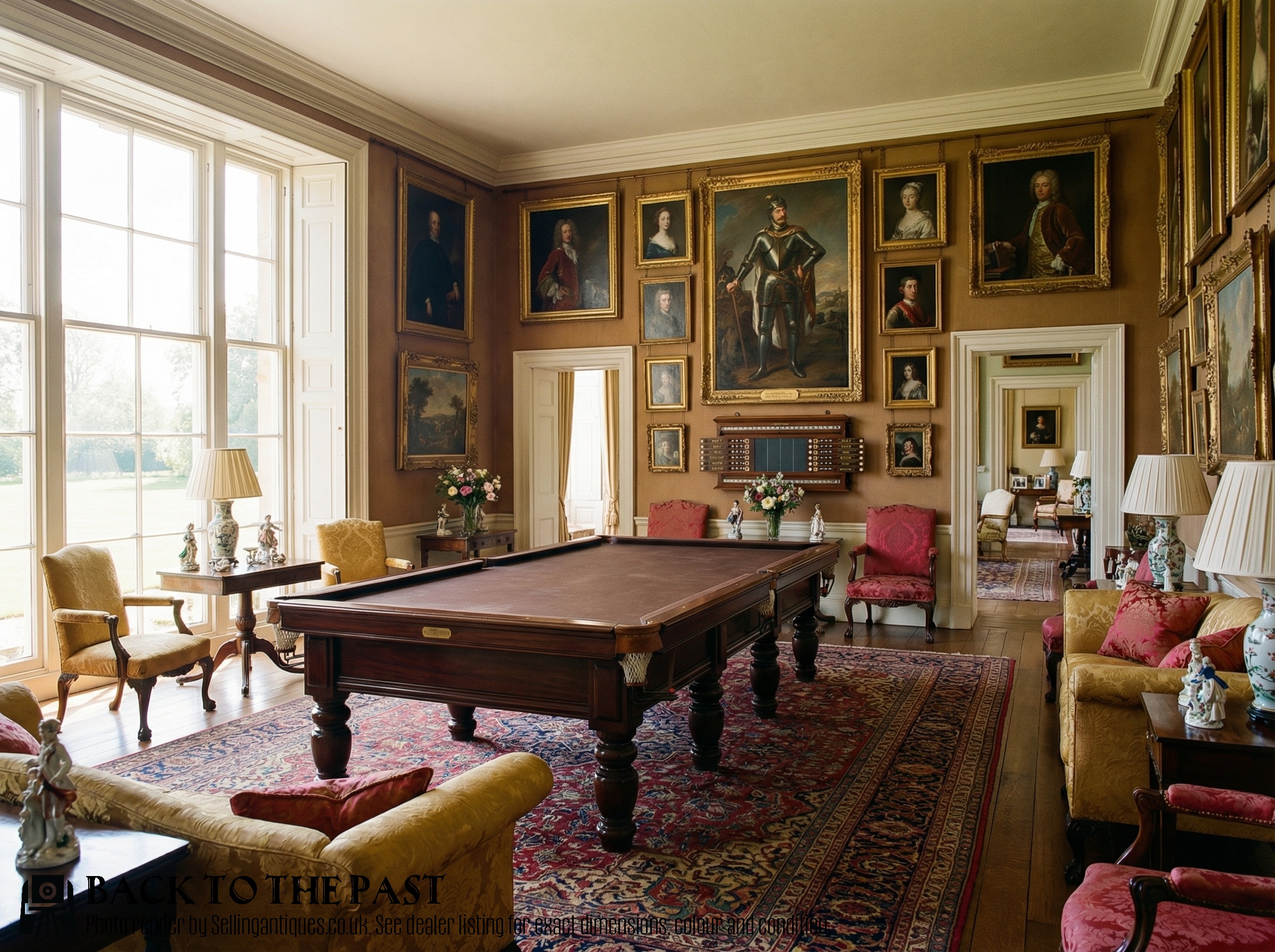
Life Pool Scoreboard
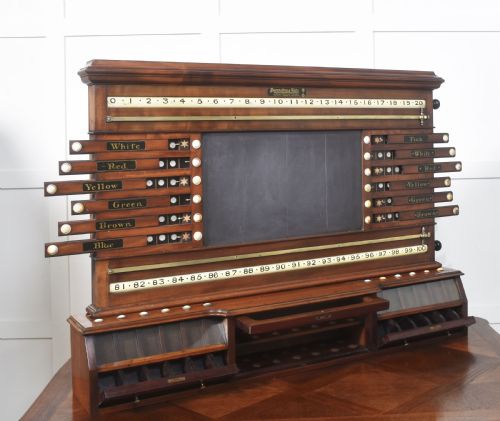
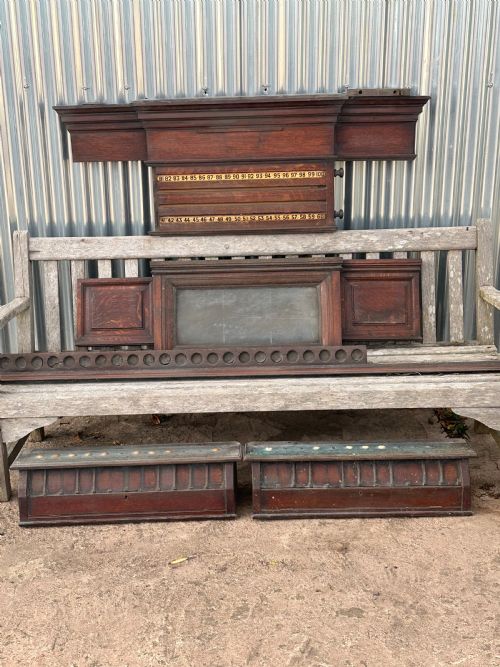
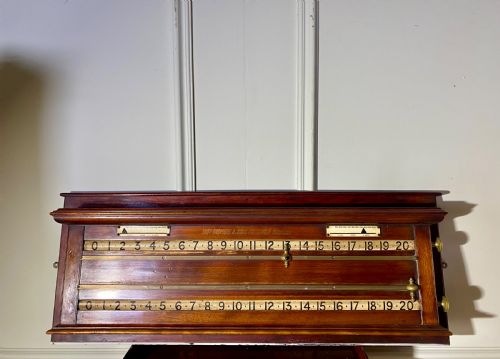
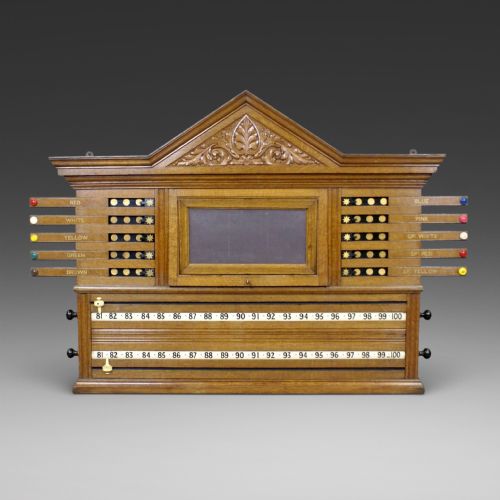
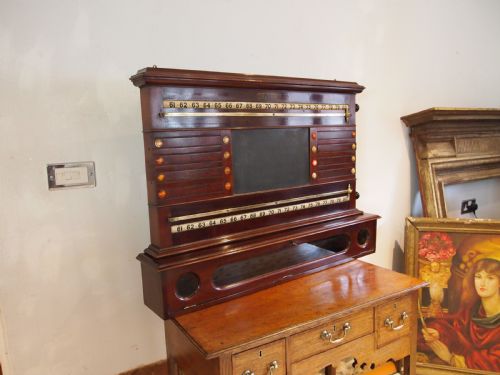
A life pool scoreboard is a specialised games room accessory designed to track the intricate scoring of nineteenth-century cue sports. These boards appear across Victorian and Edwardian periods, frequently taking the form of wall-hung cabinets or architectural timber boards.
The pieces on this page span the nineteenth century, including specific dates from the eighteen-eighties and eighteen-nineties alongside Edwardian examples. They function as both practical tallies and decorative panels for billiard rooms, utilising sliding markers and dials.
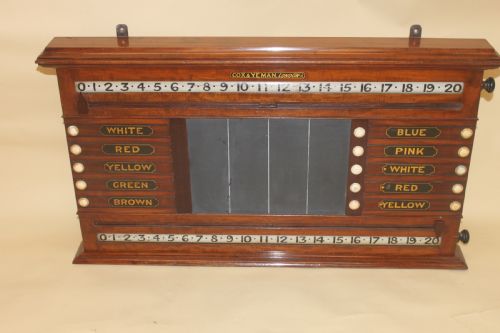
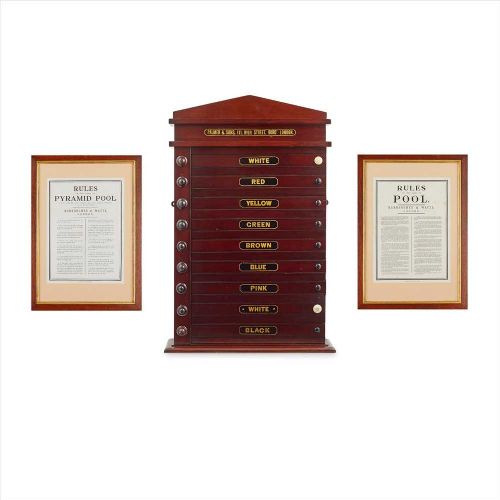
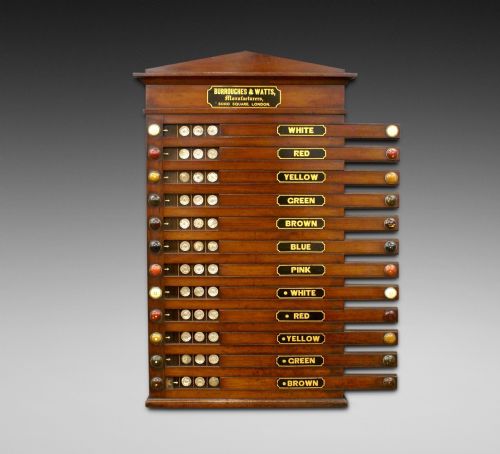
Makers and retailers such as Thurston and Co., Orme and Sons, and Cox and Yeman dominate the better examples. Collectors encounter configurations built for twelve players or nine players, often incorporating related prints or integrated storage cabinets.
Materials and construction
Cabinetmakers built these scoreboards primarily in mahogany, oak, and English walnut, selecting timber for deep grain and durability. These woods formed the substantial backboards and enclosed cabinets that house the scoring mechanisms.
Makers incorporated brass for sliding pointers, dial tracks, and hanging brackets, ensuring smooth mechanical movement alongside structural strength. Details in bone, celluloid, and glass frequently appear on dials, pointers, and slate inserts to mark player lives and points.
Listings feature boards constructed from mahogany, oak, and English walnut, incorporating brass, slate, bone, glass, and celluloid details.
Judging quality and craftsmanship
Quality rests in the presence of named maker signatures, superior timber selection, and complex multi-player tracking layouts. Fine examples feature substantial oak or walnut cases, crisp brass sliding markers, and integrated cabinets rather than simple flat panels.
The sophistication of the scoring arrangement dictates distinction, with twelve-player boards and combined life pool systems demanding greater mechanical precision. Original brass hardware, clear bone or glass numerals, and attribution to prominent London or Manchester makers elevate an example.
Orme and Sons Manchester·Thurston and Co of London·Cox and Yeman London·Burroughes and Watts·Palmer and Sons
The Life Pool Scoreboard Glossary
- Life pool
- A traditional variation of cue sports where players retain lives represented by markers on the board. Losing a life through missed shots or opponent pots ultimately decides the winner.
- Scoreboard cabinet
- A wall-mounted wooden housing that combines sliding tally markers with enclosed storage space. These cabinets often feature decorative carved panels and glass doors.
- Celluloid
- An early thermoplastic material used for numeric markers and dials on nineteenth-century boards. It mimics ivory while providing a durable surface for frequently adjusted indicators.
- Slide marker
- A brass pointer moving along a numbered groove to tally points or remaining lives. Quality examples glide evenly across calibrated wooden or slate scales.
- Backboard
- The principal vertical timber panel supporting the mechanical scoring tracks and dials. It provides the structural foundation for wall mounting.
Life Pool Scoreboard: Frequently Asked Questions
What is a life pool scoreboard?
A life pool scoreboard is a specialised timber tally board designed to track the intricate scoring and remaining lives of players in nineteenth-century cue sports.
These pieces range from simple wall-hung wooden panels to large, decorative cabinets with brass tracks and sliding markers.
How were these scoreboards used?
Players used the sliding brass pointers and rotating dials to track scores, points, and remaining lives during billiard and snooker matches.
The boards hung on the walls of Victorian and Edwardian games rooms, serving as both practical tallies and prominent wall furniture.
How do I identify Victorian boards?
Victorian boards typically feature rich timber selections like mahogany and English walnut, accompanied by heavy brass sliding hardware and hand-calibrated marker scales.
Many bear the stamped names of prominent makers such as Thurston or Orme, often dating from the mid to late nineteenth century.
How do I live with a scoreboard?
These scoreboards mount securely to interior walls, functioning well in studies, dining spaces, or modern games rooms as striking architectural wood panels.
They require stable indoor humidity to protect nineteenth-century timbers and delicate brass or bone sliding mechanisms.