





Victorian Billiard Board
These Victorian billiard boards are the timber scoring frames and cabinets that kept tally in nineteenth-century games rooms, prized for their handsome woodwork and sliding brass pointers.
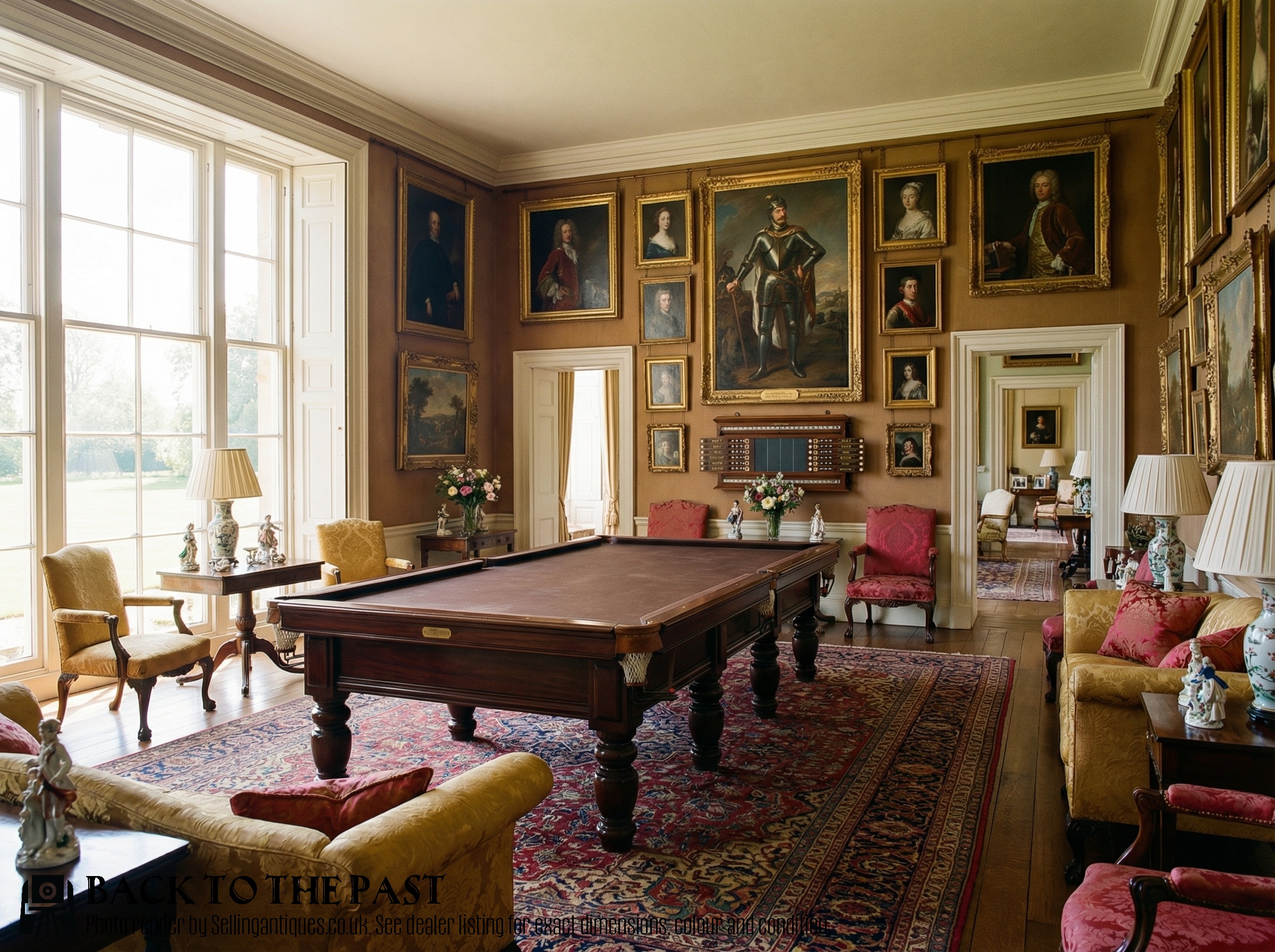
Victorian Billiard Board
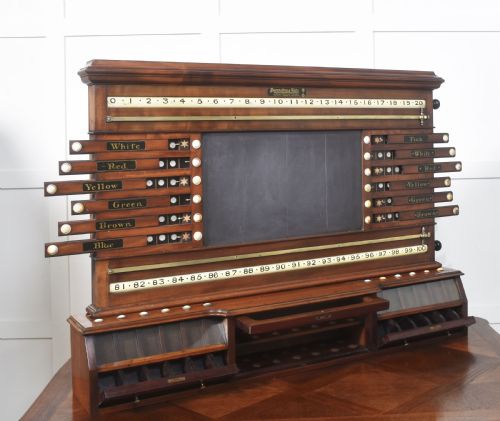
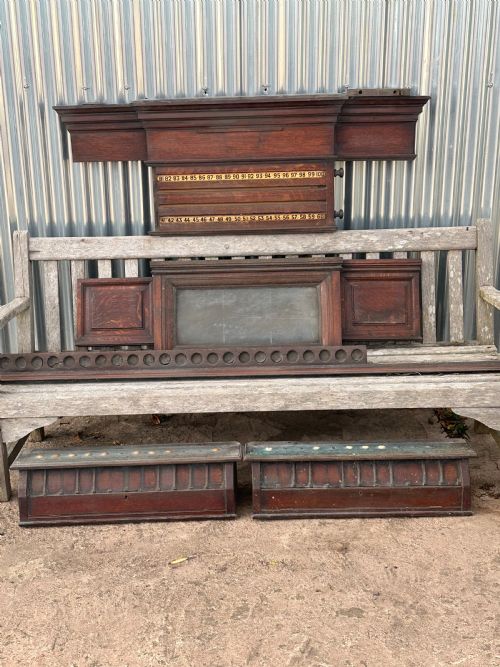
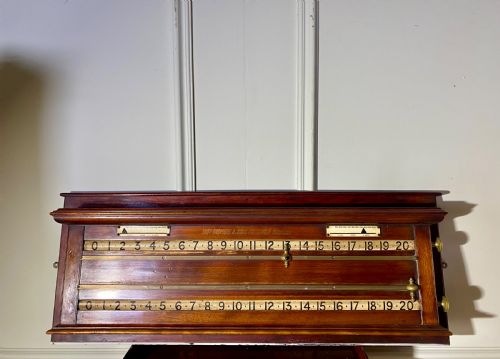
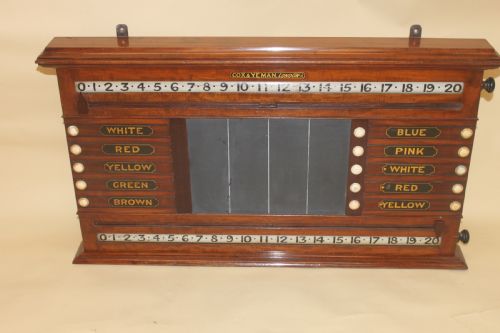
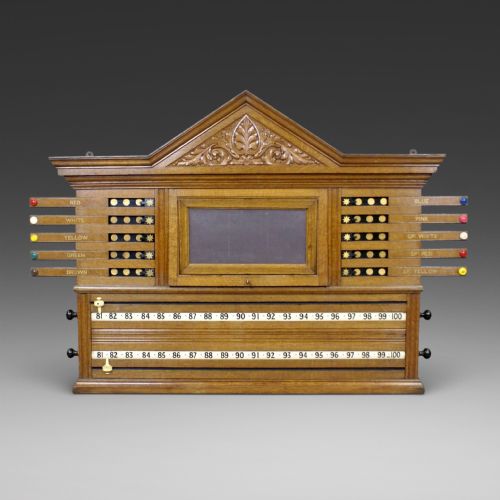
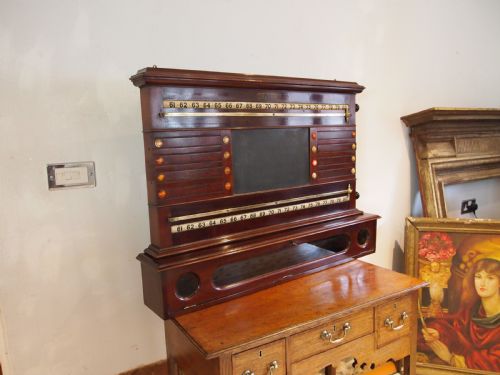
A victorian billiard board takes the form of a wall-mounted wooden frame or cabinet designed to record scores for billiards, snooker, and pool. The selection on this page centres on nineteenth-century examples, spanning the Victorian and Edwardian periods.
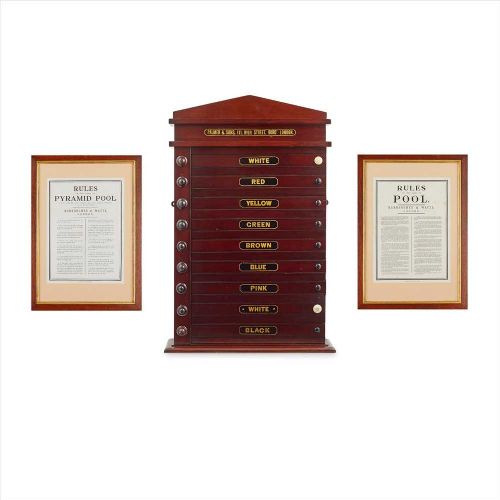
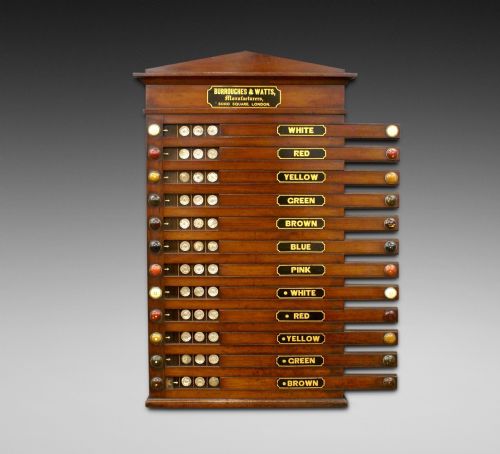
Most pieces function as scoreboards featuring sliding pointers alongside rotating rollers or dials to track frames and points. Alongside dedicated scoreboards, the selection includes related items such as bagatelle tables and games room accessories.
Originating primarily from English workshops, these boards reflect the domestic and club billiard rooms of the nineteenth century. Oak and mahogany form the structural core of these wall-mounted scoring systems.
How they were made
Cabinet makers utilised dense hardwoods such as mahogany and oak to construct the main frames and housing. These timbers were frequently polished to a rich finish, showing the natural grain of the wood.
Brass fittings form the mechanical elements, including sliding pointers, runners, and indicator plates. Slate and bone occasionally appear as supplementary materials for specific scoring markers and decorative details.
What varies in quality
The distinction between standard boards and exceptional examples lies in the complexity of the mechanism and the presence of maker attribution. Pieces bearing the mark of established makers command attention for their superior joinery and engraved brass details.
Cabinetry execution dictates the overall impression, with superior boards incorporating carved decorative elements and well-fitted glazed doors where applicable. The clarity of the numbering divisions and the smooth movement of the brass pointers distinguish finer scoring boards.
Orme & Sons Manchester·Thurston & Co of London·Cox & Yeman London·Burroughes and Watts·Palmer & Sons
The Victorian Billiard Board Glossary
- Bagatelle
- A cue sport played on a board with holes, represented here by nineteenth-century tables. This game preceded modern snooker in many domestic settings.
- Baize
- A coarse woollen fabric used to cover games tables and interior backing panels. It provides a traditional textured surface behind the scoring markers.
- Life pool
- A variation of pool where players receive lives indicated on specialised scoring boards. Scoring involves tracking remaining lives alongside standard point tallies.
- Scoreboard
- A wall-mounted frame utilised to track scores during cue sports. These boards incorporate sliding pointers and rotating rollers.
Victorian Billiard Board: Frequently Asked Questions
How do you mount a Victorian billiard board?
These boards mount directly to a wall using the original hanging brackets or reinforced fixing points integrated into the wooden frame.
Because solid hardwoods like oak and mahogany add considerable weight, secure wall fixings are essential to support the frame safely.
What is the difference between snooker and life pool boards?
Life pool boards include additional sliding markers or dials to track individual player lives alongside standard point tallies.
Standard snooker boards focus primarily on counting game points using sliding brass pointers set against wooden scoring tracks.
Can these boards be used for modern scoring?
The sliding brass pointers and numbered tracks remain fully functional for keeping score during casual matches.
The mechanics rely on simple physical movement rather than electrical components, allowing the original sliding tracks to operate as intended.
How do you distinguish oak from mahogany examples?
Oak boards display a pronounced open grain with distinct medullary rays, often showing a medium brown tone.
Mahogany boards present a smoother, tighter grain with deep reddish-brown colouration that darkens naturally over time.