

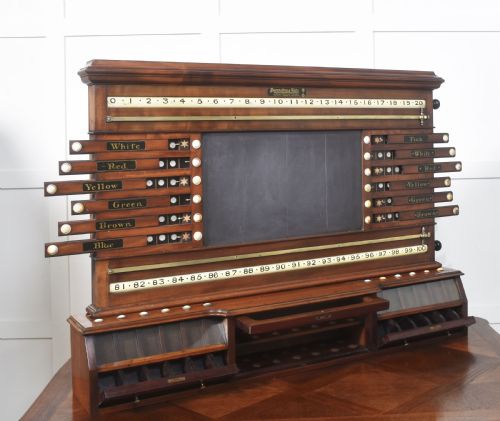

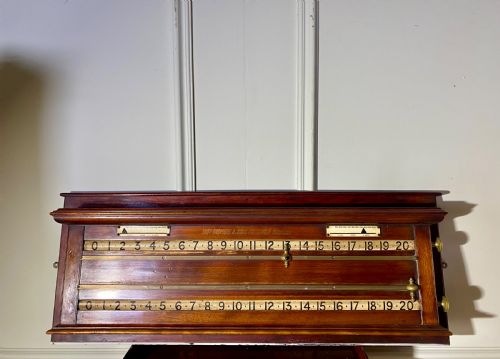

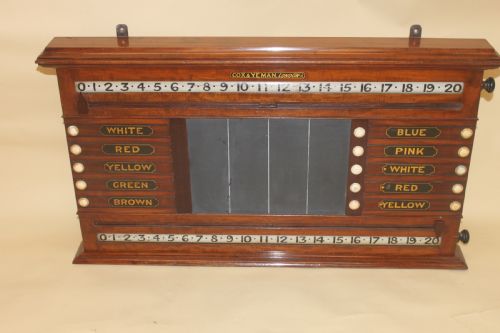
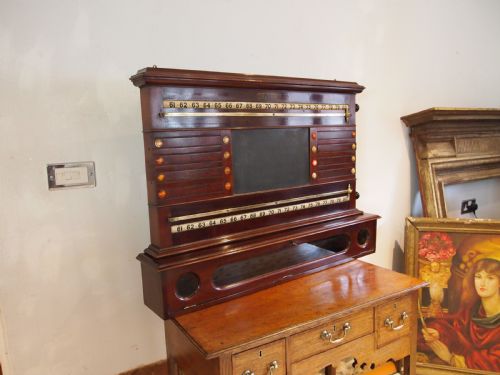
Dark Mahogany Scoreboard
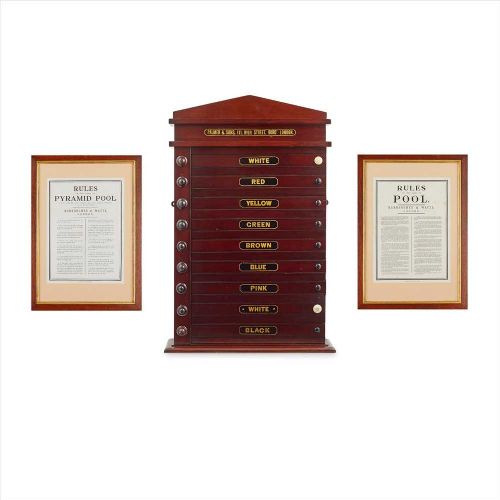
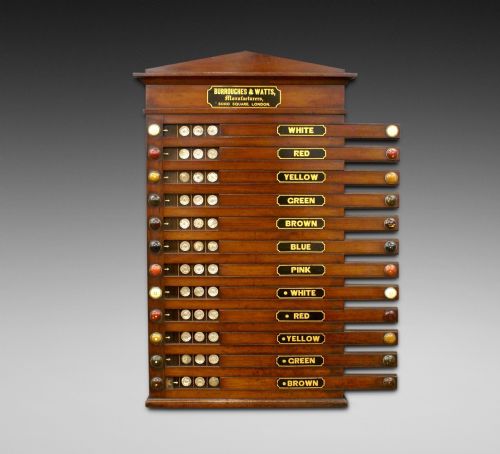
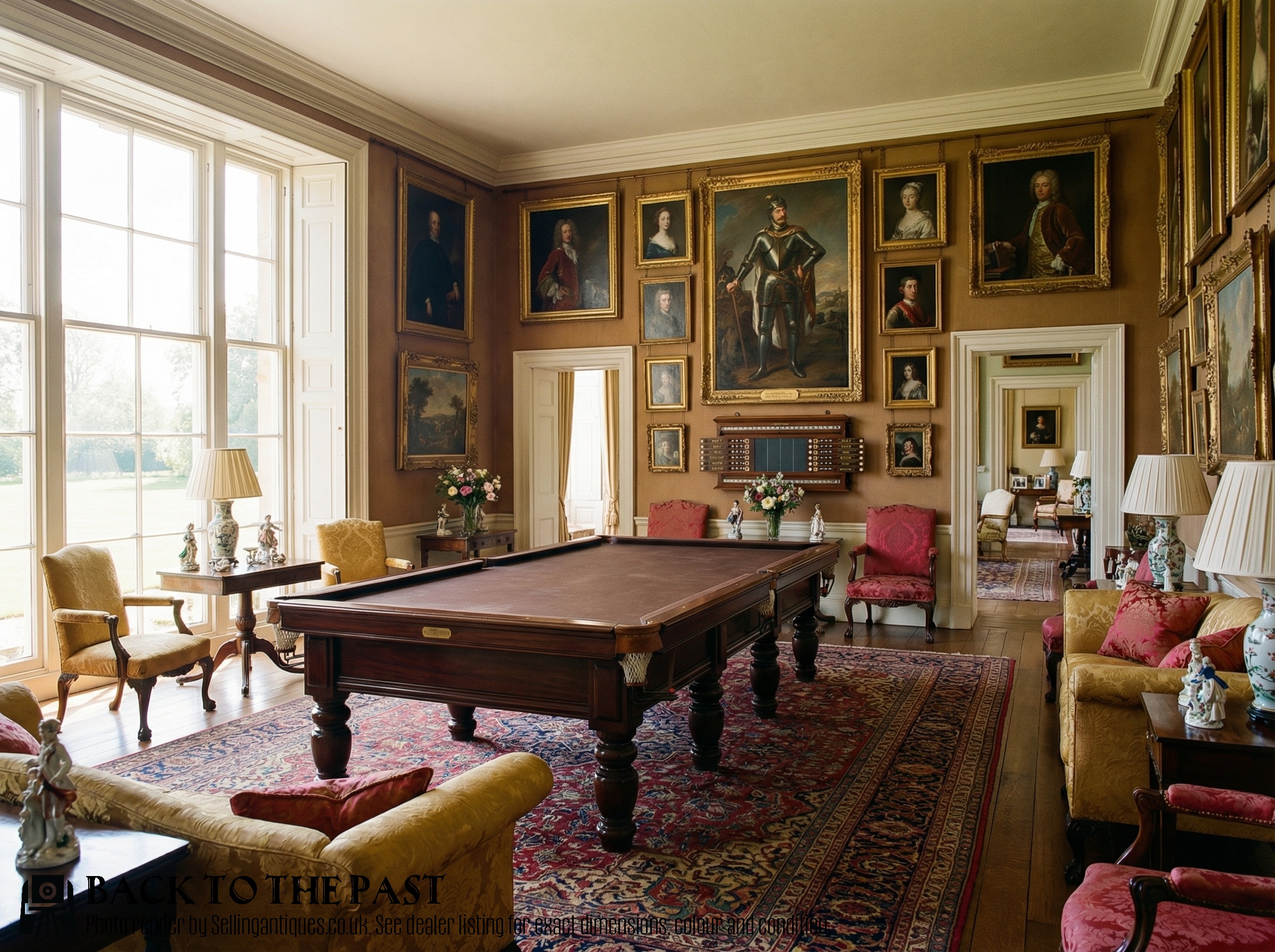
These dark mahogany scoreboards are robust Victorian wall-mounted game counters that bring authentic clubroom atmosphere to a home billiard room.
Dark Mahogany Scoreboard
A dark mahogany scoreboard serves as a traditional tally device for cue sports such as billiards, snooker, pool, and life pool. You encounter these instruments primarily in Victorian formats dating from the nineteenth century, notably around the decades of 1860, 1880, 1890, and 1900.
The standard configuration involves vertical or horizontal mahogany boards featuring sliding pointers, brass scoring rods, and occasionally rotating rollers or dials. Makers designed these pieces to be mounted directly onto games room walls for easy visibility during competitive play.
Many examples accommodate multiple variations of cue sports simultaneously, reflecting the changing popularity of games like life pool and snooker within private residences and public clubs. The darker timber tones suit traditional wood-panelled interiors and billiard rooms perfectly.
Materials and construction
Workshop construction relies principally upon solid mahogany timber, complemented by brass fittings, inset slate panels, bone indicators, paper score cards, and small glass elements. Craftsmen shaped the dense mahogany boards to house sliding brass rods and wooden markers securely.
Maker details and numbers appear via printed paper markers behind glass or carved directly into the timber housing. Brass brackets and screws provide the mechanical action for the sliding pointers that track the players' scores.
Evaluating the pieces
Quality separates ordinary utility pieces from works carrying distinguished maker attribution such as Thurston & Co Ltd, Cox & Yeman London, or Burroughes and Watts. Finer boards display crisper timber mouldings, superior brass engineering, and intact original bone or ivory markers.
The presence of specialised scoring tracks for life pool alongside standard billiard registers indicates a more complex, higher-grade commission. Preserved paper inserts under glass and complete sets of original sliding indicators elevate the historical integrity of the scoreboard.
Thurston & Co Ltd·Cox & Yeman London·Burroughes and Watts·Palmer & Sons
The Dark Mahogany Scoreboard Glossary
- Mahogany
- A heavy, durable tropical hardwood prized for its rich dark grain and structural stability. Cabinetmakers utilised it extensively for nineteenth-century institutional furniture and games room equipment.
- Life pool
- A traditional multi-player cue sport where each participant holds a specific number of lives. Scoreboards dedicated to this variant feature specialised rows of sliding markers or revolving cylinders.
- Brass rod
- The horizontal metal track upon which numerical pointers slide to record scores. High-quality examples feature polished brass that remains straight and securely anchored within the timber frame.
- Slate inset
- A thin slab of dark stone integrated into the wooden scoreboard frame. Manufacturers used slate sections to provide a durable writing surface for chalk tallies.
Dark Mahogany Scoreboard: Frequently Asked Questions
How do you mount a heavy wooden scoreboard safely?
These nineteenth-century boards require sturdy wall fixings distributed across the main mahogany backing frame to support the considerable weight of timber and brass.
Professional installation into brickwork or secure wall studs ensures the board remains stable during frequent game scoring.
What sports can be scored on these boards?
Most examples are configured for traditional nineteenth-century cue games including standard billiards, snooker, pool, and life pool.
Multi-game boards feature multiple sliding tracks and dials to accommodate the complex scoring rules of each distinct variation.
How do I maintain the mahogany and brass parts?
The mahogany timber benefits from occasional treatment with a traditional wax polish to preserve the deep dark finish and prevent drying. Brass sliding rods and pointers require gentle cleaning with a soft cloth to maintain their metallic sheen without disturbing the surrounding wood.
How can I identify the maker of a scoreboard?
Maker attribution typically appears as a signature paper label beneath glass, an engraved brass plaque, or a stamp directly onto the timber frame. Prominent nineteenth-century London billiard table makers frequently branded their scoring apparatus with company names and addresses.