






Antique Snooker Scoreboard
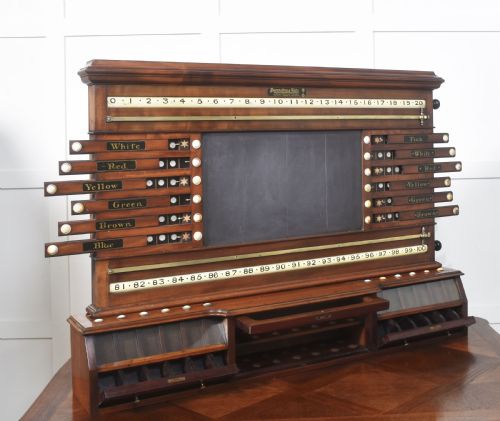
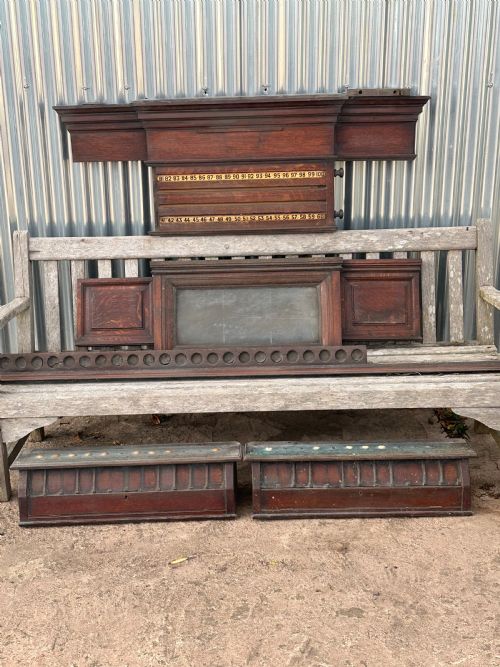
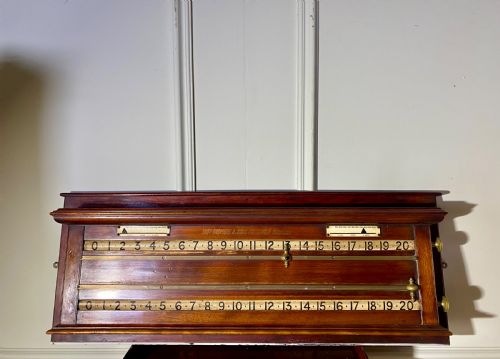
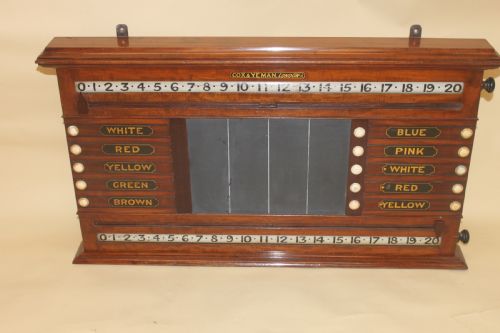
These antique snooker scoreboard pieces are timber wall apparatuses with sliding pointers, built to keep score in nineteenth and twentieth-century games rooms.
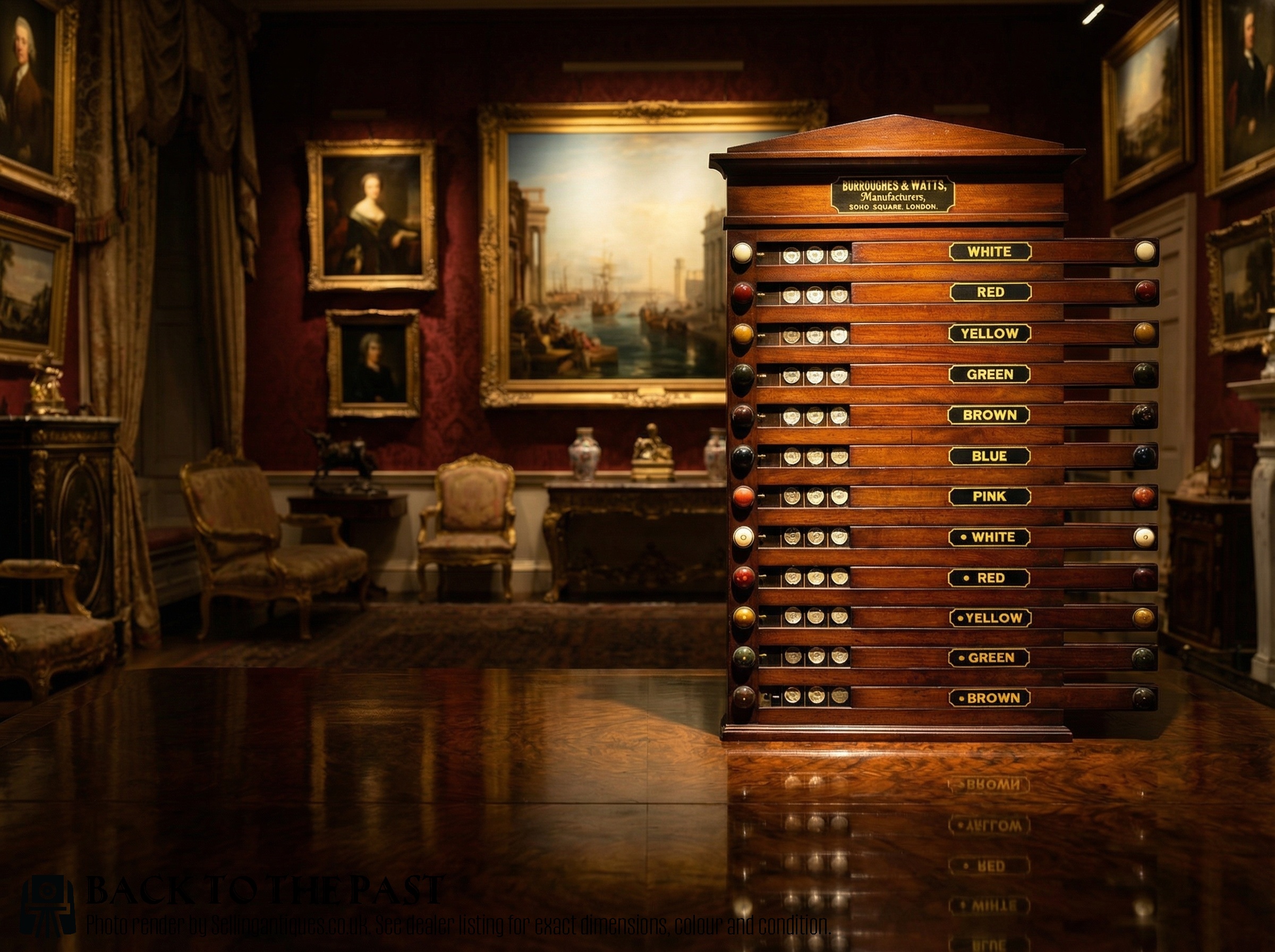
Antique Snooker Scoreboard
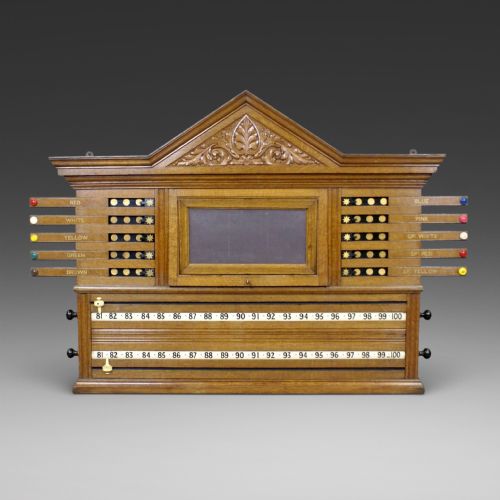
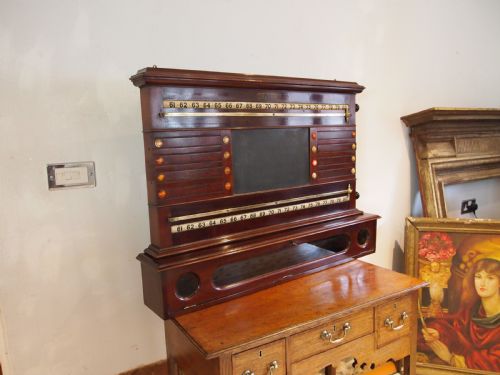
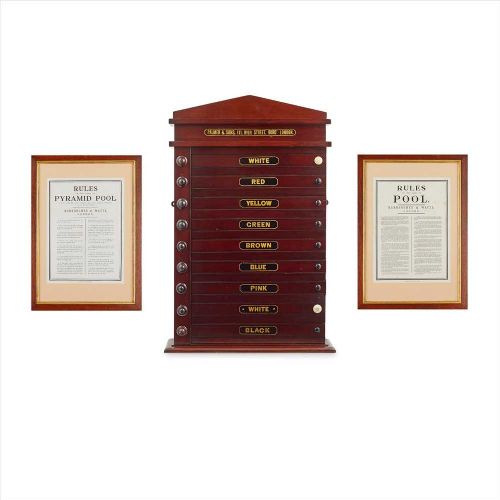
An antique snooker scoreboard is a wall-mounted apparatus designed to record points for billiards, pool, and snooker during the nineteenth and twentieth centuries. These pieces range from simple wooden boards with sliding pointers to large score cabinets incorporating storage sections.
Visitors to this page are most likely to encounter Victorian and Edwardian examples fashioned from timber such as mahogany, oak, and walnut. Makers built these items primarily for domestic and club games rooms to accommodate multiple players.
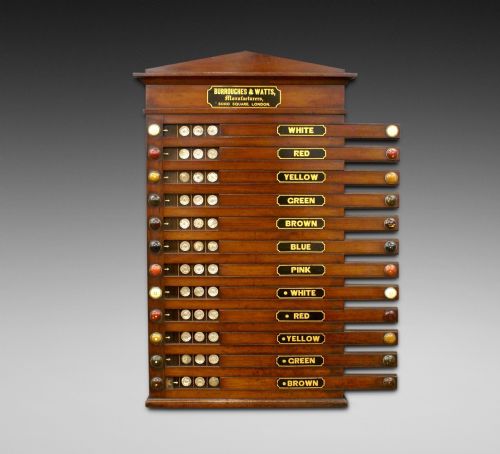
The objects often feature subsidiary markers for life pool alongside main snooker scoring tracks. Cabinet versions integrate enclosed storage spaces for chalk, brushes, and rules alongside the scoring dials.
How they were made
Cabinet makers utilised dense hardwoods like mahogany, oak, and walnut for the primary chassis and backing boards. These timbers provided the structural stability required for wall-mounted sliding mechanisms.
Pointers and scoring numbers incorporate contrasting materials such as brass, bone, and celluloid inlaid into the wood or mounted on tracks. Slate elements occasionally appear in structural or decorative panels within the larger cabinet formats.
Antique Snooker Scoreboard Retail Price Guide 2026
Typical asking prices for snooker scoreboard among the pieces listed under this phrase on Sellingantiques today, from the lower quarter to the upper quarter. They describe what is for sale here now, not the wider market.
Listings feature eighteenth and nineteenth-century timbers including mahogany, oak, walnut, and slate alongside brass, bone, and celluloid fittings.
What varies in quality
Quality in an antique snooker scoreboard depends upon the selection of timber and the precision of the mechanical scoring tracks. Higher tier pieces demonstrate superior joinery, Figured grain timbers, and substantial brass fittings rather than plain pine or loose tracks.
Makers such as Thurston, Orme and Sons, or Burroughes and Watts applied finer decorative carving and superior cabinet work to their output. The inclusion of integrated storage cabinets and complete original pointer indicators elevates the standing of an individual piece.
Orme and Sons Manchester·Thurston and Co of London·Cox and Yeman London·Burroughes and Watts·Palmer and Sons London
The Antique Snooker Scoreboard Glossary
- Life Pool
- A variation of cue sports requiring specific secondary scoring tracks on the board. These auxiliary pointers allow players to track lives remaining in the game.
- Sliding Pointer
- The mechanical indicator moved along a numbered groove to tally points. Smooth operation depends on the precise routing of the timber track.
- Score Cabinet
- A larger wall-mounted housing that combines scoring mechanisms with enclosed storage for accessories. These units often feature glazed doors or decorative paneling.
- Celluloid
- An early semi-synthetic plastic material utilised for number markers and indicator faces. It provides a bright, durable surface contrasting with the dark timber backing.
Antique Snooker Scoreboard: Frequently Asked Questions
How do you mount an antique snooker scoreboard?
These scoreboards hang from robust wall fixings secured directly into the rear timber battens of the frame. Given the substantial weight of dense hardwoods like oak and mahogany, professional installation ensures the board remains secure during use.
Position the board at a standard eye level within the games room to allow comfortable operation of the sliding pointers from the table. Ensure the wall structure can support the continuous mechanical interaction of players adjusting scores.
What is the difference between Victorian and Edwardian scoreboards?
Victorian scoreboards generally display heavier proportions, darker mahogany or oak timbers, and robust brass fittings designed for formal nineteenth-century billiard rooms. Ornamentation tends toward traditional carved detailing and straightforward numerical tracks.
Edwardian examples often incorporate lighter oak or walnut, occasionally featuring broader cabinet formats with decorative glazing or simplified geometric forms. The transition reflects changing domestic interior tastes towards airier, less ostentatious games room furniture.
Were these scoreboards used for games other than snooker?
Many scoreboards accommodate multiple cue sports through additional scoring rows labelled for billiards, pool, and life pool. The inclusion of extra tracks allowed clubs and homeowners to play varied games on a single table without changing equipment.
Markers for life pool utilise distinct point scales and revolving indicators to track individual player scores separately from the main snooker tally. This versatility defines the layout of larger nineteenth-century scoring boards.
What materials are used for the numbers and pointers?
Makers constructed numbers and pointers from brass, bone, ivory, and later celluloid set into recessed wooden tracks. Brass provides durability for frequently moved indicators, while bone and celluloid offer high contrast against dark timber backgrounds.
Surviving pieces retain their original materials, though replacements occasionally occur during restoration work. Examining the patina on these components helps determine their period authenticity.