




Edwardian Life Pool Board
An edwardian life pool board is a specialist games room accessory for keeping score, combining woodwork and brass markers for serious players.
Edwardian Life Pool Board
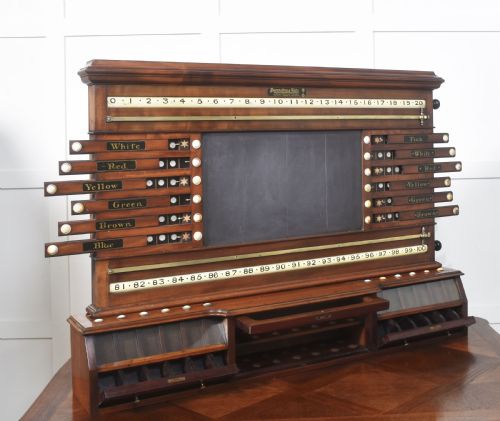
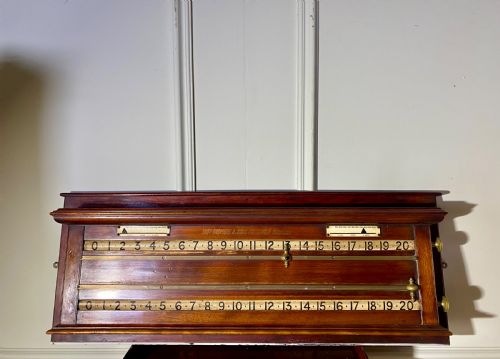
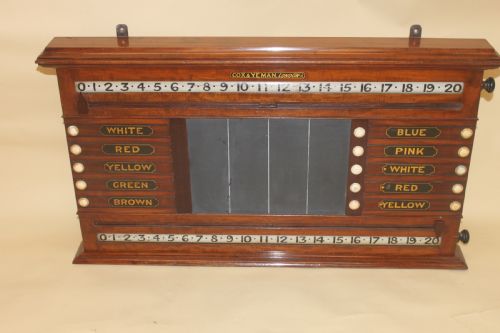
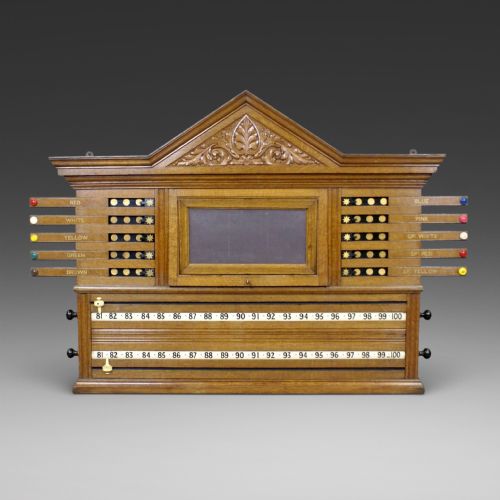
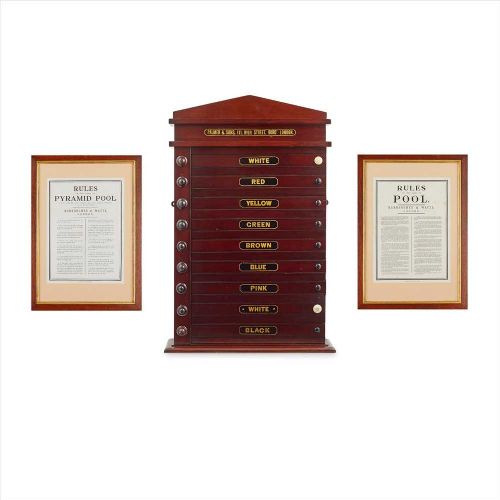
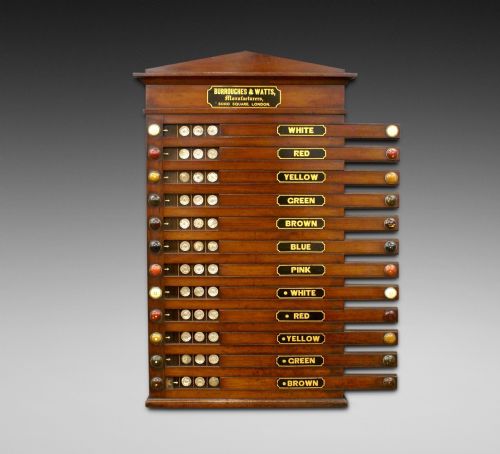
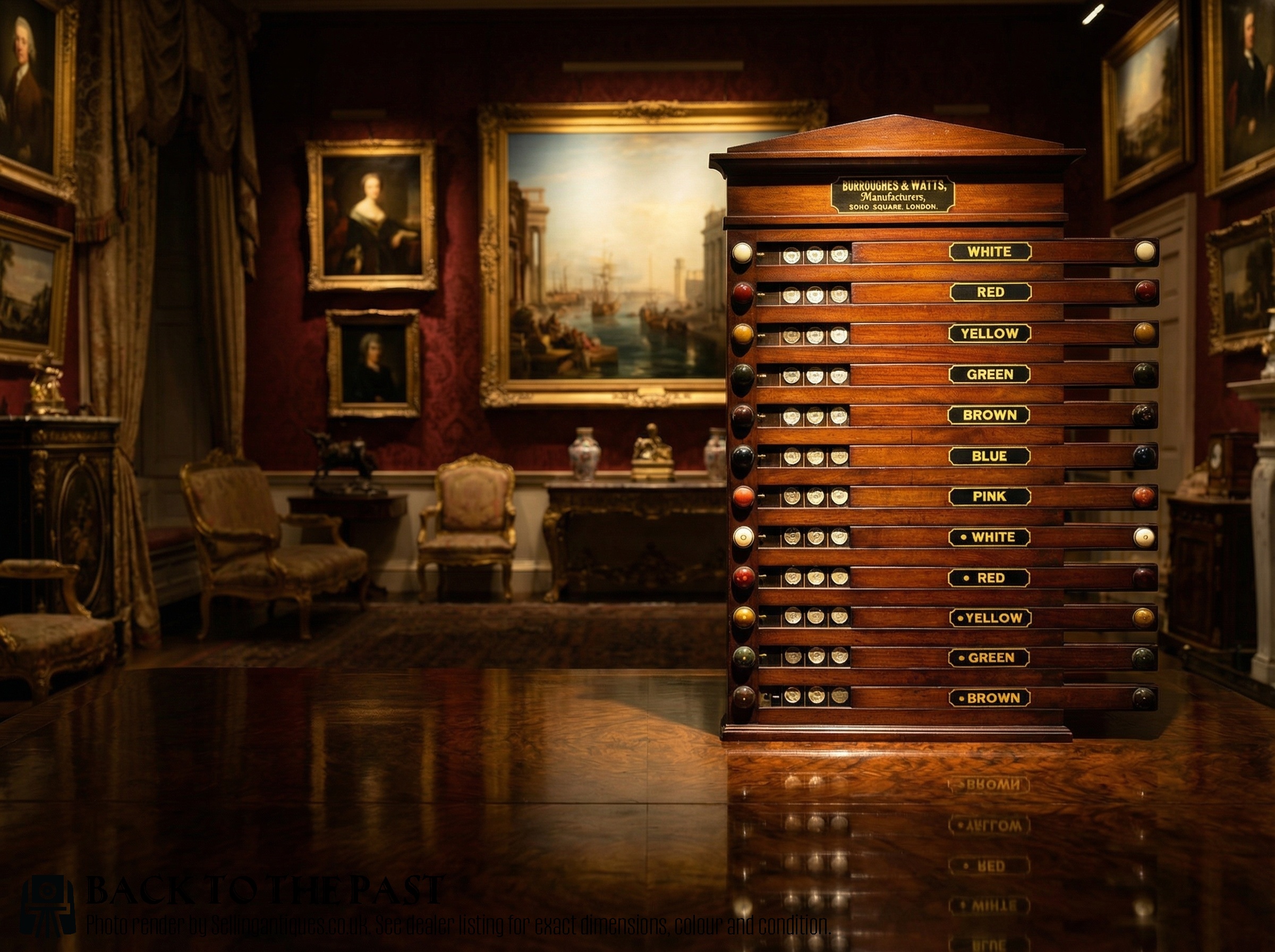
When you search for an edwardian life pool board, you encounter timber scoreboards designed for games rooms, originating from the Victorian and Edwardian periods. These pieces serve to track scores for billiards, snooker, and life pool using sliding indicators.
The versions you meet on this page include mahogany, oak, and walnut scoreboards and score cabinets. Makers integrated brass details, glass elements, and bone markers into wall-mounted timber frames.
How they were made
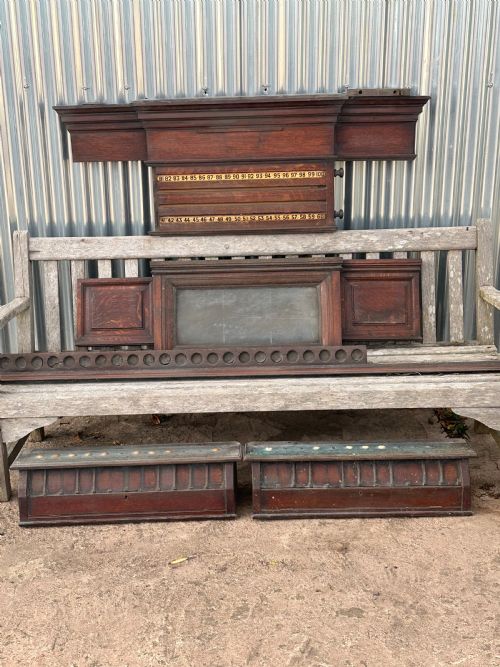
Carpenters constructed the primary frames and cabinets using solid hardwoods like mahogany, oak, and English walnut. These timbers provided the durability required for frequent use in nineteenth-century billiard rooms.
Makers incorporated brass sliding markers, slate panels, bone components, and glass doors to complete the mechanism. Skilled joiners built cabinets with integrated storage for accessories alongside the central scoring dials.
Players once relied on these clever sliding dials to settle gentlemanly wagers without losing count over a long evening.
What varies in quality
The distinction between standard boards and superior examples lies in the complexity of the cabinetwork and the choice of timber. Finer pieces utilise English walnut or substantial oak with decorative carvings and dedicated storage cabinets.
Quality also rests on the execution of the brass mechanisms and sliding indicators. Well-made boards feature crisp engraving, robust mounting points, and refined integration of slate and bone details.
Orme and Sons Manchester·Thurston and Co of London·Palmer and Sons·Burroughes and Watts
The Edwardian Life Pool Board Glossary
- Life Pool
- A cue sport played with coloured balls where each player loses a life upon a foul or potted ball, requiring specialised scoring apparatus.
- Scoreboard
- A wall-mounted timber board fitted with sliding brass pointers and dials to record the progress of cue sports.
- Score Cabinet
- An enclosed games room fixture combining score recording mechanisms with storage space for accessories.
- Celluloid
- An early thermoplastic material utilised for markers and indicators on period scoreboards.
Edwardian Life Pool Board: Frequently Asked Questions
What is a life pool board?
A life pool board is a specific type of scoreboard designed to track the lives of players in traditional pool games. These boards utilise sliding markers and dials to show remaining lives and scores.
They hang on the walls of billiard rooms and games rooms, functioning as both practical equipment and decorative woodwork.
How do you date these scoreboards?
Dating relies on identifying the timber species, construction methods, and maker signatures found on the piece. Nineteenth-century examples often display simpler oak or mahogany frames, while Edwardian pieces frequently incorporate larger decorative cabinets.
Examining the materials used for the sliding markers, such as bone or celluloid, also helps narrow down the period of manufacture.
Where were these boards placed?
These scoreboards were mounted on the walls of dedicated billiard rooms in large country houses and private clubs. Their placement ensured players could easily update their scores during a match without leaving the table.
Larger score cabinets were positioned near the main seating areas to store associated accessories within reach.
How do you maintain the timber?
Maintaining the wood requires keeping the board away from direct heat sources and sudden humidity changes. Regular dusting with a dry cloth preserves the finish on mahogany and walnut surfaces.
Avoid using harsh chemical polishes on the brass markers and wooden frames to protect the original nineteenth-century patina.