




Vintage Games Room Decor
Vintage games room decor brings character and purposeful history to a space through authentic nineteenth-century scoreboards, tables, and gaming accessories.

Vintage Games Room Decor
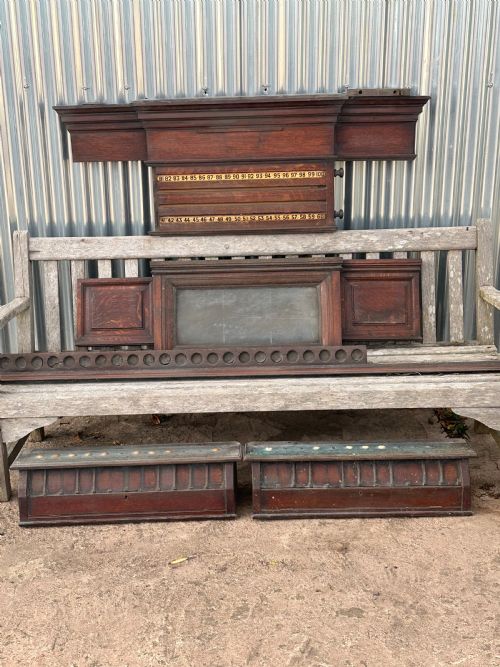
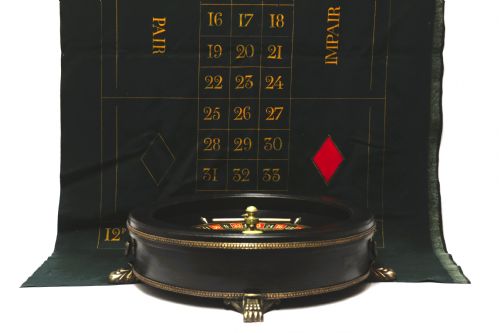
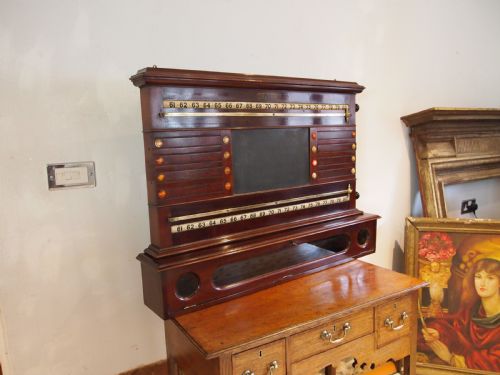
Vintage games room decor encompasses functional nineteenth-century equipment built for billiards, snooker, chess, and roulette. These items range from large mahogany and oak scoring boards to folding chess boards and roulette wheels.
Buyers most frequently encounter Victorian scoreboards alongside occasional Edwardian chess sets and French roulette wheels. These pieces originate from prominent makers and workshops operating during the nineteenth century.
The objects serve as both decorative wall hangings and functional focal points for domestic spaces. Their robust construction reflects the serious leisure pursuits of the Victorian and Edwardian eras.
How they were made
Cabinetmakers utilised dense hardwoods such as mahogany and oak to construct durable scoreboards and games boards that could withstand heavy daily use. Brass fittings, bone indicators, and ebonised wood details provided contrast and mechanical reliability.
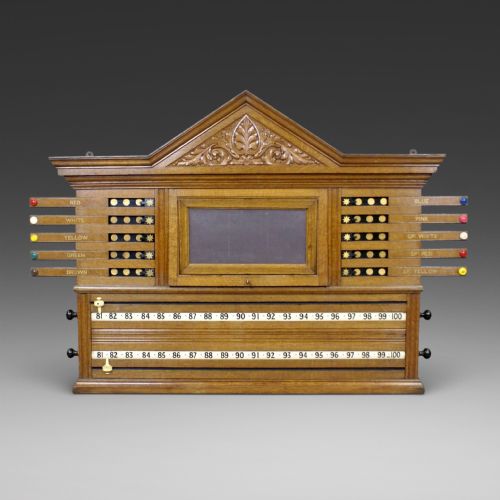
Specialist workshops integrated slate, glass, and turned wood into complex scoreboards featuring multiple sliding markers and dials. Textile elements such as original felt table cloths accompanied French roulette wheels of the period.
What varies in quality
Quality rests in the precision of the mechanical scoring mechanisms and the integrity of the cabinetwork. Pieces bearing the stamps of established makers display superior joinery and more refined timber selection.
The presence of original elements, from brass pointers to felt surfaces, distinguishes exceptional examples from heavily altered pieces. Greater scale and more elaborate timber mouldings separate top-tier scoreboards from simpler utilitarian versions.
Orme and Sons Manchester·Thurston and Co of London·Cox and Yeman London·Burroughes and Watts
The Vintage Games Room Decor Glossary
- Scoreboard
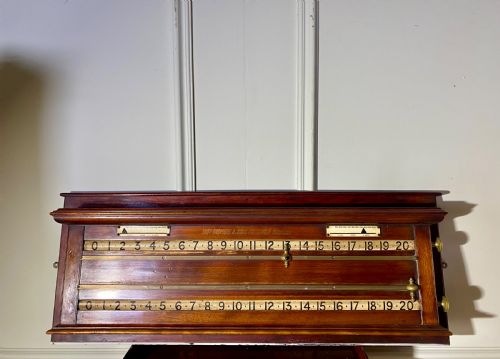
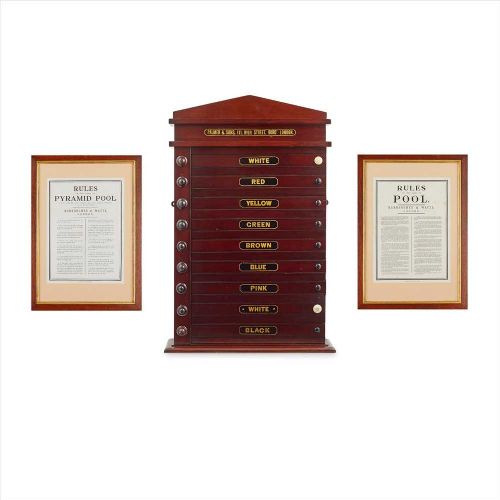
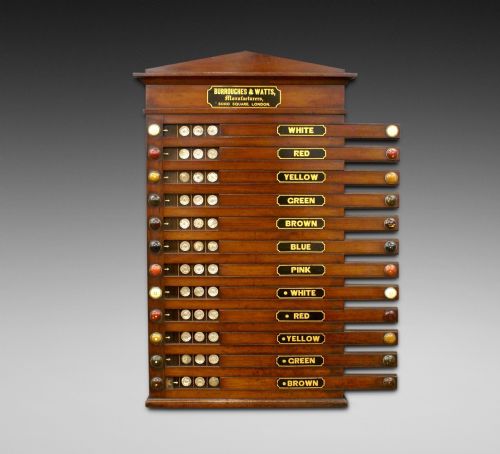
- A large wall-mounted board used to track points in cue sports using sliding pointers or rotating rollers. These items often feature substantial mahogany or oak backing plates.
- Ebonised wood
- Timber treated to resemble ebony through a staining and finishing process. Makers used this technique to create dark, uniform contrasts on games room accessories.
- Napoleon III
- A nineteenth-century French design style noted for eclectic revivalism and luxurious finishes. Pieces from this aesthetic include roulette wheels housed in decorative wooden housings.
Vintage Games Room Decor: Frequently Asked Questions
What is vintage games room decor?
Vintage games room decor consists of antique equipment and furnishings built for nineteenth-century parlours and billiard halls. This category includes scoreboards, roulette wheels, and folding chess sets.
These items combine practical utility with substantial woodwork, making them popular focal points for modern interiors.
How were nineteenth century scoreboards used?
Scoreboards were mounted on the walls of billiard rooms to track scores during snooker, billiards, and life pool matches. Players or markers adjusted brass pointers along numbered scales as the game progressed.
Larger boards often incorporated multiple sliding indicators to record frames, points, and handicaps simultaneously.
How do I hang a heavy scoreboard?
Heavy mahogany and oak scoreboards require secure wall fixings distributed across their primary structural frame. Professional installation is recommended due to the substantial weight of dense nineteenth-century hardwoods.
Ensure the fixings engage directly with wall studs or utilise appropriate cavity anchors to support the board safely.
How do I identify a Victorian scoreboard?
Victorian scoreboards are typically identified by their use of solid mahogany or oak, brass sliding markers, and traditional cabinetmaker construction techniques. Maker stamps from firms such as Thurston or Burroughes and Watts often appear on the timber frame.
The materials, patination, and mechanical complexity of the scoring dials generally point to production during the second half of the nineteenth century.