




Victorian Life Pool Board
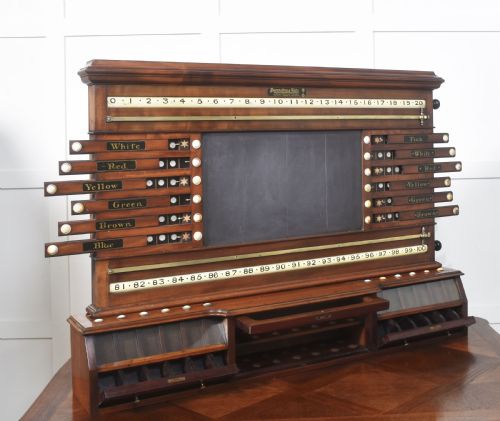
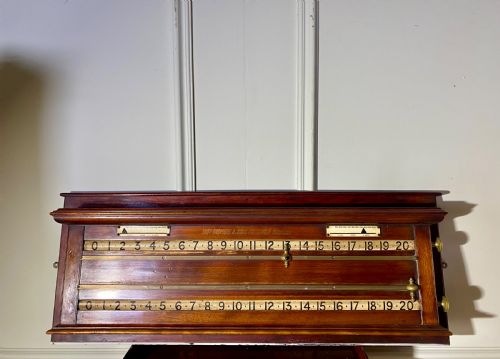
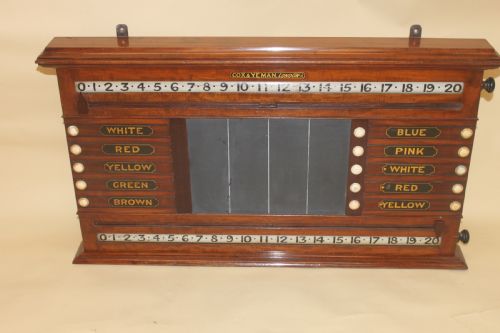
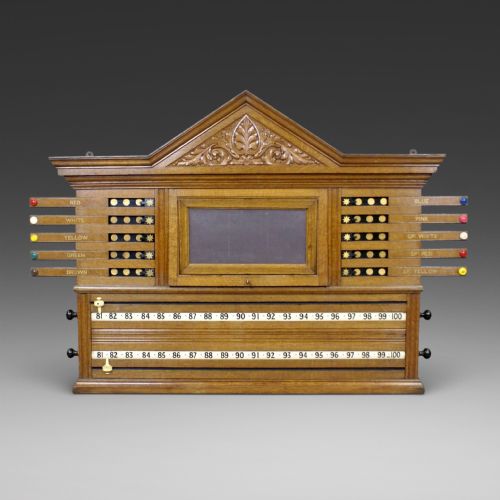
These Victorian life pool boards are timber and brass tally markers for nineteenth-century parlour games, built to track complex scoring systems.
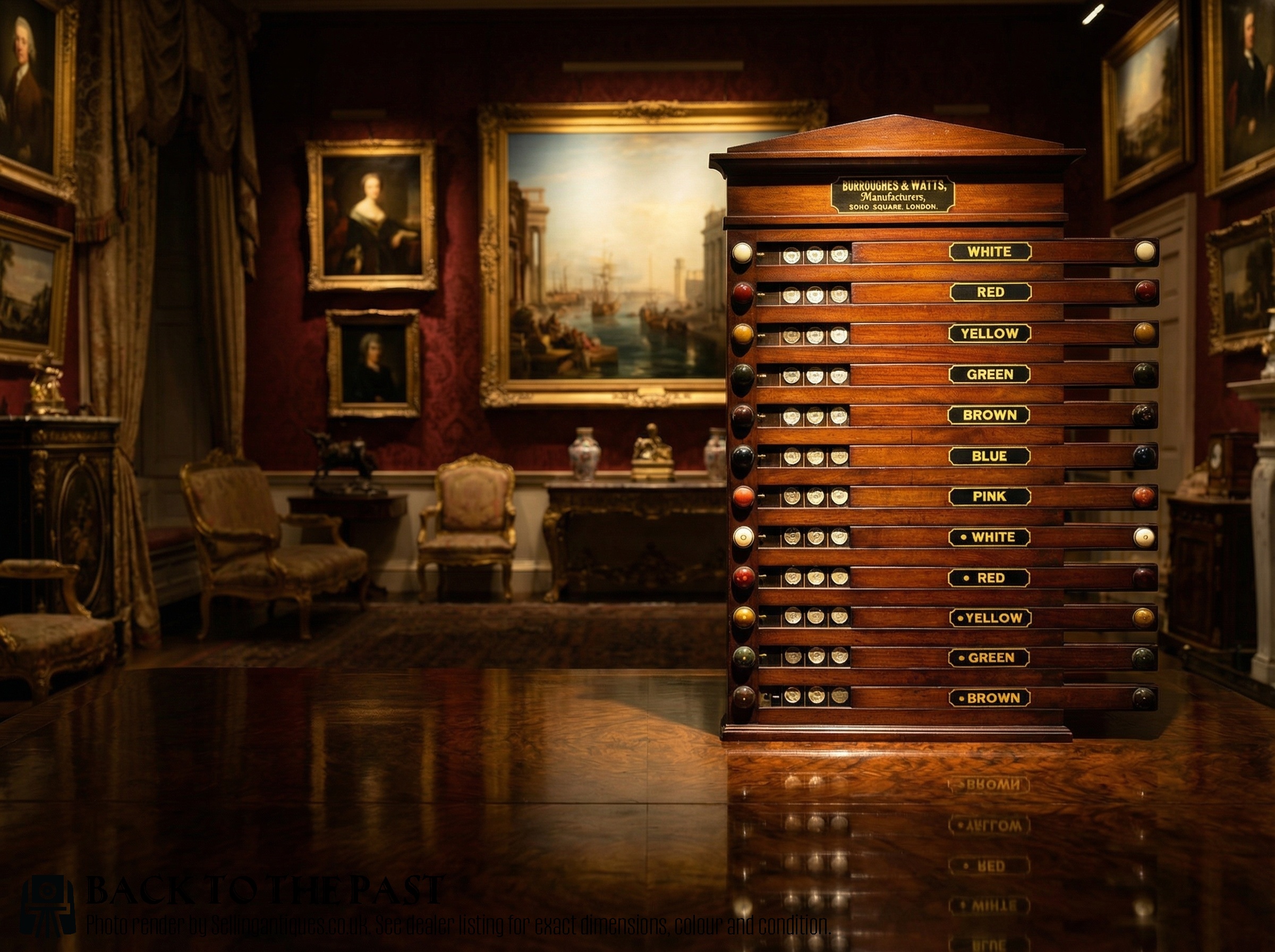
Victorian Life Pool Board
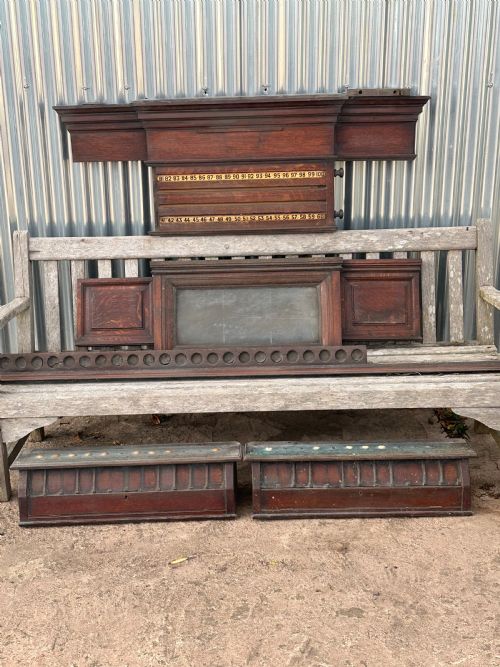
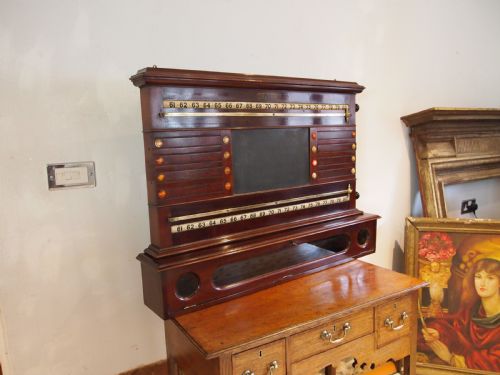
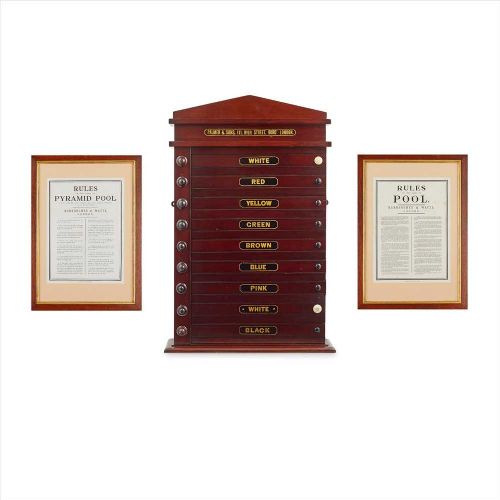
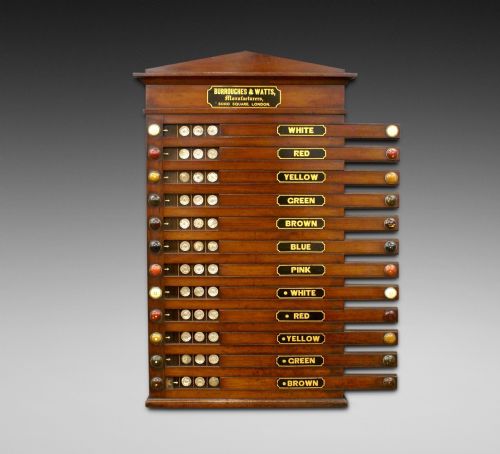
A victorian life pool board is a specialised wooden marker designed for tracking scores in nineteenth-century parlour and club cue sports. These pieces range from simple wall-mounted mahogany or oak panels to elaborate cabinets housing sliding indicators, markers, and rollers.
The versions most commonly met on this page date from the nineteenth century, spanning the Victorian and Edwardian eras. They serve both a practical function in the games room and a decorative purpose as substantial wall furniture.
How they were made
Maker workshops built these scoreboards using dense hardwoods such as mahogany and oak as the primary carcass and panel materials. These timbers provided the structural stability required for wall mounting and daily manipulation of sliding markers.
Brass fittings, slate inserts, and bone pointers form the mechanical sliding elements fixed to the timber faces. Paper labels or score sheets occasionally complement the wooden rollers and brass pins to record intricate game tallies.
Some nineteenth-century life pool boards include integrated spaces for prints of legendary players like Joe Davis.
What varies in quality
Quality rests upon the complexity of the scoring mechanics and the quality of the timber selection. Finer examples incorporate substantial oak or figured mahogany cabinets with complete sets of original brass runners, bone pointers, and slate detailing.
Workshop attribution also separates standard production items from superior pieces. Boards bearing the stamps or plates of notable makers command greater interest through finer carving, superior joinery, and intact proprietary scoring layouts.
Orme & Sons Manchester·Thurston & Co·Cox & Yeman London·Burroughes and Watts
The Victorian Life Pool Board Glossary
- Life pool
- A variation of cue sports popular in the nineteenth century where players retain lives until eliminated. Scoreboards designed for this game include specialised tracks for each participant.
- Scoreboard
- A wall-mounted timber panel featuring sliding pointers or rollers to track scores. These items formed standard equipment in nineteenth-century billiard rooms.
- Mahogany
- A durable, reddish-brown tropical hardwood utilised extensively for nineteenth-century cabinet work and games room accessories. Its stability suited it to pieces with sliding mechanical parts.
- Slate
- A fine-grained metamorphic rock occasionally incorporated into Victorian games accessories and scoreboards. It provided a stable, dark backing surface for chalk writing or brass fittings.
Victorian Life Pool Board: Frequently Asked Questions
How do you play life pool?
Life pool is a nineteenth-century cue sport where each participant starts with a set number of lives represented on the scoreboard. Players lose a life when an opponent pockets their cue ball or commits a foul.
The game continues until only one player remains with active lives on the board. The mechanical sliding markers track these remaining lives throughout the match.
Where were these boards mounted?
These scoreboards were mounted on the walls of billiard rooms in large country houses, gentlemen's clubs, and commercial establishments. Their prominent placement allowed players and spectators to monitor the game state easily from across the room.
Because they were fixed to walls, most surviving examples retain sturdy hanging brackets or screw holes integrated into their timber frames.
How do I care for the wood?
Maintenance requires keeping the timber away from direct heat sources and extreme humidity fluctuations to prevent warping or splitting. Regular dusting with a dry, soft cloth preserves the finish of the mahogany and oak surfaces.
Avoid using modern liquid polishes that can build up a residue around the brass fittings and sliding bone pointers.
How do I date a scoreboard?
Dating relies on stylistic clues, timber choice, and mechanical construction methods evident in the piece. Victorian examples often feature heavy oak or mahogany frames with maker stamps from prominent London or Manchester firms.
Edwardian boards tend to show lighter oak construction and refined decorative cabinet work corresponding to the turn of the twentieth century.