






Vintage Pool Scoreboard
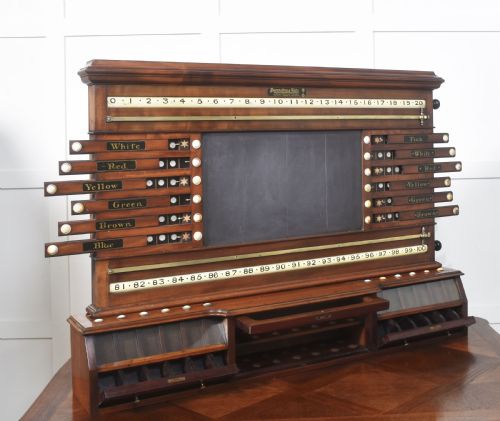
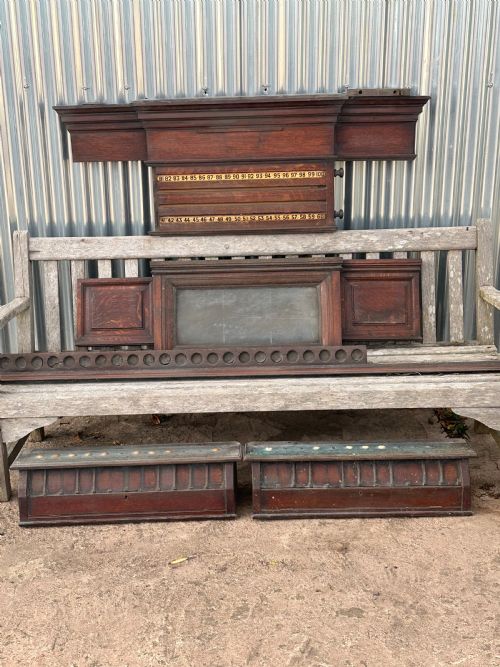
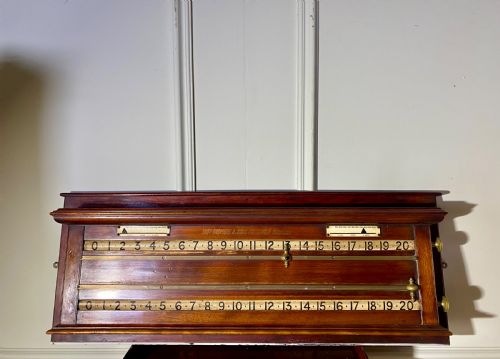
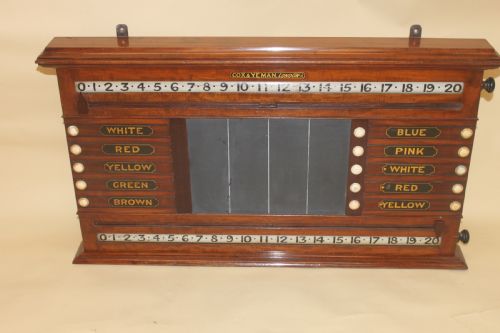
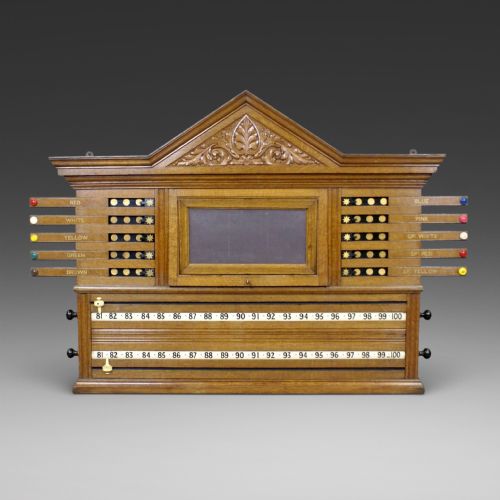
These vintage pool scoreboard pieces are timber and brass games room scoring cabinets designed to keep track of traditional cue sports.
Vintage Pool Scoreboard
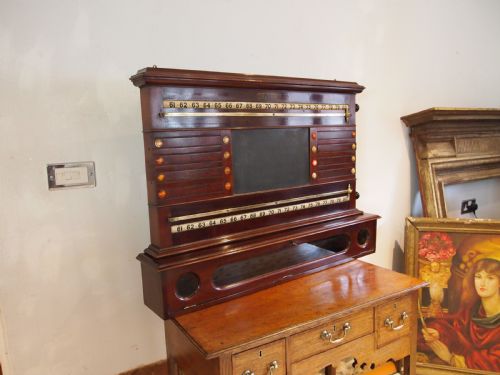
A vintage pool scoreboard is a wall-mounted wooden frame or cabinet fitted with sliding pointers, wooden rollers, and rotating dials to record the scores for billiards, snooker, and pool. When you search for a vintage pool scoreboard, you encounter nineteenth-century and Edwardian examples built by specialist makers to service the British pub and billiard room trade.
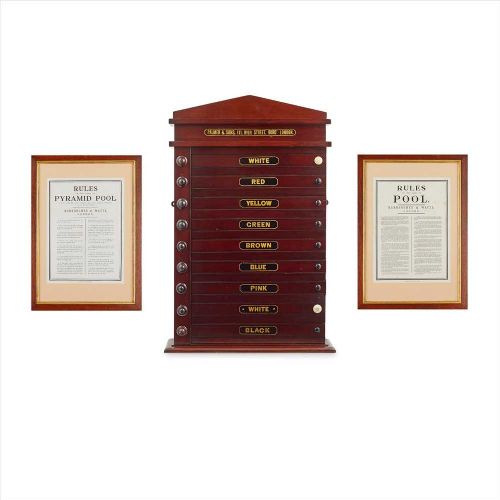
The pieces on this page are predominantly constructed from mahogany or oak, featuring brass pointers and numeric scales mounted on wooden backboards or enclosed within glazed cabinets. These scoreboards range from simple linear sliding markers to large scoring cabinets complete with storage compartments for chalk, markers, and rule books.
Most items hail from the Victorian and Edwardian eras, reflecting the domestic and club popularity of cue sports during the nineteenth and early twentieth centuries. Surviving specimens demonstrate the standard scoring configurations required for games such as life pool, billiards, and snooker.
Construction and materials
Makers utilised dense hardwoods such as mahogany, oak, and English walnut to build the primary backboards and enclosing cabinets. These timbers provided the structural stability needed to support sliding mechanisms and heavy brass components over decades of regular use.
Functional details rely on contrasting materials, incorporating brass for sliding pointers, runners, and hanging brackets, alongside bone, ivory, or turned wood for small rolling indicators and pointer knobs. Glazed doors on cabinet variants occasionally use bevelled glass to protect the internal paper score cards or specialist dials.
Listings feature eighteenth and nineteenth-century timbers including mahogany, oak, and English walnut paired with brass and bone fittings.
Judging the quality
Quality in a scoreboard rests upon the integrity of the timber framing and the precision of the mechanical sliding parts. Superior examples exhibit tightly joined cabinet work, well-seasoned hardwoods that resist warping, and cast brass fittings that move smoothly along their tracks.
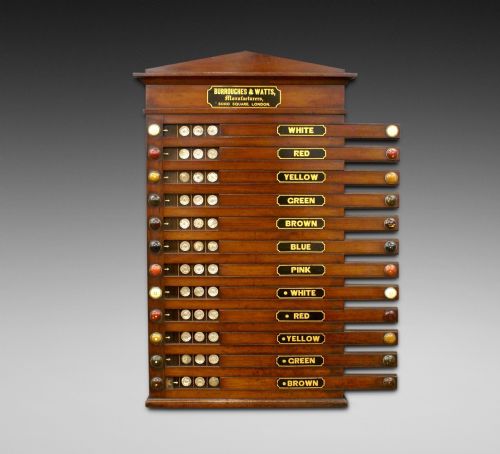
Design complexity further distinguishes the range, moving from plain linear backboards with basic wooden pointers to substantial walnut and oak cabinets featuring integrated storage cupboards and detailed maker plaques. The presence of original maker signatures and complete, matching brass hardware elevates the standing of an individual board.
Orme & Sons Manchester·Thurston & Co·Cox & Yeman London·Burroughes and Watts·Palmer & Sons
The Vintage Pool Scoreboard Glossary
- Life pool
- A variation of pool where players receive lives represented by coloured balls, requiring specialist scoring rows on the board. Scoreboards designed for this game often feature additional sliding dials or rows of indicators.
- Scoring cabinet
- A wall-hanging wooden enclosure with doors that protect the scoring mechanism and store cue room accessories. These units combine functional tally counters with decorative woodwork.
- Sliding pointer
- A small brass or wooden indicator moved along a slotted track to tally the score. The fit of this pointer within its channel indicates the standard of manufacture.
Vintage Pool Scoreboard: Frequently Asked Questions
How do these scoreboards mount on walls?
Most scoreboards feature sturdy brass mounting brackets or pre-drilled screw holes integrated directly into the heavy wooden backboard or cabinet frame.
Because these pieces utilise dense timbers like mahogany and oak, secure fixings into wall studs or solid masonry are necessary to support the weight safely.
Can these scoreboards be used for modern games?
The numerical dials and sliding pointers function precisely as they did in the nineteenth century, accommodating standard scoring requirements for cue sports.
While rules have evolved, the numeric tracks on these boards readily track points for modern snooker and casual pool games.
How do I date a Victorian scoreboard?
Dating relies on timber selection, style of brass hardware, and any maker stamps or paper labels preserved on the cabinet back.
Victorian pieces frequently display rich mahogany tones and maker signatures from London or Manchester firms active during the second half of the nineteenth century.
What is the difference between a board and a cabinet?
A board consists of an open wooden panel with exposed tracks and pointers mounted flat against the wall.
A cabinet encloses the scoring mechanism behind lockable wooden doors, frequently offering extra shelving and storage space for billiard accessories.