


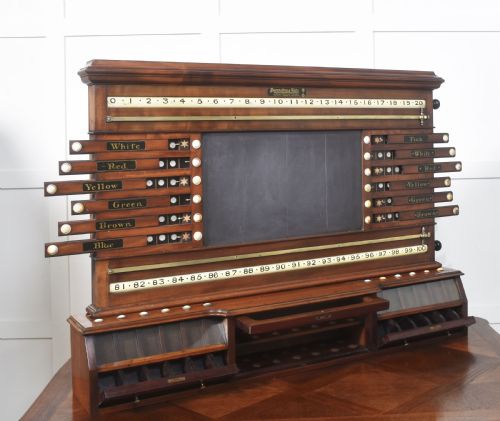
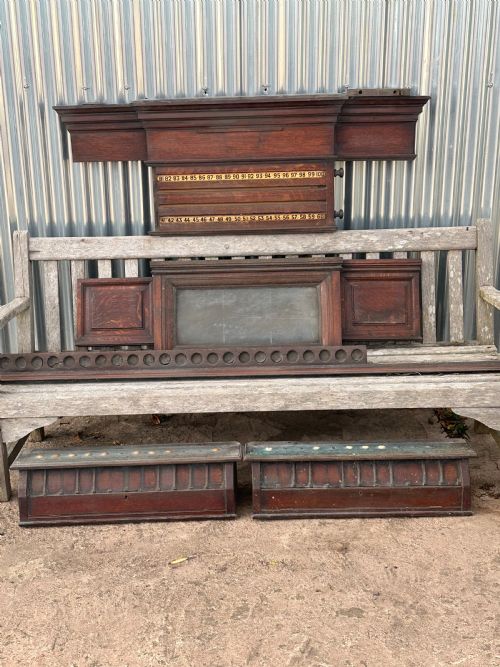

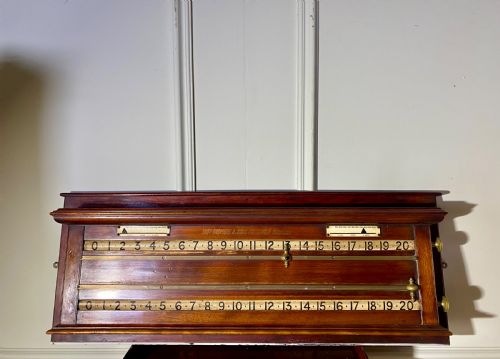

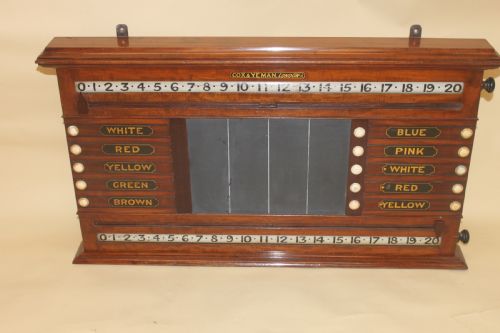


Edwardian Billiards Board
These Edwardian billiards board pieces are the timber scoreboards and cabinets that keep tally in the games room, built to last a century.
Edwardian Billiards Board
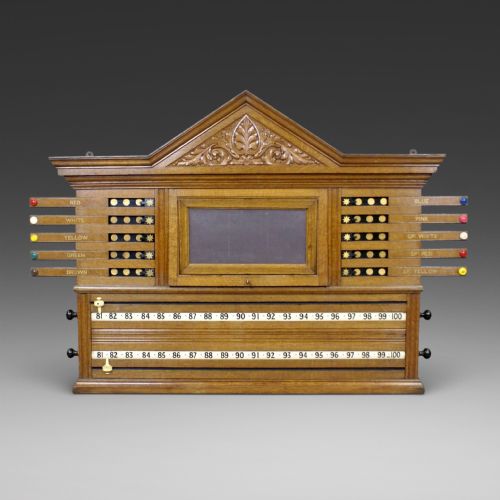
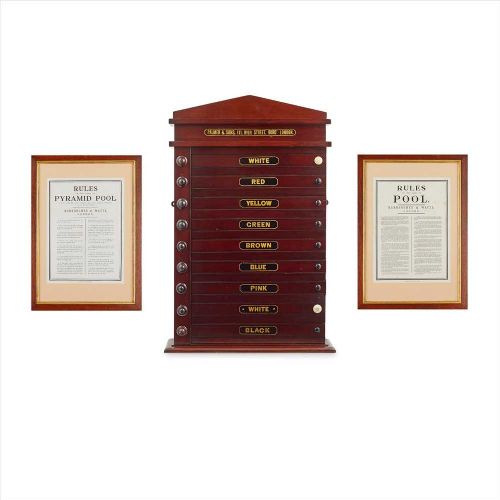
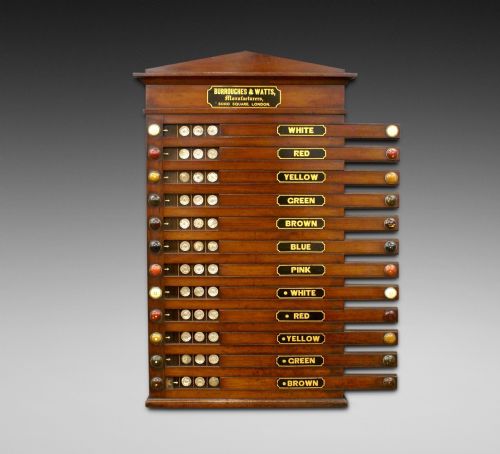
When you search for an Edwardian billiards board, you are looking at timber scoreboards and score cabinets designed to track scores for billiards, snooker, and pool. The examples you meet on this page span the Victorian and Edwardian periods, appearing in forms from simple wall-hanging scoreboards to large glazed score cabinets with dedicated marker rollers and sliding indicators.
The dominant timbers in these pieces are mahogany and oak, alongside English walnut. Makers built them to hang on the games room wall or sit within a dedicated billiard room, often combining brass dials, bone markers, and glass panels into the primary wooden housing.
While the search specifies the Edwardian era, the listings include Victorian pieces from the nineteenth century alongside Edwardian examples. These boards range from modest single-game markers to complex scoreboards fitted for life pool, snooker, and billiards on a single panel.
How they were made
Makers constructed these boards primarily from solid mahogany, oak, and English walnut, selecting dense hardwoods capable of supporting brass fittings and heavy slate or timber components. Cabinet makers joined the main bodies with traditional housing joints and secure backboards to prevent warping in rooms with fluctuating temperatures.
The functional elements relied on brass for sliding pointers, numbered rollers, and hinge hardware, while bone or ivory often appeared on the numerical markers and pointers. Glazed doors on cabinet versions used bevelled glass set within rebated wooden frames.
Green baize surfaces occasionally appear inside cabinet sections or behind markers, echoing the cloth of the billiard table itself. French polishing finished the external mahogany and walnut surfaces, sealing the grain and highlighting the natural figure of the timber.
What varies in quality
Quality in these scoreboards rests on the weight of the timber and the precision of the mechanical brass fittings. Superior boards feature robust mahogany or oak housings with smooth sliding brass rods and crisp, legible numbers carved or painted onto bone and wood.
The distinction between a standard wall board and a top-tier piece lies in the complexity of the cabinet work and the presence of maker attribution. Large score cabinets in figured walnut with glazed doors, multiple game indicators, and original maker plates represent the upper end of the range.
Orme & Sons Manchester·Thurston & Co of London·Burroughes and Watts·Palmer & Sons
The Edwardian Billiards Board Glossary
- Scoreboard
- A wall-mounted wooden board fitted with sliding indicators, rollers, or pointers to record the score during a cue sport. These boards range from simple single-game markers to elaborate multi-game panels.
- Life pool
- A variation of pocket billiards where players start with a specific number of lives represented on the scoreboard. The board includes dedicated sliding markers to track remaining lives.
- Baize
- A coarse woollen woven fabric, traditionally green, used to line games cabinets and associated billiard accessories. It matches the cloth found on the bed of a billiard table.
- Score cabinet
- An enclosed wooden wall unit with doors, frequently glazed, that houses the scoring mechanism alongside storage for chalk, rules, and prints. These larger units combine utility with display.
- Sliding pointer
- A brass or bone indicator mounted on a rod or slot that moves along a graduated scale to show the current score. Smooth operation of these pointers indicates high mechanical quality.
Edwardian Billiards Board: Frequently Asked Questions
How do you hang a heavy score cabinet?
These large timber cabinets require secure fixing directly into wall studs or masonry using heavy-duty brackets. The weight of the solid oak or walnut housing demands stable wall support.
Ensure the mounting height places the sliding markers at eye level for players standing by the table during a match.
What is the difference between a pool and a snooker board?
Snooker boards feature simple linear scales to track high numerical totals required for breaks and frames. Life pool and general pool boards include distinct rows or dials to track individual players and remaining lives.
Many Victorian and Edwardian boards combine multiple scales on a single panel to accommodate several cue sports.
How do I care for the wood and brass?
Maintain the timber surfaces with a traditional beeswax polish applied sparingly and buffed with a soft cloth. Avoid modern liquid sprays that can damage the antique French polish.
Clean brass sliding rods and markers with a dry cloth to prevent tarnish without stripping the aged patina from the metal.
Can I date a scoreboard without a maker mark?
Dating relies on timber choice, hardware style, and construction methods. Mahogany and heavy brass fittings point to the nineteenth century, while lighter oak and specific cabinet designs align with the Edwardian period.
The complexity of the scoring options also indicates the era, as multi-game boards became more common towards the end of the nineteenth century.