






Billiard Scoring Board
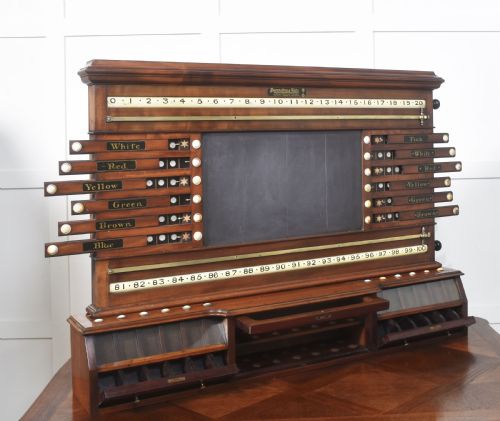
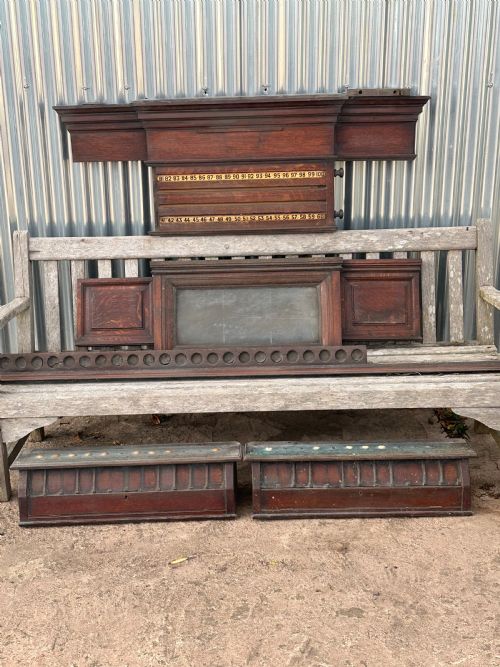
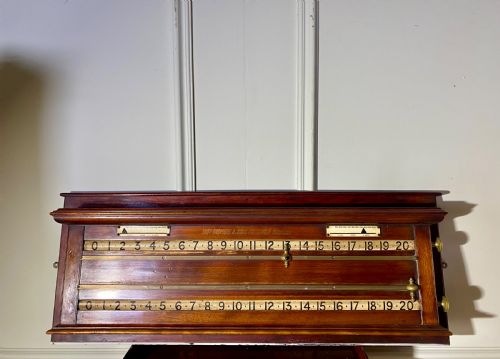
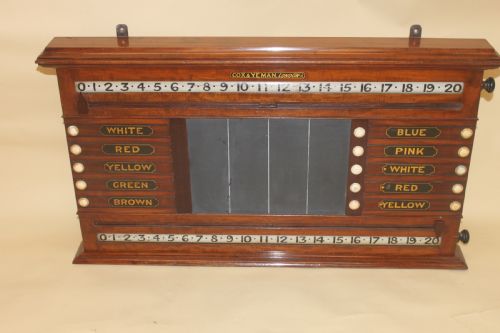
These billiard scoring board examples are practical games room furnishings from the nineteenth and early twentieth centuries, prized for their traditional woodwork and sliding markers.
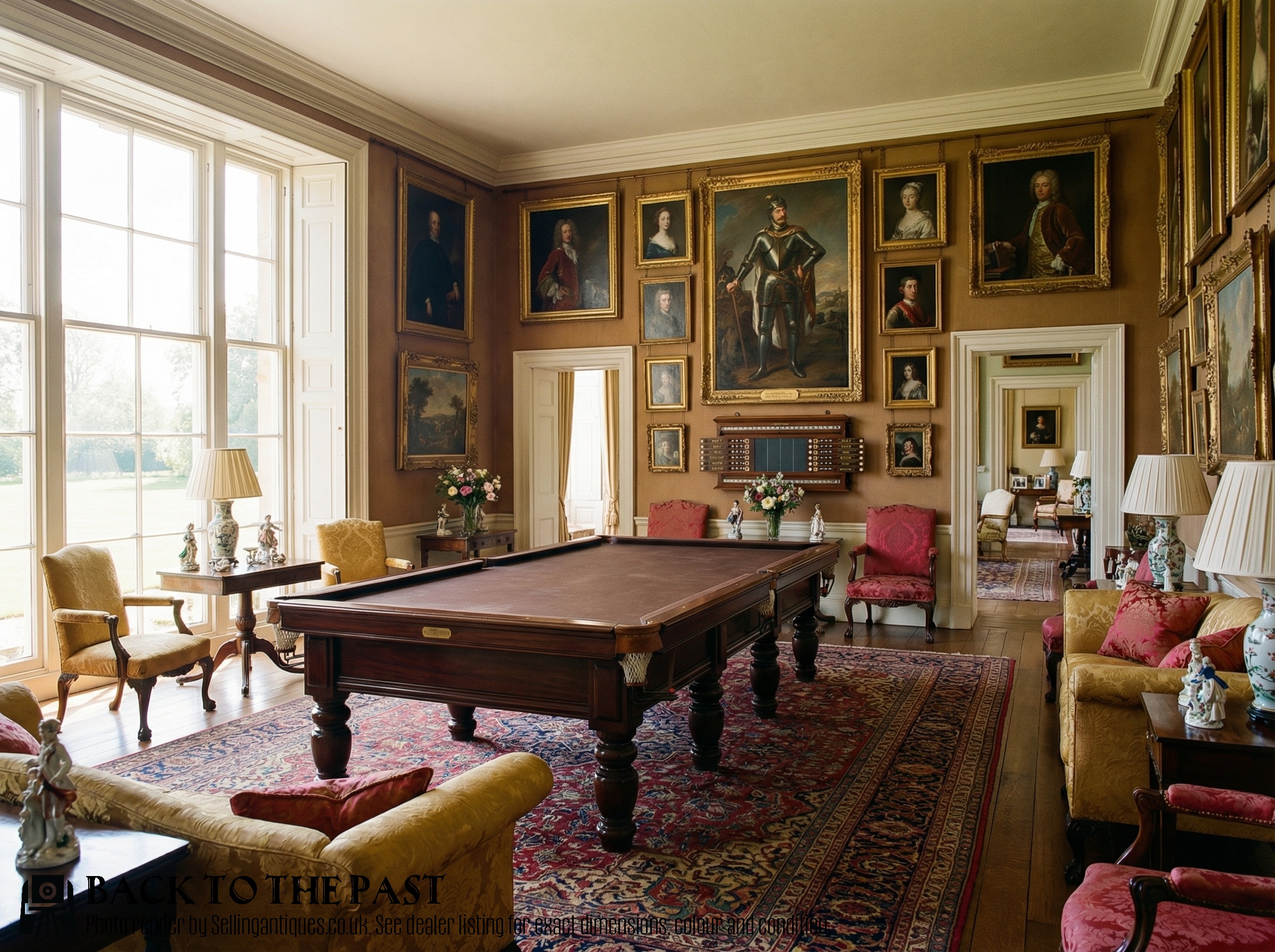
Billiard Scoring Board
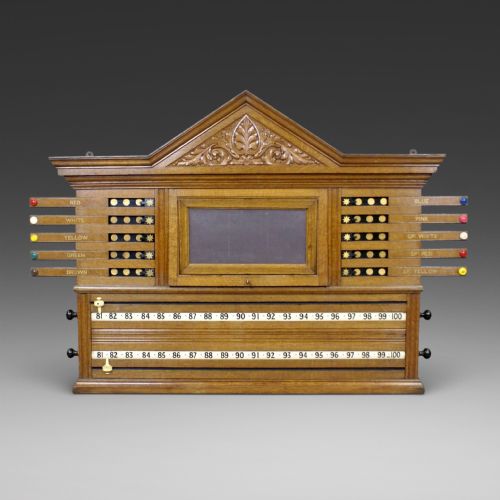
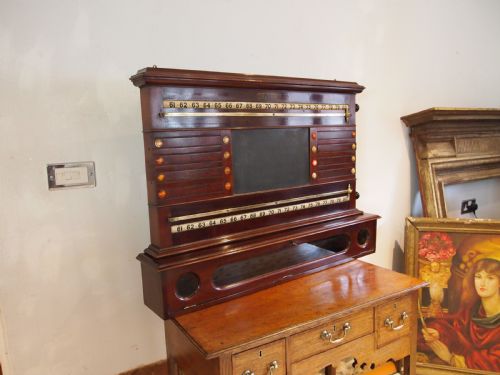
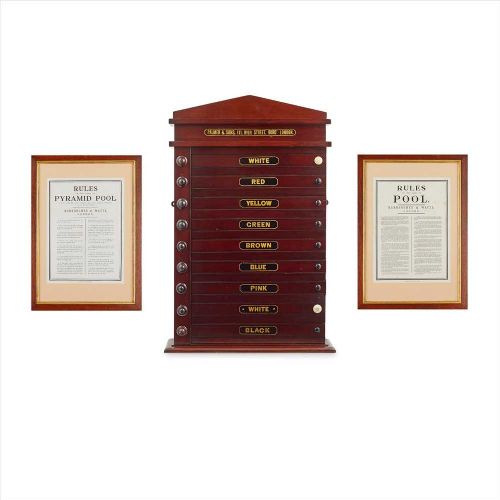
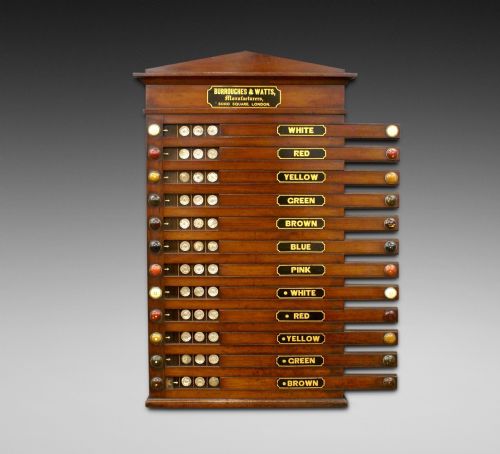
A billiard scoring board is a wall-mounted wooden panel or enclosed cabinet designed to track points for billiards, snooker, and pool during matches. When you search this phrase, you encounter large scoreboards and score cabinets originating from the Victorian and Edwardian eras.
Many items incorporate specialised scoring tracks for games like Life Pool alongside standard snooker markers. Makers configured these boards to accommodate different variations of cue sports played on full-sized tables.
How they were made
Carpenters constructed these boards primarily using dense hardwoods such as mahogany, oak, and English walnut. These timbers provided the structural stability required for wall mounting and daily manipulation in busy games rooms.
Makers integrated contrasting materials for readability and tactile function, utilising bone, ivory alternatives like celluloid, and brass for the sliding pointers, numbers, and dials. Glazed cabinets often housed scoreboards alongside print displays.
Surfaces received traditional polishing techniques to highlight the natural grain of the timber while withstanding the atmosphere of a Victorian billiard room.
Listings feature boards constructed from mahogany, oak, and English walnut, spanning the Victorian and Edwardian periods.
What varies in quality
Quality in a billiard scoring board depends on the complexity of the scoring mechanisms and the calibre of the timber used in its construction. Examples by recognised makers exhibit superior joinery and more elaborate cabinetry.
The choice of secondary materials separates standard boards from exceptional pieces, with finely turned brass markers, bone indicators, and detailed panel work marking out better workshop production.
Cabinet formats that incorporate storage space or decorative carvings represent a higher tier of games room accessory than simple flat boards.
Orme and Sons Manchester·Thurston and Co of London·Cox and Yeman London·Burroughes and Watts·Ashcroft Liverpool
The Billiard Scoring Board Glossary
- Life Pool
- A variation of cue sport where each player starts with a set number of lives. Scoreboards included dedicated markers to track remaining lives for multiple participants.
- Celluloid
- An early semi-synthetic plastic material utilised for numerical markers and pointers on boards from the later nineteenth century onwards.
- Pointer
- The sliding indicator or brass hand moved along a numbered track to record scores during a frame.
- Score Cabinet
- An enclosed wall fixture featuring doors that open to reveal the scoring board within, often incorporating space for prints or accessories.
- Slate
- A dense stone sometimes incorporated into games room furnishings, occasionally referenced in association with the heavy tables these boards accompanied.
Billiard Scoring Board: Frequently Asked Questions
How do you mount a billiard scoring board?
These boards were originally built to hang securely on heavy wall fixings to withstand the constant movement of sliding markers during matches.
Modern hanging requires strong brackets or screw points matched to the substantial weight of the hardwood backing.
What games do these scoreboards accommodate?
Most examples track traditional cue sports including English billiards, snooker, and various pool formats.
Complex boards feature multiple rows for tracking standard scores alongside specialised games like Life Pool.
How do you distinguish Victorian from Edwardian boards?
Victorian boards often display darker mahogany timbers and heavier, more ornate architectural mouldings.
Edwardian pieces frequently utilise lighter oak finishes and cleaner decorative lines typical of early twentieth-century interiors.