





Edwardian Billiard Scoreboard
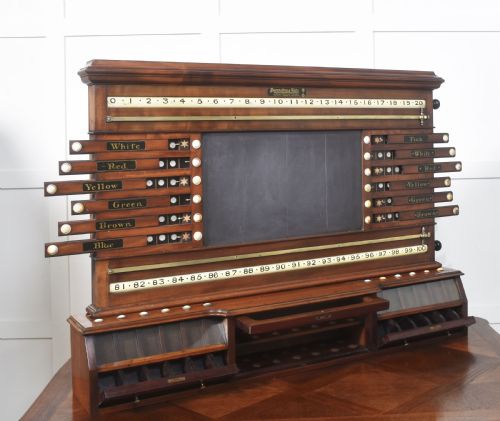
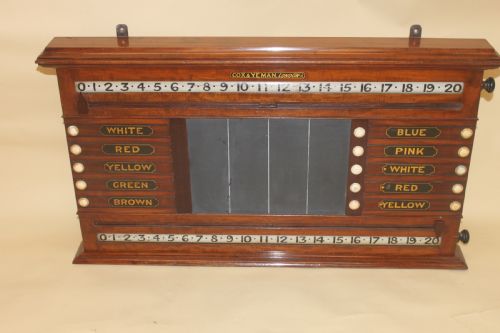
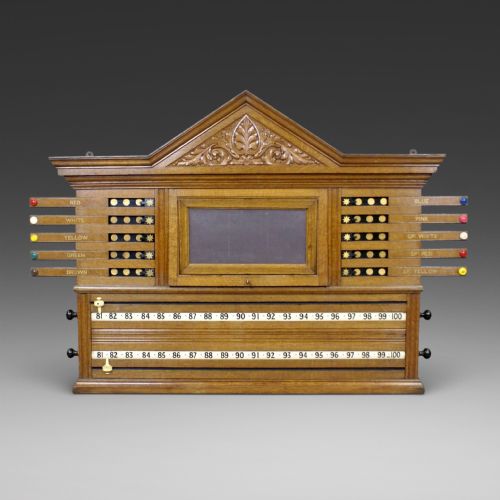
An edwardian billiard scoreboard brings functional games room history into a modern interior, offering sliding markers and polished timber construction.
Edwardian Billiard Scoreboard
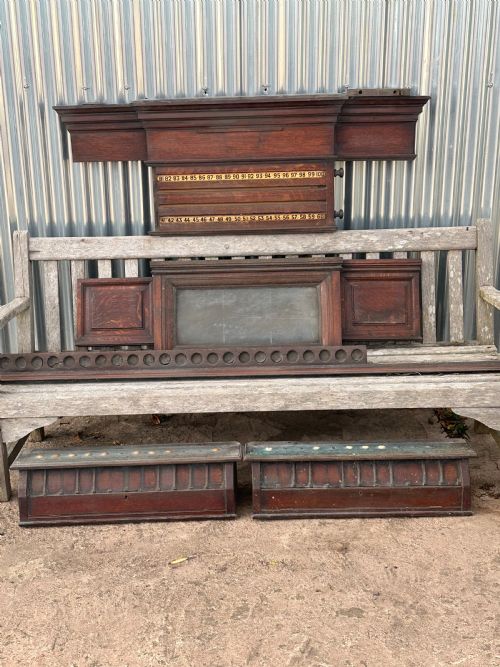
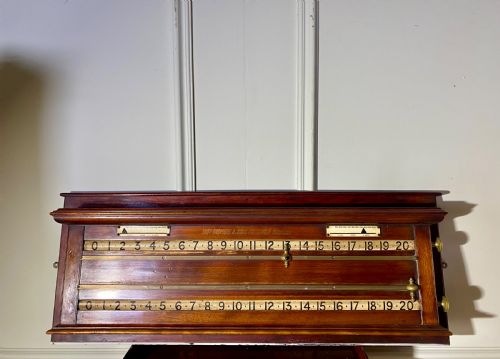
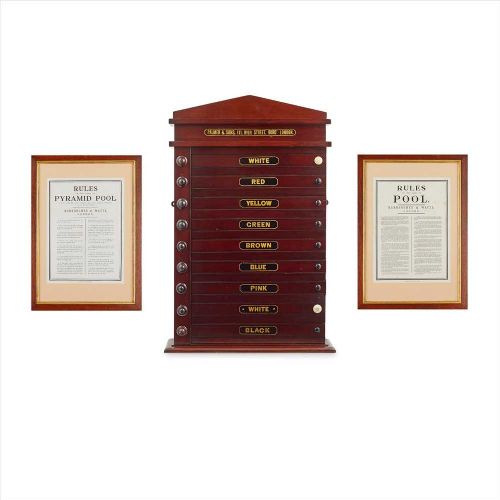
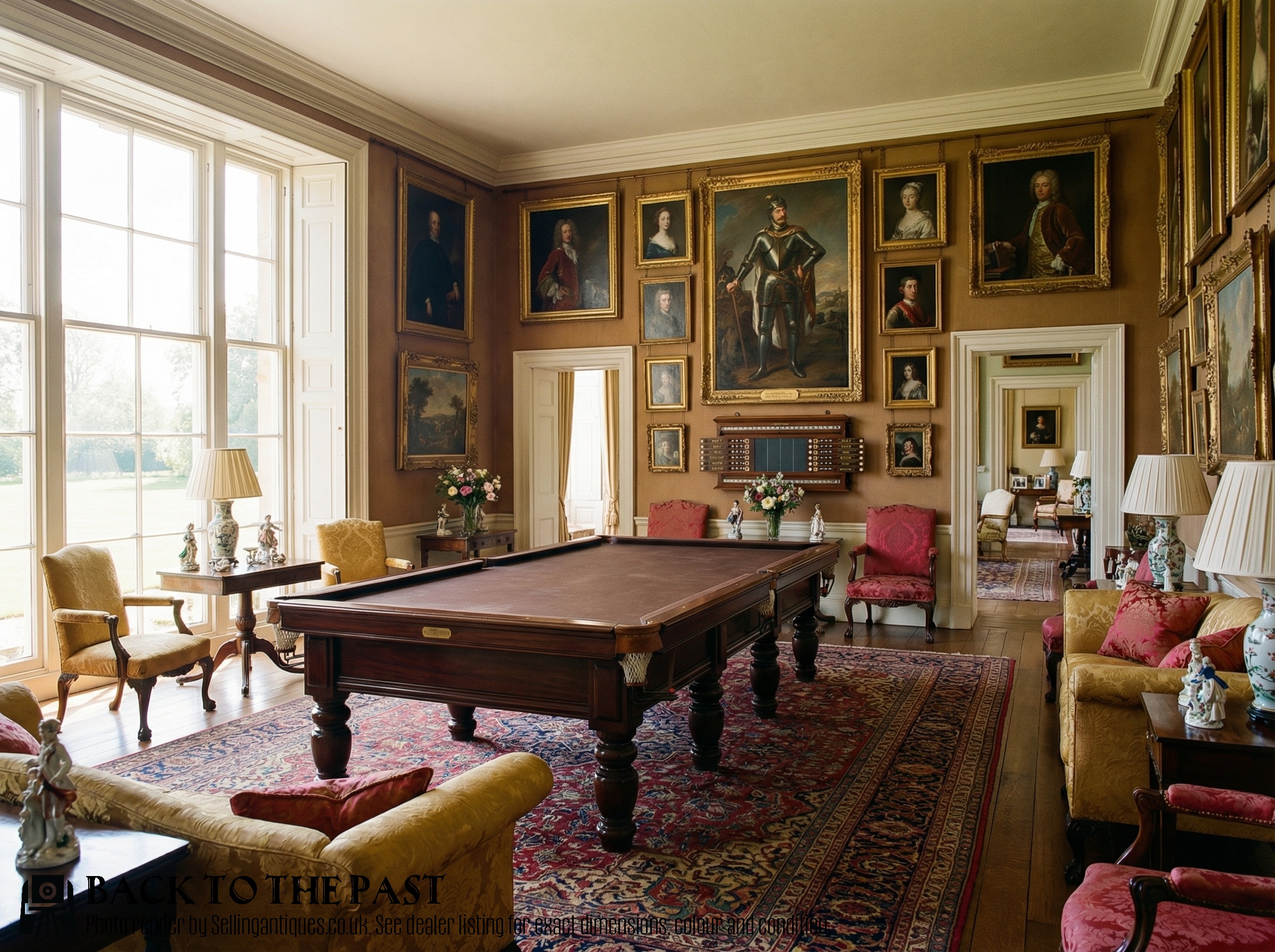
An edwardian billiard scoreboard is a dedicated wall-mounted or cabinet-style marker designed to track scores for games like snooker, billiards, and pool. These pieces originate primarily from the Edwardian period and the wider nineteenth century, reflecting the popularity of home and club cue sports.
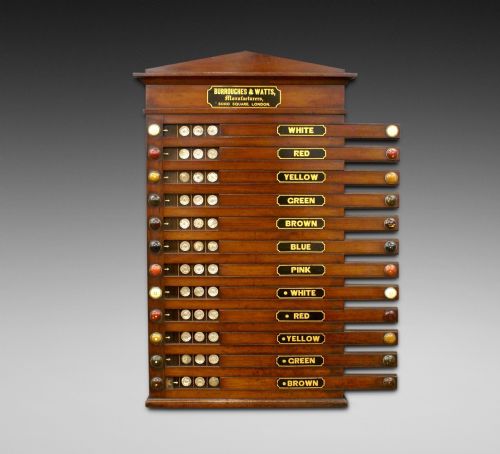
The most common formats on this page include mahogany, oak, and walnut boards fitted with brass sliding pointers, revolving scoring rollers, or miniature slate markers. Many examples combine simple scoring panels with larger cabinets that incorporate storage for chalk and accessories.
Materials and construction
Makers utilised solid and veneered timbers such as mahogany, English oak, and walnut to build the primary boards and cabinets, providing a sturdy framework for daily use in games rooms. These wooden housings were frequently polished to a deep finish that highlighted the natural grain.
Several boards include dedicated rows for life pool, reminding us that Victorian players enjoyed elaborate games that involved losing lives rather than just points.
Markers of quality
The distinction between standard boards and superior examples lies in the complexity of the scoring mechanisms and the cabinetry. Simpler models feature straightforward brass runners and wooden panels, whereas finer pieces take the form of substantial walnut or oak cabinets with carved detailing.
Quality is also evident in the materials used for the numerals and indicators, with bone or finely turned ivory-substitute markers demonstrating higher craftsmanship than painted substitutes. Maker attribution to established firms like Thurston or Burroughes and Watts further elevates the standing of a piece.
Orme and Sons·Thurston and Co·Burroughes and Watts·Palmer and Sons·Riley
The Edwardian Billiard Scoreboard Glossary
- Sliding pointer
- A small brass indicator that moves along a numbered track to tally points during a game. These pointers are typically mounted on horizontal brass rods.
- Life pool
- A variation of cue sports where players lose lives rather than accumulate standard points, requiring specialised scoring rows on the board.
- Scoring roller
- A revolving cylindrical drum marked with numbers, allowing players to rotate the cylinder to tally higher game scores without separate sliding markers.
- Celluloid
- An early semi-synthetic plastic material frequently utilised for inset score numbers and markers on late nineteenth and Edwardian boards.
Edwardian Billiard Scoreboard: Frequently Asked Questions
How do you mount an antique scoreboard?
These boards generally feature original brass hanging brackets or screw holes integrated into the timber frame for wall attachment.
Given the substantial weight of solid mahogany or oak cabinets, secure fixings into wall studs or appropriate masonry anchors are essential to support the piece safely.
Can these scoreboards be used for modern snooker?
Most boards include standard scoring tracks that accommodate traditional snooker, billiards, and pool point requirements.
The sliding markers and numbered rows function just as they did originally, making them practical for active games rooms as well as decorative displays.
How do I care for the wood and brass?
Routine maintenance involves dusting the timber surfaces and gently polishing the brass runners with a dry or lightly oiled cloth.
Harsh chemical cleaners should be avoided to protect the aged patina of the wood and the delicate finish on bone or celluloid markers.
What is the difference between a board and a cabinet?
A standard board is a flat panel designed strictly for tracking points, whereas a cabinet version includes enclosed storage space.
Cabinets often feature doors, shelving, or dedicated compartments to hold chalk, brushes, and other small accessories alongside the scoring tracks.