






Antique Games Room Board
These antique games room board pieces are practical furnishings for domestic play, bringing period craftsmanship into modern homes.
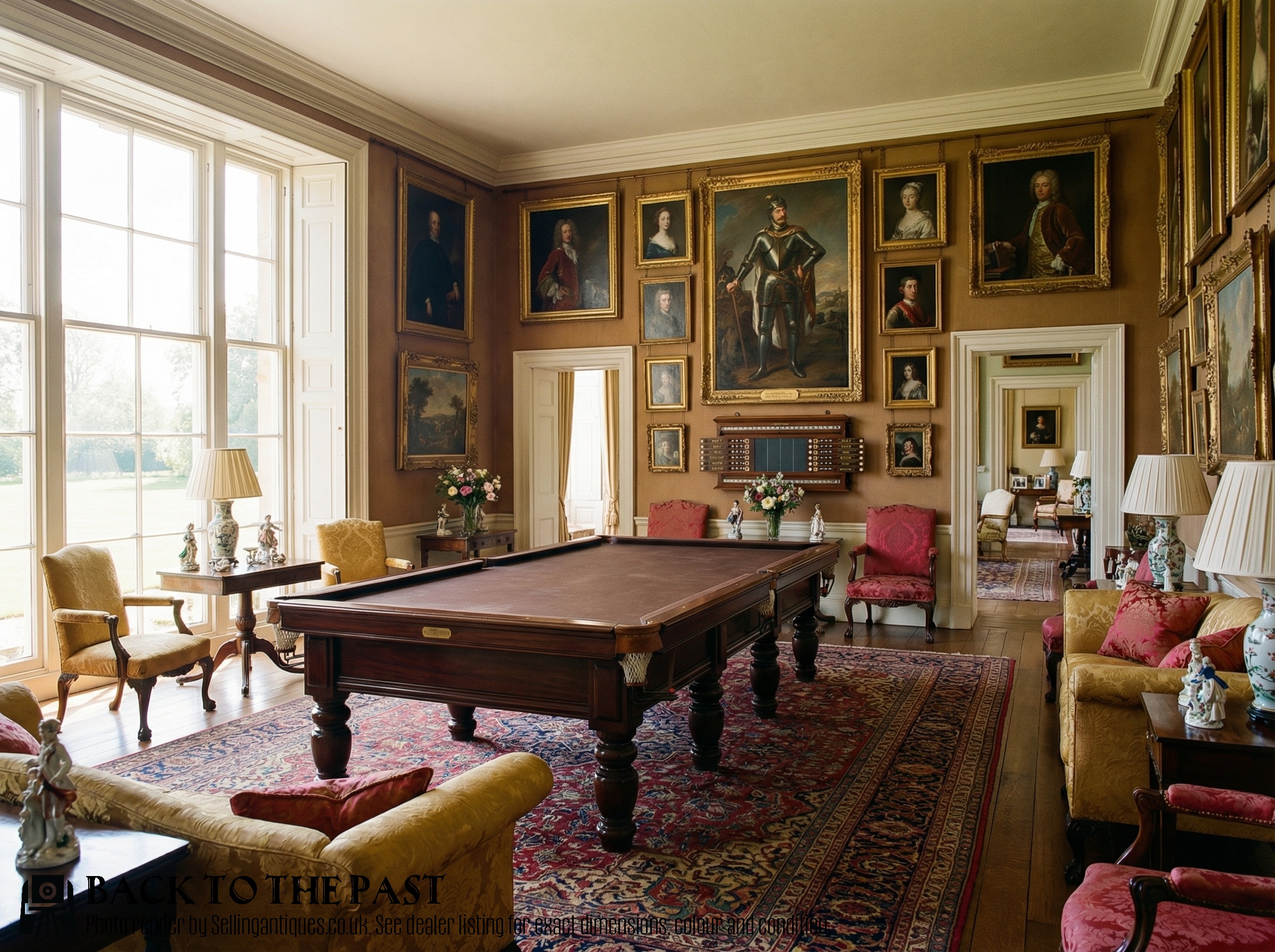
Antique Games Room Board
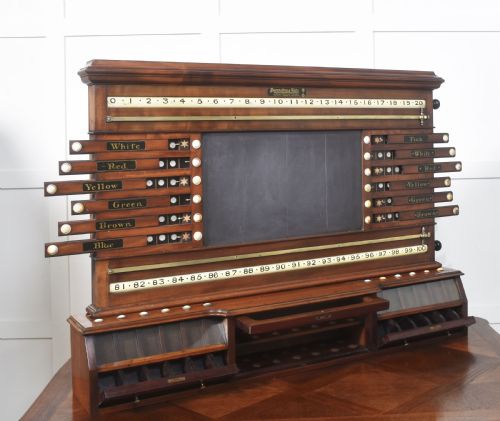
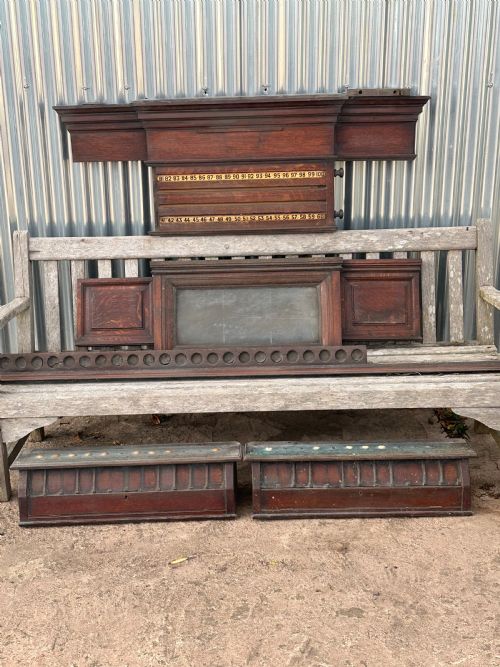
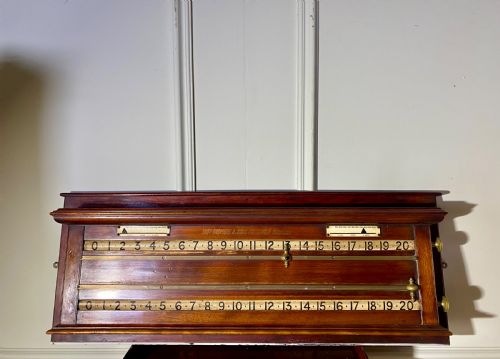
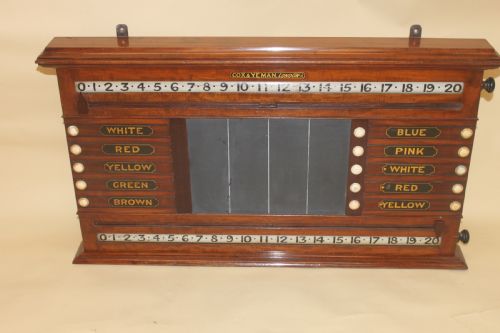
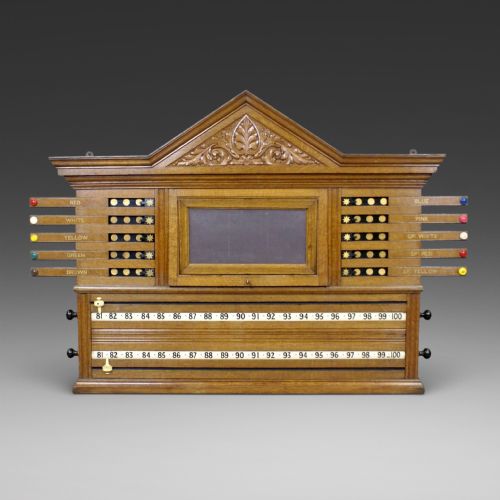
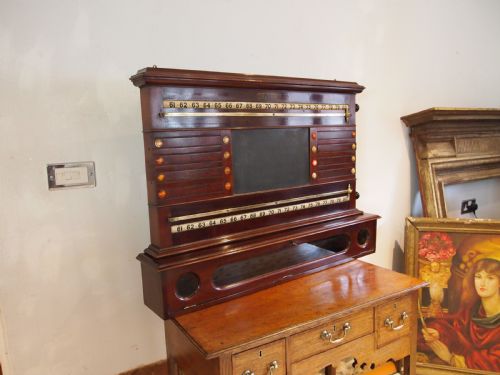
When searching for an antique games room board, collectors encounter scoreboards, cabinets, and folding boards designed for billiards, snooker, pool, and cribbage. The selection on this page consists predominantly of nineteenth century and Edwardian wall-mounted scoreboards and scoring cabinets.
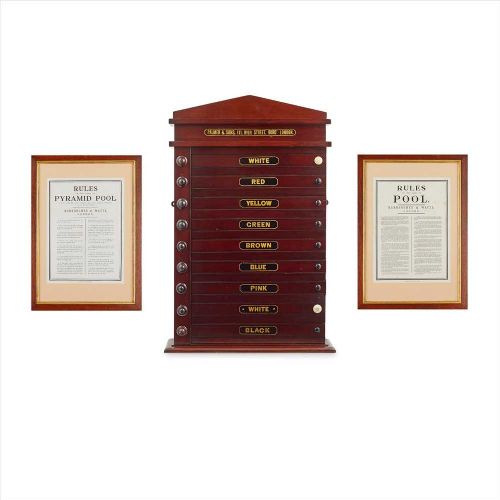
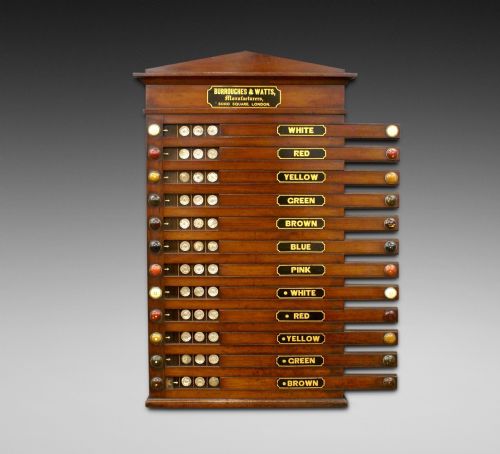
The dominant forms are timber scoreboards built to track scores for billiards, snooker, pool, and life pool. Alongside these utility boards, the evidence includes cribbage boards and folding chess sets with pieces and drafts.
Origins span the Victorian and Edwardian eras, utilising woods such as mahogany, oak, and walnut. Buyers meet both utilitarian club pieces and decorative domestic cabinets intended for private billiard rooms.
Materials and construction
Makers utilised dense hardwoods including mahogany, oak, and walnut to construct sturdy frames capable of supporting sliding markers and brass indicators. Slate and glass appear alongside bone components, providing durable surfaces and markers for frequent club use.
Cabinetmakers combined traditional timber framing with brass mechanisms and glazed panels to protect the scoring rollers and pointers. The integration of brass fittings into mahogany and oak bodies defines the structural build of these pieces.
Makers represented in the records include Thurston, Orme and Sons, Cox and Yeman, and Burroughes and Watts.
Judging quality and workmanship
The distinction between standard utility items and finer pieces lies in the choice of timber and the complexity of the cabinetry. Well-figured English walnut, substantial oak cases, and maker attributions elevate certain scoreboards above basic pine or plain mahogany examples.
Intricate carving, decorative brass work, and integrated storage cabinets indicate superior workshop output. The presence of original sliding markers, bone pointers, and maker signatures adds to the distinction of the piece.
Orme and Sons Manchester·Thurston and Co of London·Cox and Yeman London·Burroughes and Watts·Palmer and Sons
The Antique Games Room Board Glossary
- Scoreboard
- A wall-mounted timber board featuring sliding pointers or rollers used to track scores for cue sports. These devices were essential fixtures in nineteenth century billiard rooms.
- Cribbage board
- A board used to track points during the card game cribbage, typically featuring continuous tracks of small holes for pegs. Nineteenth century examples often utilised turned wood or bone.
- Life pool
- A variation of pool where players start with a specific number of lives, tracked on specialised scoreboards with dedicated revolving dials.
- Scoring cabinet
- An enclosed wall fixture combining score markers with storage space for billiard accessories, cue chalk, and rule books.
- Drafts
- An alternative historical term for checkers, often found stored alongside folding chess boards from the Edwardian period.
Antique Games Room Board: Frequently Asked Questions
How do I mount an antique scoreboard?
These wall-hung pieces require secure fixing to solid walls using appropriate brackets to support the substantial weight of the timber and brass mechanisms.
Ensure the mounting height places the sliding markers at a comfortable level for players using the room.
What woods were used for scoreboards?
Makers predominantly utilised English hardwoods such as mahogany, oak, and walnut to match the heavy furniture found in nineteenth century billiard rooms.
These timbers provided the structural stability required for wall-mounted cabinets and sliding pointer tracks.
How do I care for the timber?
Maintain the wood surfaces by applying appropriate wax polish periodically, avoiding excessive moisture or direct sunlight that might dry out the finish.
Brass pointers and markers benefit from gentle dusting to keep the sliding mechanisms functioning smoothly.
Are all scoreboards for snooker?
While many pieces accommodate snooker and billiards, others are configured for pool, life pool, or specific card games like cribbage.
Check the number of scoring rows and dials to determine which cue sports or games the board was built to track.