






Antique Snooker Board
An antique snooker board manages the game through sliding markers and rotating cylinders, bringing a distinct Victorian character to a games room.
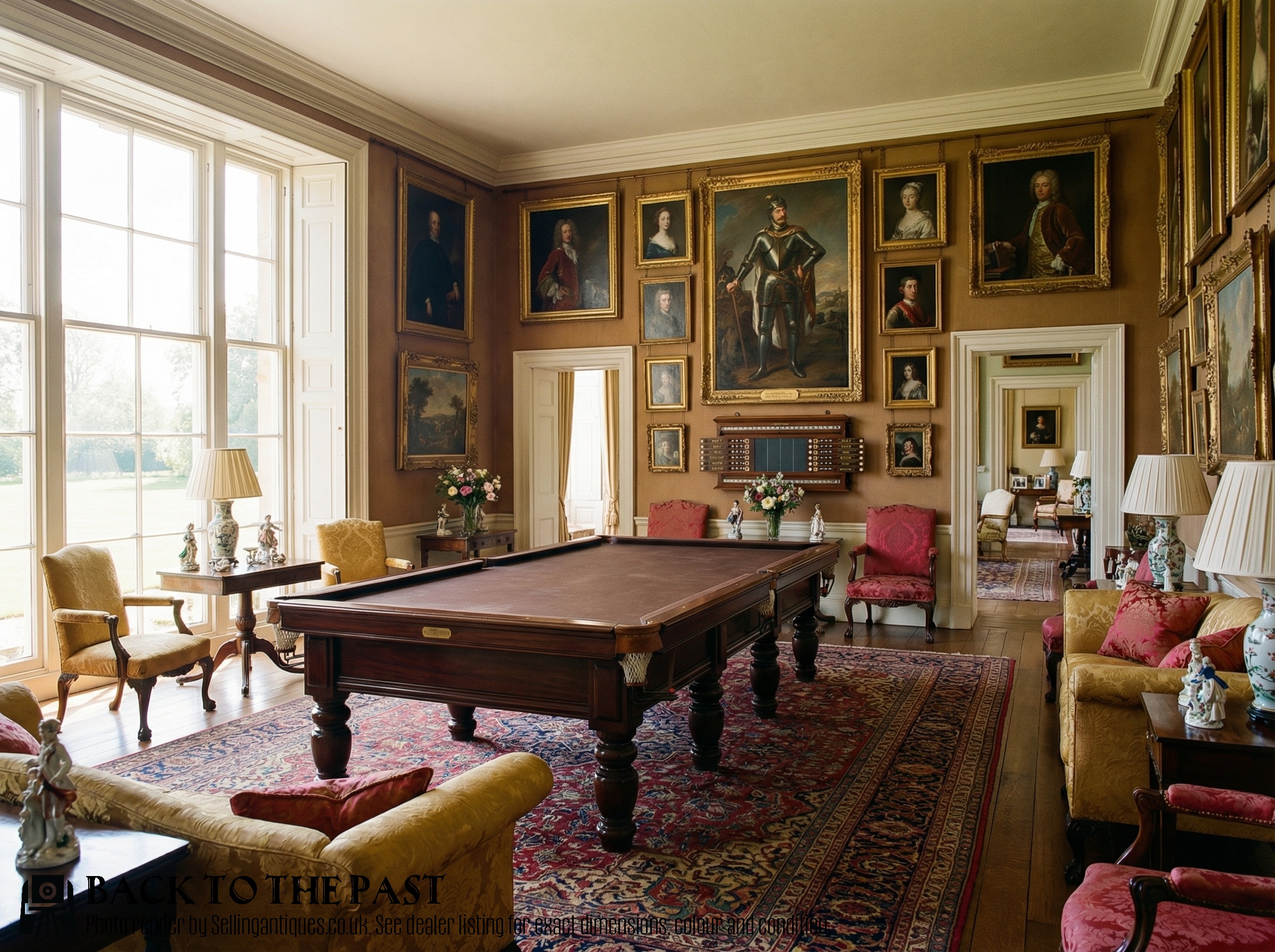
Antique Snooker Board
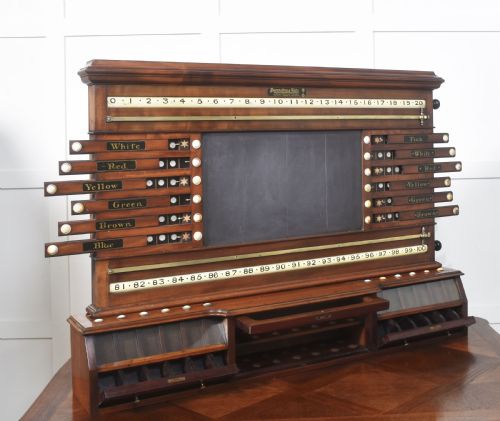
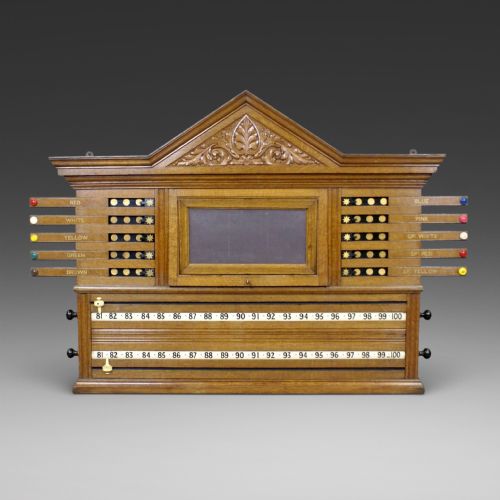
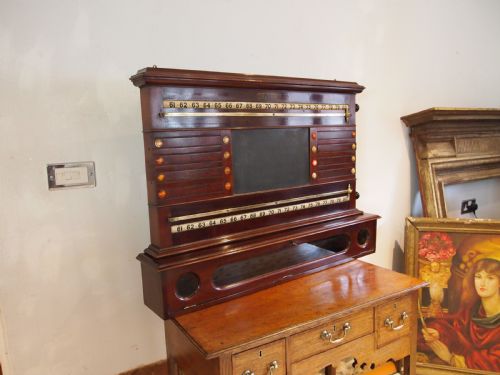
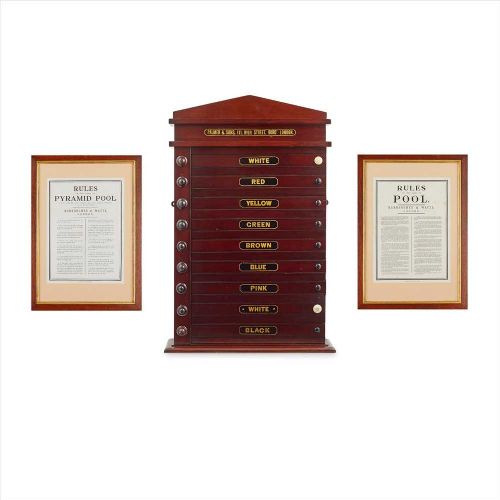
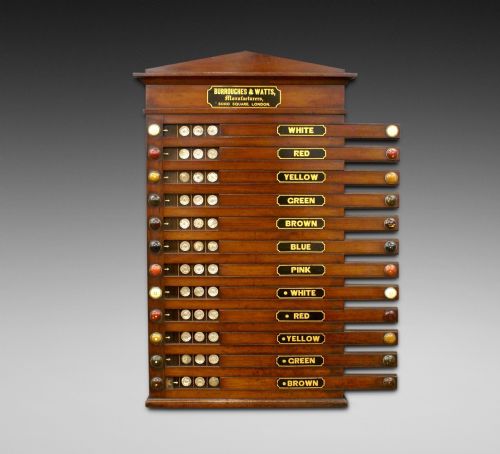
The antique snooker board category encompasses wall-mounted scoreboards and scoring cabinets designed for billiards, pool, and life pool. These pieces originate primarily from the nineteenth century and the Edwardian era, spanning the 1860s through to 1900.
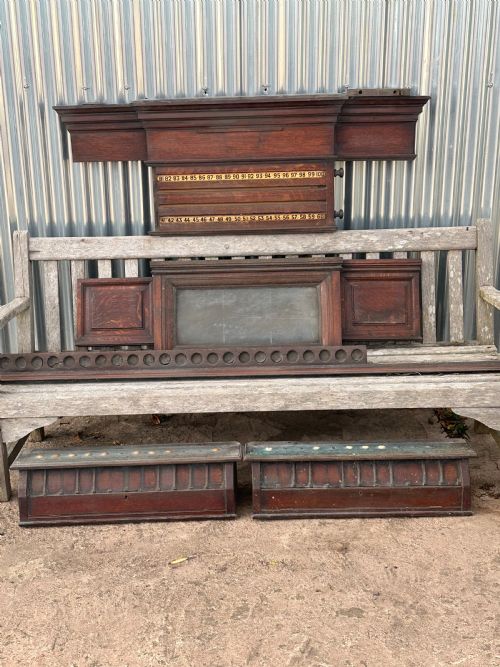
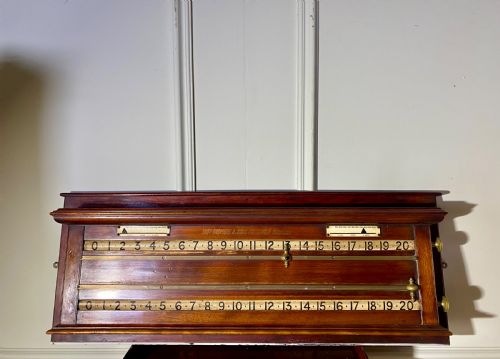
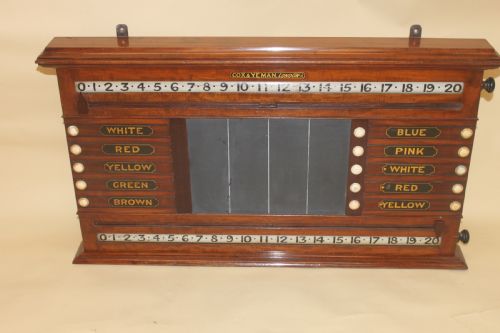
Most examples function as complete scoring systems featuring wooden slides, numbered rollers, and brass pointers. Larger formats incorporate enclosed cabinets with glass panels to house accessories or drinks alongside the main scoring board.
How They Were Made
Cabinet makers utilised dense hardwoods such as mahogany, oak, and English walnut to construct the primary body and framing of each board. These timbers provide the structural stability required for wall mounting and heavy daily use.
Makers incorporated brass for the sliding pointers, hinges, and corner brackets, while numerals and marker rings often utilise bone, ivory, or celluloid inlay set directly into the wood.
Some scoreboards include tiny brass pegs that have survived a century and a half of heated slate-table disputes.
What Varies in Quality
Quality rests upon the execution of the woodwork and the complexity of the scoring mechanisms. Finely made pieces display crisply carved mouldings, select timber figuring, and maker signatures integrated into the design.
Orme and Sons Manchester·Thurston and Co of London·Cox and Yeman London·Burroughes and Watts·Ashcroft Liverpool·Palmer and Sons
The Antique Snooker Board Glossary
- Scoreboard
- A wall-mounted wooden board fitted with sliding indicators to track points in cue sports. These often accommodate multiple games including billiards and life pool.
- Life Pool
- A variation of pool where players lose lives, requiring specialised scoring dials alongside the main markers. Boards built for this game feature extra rows of numbers or rotating cylinders.
- Celluloid
- An early thermoplastic material utilised for numerals and markers on late nineteenth-century boards. It mimics ivory while offering durable wear resistance.
- Games Cabinet
- An enclosed wall furniture piece combining a snooker scoring board with storage space for cues, balls, or drinks. These units represent the larger end of games room accessories.
Antique Snooker Board: Frequently Asked Questions
How do you mount an antique snooker board safely?
These boards carry significant weight due to dense timbers and internal mechanisms. Secure them directly into structural wall studs using appropriate heavy-duty brackets.
Professional installation prevents strain on the original wooden frame and historical joints.
Can these boards track games other than snooker?
Many boards feature multiple rows of numbers and sliding indicators designed for billiards, pool, and life pool. The varied scoring tracks accommodate different rules within a single piece.
Inspect the dial configurations to identify which specific cue games the board supports.
How should I clean the wood and brass?
Maintain the timber surfaces with a traditional microcrystalline wax rather than modern liquid polishes. Clean brass pointers gently to preserve their historical patina without removing the aged finish.
Avoid chemical solvents that might damage bone or celluloid number inlays.
What indicates a Victorian date on these boards?
Victorian examples frequently display rich mahogany or oak construction paired with hand-carved decorative elements and maker plates from London firms. The presence of bone or ivory scoring indicators typically points to nineteenth-century production.
Edwardian boards later introduced lighter oak tones and alternative inlay materials like celluloid.