





Victorian Snooker Scoreboard
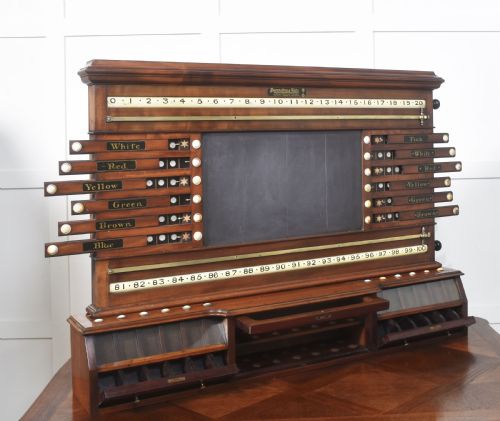
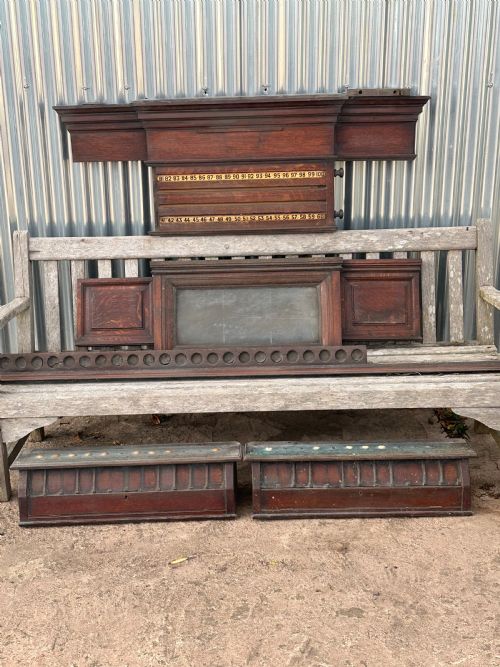
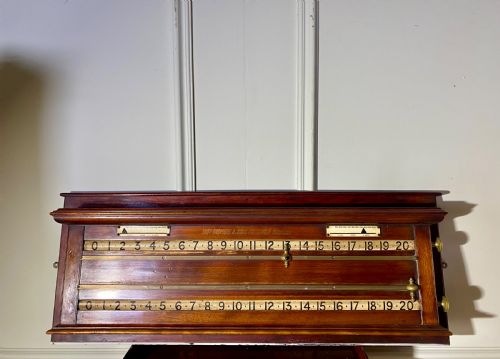
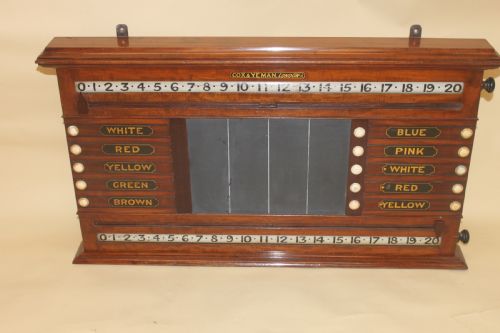
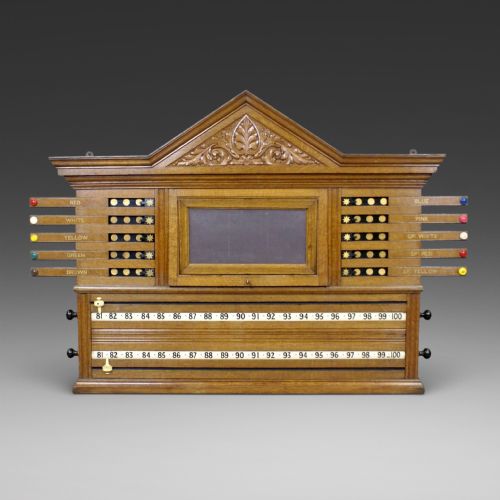
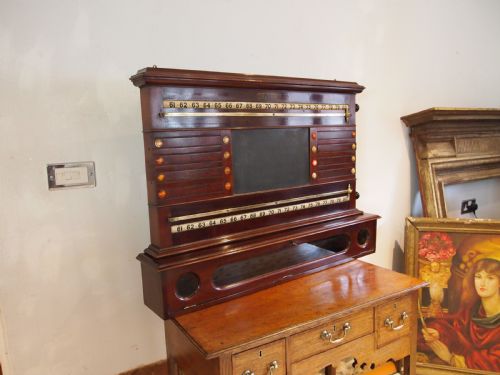
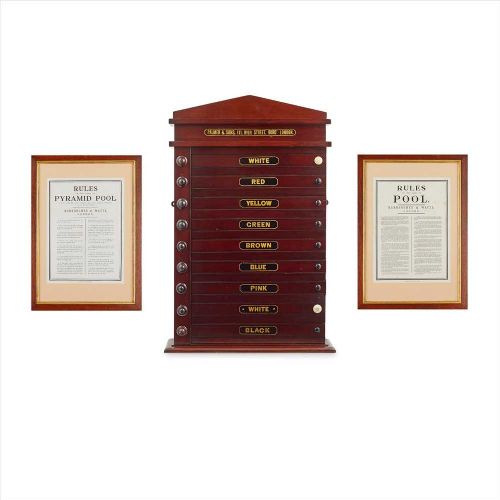
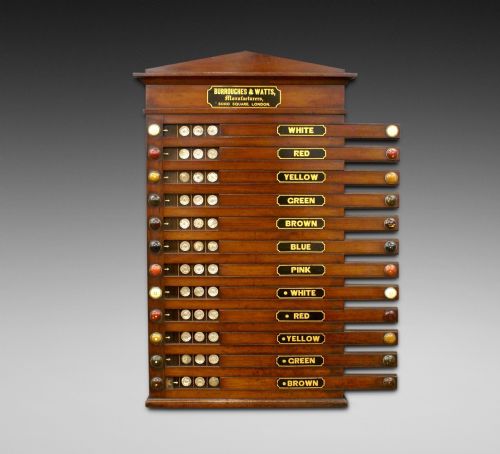
These pieces are a victorian snooker scoreboard, mechanical timber tallies built to hang on the wall of a billiard room.
Victorian Snooker Scoreboard
A victorian snooker scoreboard is a timber wall-hanging board designed to track points for billiards, snooker and pool games. When you search this phrase, you meet boards configured with sliding pointers, brass pointers and rotating scoring cylinders.
The objects appear primarily in mahogany and oak, frequently housing sliding markers made of bone or brass. Many examples record scores for multiple game variants on a single face, including life pool alongside standard snooker.
Most pieces date from the nineteenth century, spanning the Victorian and Edwardian periods. Makers such as Orme and Sons, Thurston and Co, and Cox and Yeman dominate the origins of these surviving boards.
Materials and construction
Makers built these boards using dense hardwoods like mahogany and oak as the primary chassis for stability against wall mounting. Brass rods, sliding markers and numerical tracks were integrated into the timber face to manage the scoring mechanics.
Details such as pointers and numerals frequently incorporated bone or contrasting light woods inlaid into the darker backing. Glass elements and paper components appear alongside cabinetry housing storage compartments for accessories.
Listings show scoreboards constructed from mahogany and oak, incorporating brass rods, bone markers and glass panels across the Victorian and Edwardian periods.
Judging the build
The distinction between standard boards and superior examples lies in the complexity of the scoring mechanisms and the cabinetwork. Heavier timber framing and branded maker plates denote workshop production by notable billiard outfitters.
Finely turned brass fittings, integrated glass panels and detailed wood carving elevate the construction above plain utilitarian tallies. The inclusion of life pool dials alongside standard snooker tracks indicates a higher tier of original specification.
Orme and Sons Manchester·Thurston and Co of London·Cox and Yeman London·Burroughes and Watts·Palmer and Sons
The Victorian Snooker Scoreboard Glossary
- Life pool
- A billiard variant played with coloured balls where players lose lives, requiring specialised scoring tracks on the board. These auxiliary tracks distinguish more complex boards from simple score counters.
- Scoring board
- The primary timber panel fitted with sliding pointers or dials to register points during a game. Such boards mounted directly to the billiard room wall.
- Billiard accessories
- Ancillary items associated with cue sports, sometimes grouped with scoreboards in games room furnishings. These pieces accompany the main timber tally.
Victorian Snooker Scoreboard: Frequently Asked Questions
What is a victorian snooker scoreboard?
It is a mechanical wooden wall-mounted board used to track points in nineteenth-century billiard and snooker rooms.
These pieces feature sliding markers, brass rods and dials mounted on oak or mahogany backboards.
How do you use the sliding markers?
Pointers slide along numerical tracks to record scores for individual players or teams during a match.
More complex boards include multiple tracks for different rule sets like life pool and billiards.
How do I identify the maker?
Makers often stamped their company name onto the wooden face or attached small brass plaques to the board.
Prominent nineteenth-century firms included Orme and Sons, Thurston and Co, and Cox and Yeman.
What woods were used?
Makers predominantly utilised mahogany and oak to construct the heavy backboards and cabinetry.
These dense hardwoods ensured the boards remained stable when hung on billiard room walls.
How do I hang a heavy scoreboard?
These boards require secure wall fixings suited to their substantial timber and brass weight.
Professional wall brackets or heavy-duty screw fixings into wall studs provide the necessary support.