




Antique Games Room Decor
Antique games room decor brings character and tactile history to a room through genuine Victorian scoreboards, boards and tables.
Antique Games Room Decor
When you search for antique games room decor, you encounter functional pastimes equipment from the nineteenth century and the Edwardian era. These items formed the practical furniture and accessories of private billiard rooms, smoking rooms and parlours.
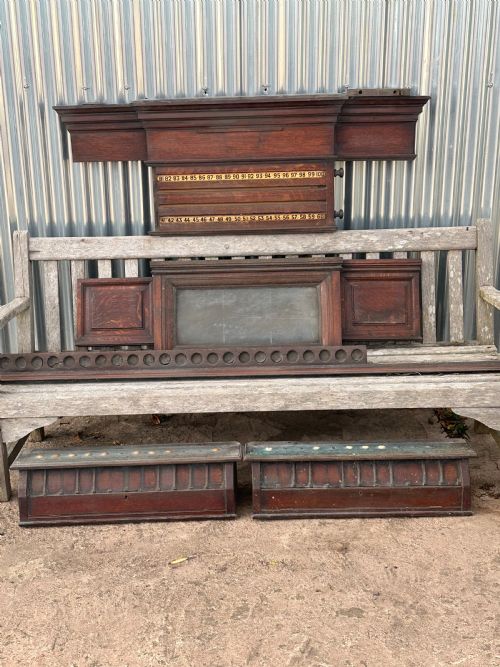
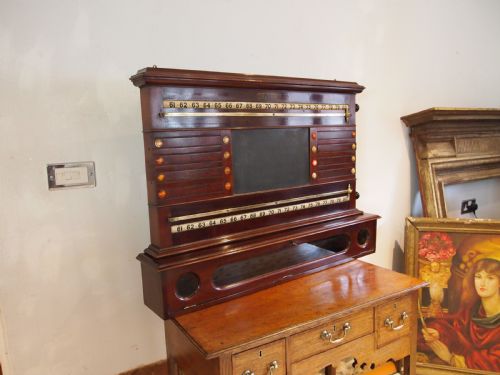
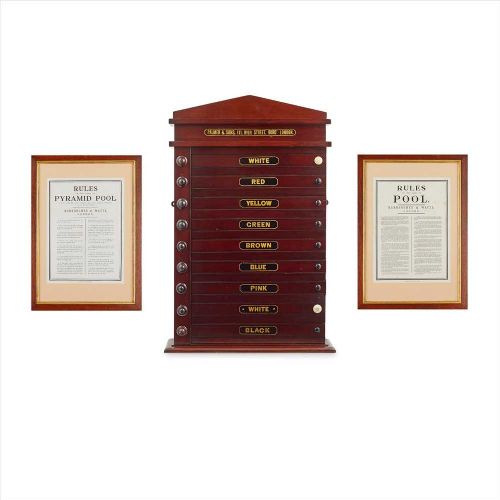
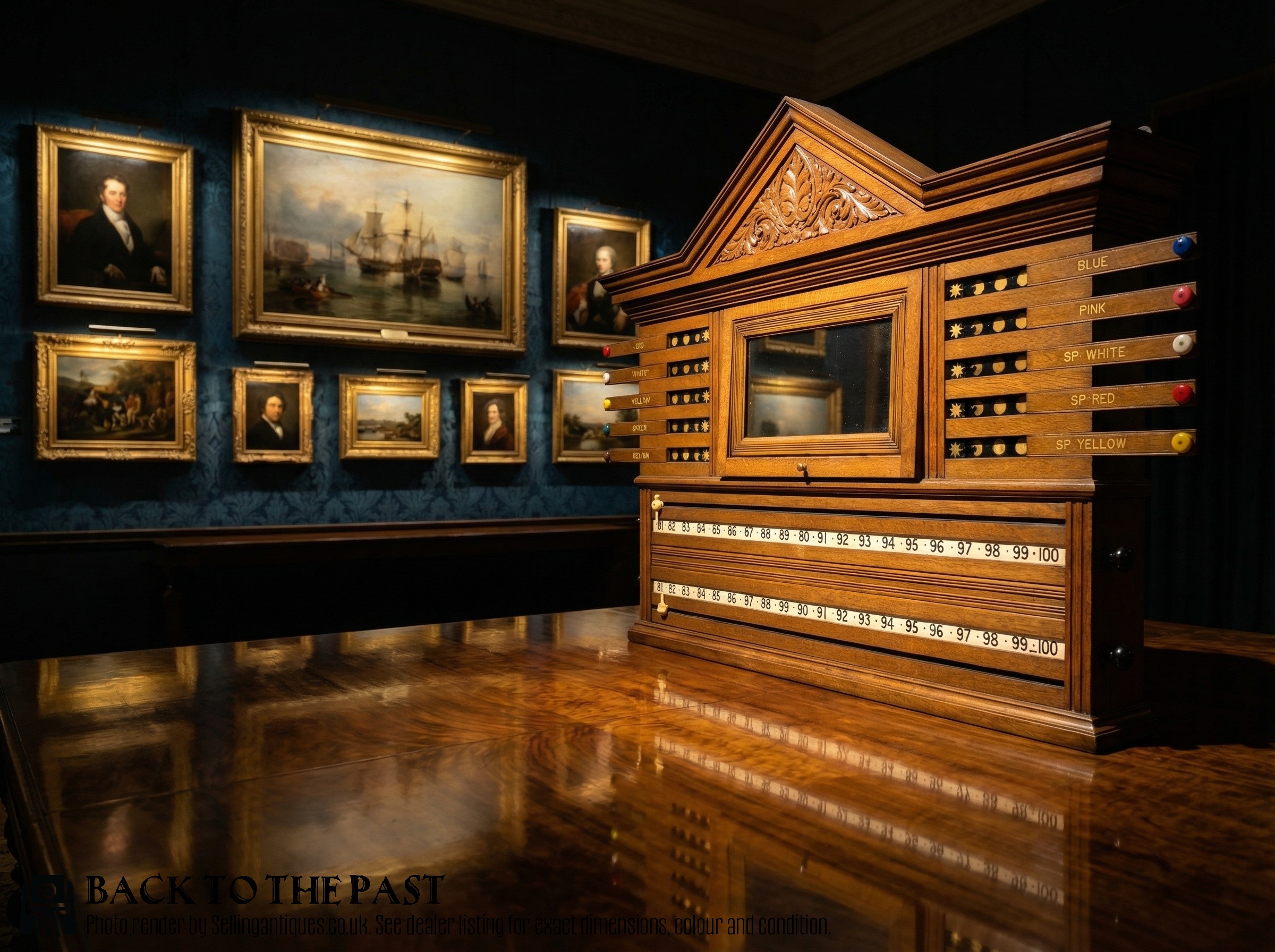
The objects on this page consist primarily of wooden scoreboards for billiards, snooker and pool, alongside folding chess boards, cribbage boards and roulette wheels. Mahogany and oak dominate the forms, reflecting the heavy wood panel culture of Victorian interiors.
You meet Victorian and Napoleon III pieces spanning the decades from eighteen sixty to nineteen hundred, with makers such as Thurston and Orme appearing on larger scoreboards. These pieces survive because they were built for heavy daily use in gentlemen's clubs and substantial houses.
How they were made
Makers utilised dense timbers such as mahogany and oak to construct durable scoreboards and games cabinets that could withstand decades of club use. Brass tracks, markers, pointers and hinges provide the mechanical action on scoreboards and folding boards.
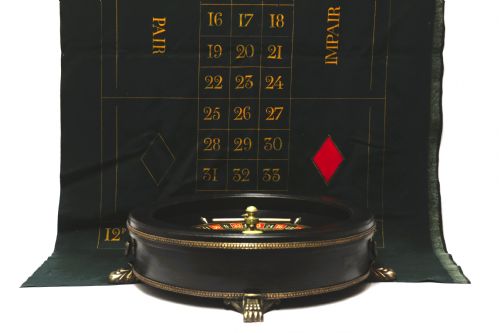
Bone and ebonised wood appear frequently on smaller gaming items, while slate surfaces and felt table cloths survive on larger accessories like roulette wheels. Joinery methods of the period relied on solid timber construction rather than modern veneers or laminates.
French roulette wheels from eighteen eighty bring clandestine casino atmospheres straight into domestic nineteenth-century dining rooms.
What varies in quality
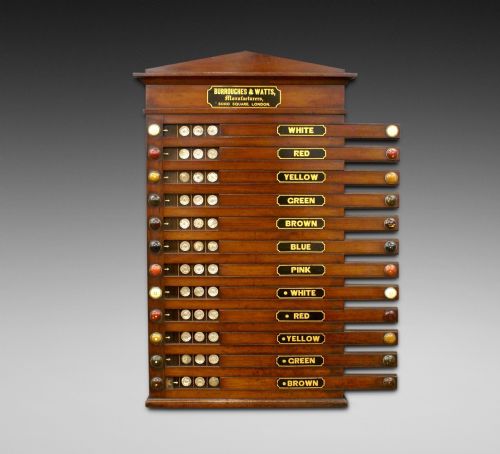
Quality rests upon the maker's reputation and the complexity of the mechanism, ranging from standard workshop output to signed pieces by prominent manufacturers like Burroughes and Watts or Cox and Yeman. The crispness of brass numerals and the retention of original markers dictate the desirability of a scoreboard.
The choice of timber grain and the presence of secondary decorative elements, such as matching prints or specialised scoring dials, separate utilitarian items from those commissioned for grander billiard rooms. Original surfaces without modern alterations preserve the historical integrity of each piece.
Orme and Sons Manchester·Thurston and Co of London·Cox and Yeman London·Burroughes and Watts
The Antique Games Room Decor Glossary
- Scoreboard
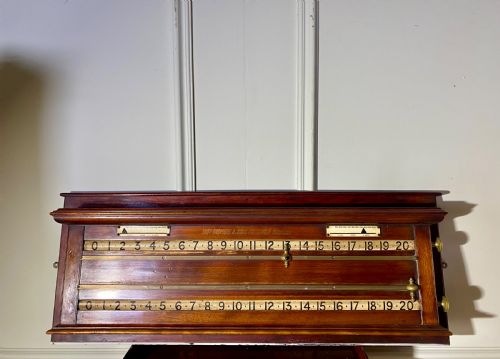
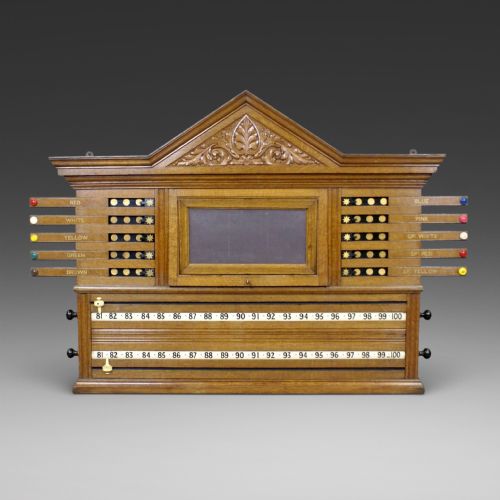
- A wall-mounted or freestanding wooden board featuring sliding markers and brass pointers to record points during cue sports. These devices range from simple single-player tallies to large multi-player setups.
- Cribbage board
- A small board, often made of wood or bone, drilled with holes to track scores in the card game cribbage using pegs. They frequently date from the Victorian period and feature hinged storage compartments.
- Napoleon III
- A nineteenth-century French stylistic period spanning the mid to late eighteen hundreds, known for eclectic revivals and decorative flair. Pieces from this era often incorporate fine hardware and rich materials.
- Ebonised wood
- Timber treated with a dark finish to imitate expensive ebony, commonly used for contrast in nineteenth-century games pieces and chess sets. This technique creates a dense, uniform black surface.
Antique Games Room Decor: Frequently Asked Questions
What is antique games room decor?
Antique games room decor comprises historical items used for indoor pastimes and sports during the nineteenth and early twentieth centuries. These objects include wooden scoreboards, roulette wheels and folding chess sets.
Such pieces reflect the social habits of Victorian and Edwardian homes, where dedicated rooms for billiards and card games were common. They combine practical function with traditional cabinetmaking materials like oak and mahogany.
How were billiard scoreboards used?
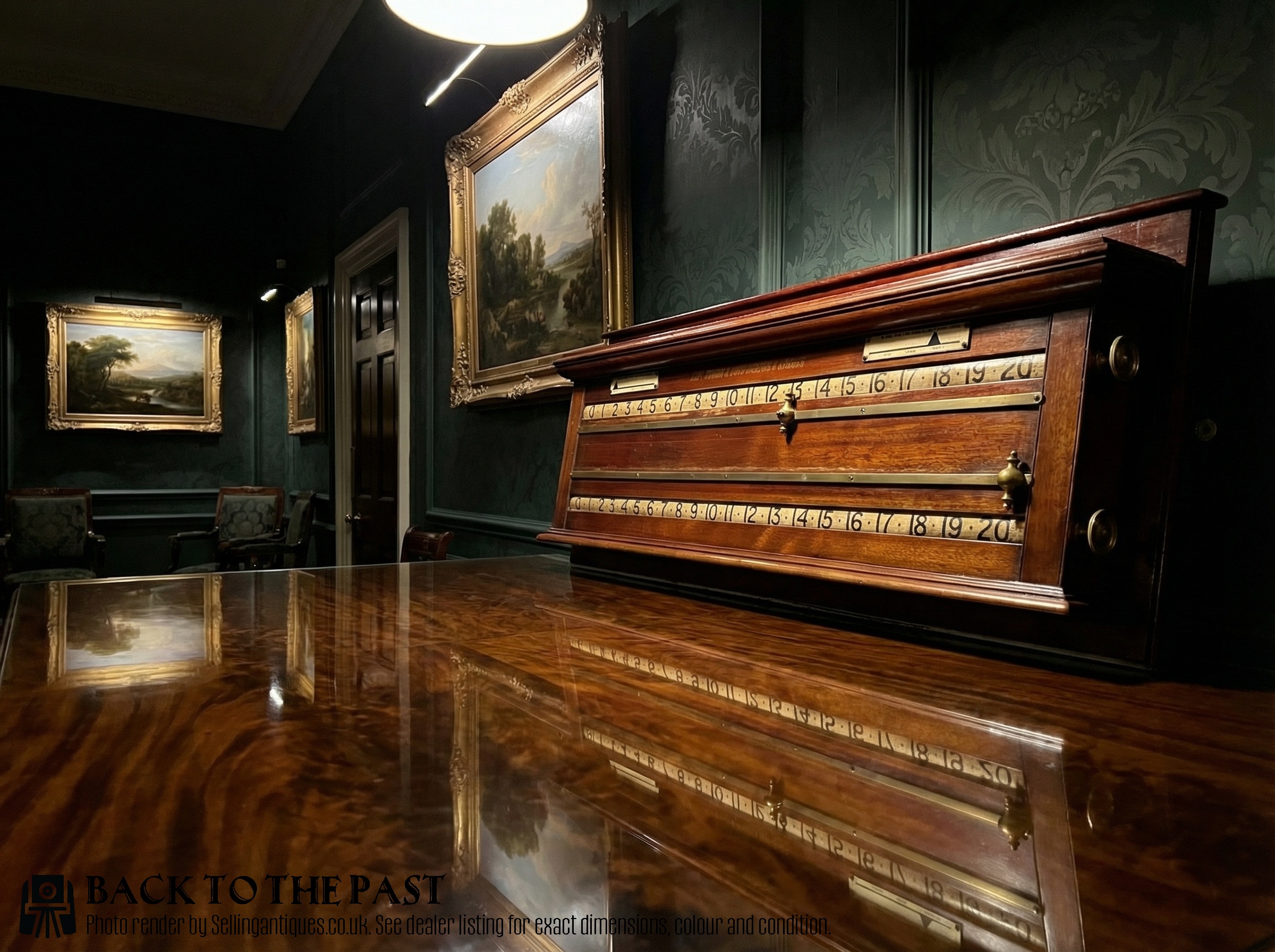
Billiard scoreboards hung on the wall near the table to track points during games of snooker, billiards and pool. Players or markers moved brass pointers along wooden tracks as scores accumulated.
Larger boards included multiple rows for different players and often incorporated subsidiary dials for frames or hazards. They served as both functional score counters and central decorative fixtures in the room.
How do I date a Victorian scoreboard?
Dating a Victorian scoreboard involves examining the timber, the style of the brass lettering and any maker signatures stamped into the wood. Pieces often bear the names of prominent nineteenth-century billiard table manufacturers.
Stylistic cues such as the use of pale oak versus dark mahogany, alongside the complexity of the scoring tracks, help place an item within periods like eighteen eighty or eighteen ninety.
Can I hang an antique scoreboard on a modern wall?
Antique scoreboards are generally heavy items built from solid oak or mahogany, requiring secure fixings into wall studs or masonry. Their substantial weight means standard picture hooks are unsuitable.
Before mounting, check the original hanging brackets on the back of the timber frame to ensure they remain structurally sound. Proper weight distribution protects both the wall and the historical timber.
What materials are common in these pieces?
Mahogany and oak form the primary structure for the majority of scoreboards and larger games furniture found in this category. Brass is standard for the sliding pointers, tracks, hinges and dials.
Smaller accessories incorporate bone, glass, slate and ebonised wood, particularly on items like roulette wheels, cribbage boards and chess sets. These durable materials ensured the equipment survived decades of club use.