





Antique Life Pool Board
An antique life pool board is a timber scoreboard built for nineteenth-century billiard and games rooms to track complex scoring.
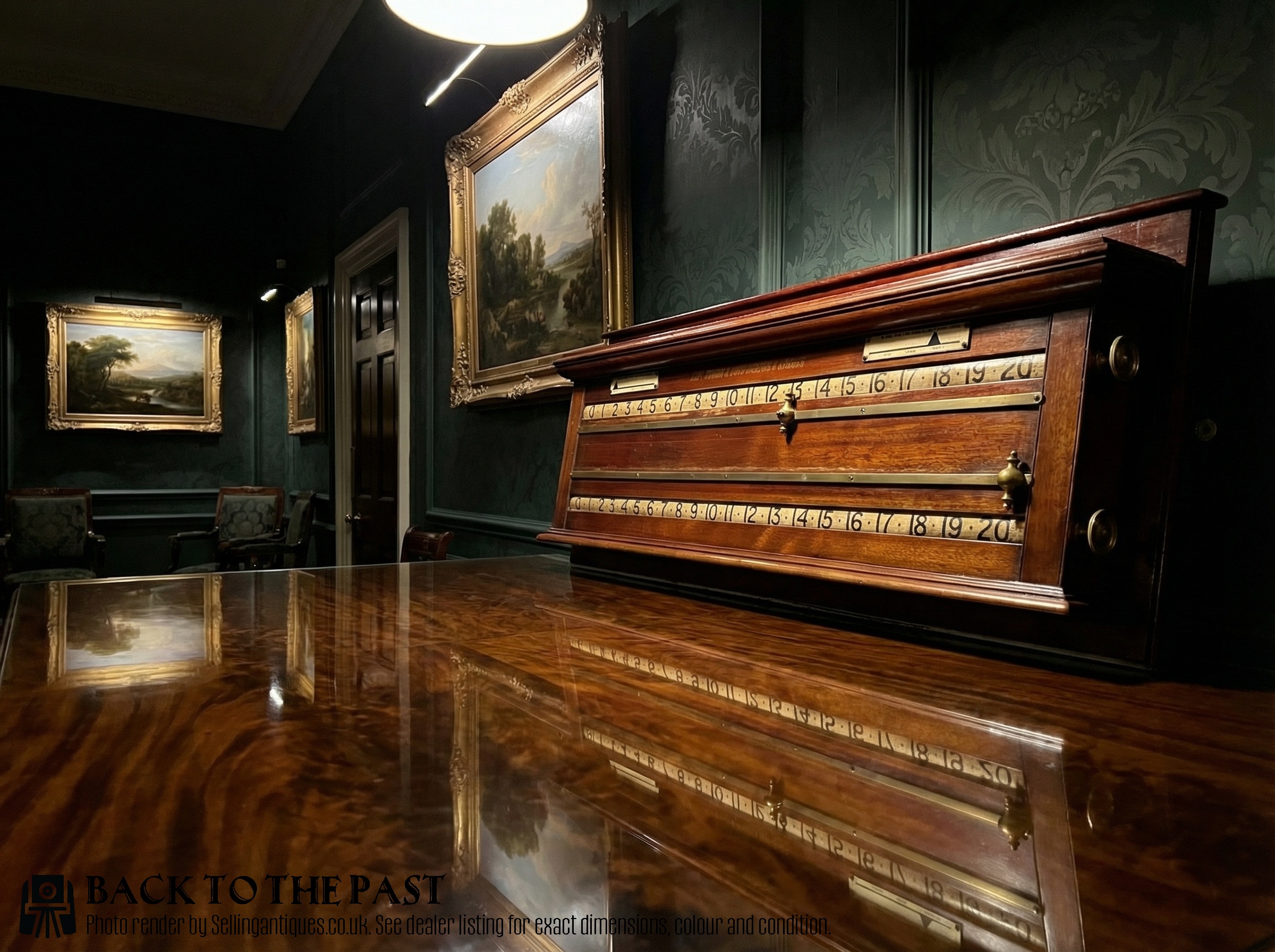
Antique Life Pool Board
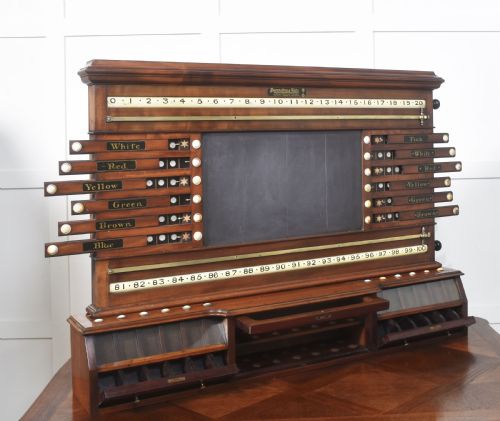
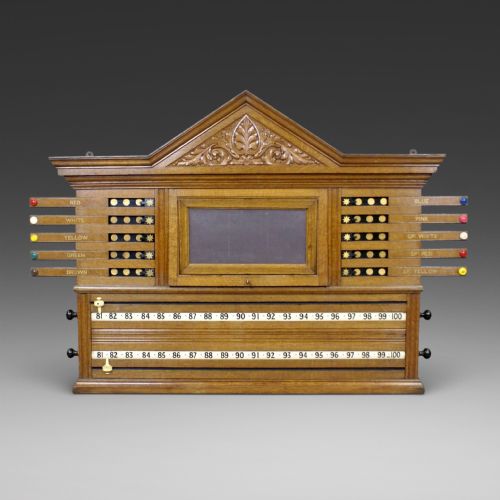
When you search for an antique life pool board, you encounter wooden scoreboards originating from the nineteenth century, including the Victorian and Edwardian periods. These pieces serve as games room accessories designed for billiards, snooker, and life pool scoring.
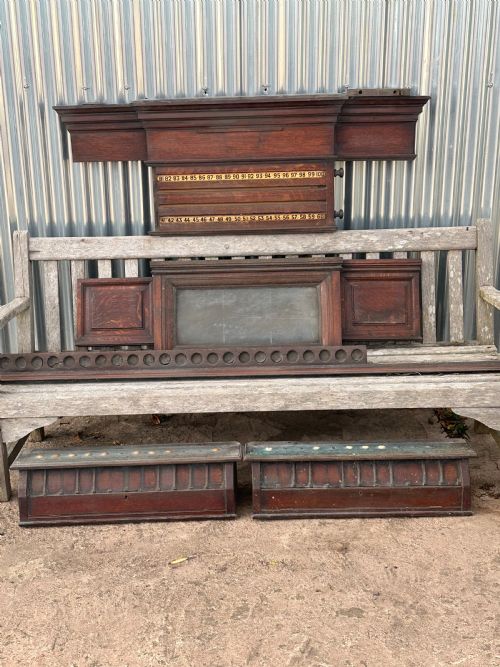
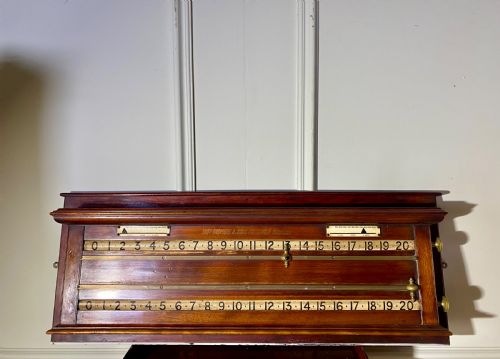
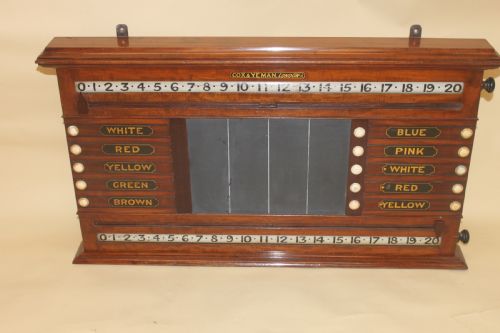
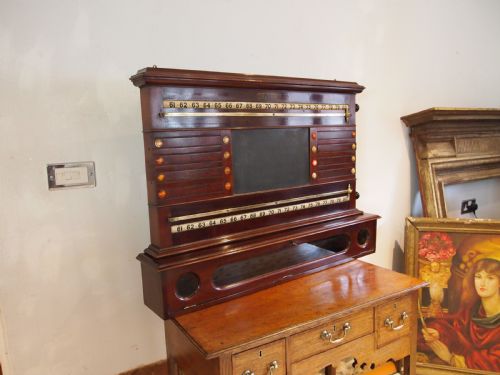
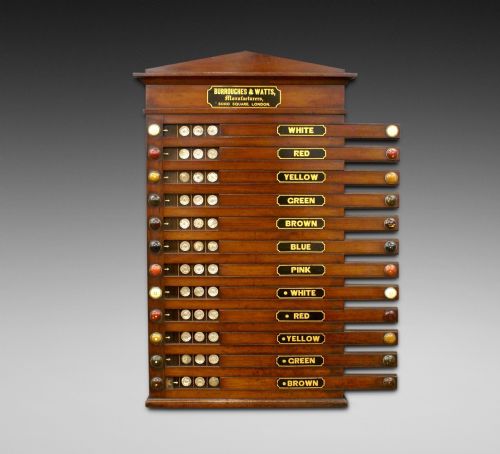
The versions most frequently met on this page take the form of wall-mounted scoreboards and score cabinets constructed in mahogany, oak, or walnut. They incorporate sliding markers, dials, or sliding pointers alongside indicators for multi-player life pool games.
Makers such as Thurston, Orme and Sons, Cox and Yeman, and Ashcroft produced these boards to organise matches in private homes and public billiard halls. They survive as functional wall furniture reflecting the social pastimes of the Victorian and Edwardian eras.
How they were made
Maker workshops utilised dense hardwoods like mahogany, oak, and English walnut to construct the main bodies and cabinetry of the boards. These timbers provided the durability needed for heavy wall mounting in bustling billiard rooms.
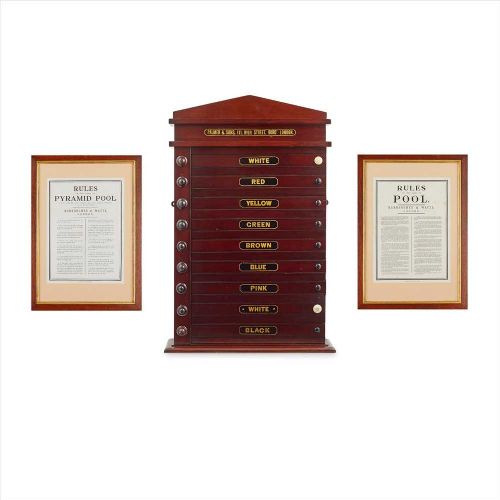
Craftsmen fitted functional elements using brass for runners, dials, and fixings, alongside bone, celluloid, and glass for the sliding markers and numerical indicators. The scoring tracks and dials were integrated directly into the timber face, often paired with enclosed cabinets or accompanying prints.
What varies in quality
Quality in these scoreboards rests upon the caliber of the timber selection and the complexity of the cabinet construction, ranging from plain mahogany boards to large oak cabinets with decorative carvings. Pieces bearing the signatures or attribution of prominent makers command greater attention due to their documented workshop origins.
The sophistication of the scoring mechanism alters the character of the piece, with multi-player life pool indicators, integrated brass dials, and sliding bone or celluloid markers demonstrating finer execution than simpler, single-game boards.
Orme and Sons Manchester·Thurston and Co of London·Cox and Yeman London·Ashcroft Liverpool
The Antique Life Pool Board Glossary
- Life pool
- A billiard variation where each player starts with a set number of lives represented on the scoring board. As players are potted, they lose lives until one remains.
- Scoreboard
- A wall-mounted wooden board fitted with sliding indicators, pointers, or dials to track points during cue sports. They range from simple flat panels to enclosed wooden cabinets.
- Mahogany
- A durable hardwood commonly utilised for nineteenth-century billiard accessories and furniture. Its rich grain and stability suited grand games rooms.
- Celluloid
- An early semi-synthetic plastic material frequently applied for numbers, markers, and scoring dials on period boards. It provided a smooth, durable surface for frequent handling.
Antique Life Pool Board: Frequently Asked Questions
What is an antique life pool board?
An antique life pool board is a nineteenth-century wooden scoreboard designed to track scores and lives for billiard and snooker variants. They were essential fixtures in Victorian and Edwardian games rooms.
These boards combine functional sliding markers, dials, and sometimes enclosed cabinetry. They reflect the popularity of cue sports in private residences and public establishments during the period.
How did players use life pool boards?
Players used the boards to track the remaining lives of multiple participants in a competitive pool match. Pointers and sliding markers moved along tracks as players lost lives.
In addition to life pool, many boards accommodated traditional billiards and snooker scoring through parallel numerical scales and rotating brass dials.
Which timbers appear on these boards?
The listings show boards constructed primarily from mahogany, oak, and English walnut. These dense hardwoods provided the structural strength required for wall mounting.
Maker workshops paired these timbers with brass hardware, glass panels, and markers made from bone or celluloid to create clear, legible scoring surfaces.
How can I date a scoreboard?
Dating relies on stylistic clues, materials, and maker attribution pointing to the nineteenth century, Victorian era, or Edwardian period. Maker names stamped or carved into the wood help anchor the piece to specific decades.
The presence of specific materials like early celluloid markers alongside traditional brass and bone also assists in establishing the production era.