





Victorian Billiard Scoreboard
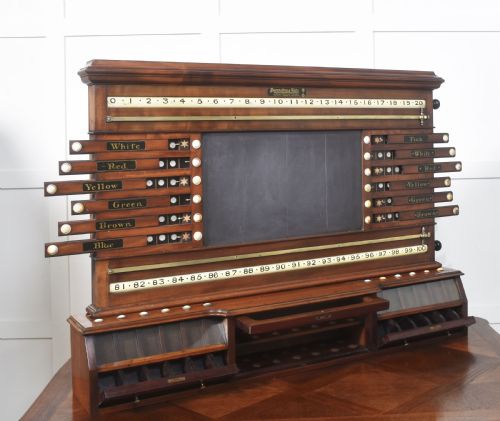
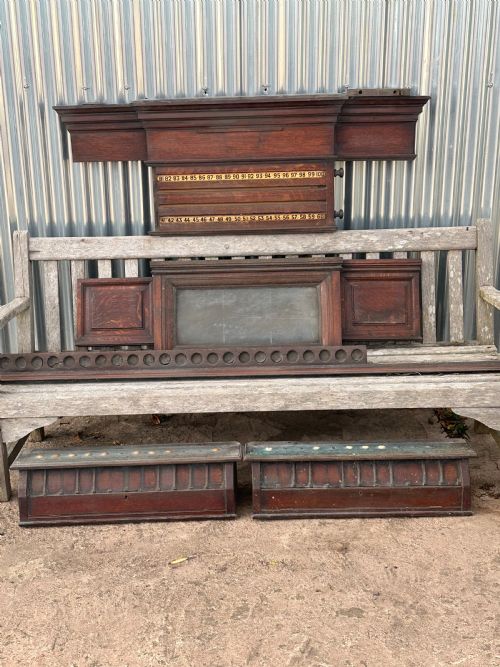
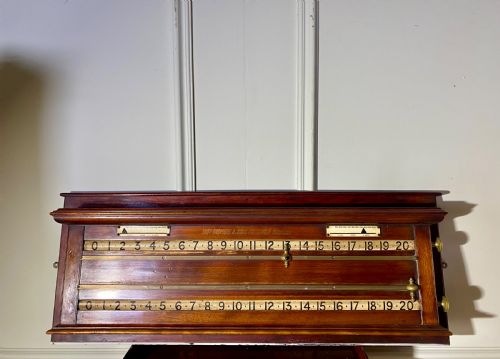
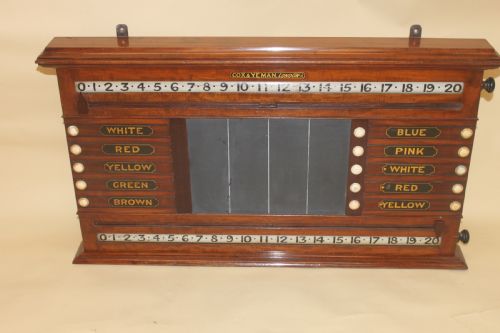
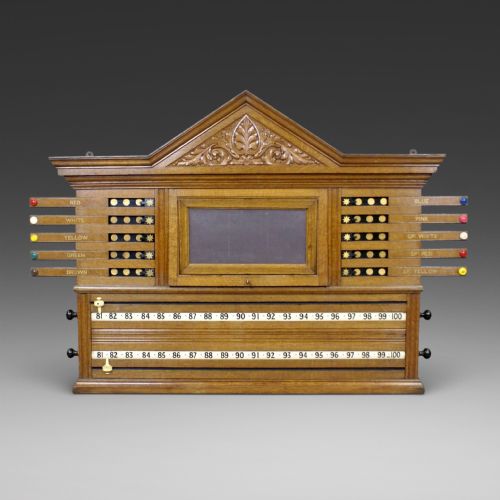
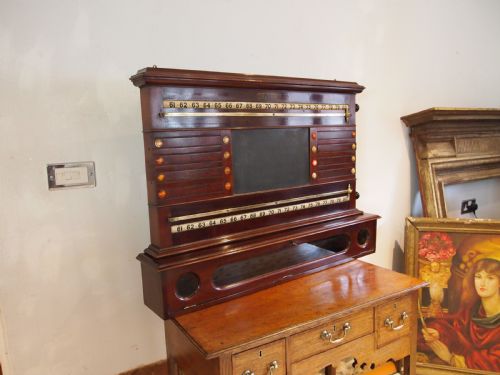
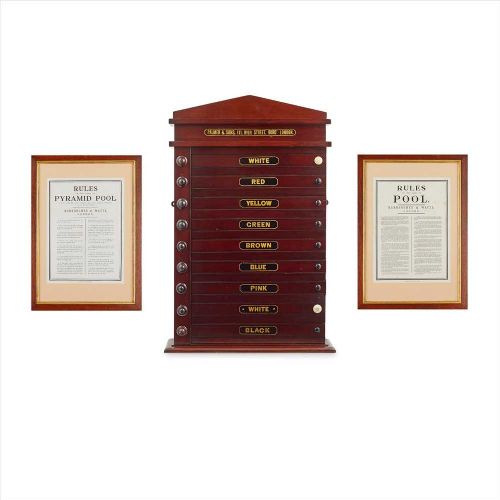
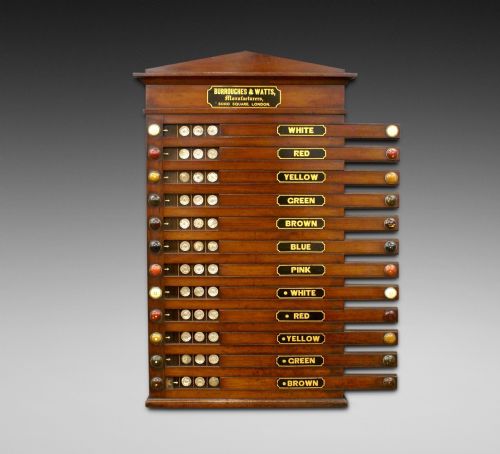
These Victorian billiard scoreboards are mechanical oak and mahogany wall pieces designed to track games room play.
Victorian Billiard Scoreboard
When you search for a victorian billiard scoreboard, you encounter games room accessories built in the nineteenth century during the Victorian and Edwardian periods. The pieces on this page include scoreboards, billiard accessories, games cabinets, and score counters designed for snooker, billiards, and pool.
You are most likely to meet mahogany and oak wall-hung scoreboards featuring sliding pointers and revolving numbers. These functional boards originated in English games rooms and span dates from 1860 to 1900.
The selection ranges from simple wooden scoring boards to large oak scoreboard cabinets with integrated glass and paper elements. Makers such as Thurston, Orme and Sons, Cox and Yeman, and Burroughes and Watts appear frequently among the listings.
Materials and construction
Timbers dominate the construction, with solid mahogany and oak providing the primary housing for the scoring mechanisms. Workshops utilised brass for sliding indicators and mounting brackets, alongside slate, bone dials, and occasional glass panels.
Joinery techniques reflect nineteenth-century cabinet making, creating sturdy wall-hung frames designed to withstand heavy games room use. Makers integrated paper scoring sheets and bone pointers into the wooden carcases alongside brass numbering tracks.
Listings feature nineteenth-century oak and mahogany scoreboards incorporating brass, bone, and glass.
Quality variations
The distinction between standard boards and top tier examples rests upon the complexity of the scoring layout and the maker's reputation. Pieces attributed to prominent makers like Thurston and Co or Orme and Sons demonstrate superior cabinet work and refined brass detailing.
Materials dictate the scale of quality, with dense pale oak or figured mahogany housing intricate multi-player mechanisms rather than simple single-game counters. Decorative elements such as carved cabinetry and complete original bone or brass hardware elevate certain scoreboards above utilitarian examples.
Orme and Sons Manchester·Thurston and Co of London·Cox and Yeman London·Burroughes and Watts
The Victorian Billiard Scoreboard Glossary
- Scoreboard
- A wall-mounted wooden board used to track points during cue sports. These objects feature sliding markers and numbered tracks.
- Life pool
- A variation of cue sports requiring specialised tracking for multiple players. Scoreboards built for this game include extra rows of dials.
- Mahogany
- A heavy tropical hardwood utilised extensively for Victorian furniture and games room accessories. Its dark grain characterises many surviving scoreboards.
- Bone
- An organic material employed for small dials, pointers, and markers on nineteenth-century scoreboards. It provides a durable contrast against dark wood.
- Slate
- A fine-grained metamorphic rock occasionally incorporated into games room furnishings. It offers a dense, durable surface for specific components.
Victorian Billiard Scoreboard: Frequently Asked Questions
How do you mount a scoreboard?
These Victorian boards generally feature original brass screw brackets or heavy wooden hanging loops fixed to the rear framework.
Installers should secure the board directly into wall studs or masonry using appropriate fixings to support the heavy oak or mahogany weight.
What games were these used for?
Nineteenth-century scoreboards tracked snooker, English billiards, and pool matches played in domestic and club games rooms.
Many boards accommodate multiple game types simultaneously through complex sliding rows and revolving numerical dials.
How do you clean the wood?
Maintenance requires a soft dry cloth to remove dust from the intricate wooden mouldings and brass tracks.
Avoid liquid furniture polishes that might damage aged paper inserts or loosen delicate bone and brass components.
Are the scoring mechanisms adjustable?
The sliding brass pointers and rotating wooden or bone numbered drums operate on internal tracks designed for manual game tracking.
Careful handling ensures the nineteenth-century brass pins and wooden sliders move smoothly without straining the aged timber frame.