





Edwardian Snooker Board
An edwardian snooker board brings the authentic atmosphere of the traditional billiard room home, combining fine cabinet-making with practical scoring mechanics.
Edwardian Snooker Board
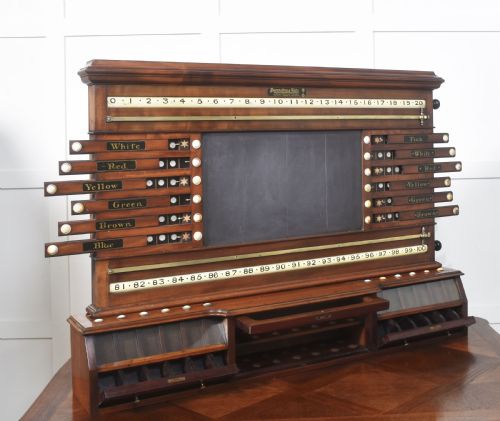
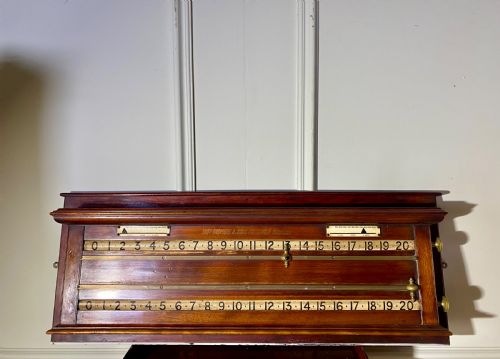
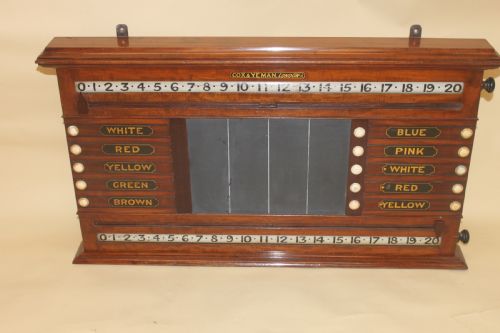
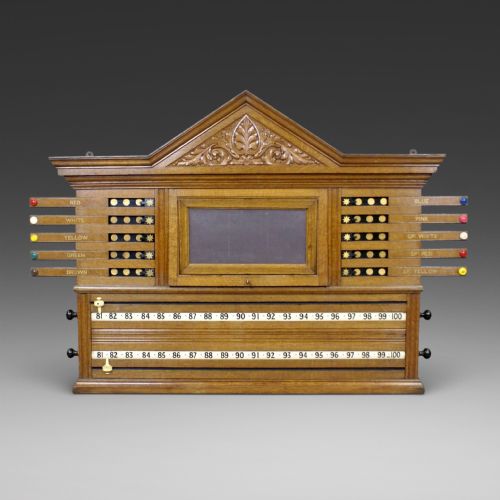
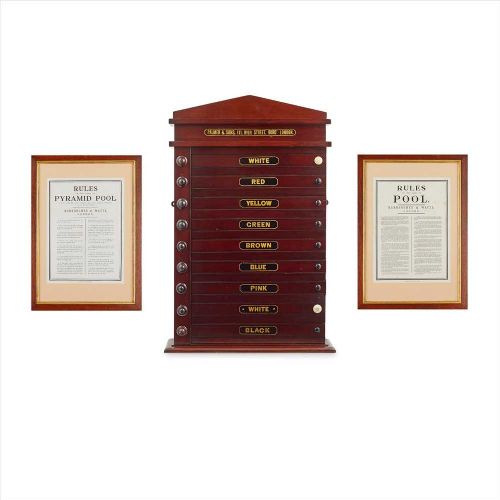
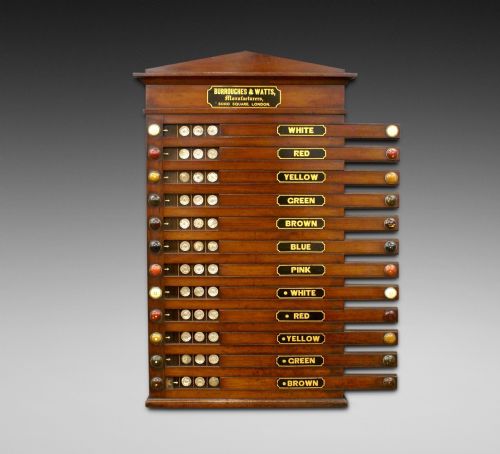
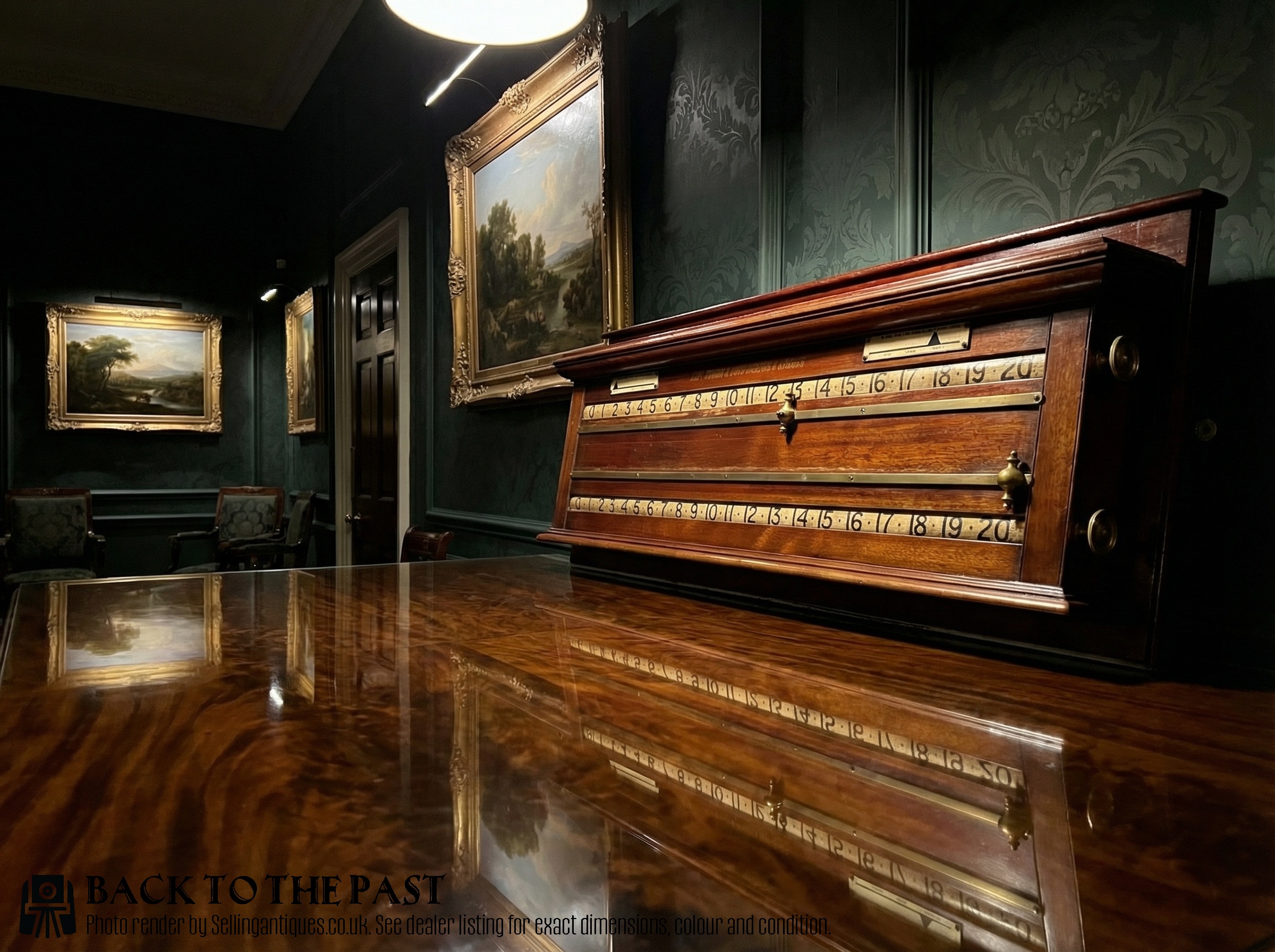
When you search for an edwardian snooker board, you encounter wall-mounted wooden scoreboards designed to track frames of snooker, billiards, and life pool in games rooms. The most common examples on this page are upright timber cabinets and boards featuring sliding brass pointers and rotating rollers.
These pieces originate principally from the Victorian and Edwardian eras, reflecting the high popularity of cue sports during the late nineteenth and early twentieth centuries. Makers varied from specialised London billiard table manufacturers to regional cabinet-makers supplying domestic and club game rooms.
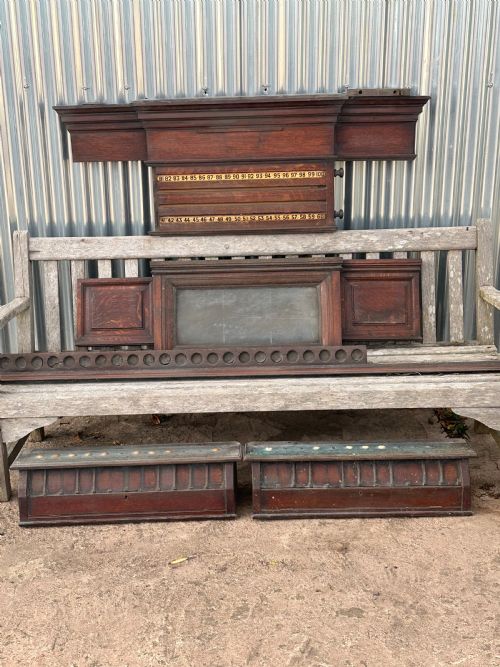
The selection ranges from simple mahogany or oak backboards to large score cabinets fitted with storage for accessories, glass panels, and decorative carvings. Many retain their original bone, celluloid, or wooden scoring pointers alongside brass numbering tracks.
How They Were Made
Makers utilised dense hardwoods such as mahogany, oak, and English walnut to construct the main boards and cabinet structures, ensuring durability against regular use in games rooms. Timber surfaces were polished or left with natural pale finishes depending on the aesthetic of the period.
Brass formed the primary material for sliding score pointers, guide rails, and fixing screws, providing a bright contrast against the dark wood backboards. Detail elements frequently incorporated bone or celluloid for numerical markers and score indicators.
Joinery techniques relied on solid timber construction, often incorporating carved mouldings, decorative panels, and fitted glass doors for cabinet variants designed to house auxiliary game accessories.
The archive reveals surviving scoreboards attributed to major nineteenth-century billiard outfitters based in London and Manchester.
What Varies in Quality
The distinction between standard boards and exceptional examples lies in the complexity of the housing and the presence of maker signatures or attribution. Simple flat backboards sit at the functional end of the scale, whereas large score cabinets with enclosed storage represent finer production.
The choice of timber and the quality of brass fittings dictate visual presence, with well-figured English walnut and heavy cast brass indicators elevating a piece. Comprehensive scoring systems that accommodate multiple games such as life pool alongside standard snooker demonstrate higher original cost and utility.
Orme & Sons Manchester·Thurston & Co of London·Burroughes and Watts·Palmer & Sons London·G Wright & Co London
The Edwardian Snooker Board Glossary
- Scoreboard
- A wall-mounted wooden board or cabinet fitted with sliding markers to keep count during cue sports. These devices were essential fixtures in private homes and gentlemen's clubs.
- Life Pool
- A variation of cue sports involving multiple players who each start with a life, tracked on specialised sections of the board. Scoring for this game requires additional rotating rollers or secondary tracks.
- Celluloid
- An early thermoplastic material frequently utilised for number panels and pointers on period boards before the widespread adoption of modern plastics. It provides a creamy, ivory-like tone.
- Backboard
- The primary timber panel that supports the brass runners, rollers, and scoring markers. It attaches directly to the wall of the games room.
Edwardian Snooker Board: Frequently Asked Questions
How do you mount an old scoreboard?
These pieces generally feature original brass screw holes or mounting brackets affixed to the rear timber frame. Fixing them securely to wall studs is essential due to the combined weight of hardwood and brass.
Ensure the board hangs level so that the sliding brass pointers and rotating rollers operate smoothly along their tracks without jamming.
What games can these boards score?
Most examples are configured to score standard snooker alongside traditional billiards. Larger formats frequently include scoring rows specifically dedicated to life pool.
The number of rollers and sliding markers visible on the face indicates which combination of games the board was built to handle.
How do I care for the wood and brass?
Dust timber surfaces regularly with a dry cloth and apply a quality beeswax periodically to maintain the lustre of the mahogany, oak, or walnut. Avoid liquid cleaners that might seep into the timber joints or damage old finishes.
Brass pointers and runners can be cleaned gently with a dry cloth to preserve their aged patina rather than polishing them to a bright shine.
Were these boards made for homes or clubs?
Manufacturers produced scoreboards for both private domestic residences and commercial gentlemen's clubs or public billiard halls. Smaller, straightforward mahogany boards typically suited residential homes.
Large oak or walnut score cabinets with built-in storage for accessories generally originated in larger country houses or dedicated club rooms.