




Victorian Game Room Decor
Victorian game room decor brings home the competitive spirit of the nineteenth century with authentic scoreboards and boards.
Victorian Game Room Decor
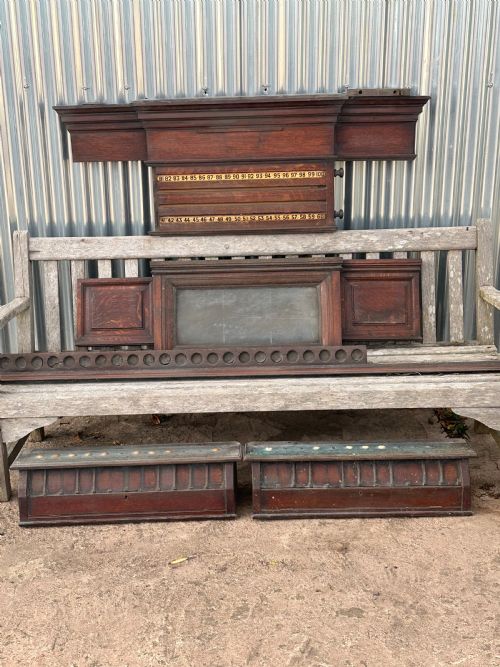
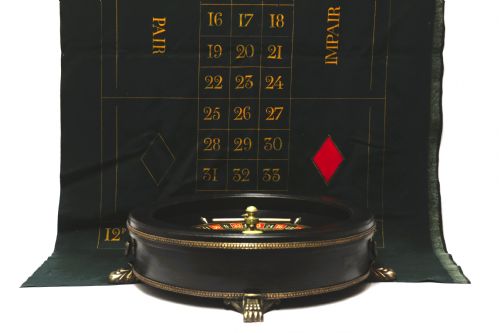
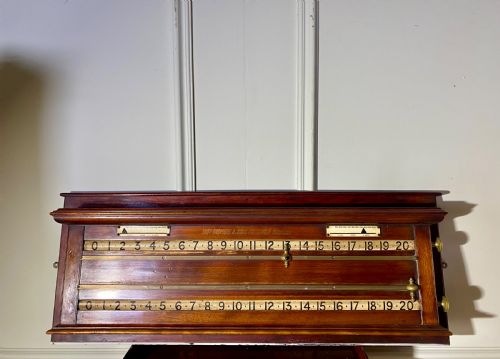
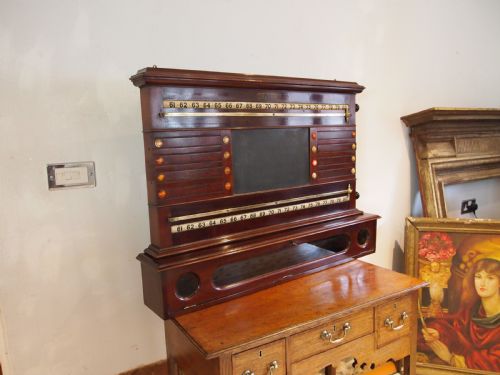
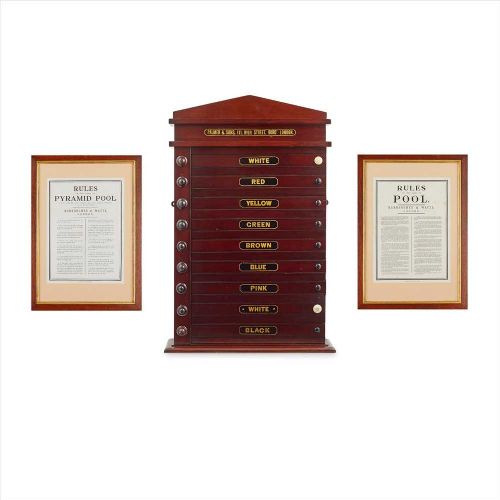
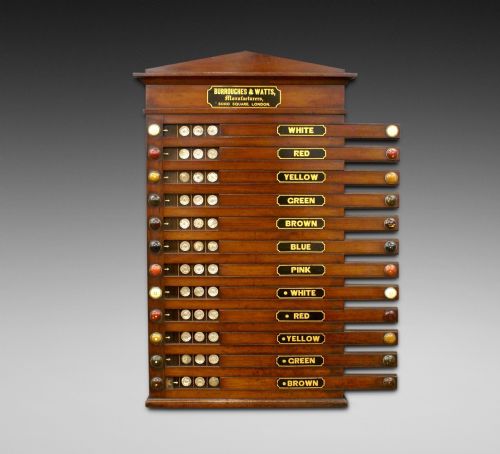
Victorian game room decor encompasses the functional equipment and leisure accessories used in nineteenth-century homes and billiard rooms. Buyers searching for victorian game room decor primarily encounter scoreboards, folding chess sets, cribbage boards, and roulette wheels.
The objects span the nineteenth century and the Edwardian period, reflecting the era's dedication to parlour games and cue sports. Billiards scoreboards dominate the material evidence, alongside smaller items like bone cribbage boards and French roulette wheels.
Pieces originate from British workshops and French makers, utilising the robust timbers and specialised fittings of the period. Every item serves a distinct recreational purpose, whether mounting on a wall for cue sports or sitting on a table for card games.
How they were made
Makers utilised dense hardwoods such as mahogany and oak for scoreboards and game boards, ensuring structural durability for heavy daily use. Brass components, including sliding pointers and hinges, provide mechanical precision alongside bone indicators.
Ebonised wood and glass appear frequently across the inventory, lending contrasting dark tones and protective glazing to dials and markers. Selected items incorporate original textiles such as felt table cloths alongside slate beds for gaming equipment.
Card players can still track a hand of cribbage on a bone board carved over a century ago.
What varies in quality
Quality rests in the choice of timber and the complexity of the mechanical scoring mechanism rather than superficial decoration alone. Superior scoreboards display substantial oak or mahogany construction with signed brass plaques from prominent makers.
The presence of original fittings, such as intact bone pointers, glass panels, and associated prints, elevates an object above standard utility pieces. Finer boards exhibit crisp carving, precise joinery, and well-preserved maker inscriptions.
Orme & Sons Manchester·Thurston & Co of London·Cox & Yeman London·Burroughes and Watts·Palmer & Sons
The Victorian Game Room Decor Glossary
- Scoreboard
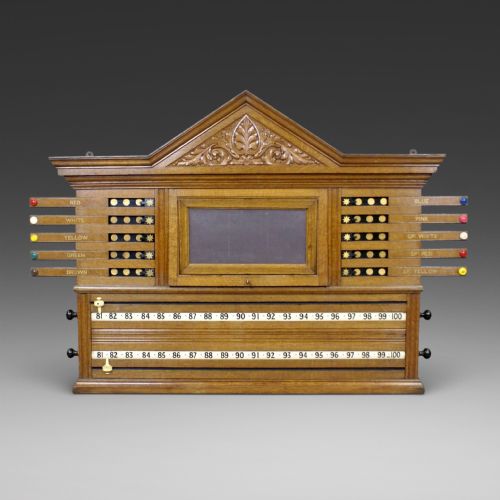
- A mechanical board featuring sliding markers used to track points in cue sports such as billiards and snooker. These devices hang on the wall and often bear the name of the maker.
- Cribbage board
- A small board drilled with holes to track scores in the card game cribbage using pegs. They appear in materials like bone and various woods.
- Ebonised wood
- Timber treated to resemble ebony, providing a deep black finish common in nineteenth-century decorative items. It offers a sharp contrast to brass fittings.
- Roulette wheel
- A gambling device featuring a spinning wheel and a numbered layout used for wagering. French examples from the nineteenth century often retain their original felt table cloth.
- Life pool
- A variation of billiards where players receive lives and try to take opponents out of the game. Scoreboards dedicated to this format include specialised tracking rows.
Victorian Game Room Decor: Frequently Asked Questions
What is a billiards scoreboard?
A billiards scoreboard is a wall-mounted wooden frame featuring brass pointers and numbered dials designed to track scores during cue sports.
These pieces hung in nineteenth-century homes and clubs, combining practical utility with impressive room decor.
How do I identify a period scoreboard?
Period scoreboards feature solid timbers like oak or mahogany, mechanical brass slide tracks, and traditional wall-mounting brackets.
Many examples bear the engraved brass plaques of notable nineteenth-century makers and billiard furnishers.
What materials were used?
Craftsmen utilised heavy hardwoods such as oak and mahogany, complemented by brass dials, bone markers, and ebonised wood details.
Certain items also incorporate glass panels, slate, and original textile elements like felt table cloths.
How should I hang a scoreboard?
Scoreboards require secure wall fixings due to their heavy timber construction and substantial brass mechanisms.
Position them at eye level in a reception room or study to showcase the original sliding markers and maker details.