





Victorian Snooker Board
A victorian snooker board is a games room wall piece that keeps score for cue sports, combining mechanical dials with polished wood to anchor a billiard room.
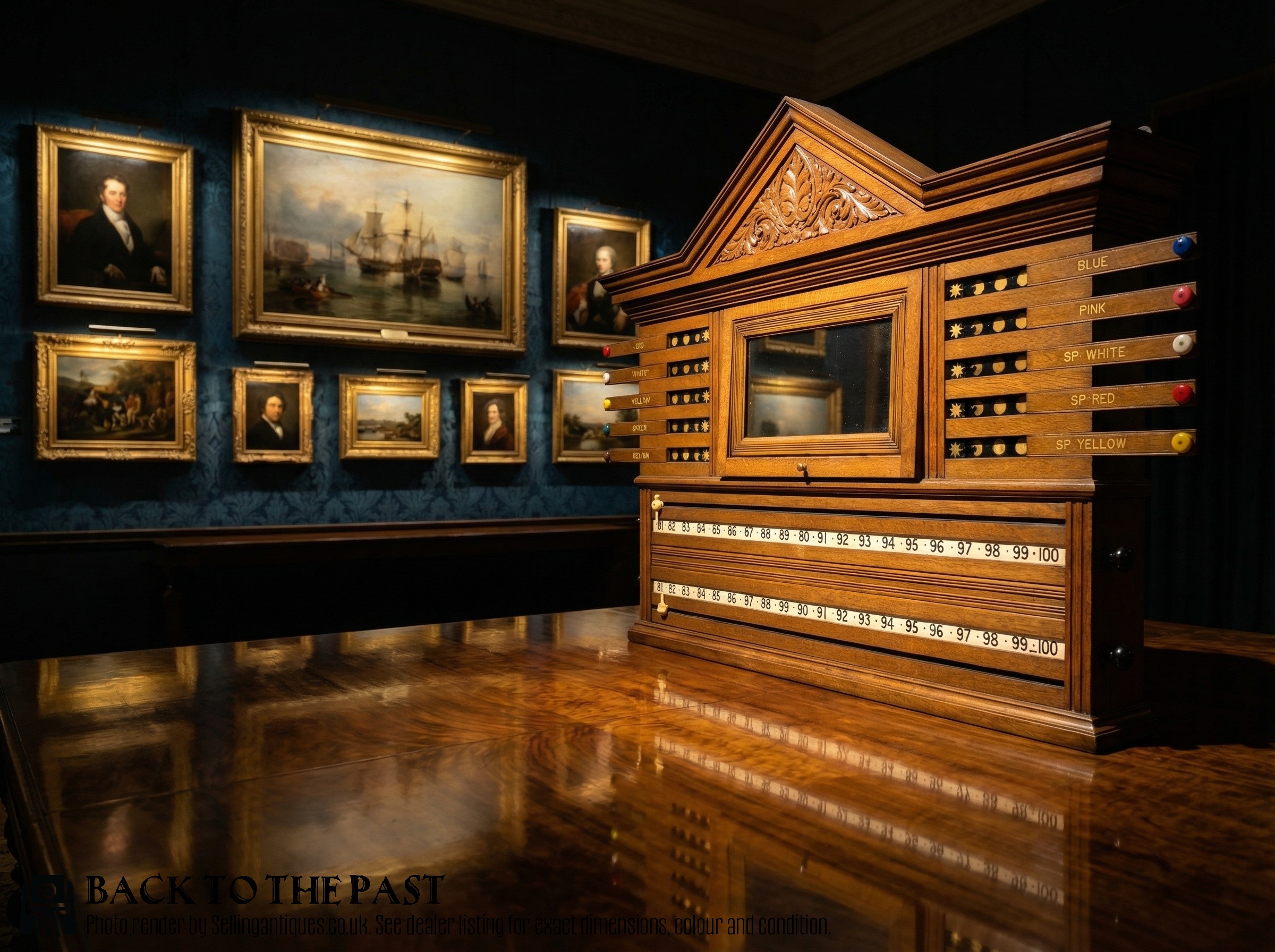
Victorian Snooker Board
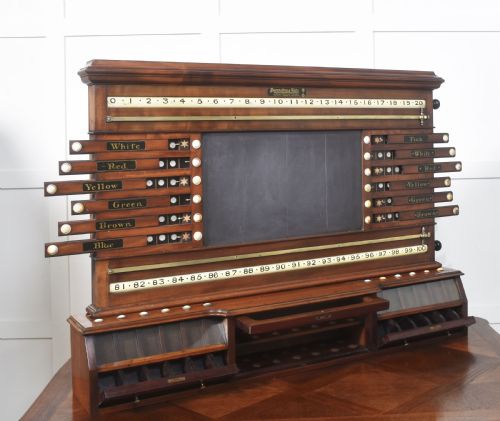
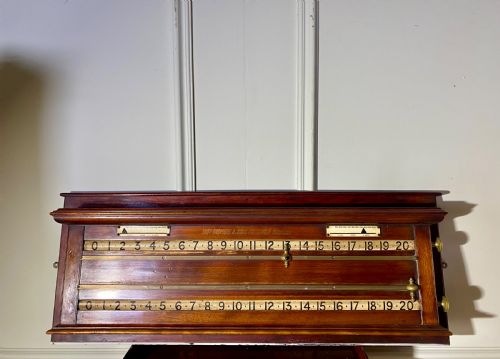
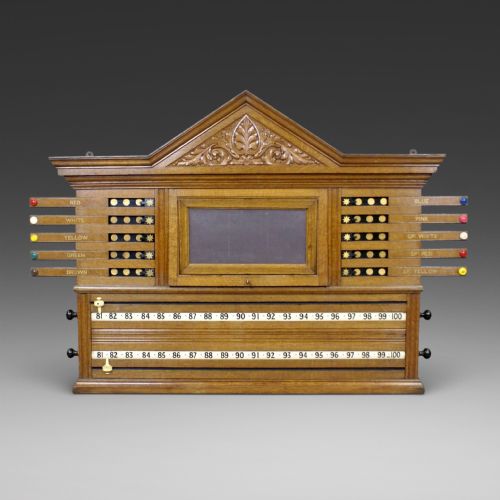
When you search for a victorian snooker board, you are looking at timber wall-mounted scoring apparatuses designed for nineteenth-century billiards and pool rooms. These pieces organise numbers and sliding pointers on wooden panels, often featuring multiple markers for different games like life pool and snooker.
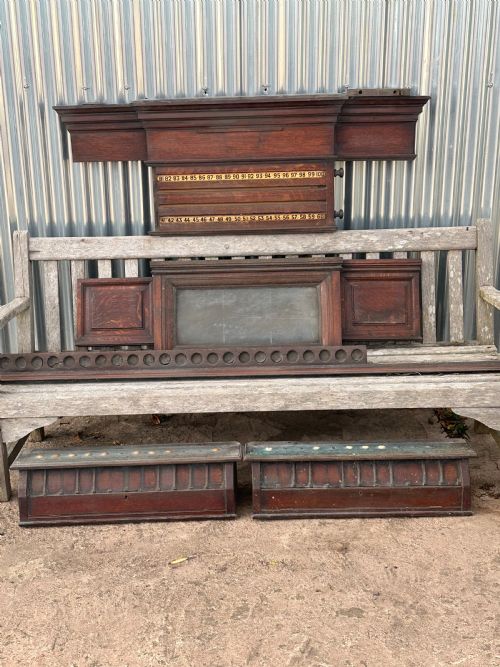
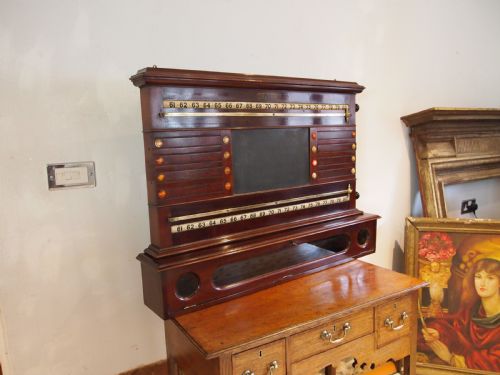
You will most commonly meet mahogany or oak examples originating from the nineteenth century, spanning from the eighteen-sixties through to the Edwardian period. They range from simple rectangular boards to large cabinets equipped with glass panels and brass fittings.
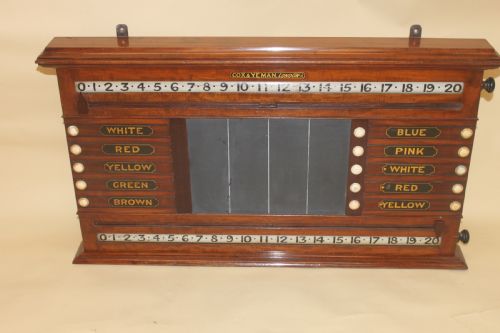
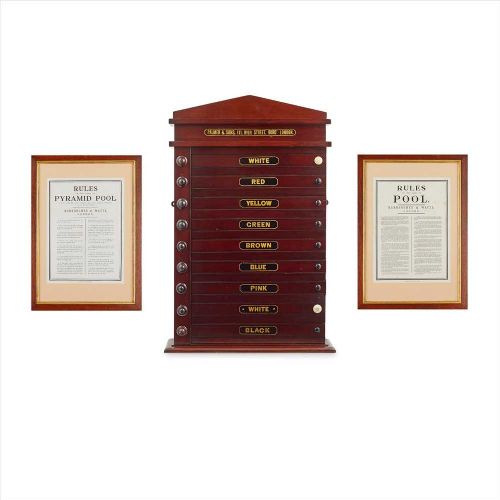
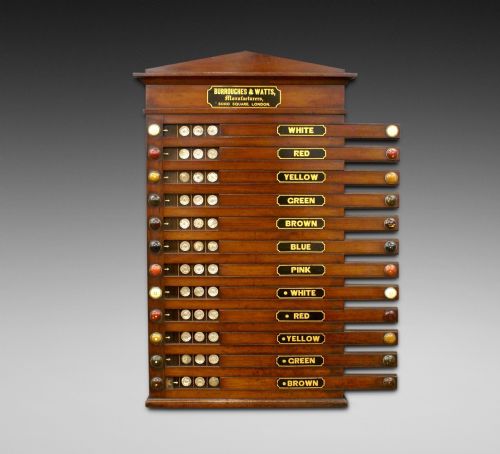
The makers represented on this page include notable London and Manchester firms such as Orme & Sons, Thurston & Co, Cox & Yeman, and Burroughes and Watts. These workshops produced sturdy accessories intended to hang in private residences and commercial billiard halls alike.
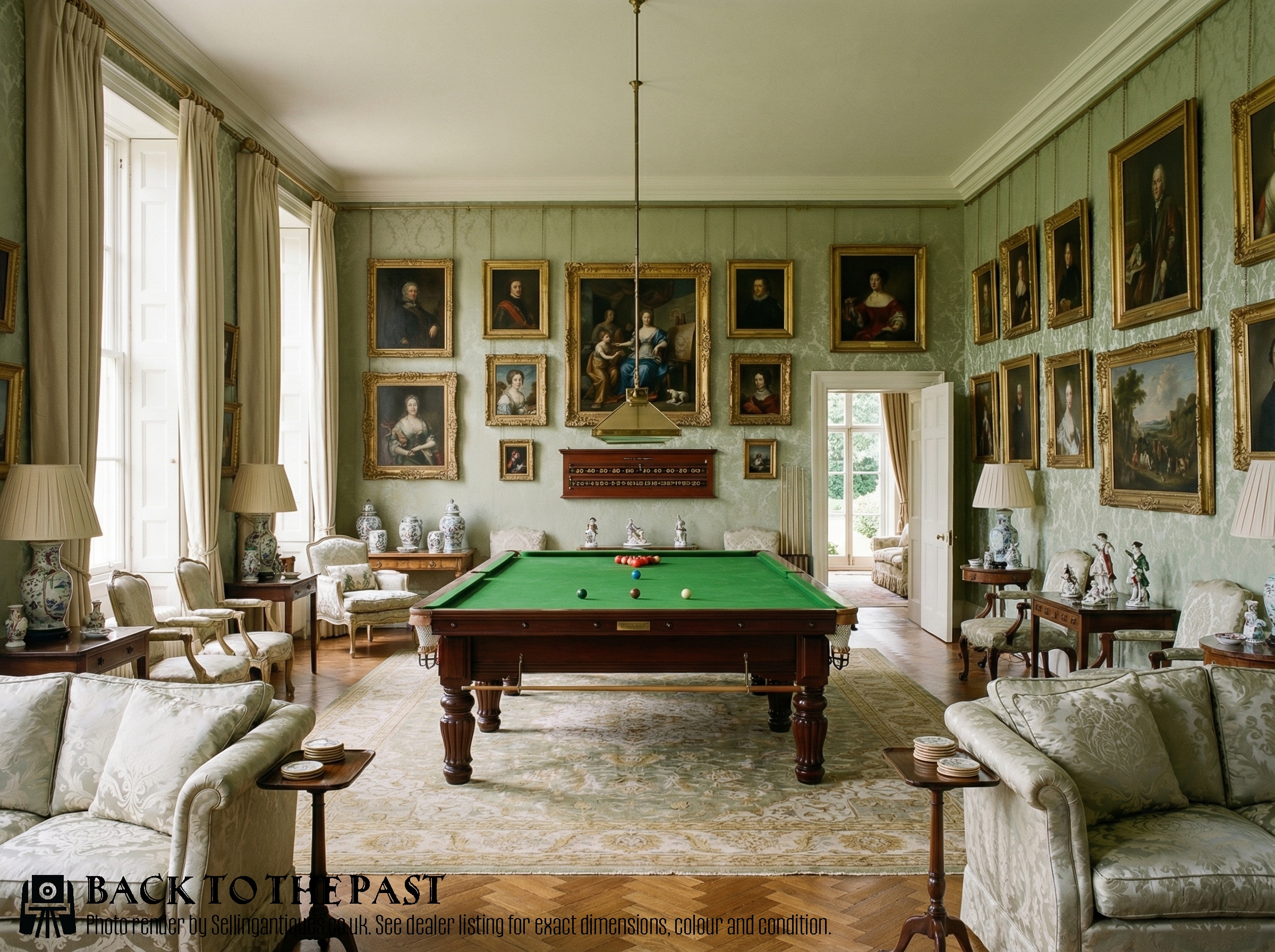
How they were made
Makers constructed these boards primarily using solid mahogany or oak, selecting dense timbers capable of supporting brass runners and mechanical scoring mechanisms. The woodwork often includes decorative mouldings, applied carvings, or panelled backing boards designed to match contemporary interior joinery.
Functional elements rely on brass rods, sliding pointers, and bone markers to track scores clearly across the face of the board. Some pieces incorporate slate panels for chalking or glass-fronted cabinets to store accessories securely.
Some boards include integrated print displays, ensuring players could contemplate sporting heroes while struggling to sink a black ball.
What varies in quality
Quality rests in the presence of maker attribution, material selection, and the complexity of the scoring layout. Boards bearing names like Orme & Sons or Thurston & Co demonstrate superior cabinet-making and more intricate mechanical arrangements than unsigned pieces.
The choice of timber and secondary materials elevates certain examples, with figured mahogany and pale oak sitting alongside detailed brass fittings and bone pointers. Larger boards featuring cabinetry or multiple game variants indicate a higher grade of original production.
Orme & Sons·Thurston & Co·Cox & Yeman·Burroughes and Watts
The Victorian Snooker Board Glossary
- Scoreboard
- A wall-mounted wooden apparatus fitted with sliding pointers or rollers to track scores during cue sports. These boards feature numbered scales for snooker, billiards, and pool.
- Mahogany
- A dense, reddish-brown tropical hardwood favoured by nineteenth-century cabinet makers for its stability and fine grain. It forms the primary structure of many scoreboards.
- Oak
- A durable, heavy timber utilised in pale or dark finishes for billiard room furniture and accessories. Oak boards often display prominent growth rings and robust joinery.
- Bone
- A natural material shaped into small markers or pointer heads attached to sliding mechanisms. It provides a contrasting pale detail against darker wood panels.
- Slate
- A fine-grained metamorphic rock occasionally incorporated into scoring boards for chalk writing surfaces. It offers a permanent, smooth plane that withstands repeated use.
Victorian Snooker Board: Frequently Asked Questions
How do you mount a victorian snooker board?
These boards attach directly to walls using heavy-duty screw fixings through the wooden backing frame to support their considerable weight.
Because they contain dense timbers like mahogany and oak, secure wall anchors are essential to hold the board firmly in place.
What games do these scoreboards track?
The mechanisms accommodate traditional cue sports including snooker, billiards, and life pool.
Different rows of numbers and sliding pointers allow players to tally frames, points, and handicaps simultaneously across various rules.
How do you date a snooker board?
Dating relies on maker signatures, timber choices, and stylistic cues from the nineteenth and early twentieth centuries.
Records of firms like Orme & Sons or Thurston & Co help place specific pieces between the eighteen-sixties and the Edwardian era.
What materials are used in these boards?
Construction primarily involves solid mahogany or oak paired with brass fittings and bone pointers.
Some examples also integrate glass doors, paper prints, or slate panels for chalking scores.