






Vintage Pool Scoring Board
A vintage pool scoring board brings the authentic character of the traditional games room into a modern interior.
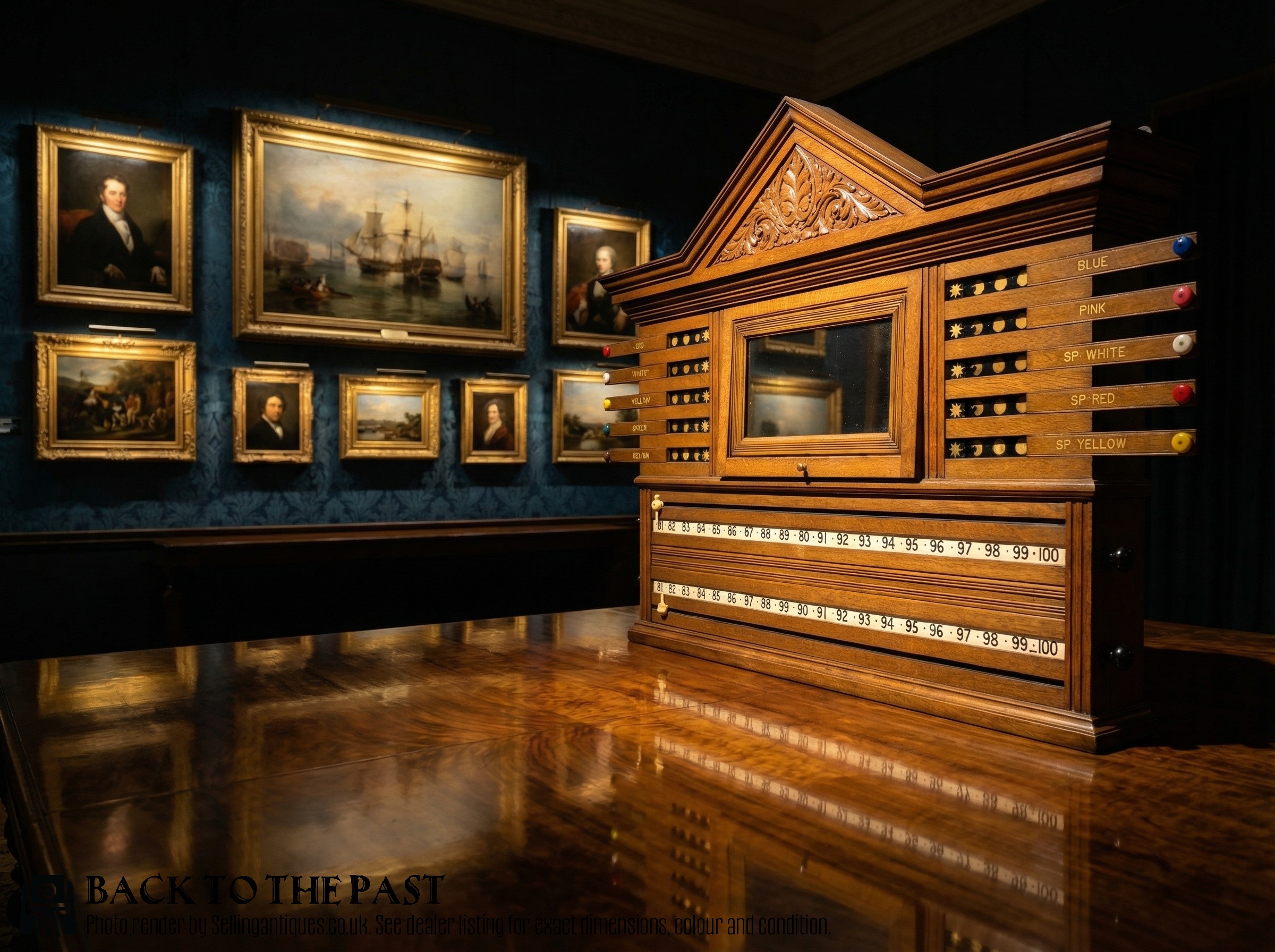
Vintage Pool Scoring Board
A vintage pool scoring board is a practical wall-mounted or cabinet-enclosed apparatus designed to track points during cue sports such as billiards, snooker, and life pool. These pieces serve as both functional game room accessories and striking decorative wall items.
Most examples encountered on this page originate from the nineteenth century and the Edwardian era, reflecting the height of home and club table sports. Makers constructed these boards from timber to complement the heavy mahogany and oak furniture typical of period billiard rooms.
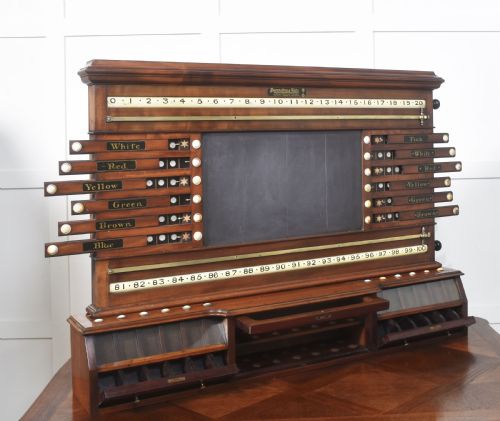
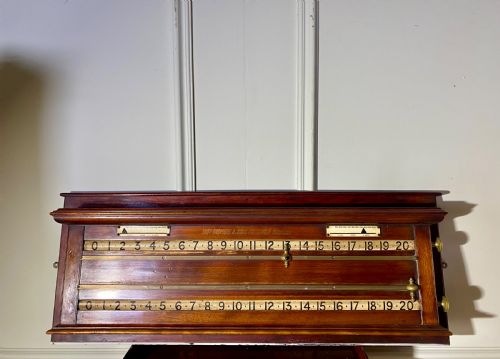
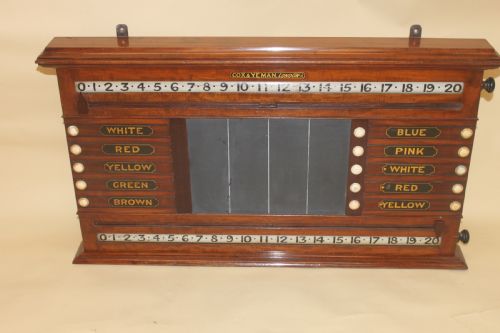
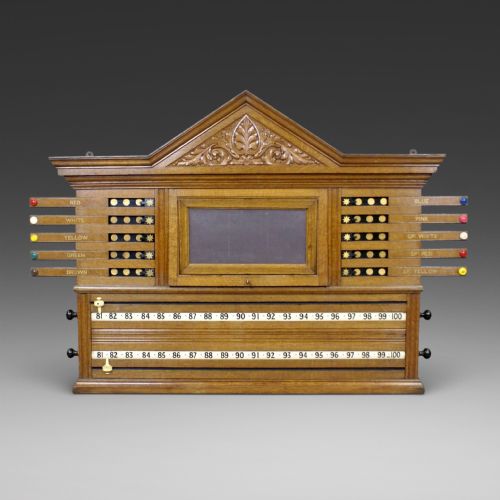
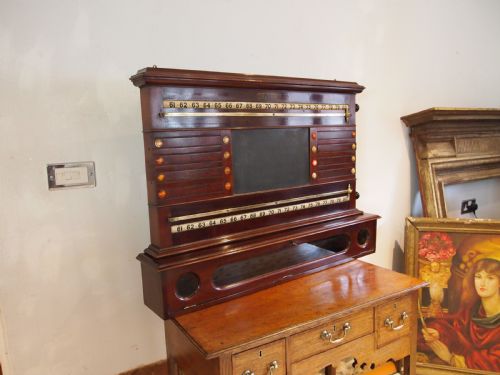
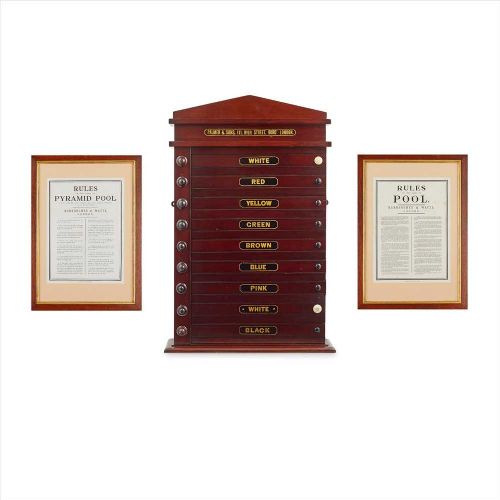
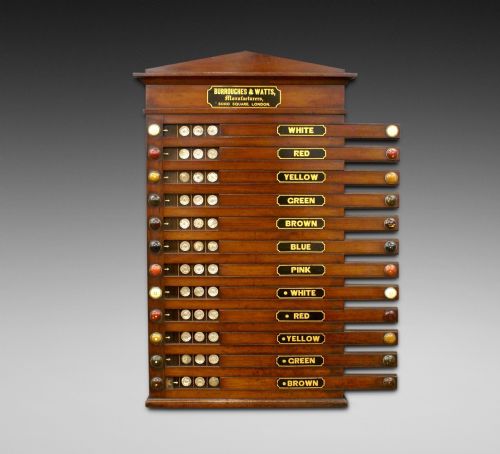
Collectors generally meet standard scoreboard panels alongside more complex score cabinets featuring sliding pointers, revolving rollers, and integrated display shelves. Each configuration records the scores of different players through numbered dials, pointers, or brass markers.
Materials and construction
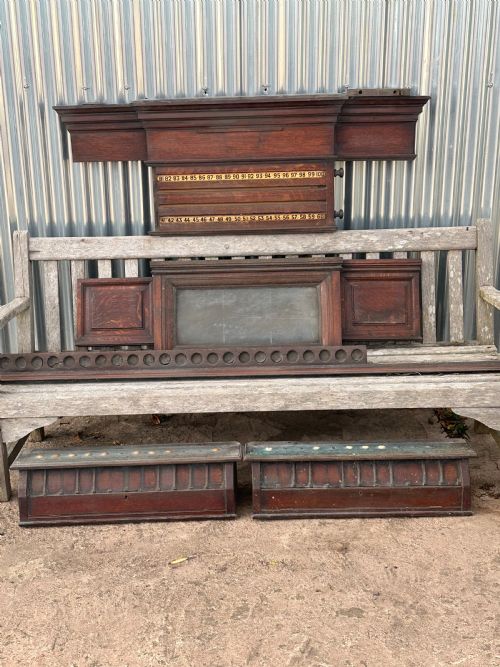
Craftsmen built these boards primarily using dense hardwoods like mahogany, oak, and English walnut, selecting timber that could withstand decades of club or domestic use. These wooden backplates often feature applied mouldings, carved details, or enclosed cabinetry.
Makers integrated contrasting materials to ensure the scoring indicators remained clearly legible across a dimly lit room. Brass pointers, bone markers, slate panels, glass fronts, and celluloid details appear across the various surviving examples.
The listings show nineteenth-century and Edwardian boards constructed from mahogany, oak, and English walnut.
Assessing quality and craftsmanship
Quality in a vintage pool scoring board rests on the sophistication of its mechanical action and the caliber of its cabinetry. Finer pieces incorporate intricate sliding mechanisms, spring-loaded rollers, and detailed brass fittings rather than simple painted numbers.
The choice of timber and the presence of maker attribution significantly elevate an example. Heavy oak and figured walnut cabinets bearing signatures from prominent makers demonstrate superior workshop output compared to unmarked, utilitarian boards.
Orme & Sons Manchester·Thurston & Co. of London·Cox & Yeman London·Burroughes and Watts·Palmer & Sons
The Vintage Pool Scoring Board Glossary
- Life pool
- A variation of cue sports involving multiple players who each start with a specific number of lives. Scoreboards dedicated to this game often include specialised scoring rows.
- Score cabinet
- An enclosed wooden housing fitted with doors that protects the scoring mechanism and occasionally stores chalk or other accessories. These cabinets frequently feature glazed panels and decorative wood grain.
- Celluloid
- An early thermoplastic material used for numbering strips, dials, or pointers on period boards. It provides a smooth, durable surface that mimics ivory.
- Brass marker
- A sliding pointer or indicator cast from brass that moves along a track to tally points. These metal components add both durability and visual contrast to the timber backboard.
- Slate
- A dense, fine-grained stone utilised in certain scoring boards for writing chalk scores or providing a stable mounting surface. Its dark matte finish contrasts sharply with light-coloured numerals.
Vintage Pool Scoring Board: Frequently Asked Questions
How do you mount a heavy scoring board safely?
These boards require secure attachment to solid wall studs or masonry due to the heavy weight of dense hardwoods like oak and mahogany. Using appropriate fixings ensures the apparatus supports the tension of sliding brass pointers and daily adjustments.
Professional installation is recommended for larger score cabinets to prevent the wood from warping or pulling away from the wall over time.
What is the difference between a pool and snooker board?
Scoring boards designed for pool, billiards, and snooker feature differing layouts of numbers and rows to accommodate the specific rules of each game. Life pool boards often include specialised marker tracks for individual player lives.
While many boards handle multiple cue sports interchangeably, the precise configuration of sliding pointers reveals which game the original maker prioritized.
How do I maintain the wooden finish?
Routine maintenance involves gentle dusting with a dry cloth and occasional application of appropriate beeswax to nourish the antique timber. Avoid harsh chemical cleaners that can strip the original polish from mahogany or oak surfaces.
Keeping the board away from direct sunlight and extreme humidity changes preserves both the wood and the delicate brass or celluloid fittings.
Can missing brass pointers be replaced?
Replacement brass pointers and sliding markers can sometimes be sourced from specialist restorers who match period components to antique boards. Maintaining original hardware preserves the authenticity and historical value of the piece.
Any restoration work should respect the existing patina of the wood and the mechanical wear accumulated over decades of use.