






Billiard Room Scoreboard
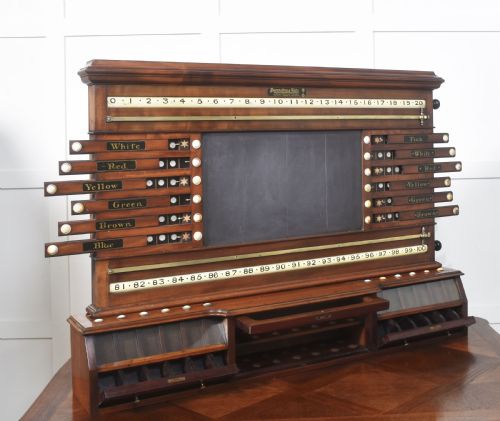
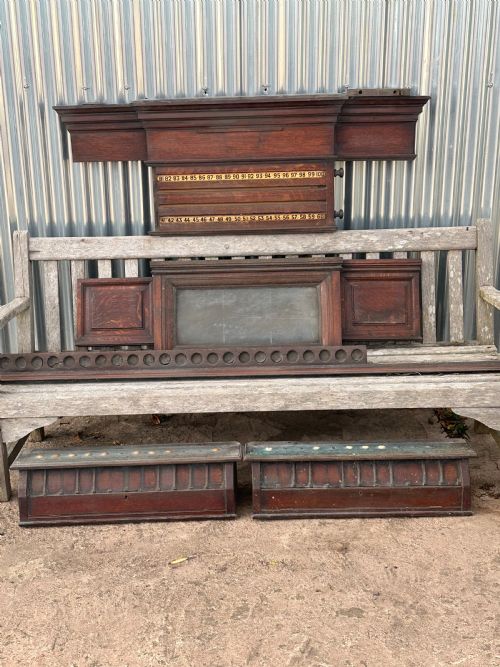
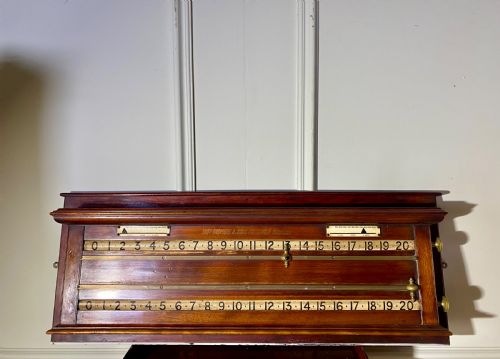
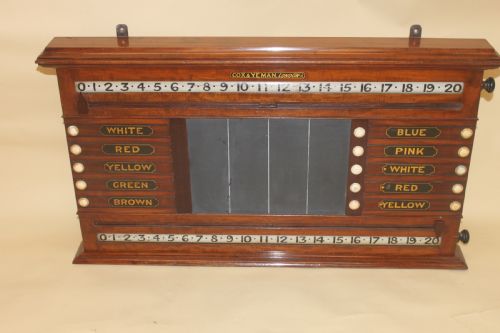
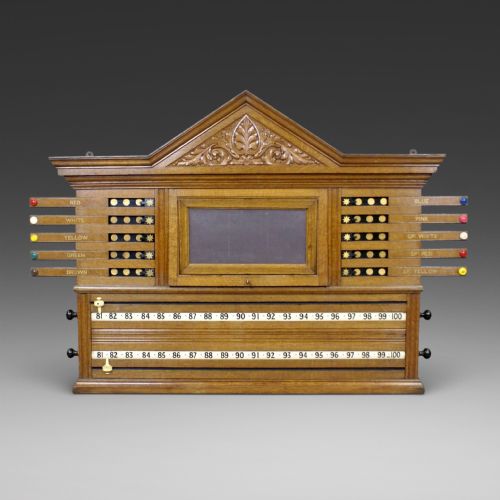
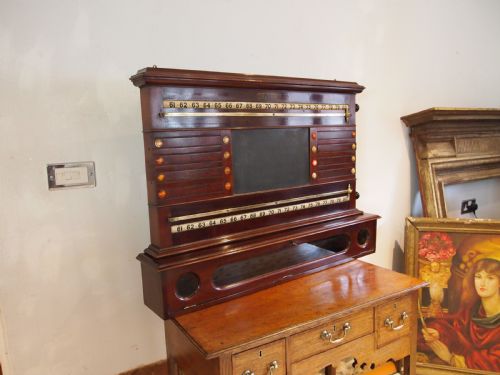
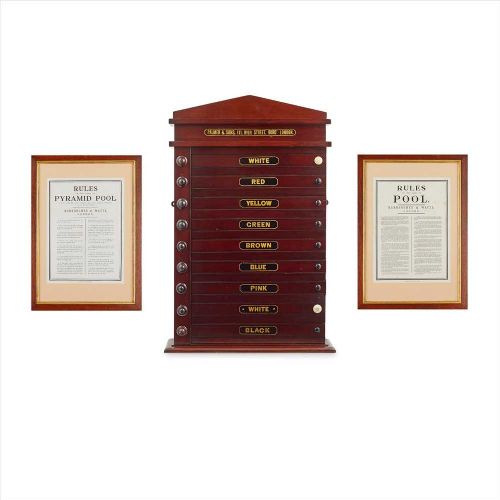
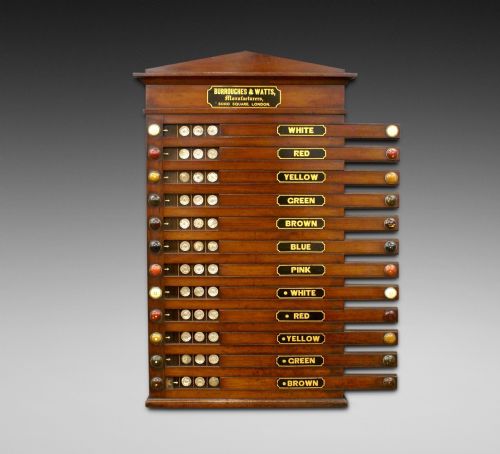
These billiard room scoreboard pieces are timber wall apparatuses designed to track matches, bringing authentic period character to a games room.
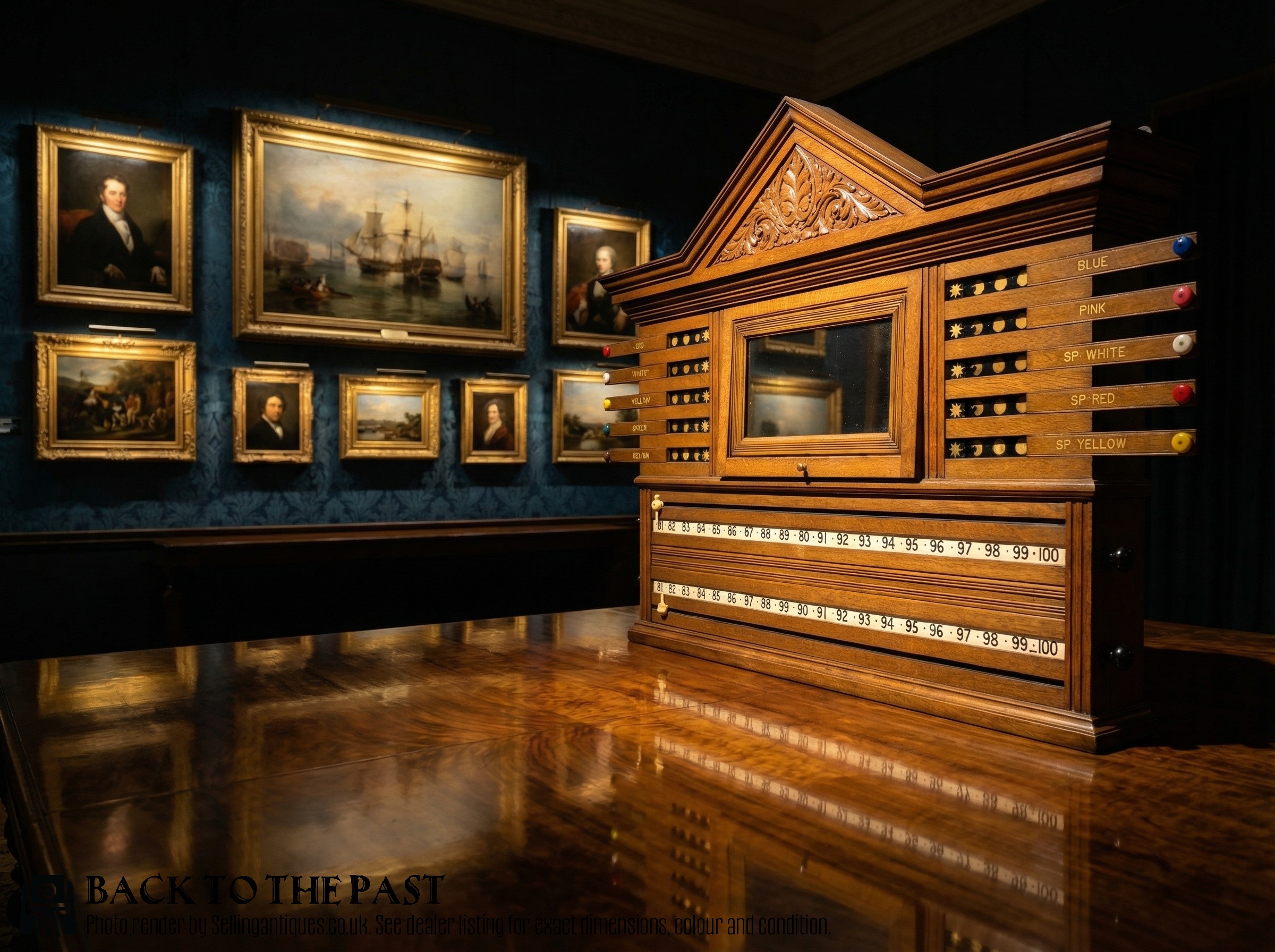
Billiard Room Scoreboard
A billiard room scoreboard is a wooden wall-mounted or cabinet-style piece designed to record points for games such as billiards, snooker, and pool. These functional accessories originate predominantly from the Victorian and Edwardian eras, spanning the nineteenth century and the early twentieth century.
Examples often reflect the output of prominent makers of the period, serving as practical fixtures for traditional games rooms while retaining their original decorative purpose.
How they were made
Makers utilised dense cabinet timbers such as mahogany, oak, and English walnut to construct the primary bodies and frames of these boards. These woods provide the structural stability required for wall mounting and daily manipulation of scoring mechanisms.
Detailing often incorporates brass fittings, bone indicators, glass panels, and inset slate markers for writing. Moving parts rely on precise carpentry, utilising sliding wooden or brass runners to ensure smooth operation of the scoring pointers.
Listings feature mahogany, oak, and walnut timbers, paired with brass, bone, slate, and glass elements across nineteenth-century and Edwardian eras.
What varies in quality
Quality rests upon the selection of timber, the complexity of the scoring mechanics, and the presence of maker signatures. Finer pieces employ superior hardwoods like figured walnut or substantial oak, alongside carefully turned brass dials and bone or celluloid markers.
Workshop attribution elevates an example, particularly when associated with established makers of billiard accessories. The integration of a locking cabinet design also distinguishes more elaborate pieces from standard flat boards.
Orme and Sons Manchester·Thurston and Co of London·Cox and Yeman London·Burroughes and Watts·Palmer and Sons
The Billiard Room Scoreboard Glossary
- Scoreboard
- A wall-mounted board or cabinet designed to record the scores of cue sports. These devices utilise sliding pointers, rollers, or chalk slate panels.
- Cabinet
- An enclosed scoring unit featuring storage compartments, often with panelled doors. These larger pieces combine score tracking with housing for related items.
- Slate
- A fine-grained metamorphic rock utilised for writing surfaces on scoreboards. Players use chalk on these dark panels to record running totals.
- Celluloid
- An early thermoplastic material used for markers, pointers, or numbering on scoring boards. It provides a durable, smooth surface resembling bone or ivory.
- Life Pool
- A variation of cue sports involving multiple players who each hold lives. Scoreboards designed for this game feature specific numbering columns and markers.
Billiard Room Scoreboard: Frequently Asked Questions
How do these scoreboards mount on walls?
Most boards feature integrated hanging brackets or sturdy timber mounting battens on the reverse to secure them safely to wall studs.
Due to the weight of dense timbers like mahogany and slate, proper wall fixings are essential for safe installation.
What games do these scoreboards support?
The boards accommodate traditional cue sports including billiards, snooker, pool, and life pool through varied scoring tracks and dials.
Many examples feature multiple sliding pointers to track different players or variants simultaneously during a match.
How do I date a scoreboard?
Dating relies on timber choices, construction methods, maker signatures, and stylistic markers associated with Victorian or Edwardian periods.
Reference to specific makers or patent dates stamped into the wood or brass fittings also helps narrow the production era.
Are the scoring mechanisms still functional?
The sliding pointers, wooden rollers, and rotating dials generally remain operable for everyday score tracking in a modern games room.
Careful handling ensures these historic brass and timber components continue to move smoothly along their tracks.