





Victorian Pool Scoreboard
These Victorian pool scoreboard pieces are essential fixtures for traditional games rooms, offering mechanical charm and period craftsmanship that collectors prize.
Victorian Pool Scoreboard
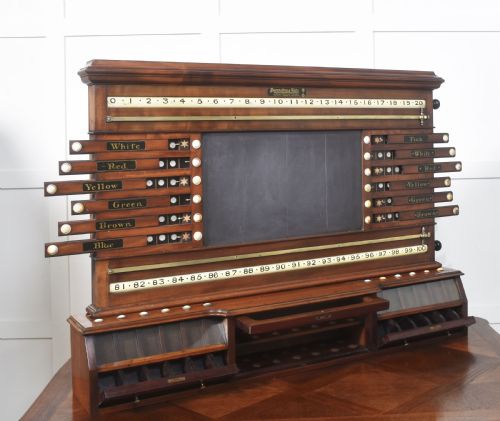
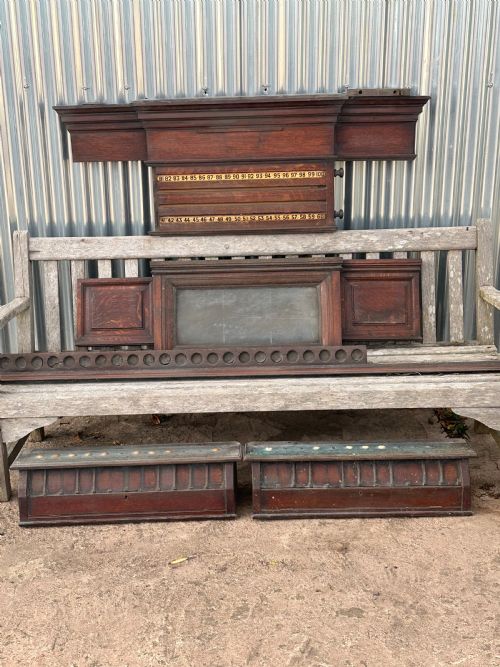
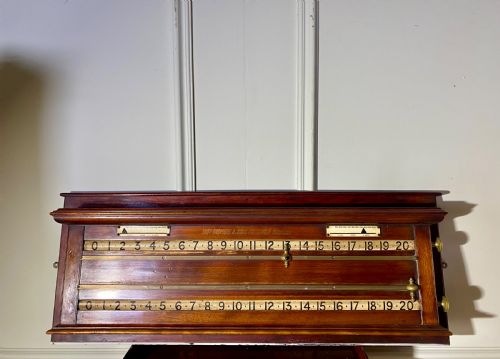
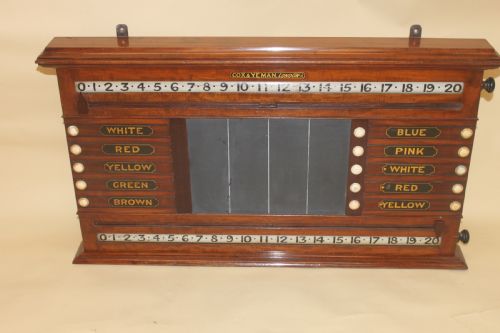
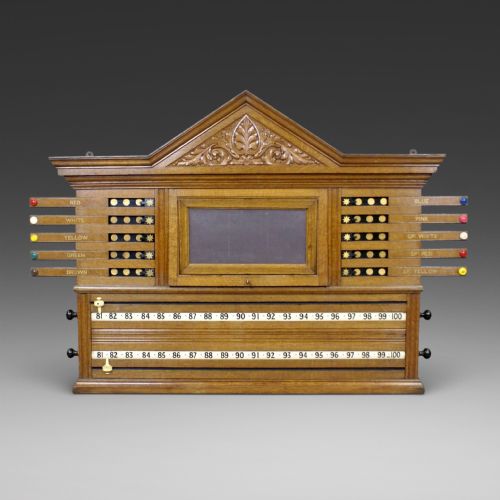
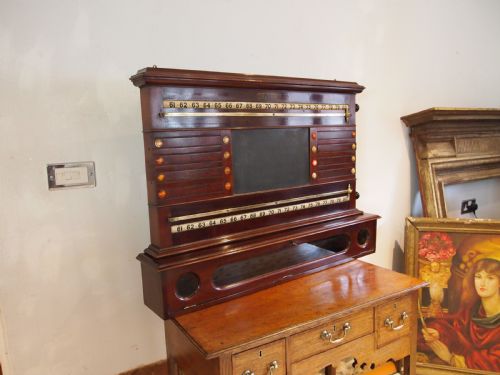
A victorian pool scoreboard is a mechanical wall-mounted or cabinet-style indicator designed to track scores for billiards, snooker, and life pool. You will most frequently encounter mahogany and oak boards dating from the nineteenth century.
The selections span simple wall-hanging scoreboards to larger games cabinets and multi-player life pool boards. These functional accessories originate primarily from the Victorian and Edwardian periods.
Maker attributions frequently point to prominent nineteenth-century billiard table manufacturers based in London and Manchester. The forms accommodate various cue sports popular during the period, utilising sliding pointers and rotating dials.
Materials and Construction
Makers utilised solid hardwoods such as mahogany and oak for the primary backboards and cabinet housings, ensuring durability during vigorous games room use. These timbers often display rich natural grain and deep polished finishes.
Functional details incorporate brass for slide rails, pointer brackets, and maker plaques, combined with bone or ivory indicators and numerical markers. Paper labels and glass panels occasionally appear on specialised cabinet variations.
Some scoreboards include tiny brass fingers that point accusingly at your missed shots, proving the Victorians took their cue sports very seriously.
Assessing Quality and Execution
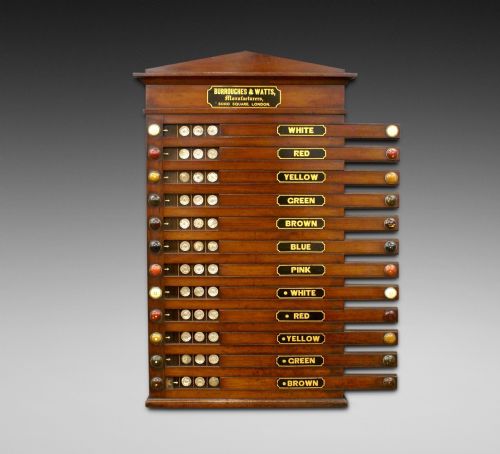
Superior examples distinguish themselves through the reputation of documented makers such as Thurston and Co or Burroughes and Watts, whose brass badges or stamps elevate the piece. The choice of timber also dictates quality, with substantial oak and figured mahogany representing the upper tier.
Intricacy of mechanical setup, such as multi-player life pool tracks and integrated storage cabinets, marks out finer workmanship. The preservation of original brass fittings and sliding markers ensures a higher standard of authenticity.
Orme and Sons Manchester·Thurston and Co of London·Cox and Yeman London·Burroughes and Watts
The Victorian Pool Scoreboard Glossary
- Life Pool
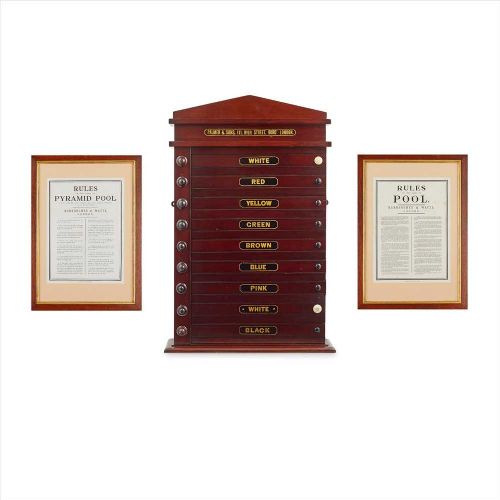
- A variation of cue sports where players hold lives and attempt to take other players' lives while scoring points. Scoreboards built for this game feature multiple sliding indicators for each participant.
- Scoreboard
- A wall-mounted wooden board fitted with brass pointers and numerical markers to track points during cue sports. These devices served as the central method of keeping score before electronic displays.
- Games Cabinet
- An enclosed wooden wall unit that combines a scoring apparatus with storage for billiard accessories and chalk. These units represent the more elaborate end of games room furnishings.
- Slate
- A dense stone material occasionally integrated into Victorian gaming items or used for bed construction in associated billiard tables. Its presence signifies heavy-duty construction typical of the era.
Victorian Pool Scoreboard: Frequently Asked Questions
How do I mount a heavy wooden scoreboard safely?
These boards require secure fixing to solid wall studs or masonry using heavy-duty brackets due to the dense mahogany or oak construction. The weight is substantial, so proper wall anchors are essential.
Professional installation is recommended to prevent damage to the historic timber backing and to ensure the sliding mechanical pointers operate on a level plane.
Can these scoreboards be used for modern snooker?
The numerical markers and sliding pointers function identically for traditional snooker, billiards, and pool scoring systems used today. Many boards accommodate standard breaks and game points without modification.
Collectors often utilise them in active games rooms, though care should be taken with delicate nineteenth-century brass mechanisms and aged wood.
What is the difference between standard and life pool boards?
Standard scoreboards track simple frame points for two players or teams using basic sliding markers along fixed tracks. Life pool boards feature complex multi-row tracks to accommodate numerous players entering and exiting the game.
Life pool variants often bear maker signatures from prominent firms and require more elaborate brass numbering plates to track individual player lives.
How should I clean aged mahogany and brass?
Maintenance requires only a soft, dry cloth to remove dust from the timber surface and intricate brass tracks. Avoid chemical polishes that can degrade nineteenth-century finishes and paper elements.
Waxing the wood occasionally helps preserve the rich patina, while brass components can be left with their natural aged appearance rather than polished to a bright shine.