






Antique Billiards Scoreboard
An antique billiards scoreboard keeps the score of nineteenth and early twentieth century parlour games in polished timber frames.
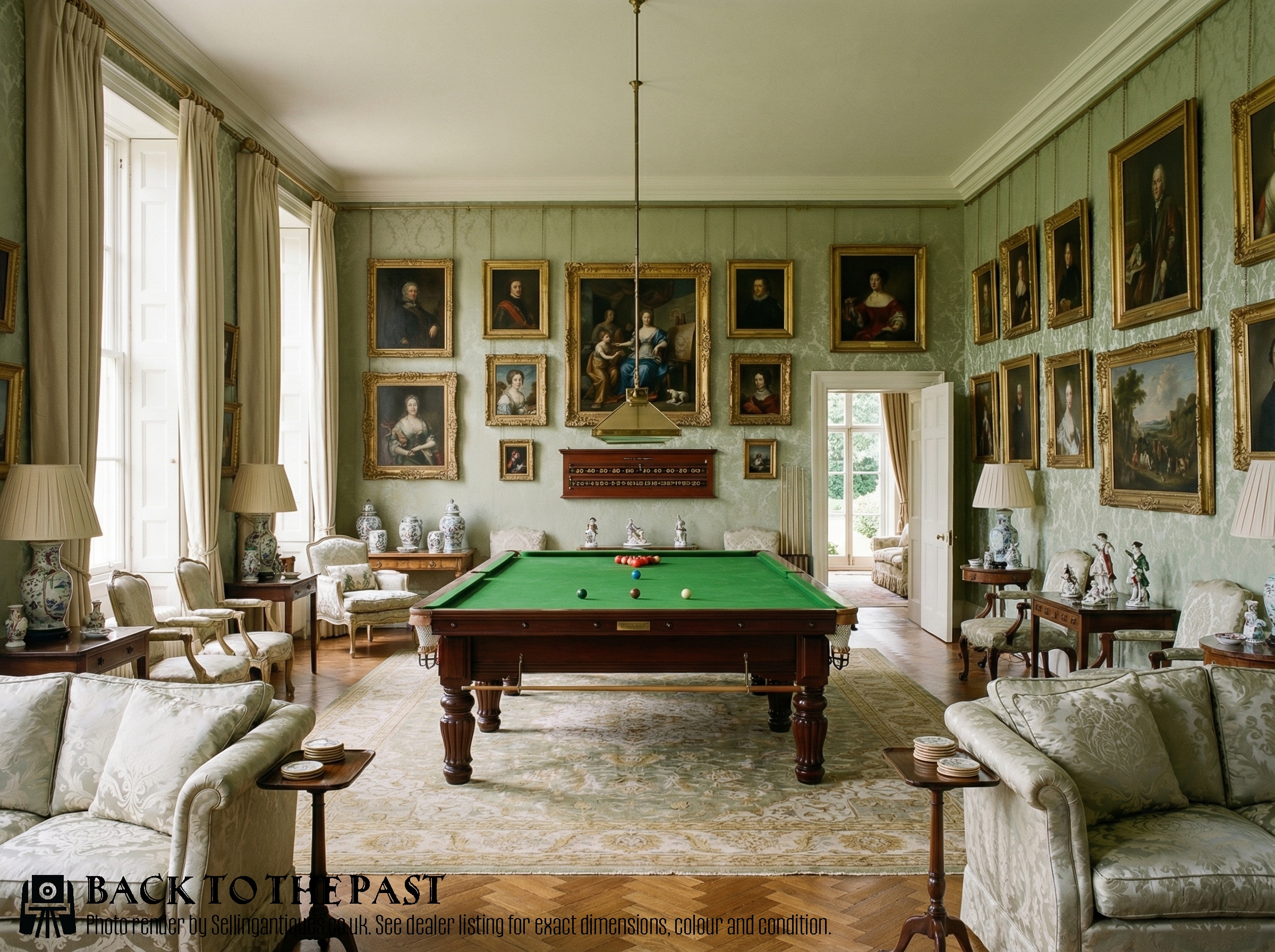
Antique Billiards Scoreboard
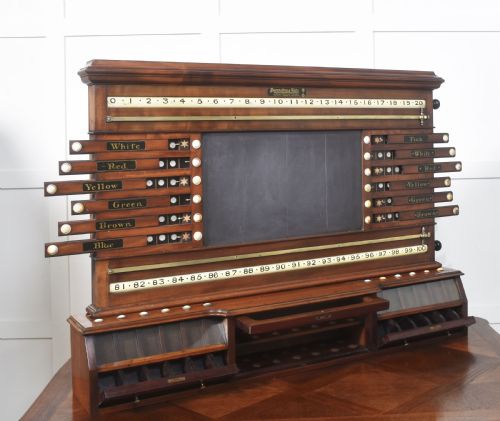
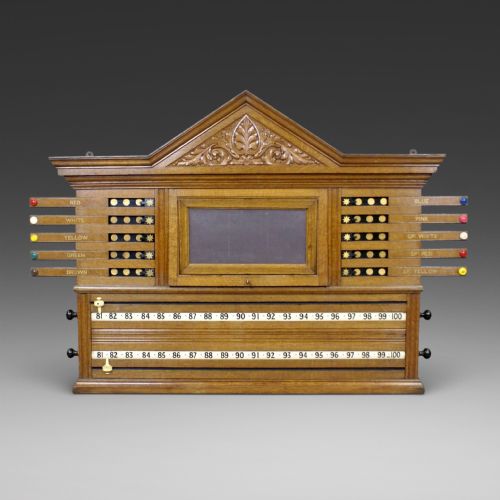
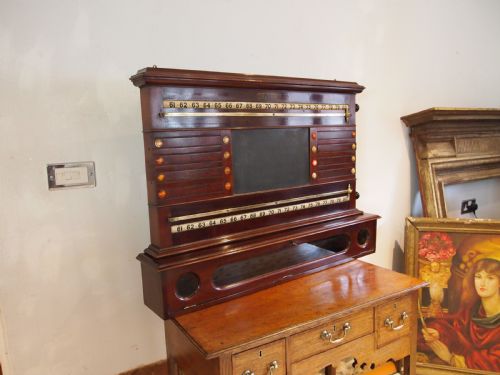
An antique billiards scoreboard is a games room accessory designed to track points for billiards, snooker, pool, and life pool. You are looking at wall-mounted panels and score cabinets originating from the Victorian and Edwardian periods.
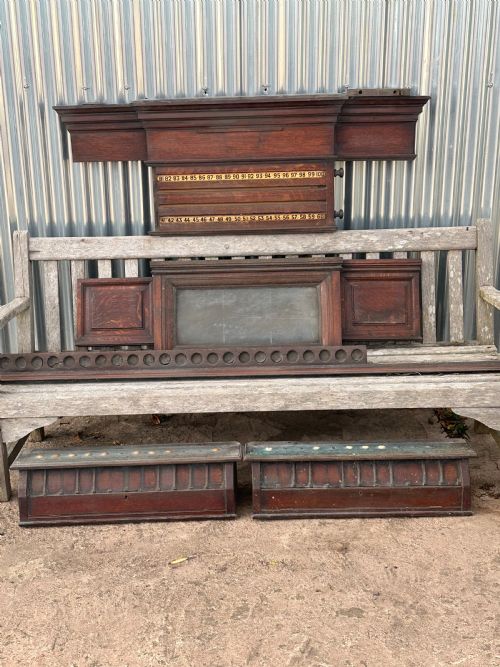
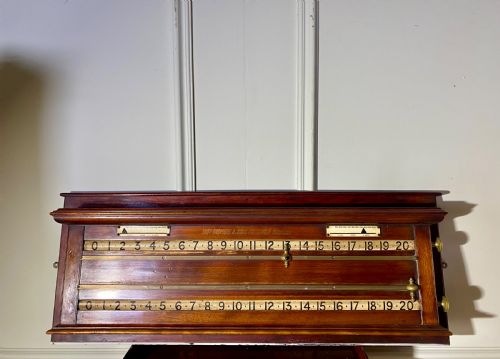
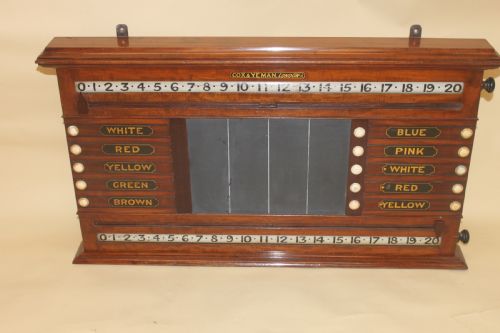
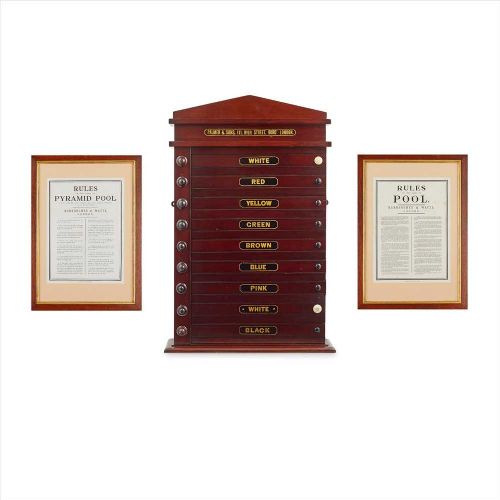
The most common examples on this page are mahogany and oak scoring boards featuring sliding markers alongside revolving brass rods or pointers. These scoreboards range from simple two-player markers to large cabinets with integrated storage for prints and accessories.
Materials and construction
Maker workshops built these scoreboards using dense hardwoods such as mahogany, oak, and English walnut. These timbers provided a stable, durable housing for frequent daily use in billiard rooms.
Details such as sliding markers and numerical indicators incorporate brass, bone, glass, and celluloid. These contrasting materials ensured the numbers remained clearly legible across a dimly lit games room.
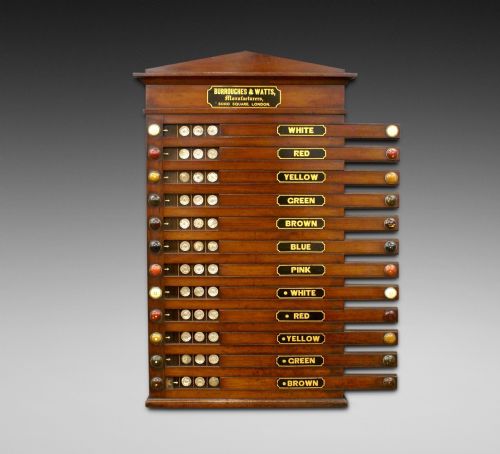
Some elaborate Victorian life pool scoreboards allowed up to twelve players to track their fading lives simultaneously.
What separates the grades
Quality in these scoreboards rests on the complexity of the scoring mechanism and the choice of cabinet timber. Elaborate multi-player boards built for life pool and snooker demand finer joinery than basic two-player markers.
Attribution to prominent makers elevates the standing of a piece significantly. Maker signatures and workshop stamps on the timber or brass fittings indicate a higher standard of manufacture from established London and Manchester firms.
Orme and Sons Manchester·Thurston and Co of London·Cox and Yeman London·Palmer and Sons
The Antique Billiards Scoreboard Glossary
- Life pool
- A variation of cue sports where each player starts with a specific number of lives, tracked on specialised boards with rotating dials.
- Scoring board
- The primary wall-mounted panel featuring numbered scales and sliding pointers to record the tally during a match.
- Score cabinet
- An enclosed wall fixture that combines a billiards scoreboard with lockable storage space for cues, chalk, and prints.
- Celluloid
- An early thermoplastic material utilised for numerals and score indicators on late nineteenth and early twentieth century boards.
Antique Billiards Scoreboard: Frequently Asked Questions
How do you mount a heavy scoreboard?
These timber boards typically require secure fixing to solid wall studs using heavy-duty brackets. The substantial weight of oak and mahogany frames demands proper load-bearing support.
Professional installation prevents warping and ensures the wall can bear the continuous physical interaction of sliding markers during play.
Can missing bone pointers be replaced?
Specialist restorers can match missing bone, ivory, or celluloid markers using period-appropriate materials. Sourcing reclaimed components preserves the historical integrity of the scoreboard.
Matching the exact patina of the existing indicators requires careful tinting by an experienced conservator.
What is the difference between Victorian and Edwardian boards?
Victorian scoreboards generally display heavier proportions in dark mahogany with ornate brass dials. Edwardian examples often feature lighter oak or walnut timbers with simplified, decorative lines.
Both eras utilised similar mechanical scoring tracks, but the aesthetic reflects the shifting interior tastes of the periods.
How should I clean the wood and brass?
Maintenance involves gentle dusting with a dry microfiber cloth and occasional application of appropriate beeswax to nourish the timber. Avoid harsh liquid cleaners on antique polished surfaces.
Brass pointers and rods benefit from careful, minimal polishing to maintain their aged lustre without removing the natural accumulation of age.