






Vintage Snooker Scoring Board
These vintage snooker scoring boards are tactile records of Victorian and Edwardian billiard rooms, built to keep a precise tally in heavy timber.
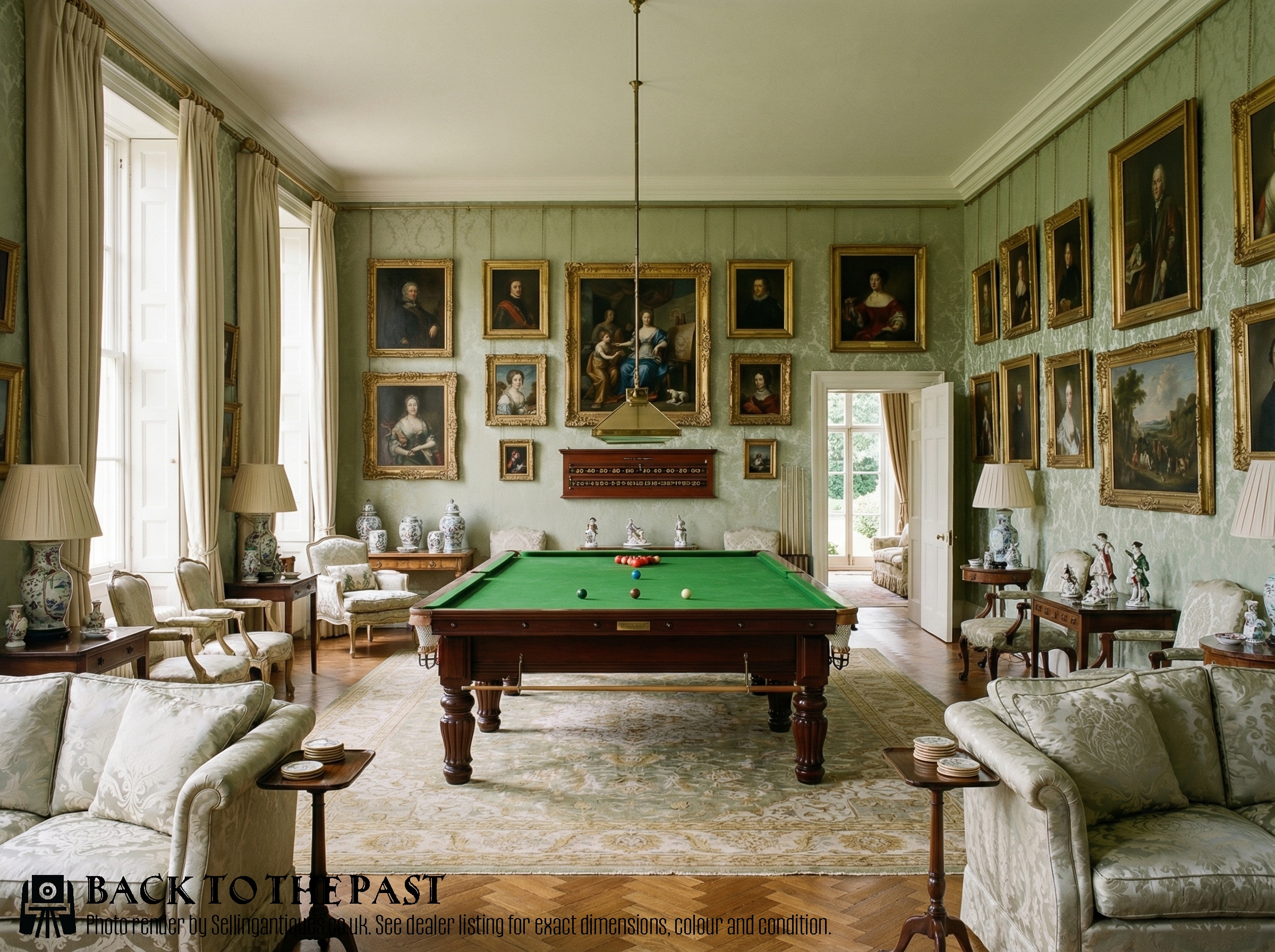
Vintage Snooker Scoring Board
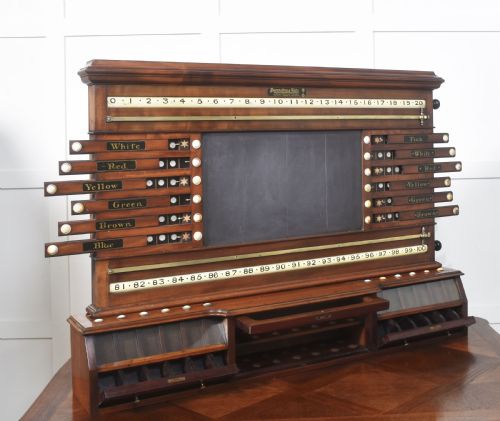
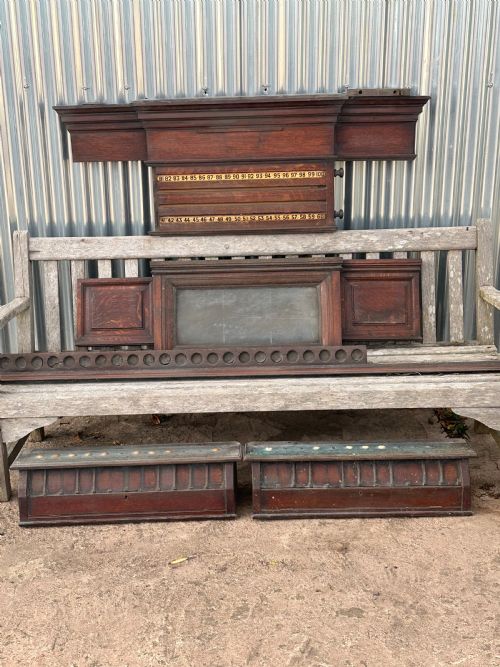
A vintage snooker scoring board is a wall-mounted or cabinet-style piece designed to track points during cue sports such as billiards, pool, and snooker. The pieces seen on this page span the Victorian and Edwardian eras, reaching back through the nineteenth century.
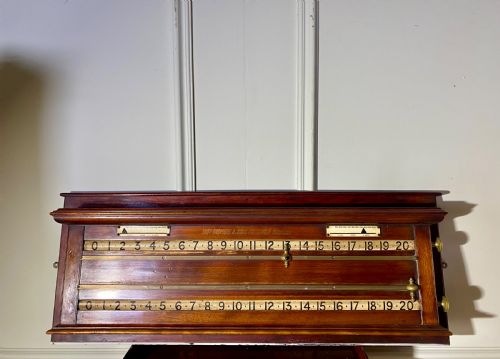
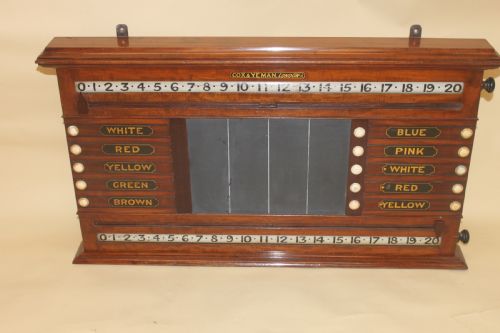
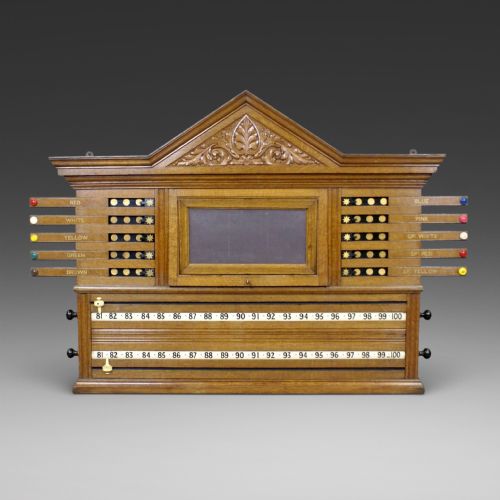
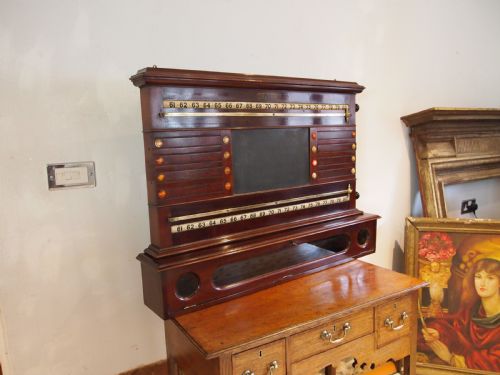
The most common form is a substantial wooden board fitted with sliding brass pointers, numerical rollers, or revolving slate dials. Many incorporate score cabinets with lockable doors to house chalk and accessories.
Makers from London and Manchester pre-dominate, reflecting the golden age of English cue sports. These boards function equally well as practical tallies in modern games rooms or as decorative wall panels in studies.
Materials and construction
Makers constructed these boards primarily in dense hardwoods such as mahogany, oak, and English walnut. These timbers provided the structural stability needed to house sliding markers and heavy dials without warping over decades of use.
Functional details rely on contrasting materials, utilising brass for pointer runners, bone or celluloid for markers and indicators, and occasionally slate or glass for specialised scoring dials. These metallic and mineral elements create a crisp mechanical contrast against the polished wood grain.
Materials appearing across these scoreboards include brass, bone, celluloid, glass, and slate.
Factors of quality
Quality rests in the complexity of the mechanism and the timber selection. Simpler boards rely on straightforward wooden slides, whereas superior examples integrate intricate brass tracks, rotating rollers, and enclosed score cabinets.
The presence of maker details stamped into the wood or brass elevates a piece significantly. Furthermore, timber choice moves from utilitarian pine or plain oak up to figured English walnut and rich, deep-toned mahogany.
Orme and Sons Manchester·Thurston and Co of London·Cox and Yeman London·Burroughes and Watts·Palmer and Sons
The Vintage Snooker Scoring Board Glossary
- Scoring board
- A mounted wooden panel fitted with markers to track points in cue sports. They range from simple sliding tallies to elaborate cabinets with multiple dials.
- Slate dial
- A circular scoring disk made from slate, often numbered for tracking higher point tallies in games like billiards and pool. Slate provides a durable, smooth surface that resists wear from constant handling.
- Life pool
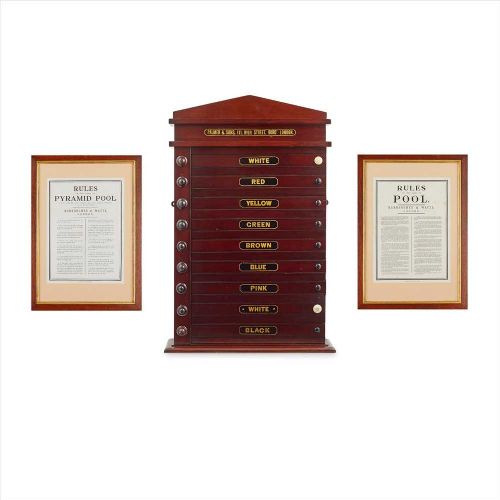
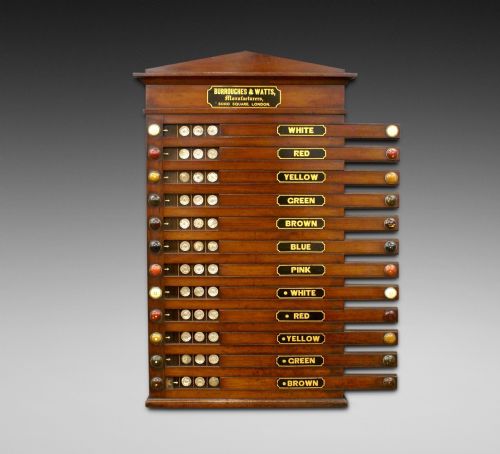
- A variation of pool played with coloured and numbered balls where players lose lives rather than accumulate points. Scoreboards designed for this include dedicated rows for tracking remaining lives.
- Brass pointer
- A sliding metal indicator fixed to a wooden track to show the current score. These pointers develop a rich patina through decades of thumb-slides.
Vintage Snooker Scoring Board: Frequently Asked Questions
How do you mount a vintage scoreboard?
Most boards feature pre-drilled fixing points or original brass mounting brackets secured into the rear timber frame. Due to the weight of dense hardwoods like mahogany and oak, secure wall anchors or direct fixing into wall studs are essential.
Position the board at eye level in a room with adequate clearance for players to adjust the markers comfortably during a frame.
What is the difference between a pool and snooker board?
Snooker and billiards boards often feature numerical tracks running up to higher numbers to accommodate larger breaks and century scores. Pool boards frequently include additional rows or rotating dials to track specific pool variants and remaining player lives.
Many nineteenth-century boards were built to accommodate multiple cue sports on a single panel by incorporating diverse sliding scales.
How should I clean the wood and brass?
Maintain the timber by applying a microcrystalline wax to nourish the grain and protect the polished surface from moisture. Avoid modern solvent-based polishes that strip the aged patina.
Clean brass pointers and tracks with a dry cloth rather than harsh metal cleaners to preserve the authentic oxidation accumulated over decades.
Can these scoreboards still be used today?
Original sliding mechanisms and brass pointers remain fully operational on most surviving nineteenth-century examples. The internal rollers and wooden tracks function precisely as they did in Victorian billiard halls.
Using them regularly adds a tactile element to modern games, provided the wall fixings safely support the weight of the timber cabinet.