


Mahogany Piano Seat
A mahogany piano seat combines solid timber framing with adjustable swivel mechanisms or hinged music storage boxes.
Mahogany Piano Seat
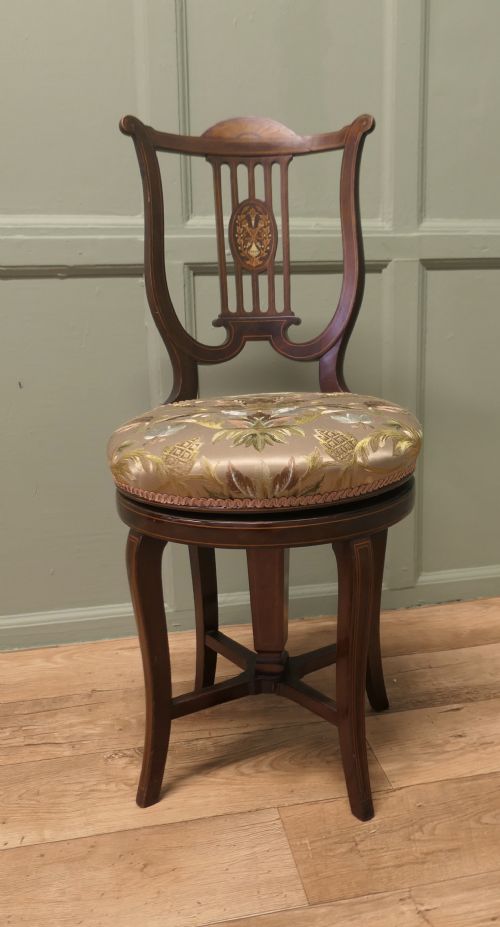
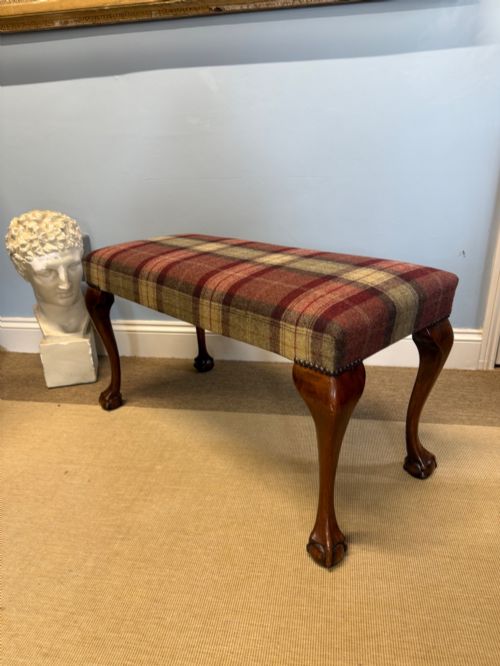
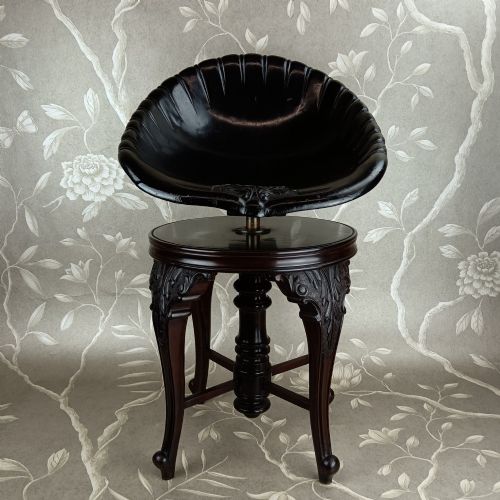
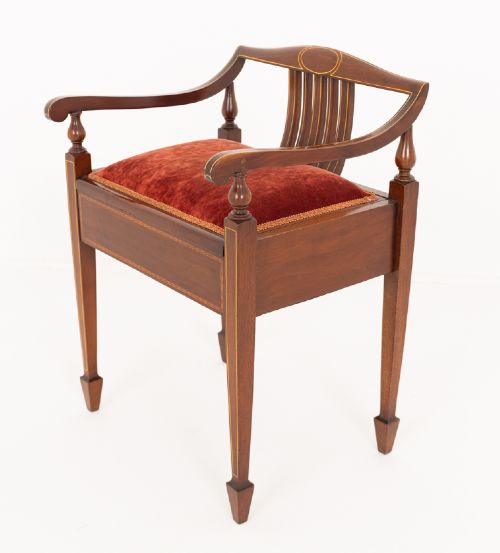
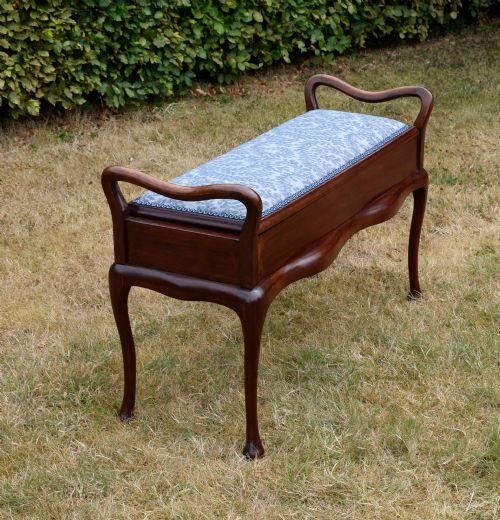
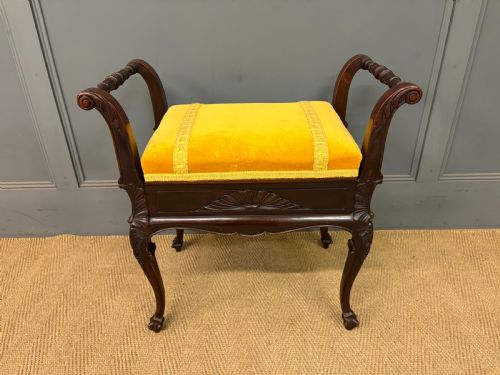
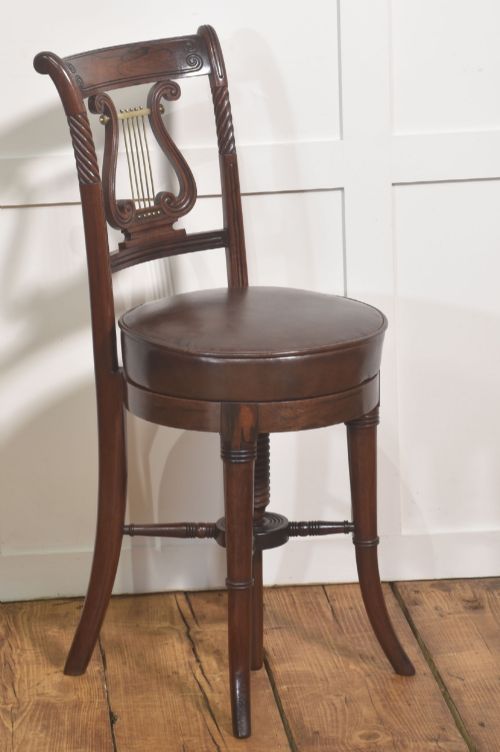
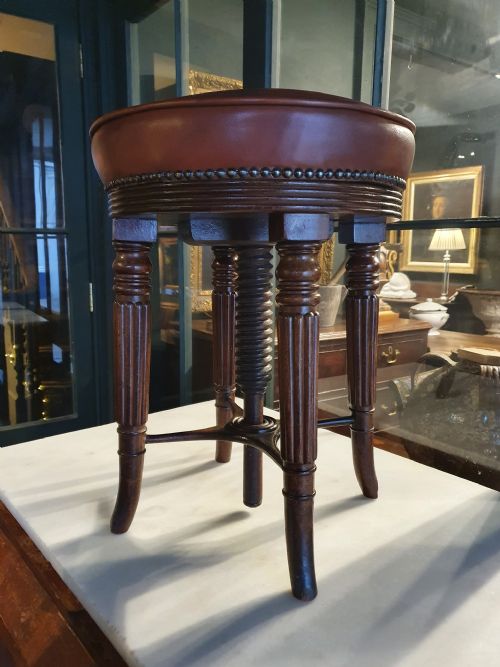
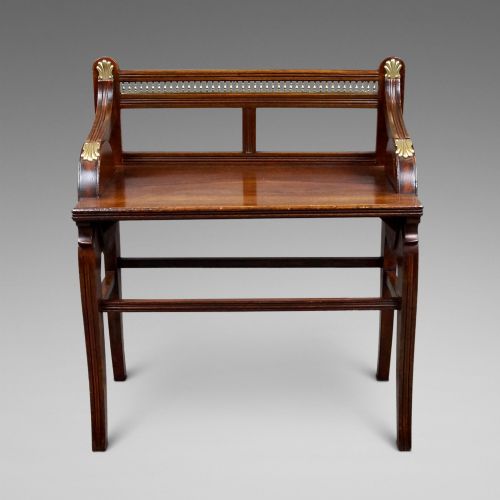
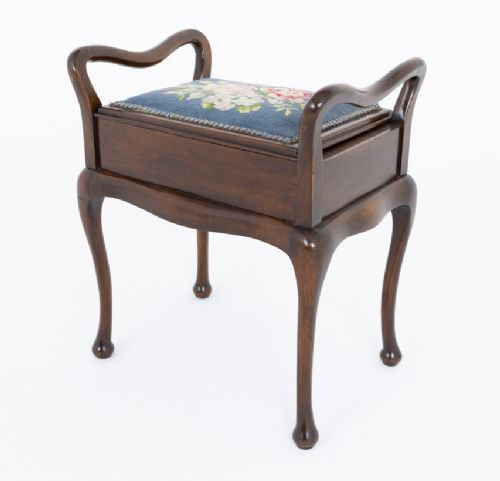
A mahogany piano seat is a specialist seating form designed for keyboard players, appearing in single revolving formats, long duet proportions, and box-seat storage variants across this selection.
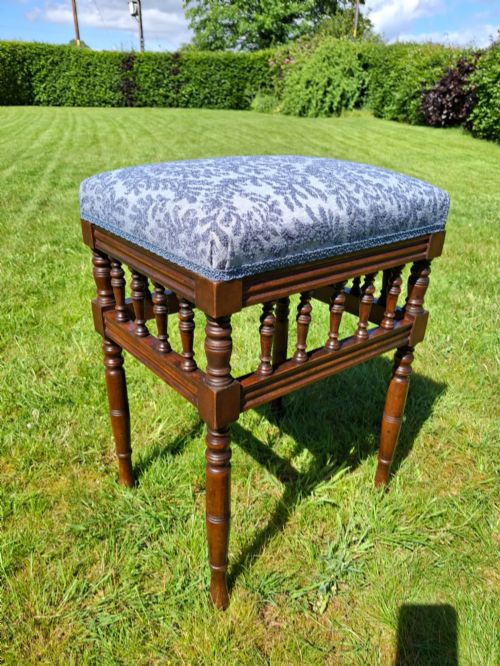
Edwardian and Victorian examples dominate the available pieces, bringing turned wooden legs, upholstered tops, and mechanical height adjustment into domestic spaces.
Makers adapted classical vocabulary, producing items in Georgian, Sheraton Revival, and William IV styles that function equally well as window seats or dressing stools.
How they were made
Craftsmen shaped dense tropical hardwood into frames, utilising solid mahogany for structural legs, revolving screw columns, and box bodies.
Upholstery techniques combined internal webbing and stuffing with top covers of fabric, leather, velvet, or tapestry needlepoint, often secured with brass tacks.
What varies in quality
The sophistication of the mechanical adjustment mechanism dictates the upper tier of execution, separating basic fixed frames from smooth swivel screws and rise-and-fall box seats.
Cabinetwork refinement shows in the crispness of wood inlay, the weight of cast brass fittings, and the structural integrity of joined cross stretchers.
Jennens and Bettridge·Jas Shoolbred·Gillows
The Mahogany Piano Seat Glossary
- Revolving
- A top mechanism that turns on a central wooden or metal screw to alter the seating height for the musician. This allows the player to spin the circular top up or down effortlessly.
- Duet stool
- An extended bench designed to accommodate two piano players at the same time. These wider seats frequently incorporate hinged lids for sheet music storage.
- Rise and fall
- A mechanical system using side handles or internal gears to raise and lower the upholstered seat level. It provides stability during energetic keyboard performances without spinning the top.
- Tapestry
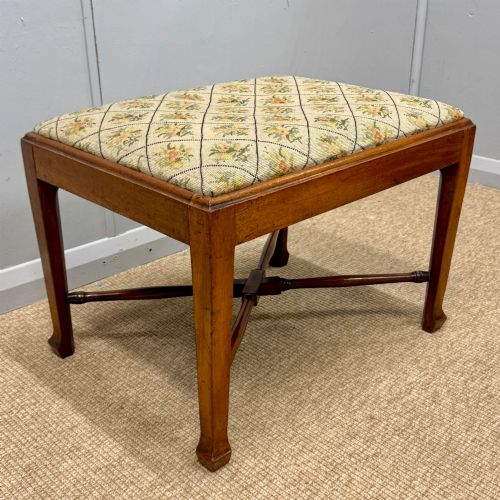
- A hand-stitched needlepoint textile featuring floral or pictorial patterns used for seat covers. Collectors look for complete needlework retaining its original tension and bright wool colours.
- Cross stretcher
- Wooden bracing bars connecting the lower legs diagonally or horizontally for added stability. They often feature a central turning or finial detail characteristic of period joinery.
Mahogany Piano Seat: Frequently Asked Questions
How do I adjust the height?
Many Victorian and Edwardian examples feature a revolving top that winds up and down on a central wooden or metal screw thread. Simply turn the upholstered seat clockwise or counter-clockwise until you reach the desired playing height.
Other models utilise a mechanical rise-and-fall system operated by side knobs or internal scissor actions. These keep the seat level while altering the height through hidden wooden or brass mechanisms.
Where were they used?
These seats were manufactured primarily for parlours, music rooms, and drawing rooms beside upright and grand pianos. Their compact footprint and upholstered tops also made them practical as dressing table chairs or hallway window seats.
Duet versions provided extended seating for collaborative piano practice, while box-seat variants kept sheet music and manuscript books neatly tucked away beneath the hinged lid.
How do I care for the mahogany?
Keep wooden surfaces away from direct sunlight and extreme radiator heat to prevent the polished mahogany from drying out or splitting. Dust regularly with a dry cloth and apply a traditional beeswax polish sparingly to maintain the natural timber lustre.
Avoid silicone-based sprays, which build up over time and attract dust into the carved grain and inlaid details.
Are the upholstery fabrics original?
Most surviving pieces have been re-covered at least once during their lifespan to match changing domestic interiors. However, some pieces retain period tapestry needlepoint, leather, or woven fabric secured with traditional brass tacks.
Inspect the underside webbing and tack lines to determine whether the textiles date from the manufacturing period or represent later conservation work.