

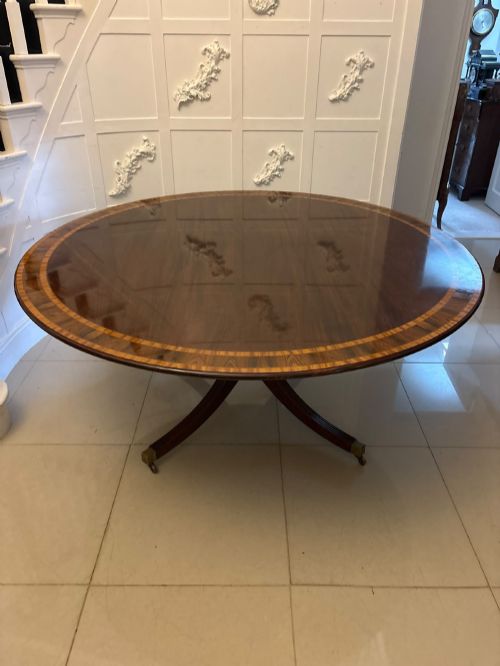
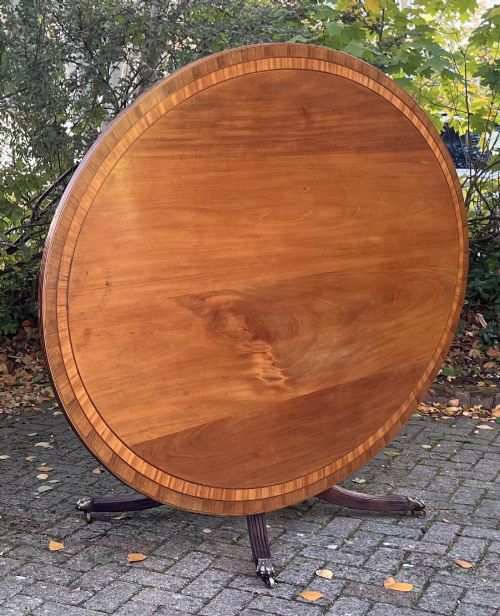
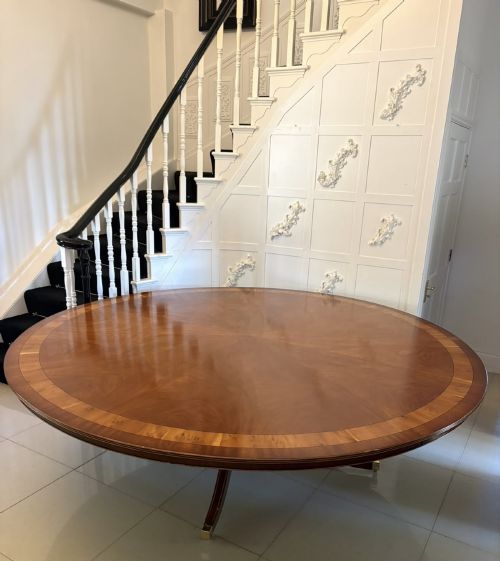
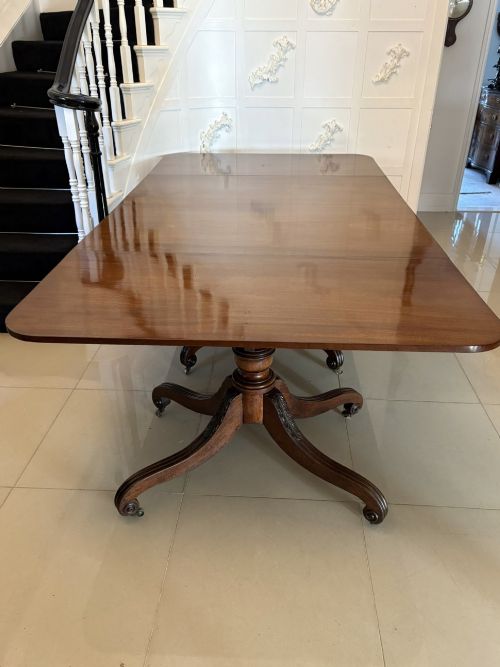
Mahogany Pedestal Dining Table
A mahogany pedestal dining table provides a versatile setting for gatherings, uniting solid timber and modular supports to serve rooms of varying scale.
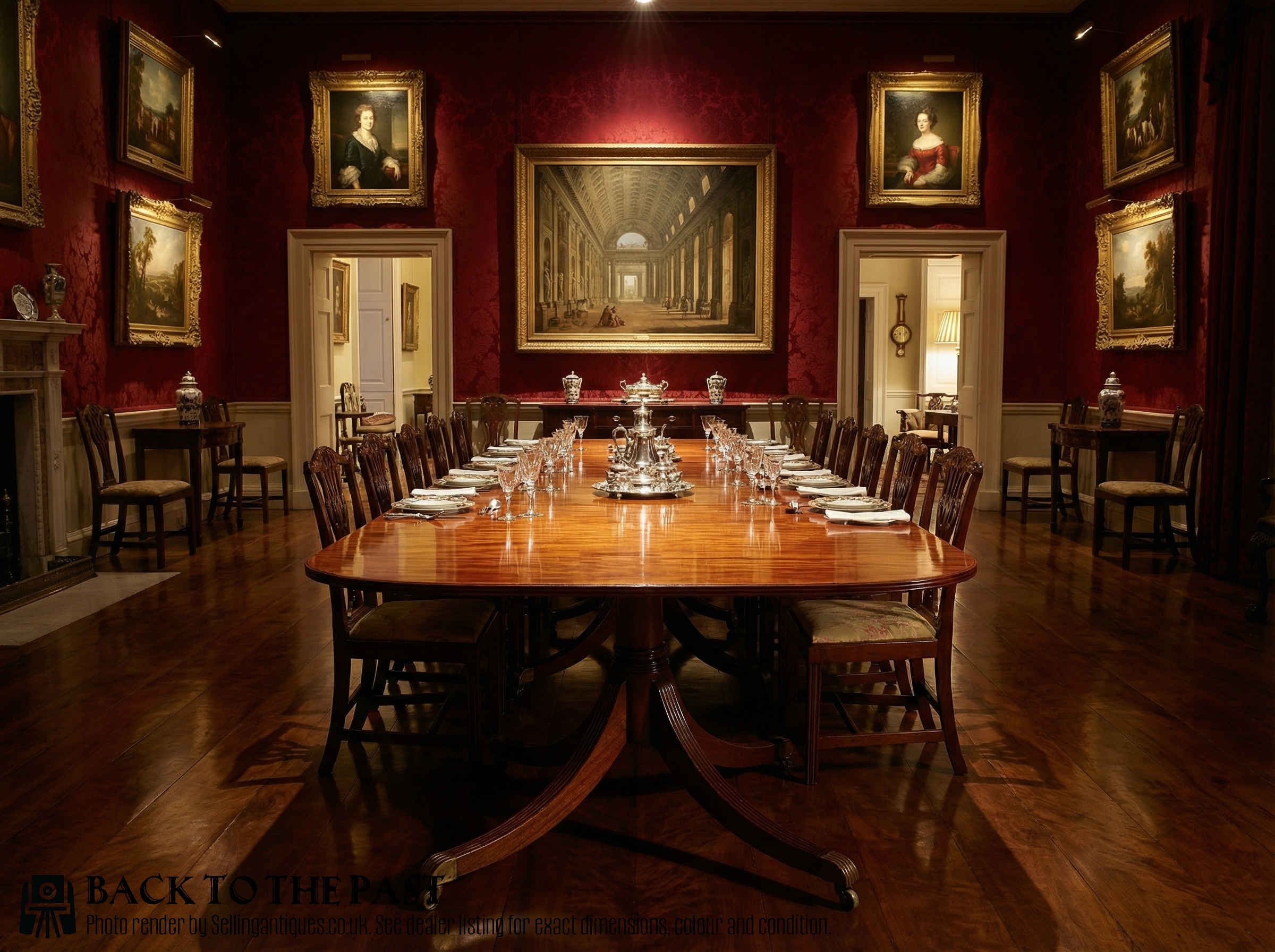
Mahogany Pedestal Dining Table
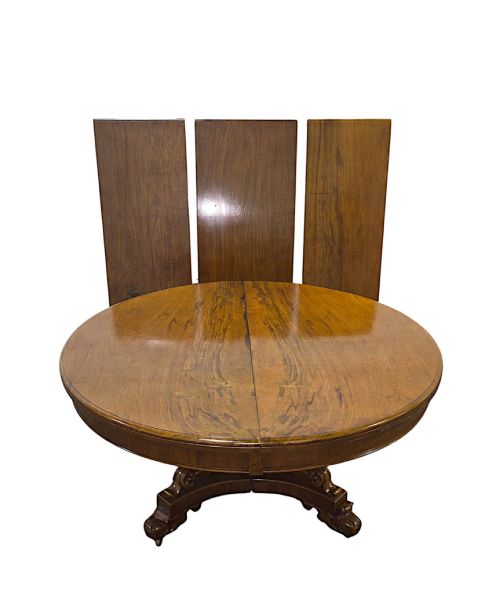
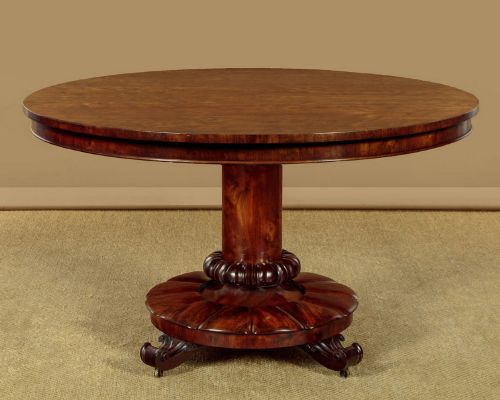
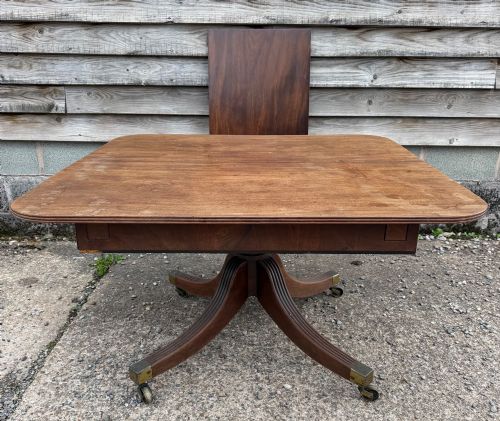
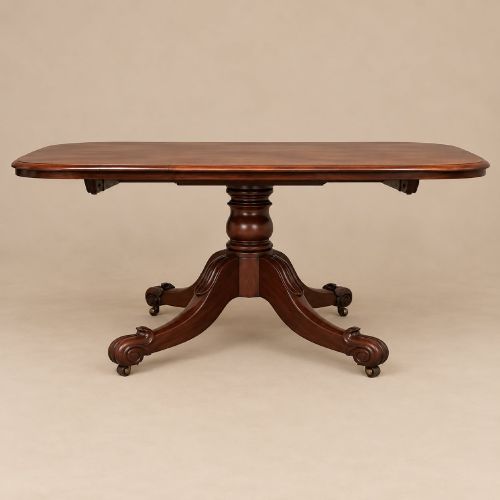
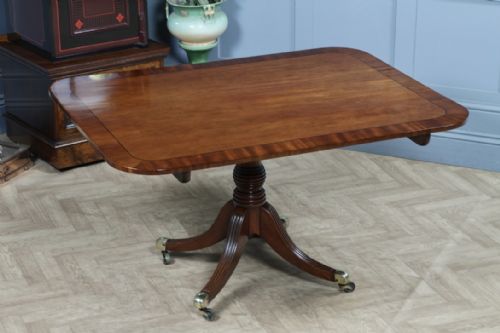
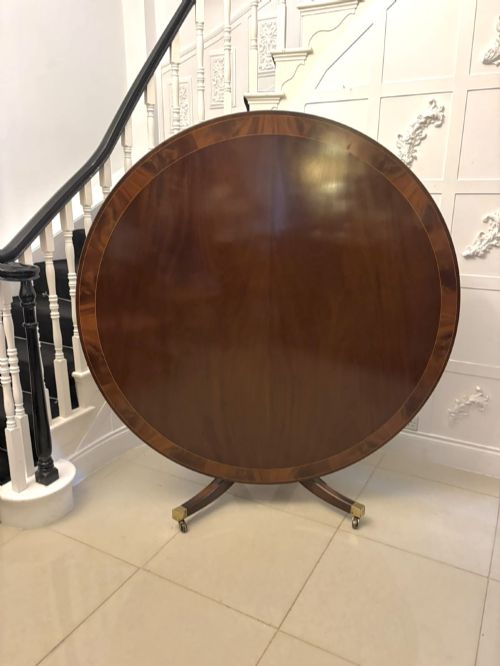
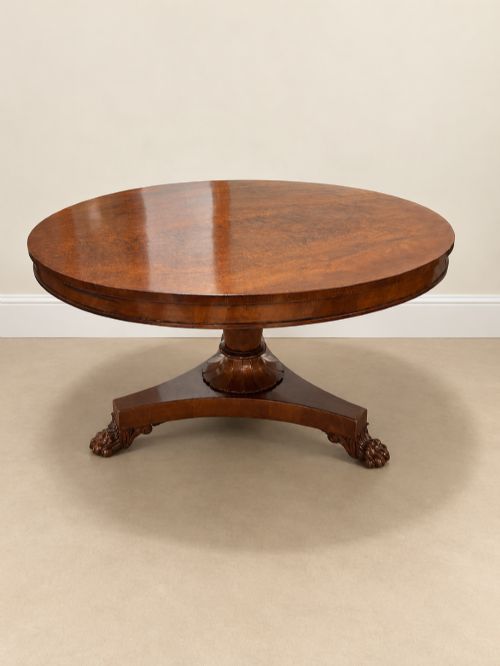
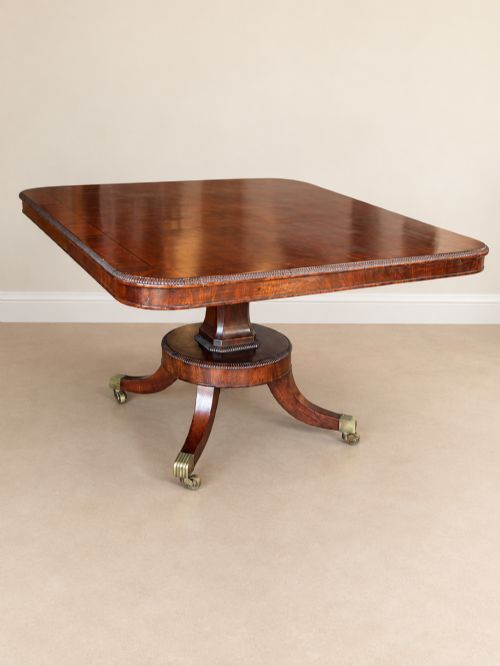
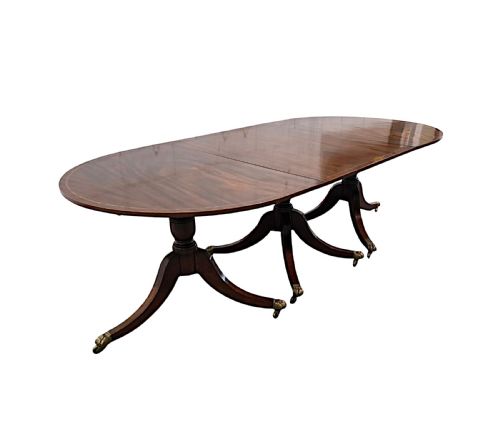
A mahogany pedestal dining table stands on one or more central columns rather than traditional corner legs, allowing maximum legroom for seated guests. These pieces appear in configurations ranging from single-pillar breakfast tables to expansive banquet formats with three or four pedestals and drop-in leaves.
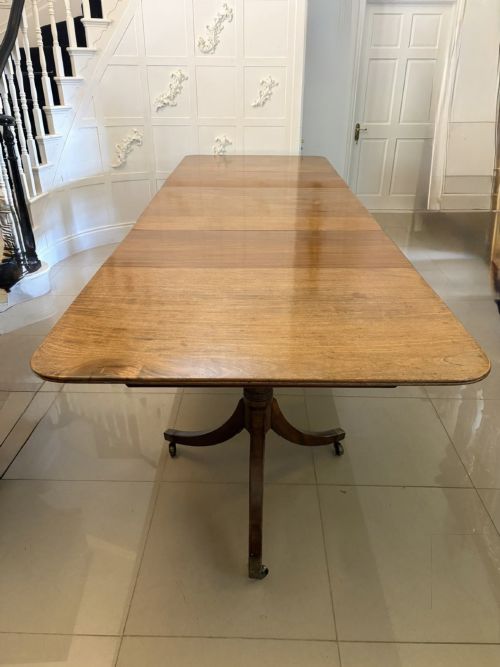
The selections span authentic Georgian and Regency origins from around 1800 to the 19th century, alongside later revival iterations from the Edwardian era and the 1920s. Twin-pillar and triple-pillar variations dominate the offerings, accommodating anywhere from six to over twenty diners depending on the number of inserted leaves.
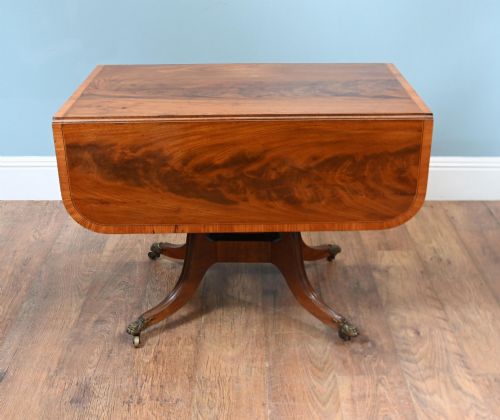
Makers historically designed these tables to adapt to domestic interiors by shrinking for daily use and expanding for larger company. Craftsmanship from the 18th and 19th centuries prioritised modular flexibility, pairing tilt-top mechanisms or pull-out actions with stable central columns.
Differentiating Quality
The depth of timber figuring and the symmetry of flame mahogany veneers distinguish standard production from exceptional examples. Cabinet makers who matched grain patterns across multiple inserted leaves achieved a unified surface aesthetic when fully extended.
Structural integrity in the pillar junction and the precision of the extending mechanism dictate long-term durability under heavy loads. Heavier banquet formats require robust triform or quadriform pedestal bases to prevent sagging across extended spans.
Mahogany Pedestal Dining Table Retail Price Guide 2026
Typical asking prices for mahogany pedestal dining table among the pieces listed under this phrase on Sellingantiques today, from the lower quarter to the upper quarter. They describe what is for sale here now, not the wider market.
Dinner gongs occasionally slip into the listings, proving that previous owners wanted their guests summoned with appropriate acoustic theatricality.
Gillows of Lancaster·Thomas Butler of London·Wylie & Lochead Glasgow
The Mahogany Pedestal Dining Table Glossary
- Pedestal
- A central support column holding up the tabletop, freeing the corners from traditional legs to increase seating capacity. These columns often feature carved details or brass castors.
- Extending dining table
- A table designed with a mechanism and removable leaves to lengthen the surface for larger groups. This format adapts a compact piece into a banquet-sized arrangement.
- Flame mahogany veneer
- Thin slices of mahogany selected for a flickering, flame-like grain pattern applied over a stable wood base. Cabinet makers used this technique to create decorative surfaces on top panels.
- Tilt-top table
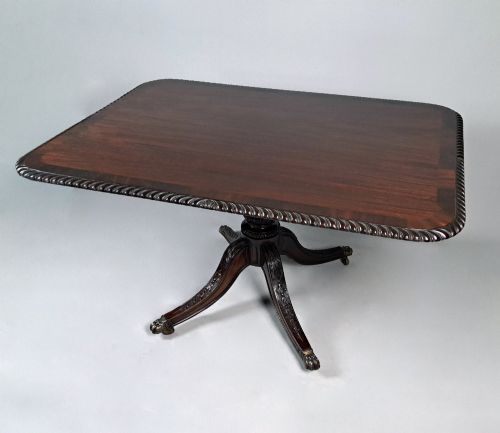
- A tabletop mounted on a hinge mechanism that pivots vertically for compact storage against a wall when not in use. This construction appears frequently on single-pillar breakfast tables.
- D-end
- A tabletop shape with one curved semi-circular end, often joined with other sections to form a long rectangular dining surface. Regency and Georgian examples frequently utilise this modular layout.
Mahogany Pedestal Dining Table: Frequently Asked Questions
How many people do these tables seat?
Seating capacity ranges significantly based on the number of pedestals and added leaves present in the construction. Compact single-pillar formats accommodate six diners, while expansive three-pillar or four-pillar banquet versions host upwards of twenty-four guests.
Buyers should measure both the room dimensions and the fully extended length with all leaves inserted to ensure adequate clearance around the perimeter.
How do twin-pillar and triple-pillar tables differ?
Twin-pillar tables feature two central pedestals and generally serve medium-length spaces seating eight to twelve individuals. Triple-pillar and four-pillar configurations add central supports to distribute weight evenly across much longer spans required for large banquet settings.
Both styles utilise modular leaves, but the additional columns on larger formats provide vital structural support to prevent tabletop sagging.
How do I care for a mahogany surface?
Maintenance requires avoiding direct sunlight and excessive heat sources that dry out the timber and cause veneer cracking. Regular dusting with a soft cloth preserves the polished finish without building up heavy chemical residues.
Using protective mats under hot dishes and liquids prevents permanent marking on the polished wood and veneer surfaces.
What is a tilt-top mechanism?
A tilt-top mechanism uses a hinged block beneath the tabletop allowing the surface to pivot into a vertical position. This historical design enabled owners to store the table against a wall to reclaim floor space when dining concluded.
Most examples secure in the horizontal position with a brass catch or sliding wooden peg during use.