



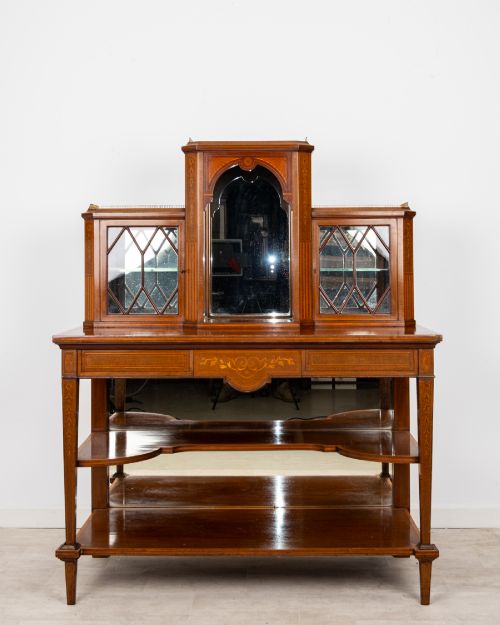
Mahogany Ladies Desk
When you search for mahogany ladies desk, you enter a refined realm of compact writing furniture crafted for private correspondence during the eighteenth, nineteenth, and early twentieth centuries.
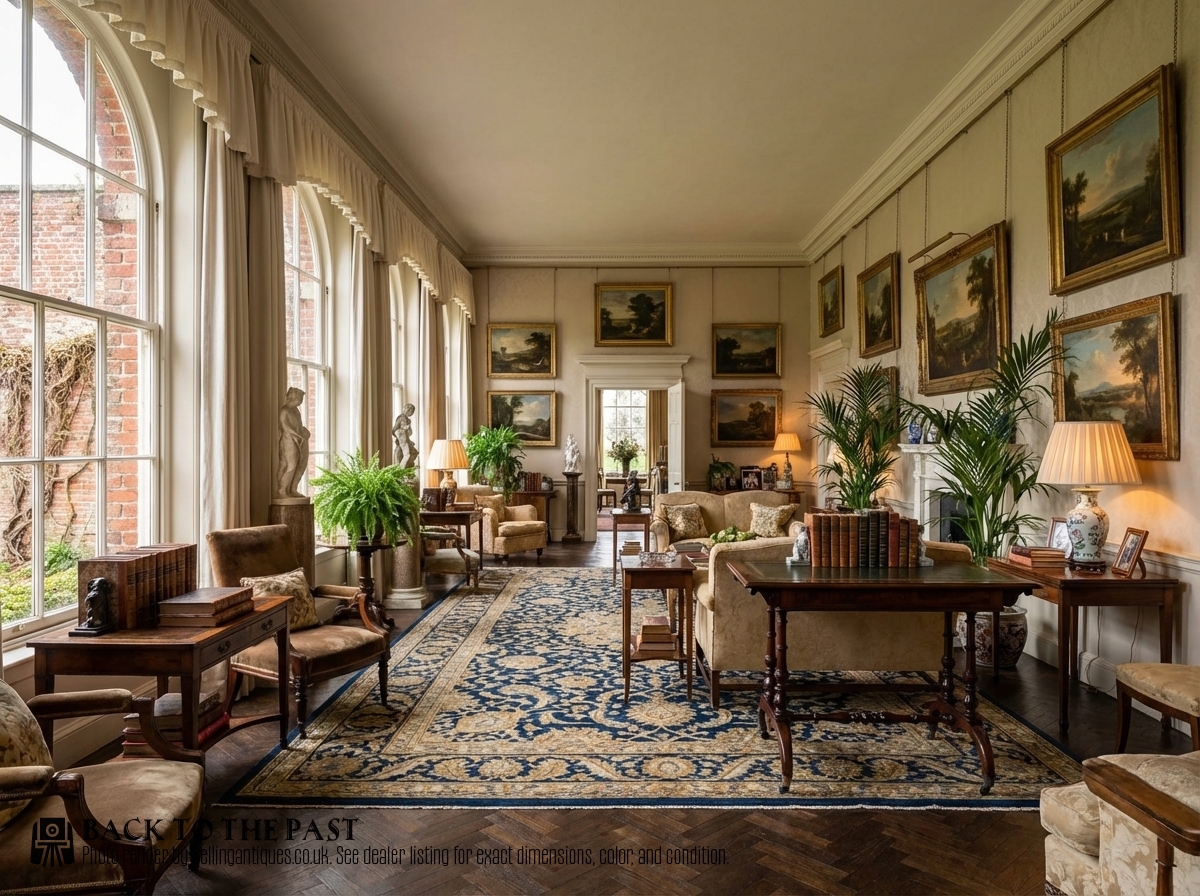
Mahogany Ladies Desk
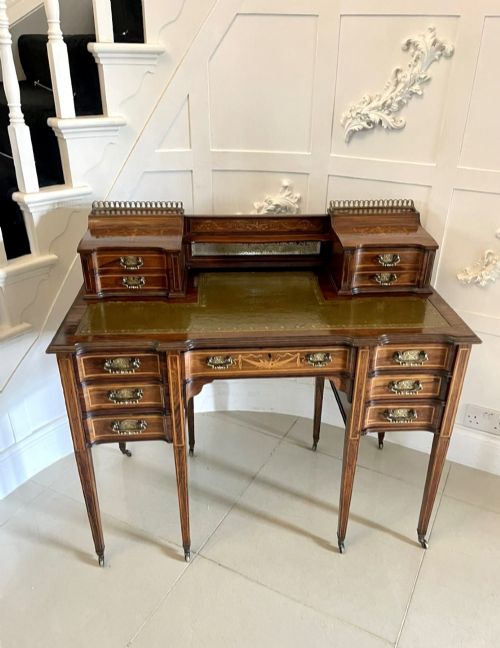
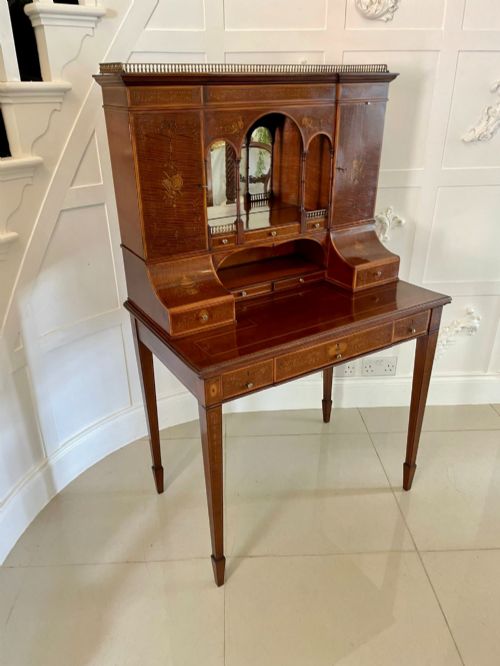
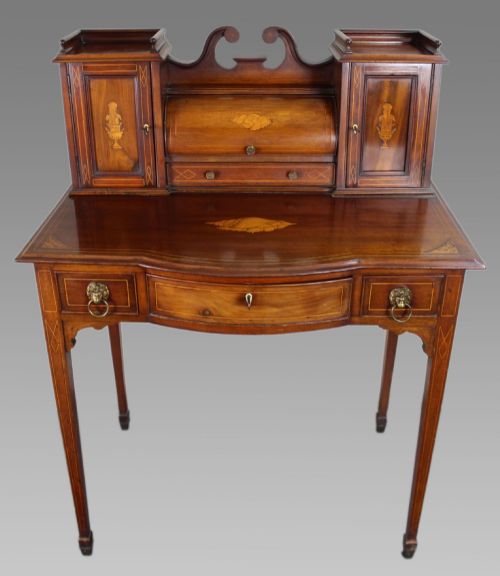
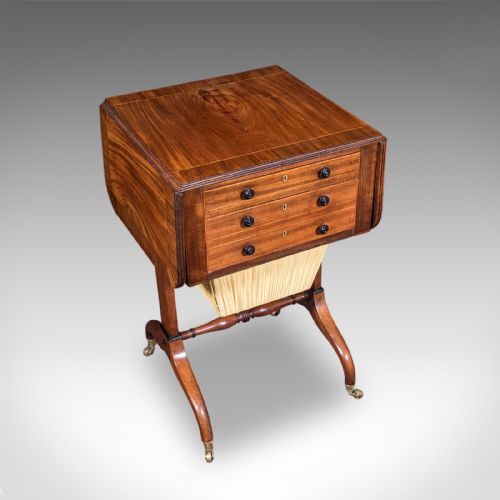
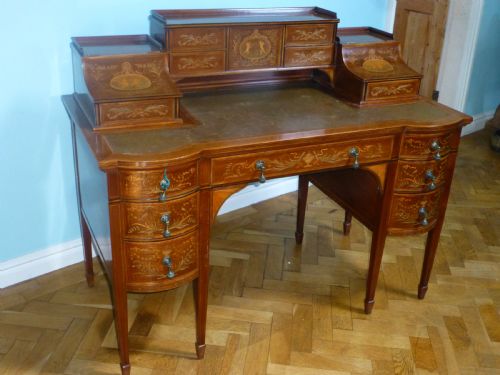
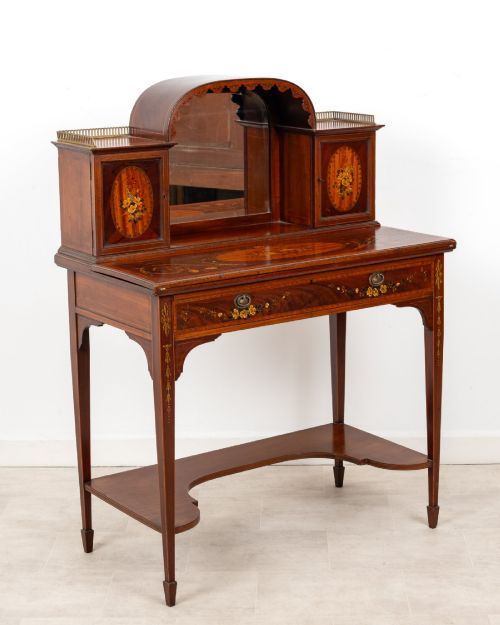
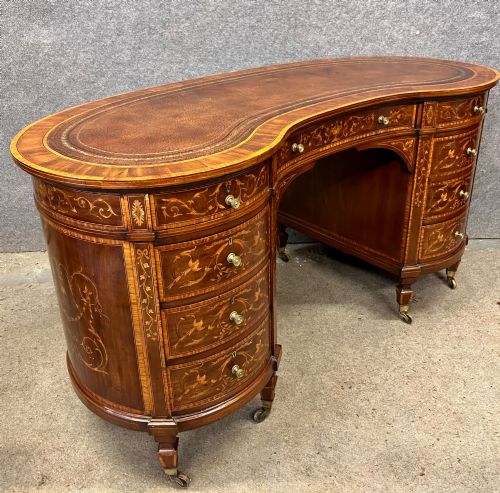
A mahogany ladies desk encompasses a variety of compact writing furniture, from simple writing tables and kneehole forms to elaborate bonheur du jour and Carlton House desks. These pieces originate predominantly from the Victorian and Edwardian eras, alongside earlier Georgian and Regency examples.
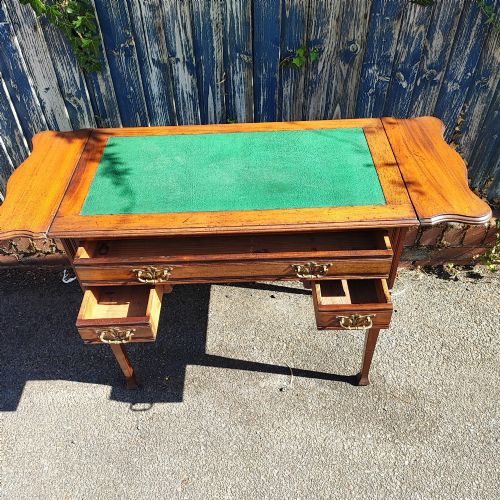
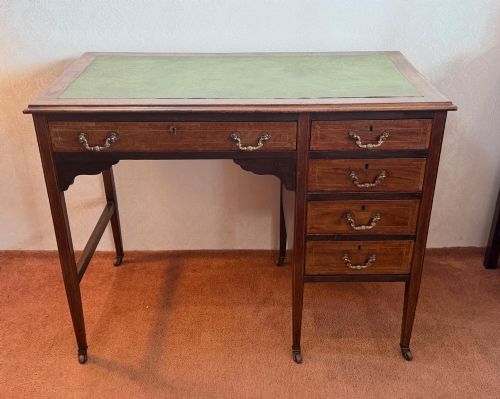
The Edwardian iterations appear most frequently on this page, often featuring delicate satinwood inlay, leather inset writing surfaces, and slender tapering legs. They were designed for domestic correspondence in drawing rooms and boudoirs, prioritizing elegance and space efficiency over utilitarian heft.
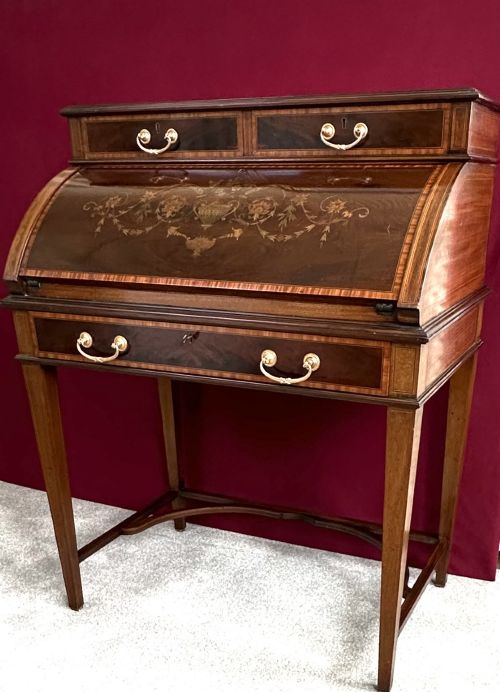
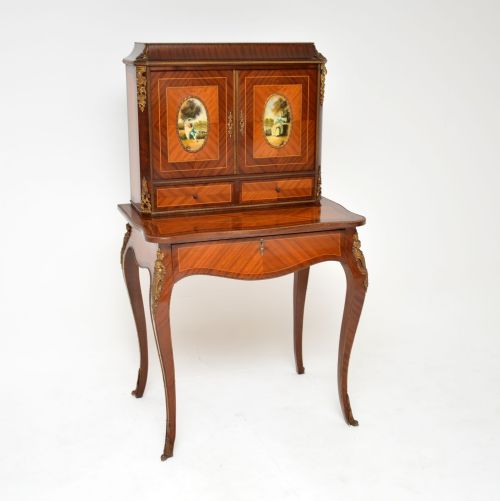
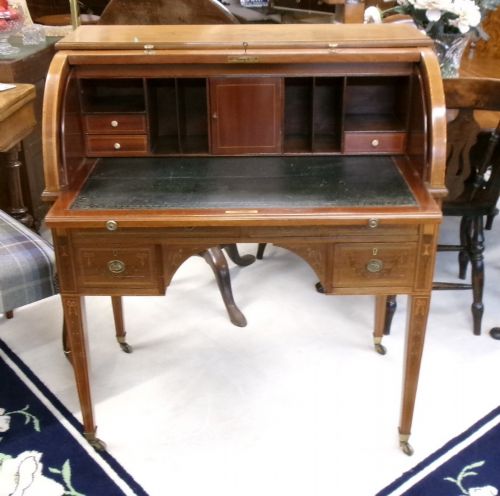
The selection extends to metamorphic tables, fall-front bureaux, and French-influenced escritoires, reflecting diverse domestic needs for storage and writing surfaces. Each form maintains a restrained scale suitable for smaller reception spaces and private chambers.
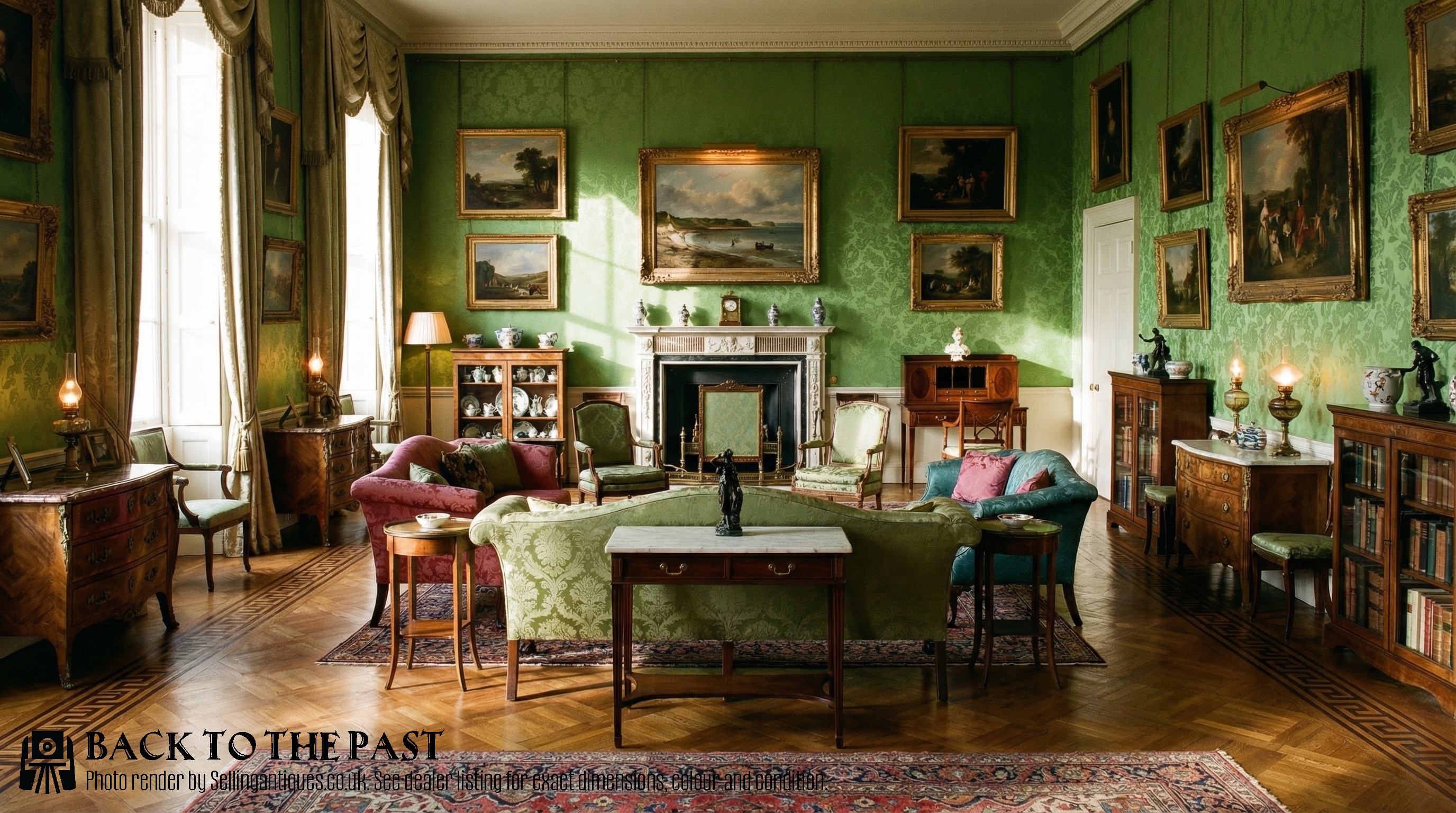
How They Were Made
Cabinetmakers utilised solid mahogany and flame mahogany veneers over secondary timbers, often accentuating the primary wood with contrasting satinwood inlay, marquetry, and rosewood banding. Brass mounts, handles, and gallery rails supplied structural trim and decorative contrast.
Writing surfaces frequently incorporated inset panels of tooled leather, while specialised pieces employed glass, mirror glass, or tambour shutters. Construction relied on traditional joinery, dovetailing drawer boxes and securing slender framing to maintain stability without bulk.
Mahogany Ladies Desk Retail Price Guide 2026
Typical asking prices for mahogany ladies desk among the pieces listed under this phrase on Sellingantiques today, from the lower quarter to the upper quarter. They describe what is for sale here now, not the wider market.
The inventory spans Georgian, Victorian, and Edwardian periods, showcasing Sheraton and French Rococo revival styles.
What Varies in Quality
The standard of a mahogany ladies desk rests upon the choice of timber figure, such as richly grained flame mahogany, and the precision of the contrasting satinwood inlay or marquetry. Finer examples display meticulous hand-cut stringing and balanced proportions that integrate storage compartments harmoniously into the writing surface.
Execution of secondary details, including finely cast brass hardware, hand-tooled leather inserts, and well-fitted internal stationery compartments, distinguishes workshop output. Maker attribution, such as pieces bearing signatures from established firms like Maple & Co or Edwards and Roberts, indicates elevated cabinetmaking standards.
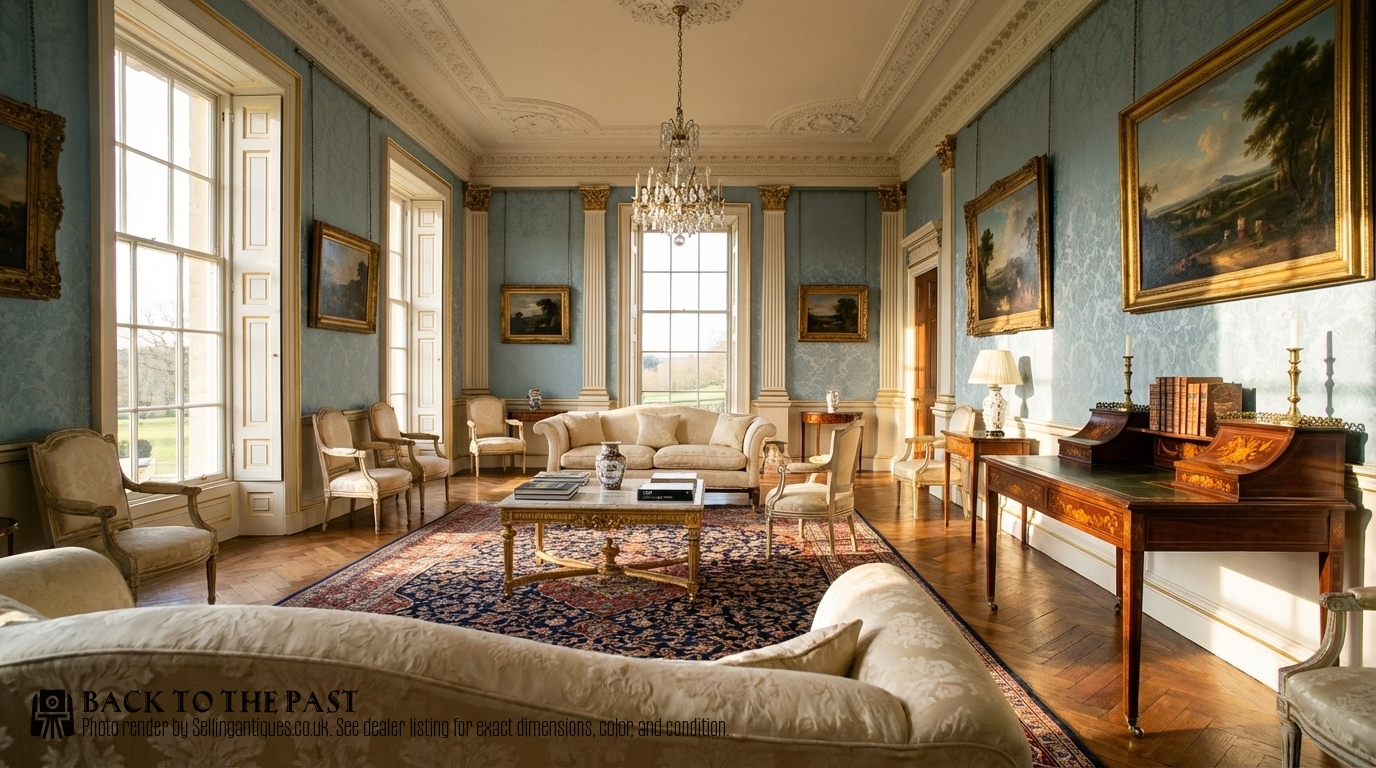
Maple and Co·Edwards and Roberts·S and H Jewell·Gillows
The Mahogany Ladies Desk Glossary
- Bonheur du jour
- A light pedestal desk featuring an upper tiered superstructure with small drawers, shelves, or a cabinet. This form emerged in France during the eighteenth century and remained popular through the Edwardian revival period.
- Carlton House desk
- A horseshoe-shaped writing desk fitted with a continuous run of small drawers and pigeonholes above the writing surface. The configuration offers organised compartment storage around a central leather-lined writing plane.
- Escritoire
- A writing cabinet featuring a fall-front flap that opens to reveal internal compartments and drawers. These pieces combine vertical storage capacity with a fold-down writing surface.
- Marquetry
- Decorative veneer patterns formed by fitting together contrasting pieces of wood, shell, or ivory to create pictorial designs. Cabinetmakers applied this technique to drawer fronts and writing surfaces for visual enrichment.
- Stringing
- Thin inlaid lines of contrasting timber set flush into the surface of mahogany panels. This linear detail defines the borders of tabletops, drawer fronts, and leg shafts.
Mahogany Ladies Desk: Frequently Asked Questions
What is a bonheur du jour?
A bonheur du jour is a light writing desk distinguished by a tiered superstructure of small drawers and compartments above the writing surface. These pieces were designed for private correspondence in domestic chambers.
The compact form combined a portable writing desk with organised stationery storage, reflecting changing domestic habits in the eighteenth and nineteenth centuries.
Were these desks used for dressing?
Many compact writing tables and bonheur du jour designs served dual purposes for both correspondence and personal grooming. Folding top actions and auxiliary compartments accommodated writing materials alongside cosmetic implements.
Surviving pieces frequently retain fitted interiors or associated mirrors that indicate multi-functional domestic use in boudoirs.
How do I care for leather desk inserts?
Leather writing surfaces require minimal moisture and occasional gentle conditioning to prevent cracking across the tooled borders. Avoiding direct sunlight preserves the original gilt tooling and dyed colour of the hide.
Regular dusting with a dry cloth maintains the surface without disturbing the traditional materials beneath.