



Mahogany Knife Boxes
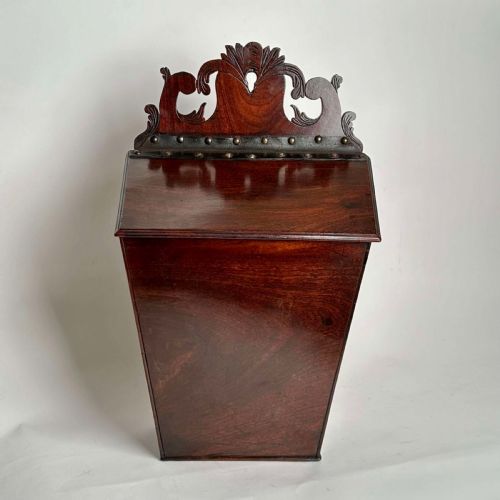
These mahogany knife boxes bring eighteenth-century dining rooms to life, offering compartmentalised storage for cutlery with a sloping lid.
Mahogany Knife Boxes
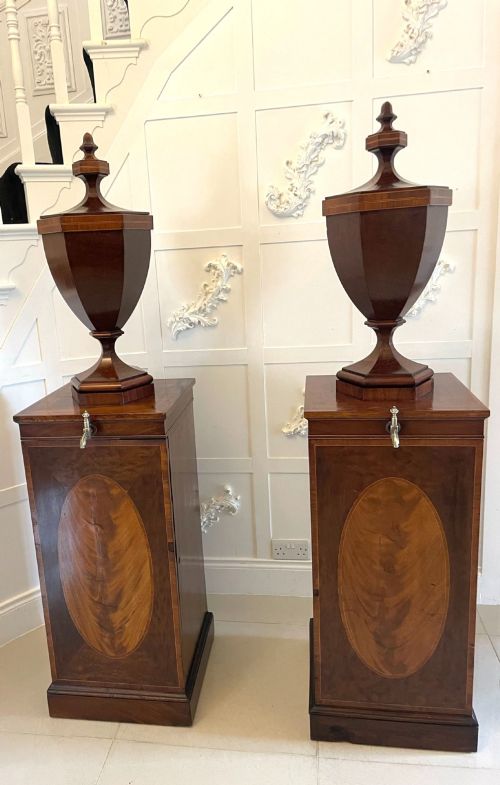
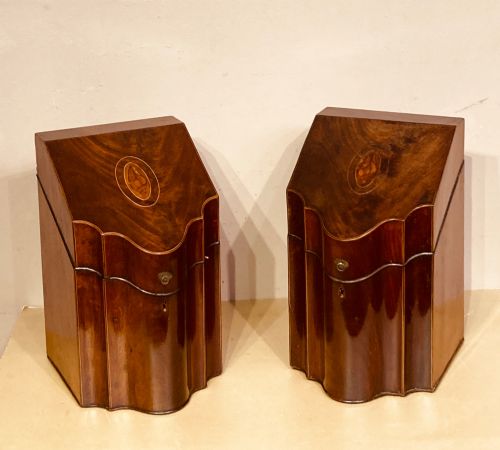
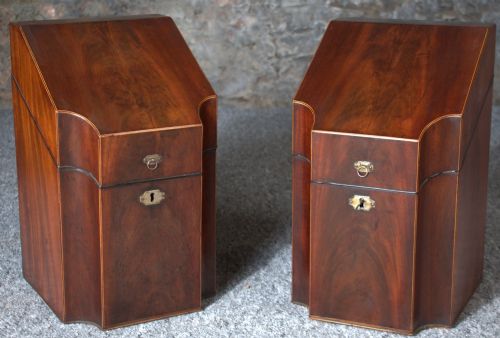
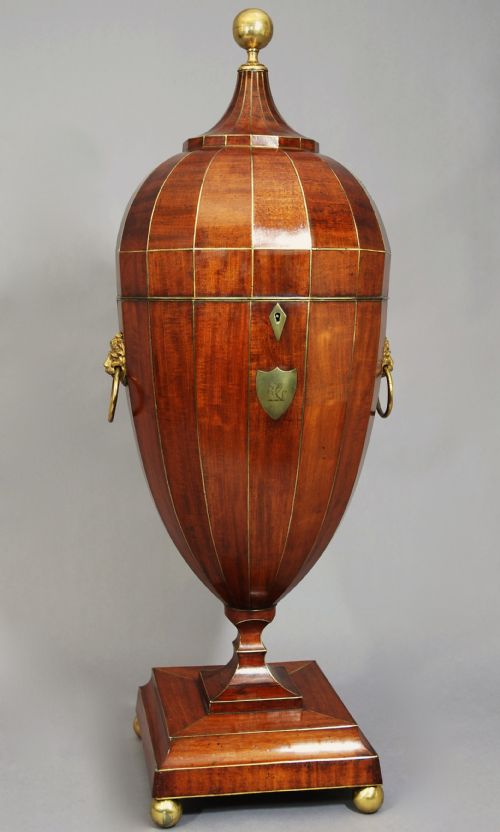
Mahogany knife boxes appear primarily in eighteenth-century and Georgian forms, designed to sit on sideboards and hold dining silver. The most frequent iteration on this page is the slope-front box, though tall cutlery urns and serpentine shapes also emerge from the evidence.
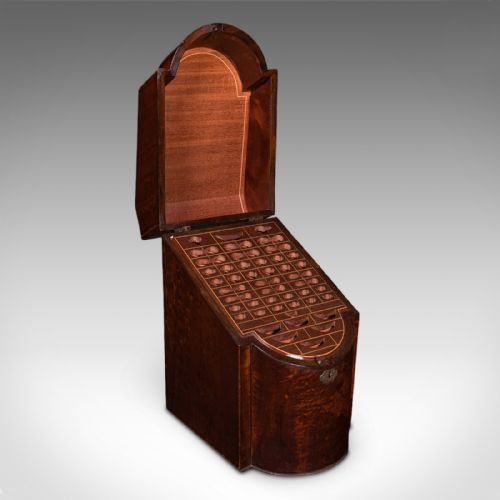
Makers shaped these containers to guard fine steel blades, often incorporating interior partitions. Alongside traditional knife boxes, the record shows related storage forms including stationery boxes and pedestals.
Georgian examples dominate the selection, spanning periods from the late eighteenth century into the nineteenth. Makers utilised styles such as George III Neoclassical, creating matching pairs that anchored formal dining arrangements.
Materials and construction
Craftsmen built these pieces from mahogany, frequently selecting figured timber for the exterior surfaces. Satinwood and boxwood inlay provided contrast, forming delicate stringing or geometric motifs across the sloping lids and serpentine fronts.
Function depended on metalwork, with brass fittings, hinges, and escutcheons securing the lids and drop fronts. Selected examples incorporated solid silver mounts, while interior arrangements utilised wood compartments designed to hold specific quantities of knives.
Materials recorded across the inventory include solid mahogany, brass, boxwood inlay, satinwood, and solid silver mounts.
Evaluating the pieces
Superior examples display exceptional figured grain in the mahogany, matched by crisp execution of boxwood and satinwood inlay. The depth of the surface patina distinguishes finer workshop output from simpler utilitarian storage.
Proportion and silhouette dictate distinction, particularly in serpentine profiles and bow fronts. Original brass fittings or solid silver mounts elevate an item, whereas replacements alter the integrity of the piece.
The Mahogany Knife Boxes Glossary
- Serpentine front
- A convex central section flanked by two concave curves, creating a fluid, undulating facade. This shape required precise carpentry and appeared on finer Georgian storage pieces.
- Cutlery urn
- A tall, vase-shaped vessel used on pedestals in grand dining rooms to store flatware. These pieces match the timber and inlay of contemporaneous knife boxes.
- Patina
- The surface sheen and colour developed by wood over centuries of handling and polishing. Good patina indicates age and careful maintenance without stripping the original finish.
- Escutcheon
- A protective plate surrounding a keyhole, usually cast in brass. On these boxes, they often feature drop handles or decorative engraving.
- Stringing
- Thin lines of contrasting wood, such as boxwood or satinwood, inlaid into channels on the mahogany surface. This technique defines the edges and panels of Georgian case pieces.
Mahogany Knife Boxes: Frequently Asked Questions
What were mahogany knife boxes used for?
These boxes stored dining knives and forks on sideboards before fitted sideboard drawers became common in the nineteenth century. The sloping lids and fitted interiors kept steel blades dry and organised between meals.
Servants carried them to the dining table when guests arrived, displaying the household's refined tableware. Later, many found new life storing letters or stationery as dining habits changed.
How do I spot a Georgian knife box?
Look for characteristic eighteenth-century proportions, solid mahogany construction, and characteristic sloping lids designed to access vertical knife slots inside. Georgian examples frequently display boxwood inlay or serpentine fronts typical of the period.
Check for period brass hardware and construction methods appropriate to the eighteenth century, such as hand-cut dovetails on the internal partitions. Many survive as matched pairs rather than single pieces.
Can I use these boxes for modern cutlery?
Most antique knife boxes feature internal partitions tailored to eighteenth-century steel blades and pistol-grip handles. Modern flatware often proves too wide or long for these historical slots.
Many collectors repurpose them for letter organisation, stationery storage, or simply display them empty on sideboards. Altering the internal wooden dividers to fit modern items damages the historical integrity of the piece.
What is the difference between a knife box and a cutlery urn?
Knife boxes feature sloping lids and vertical profiles designed to sit directly on a sideboard surface. Cutlery urns stand taller and more sculptural, often paired with matching pedestals.
Both serve the same primary function of storing dining silver, but urns represent a grander scale intended for larger Georgian dining rooms. The evidence shows both forms executed in mahogany with similar inlay techniques.