
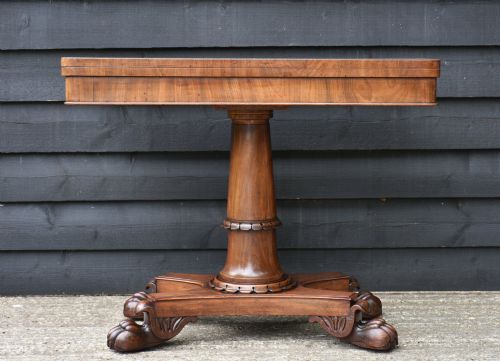
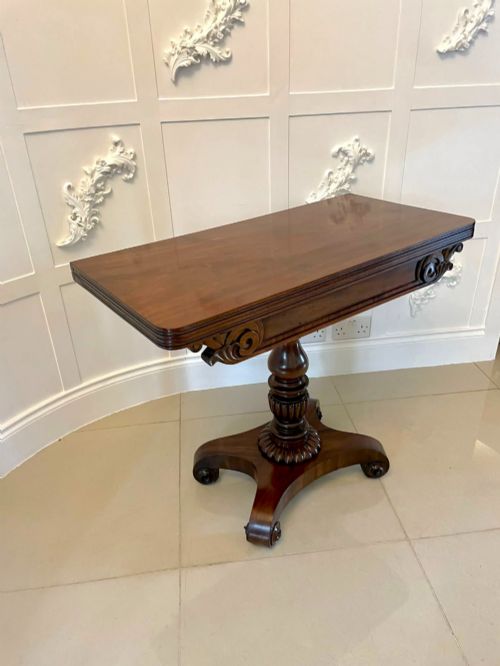
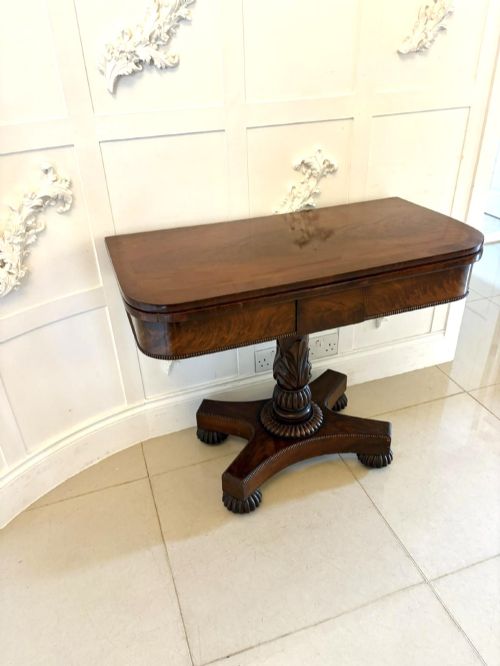
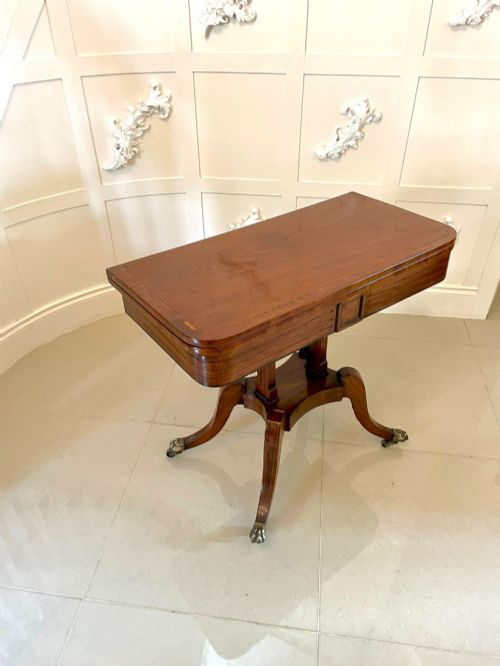

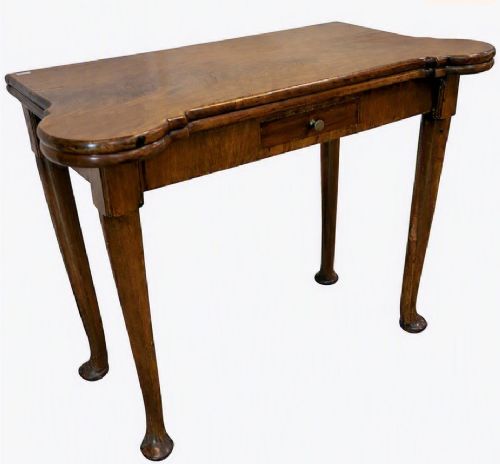
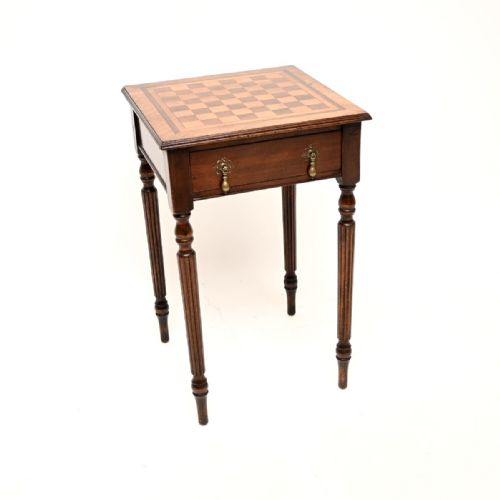
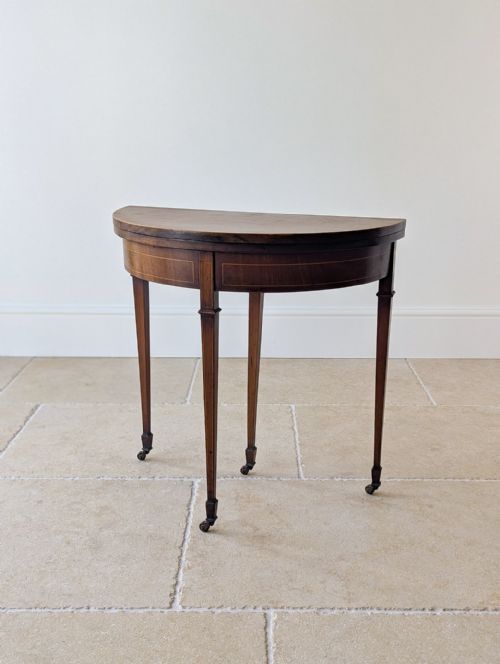
Mahogany Gaming Table
These mahogany gaming table examples bring period social life straight into the room, offering clever folding tops and hidden wells that reward a close look.
What these pieces are
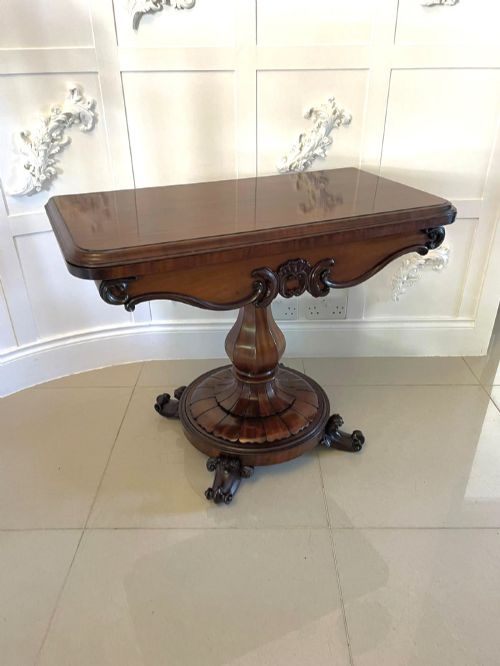
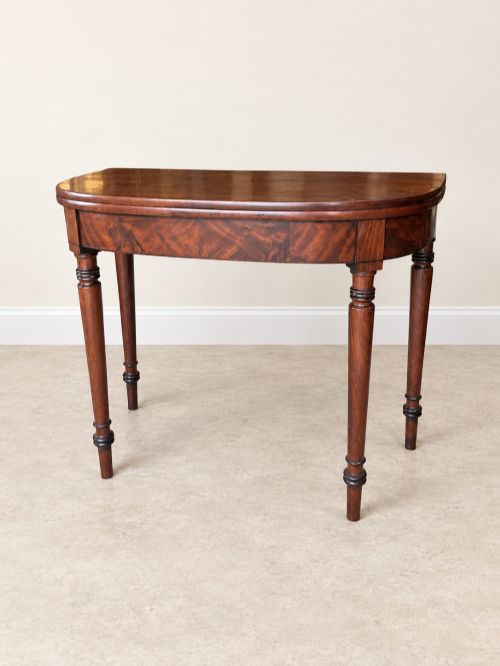
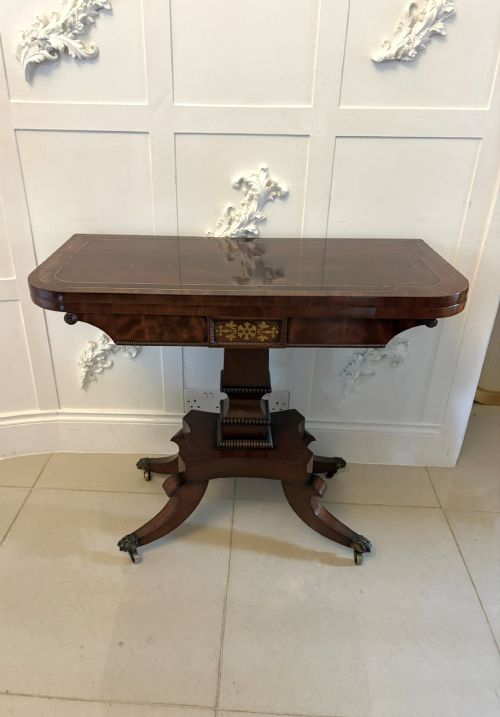
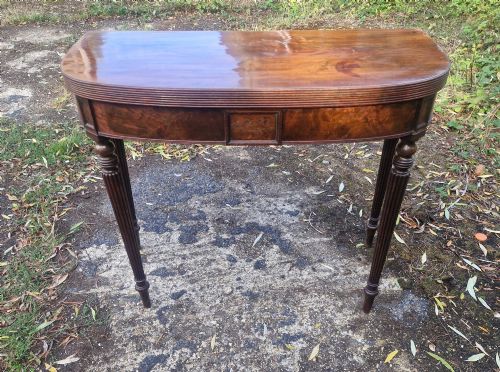
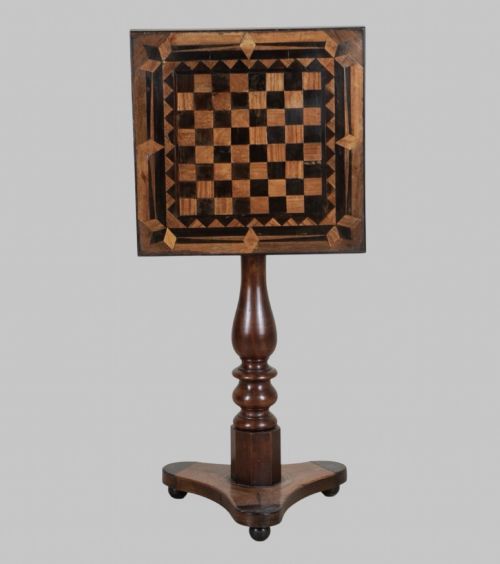
A mahogany gaming table is a dedicated piece of social furniture designed for card playing and board games in formal interiors. The selection spans 18th century George II and Georgian origins, through Regency and Victorian periods, down to Edwardian revivals.
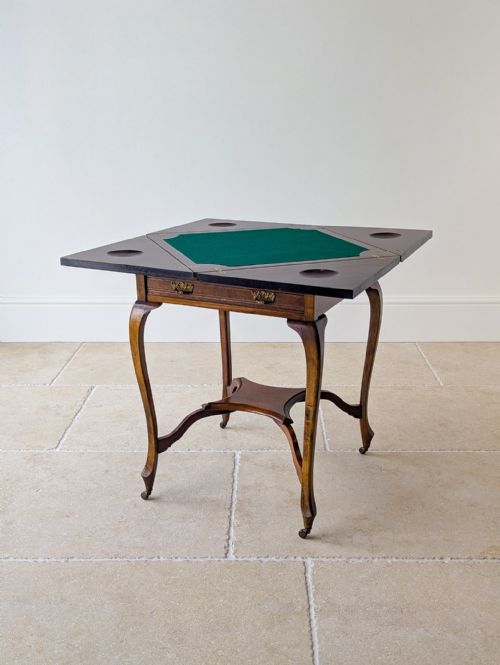
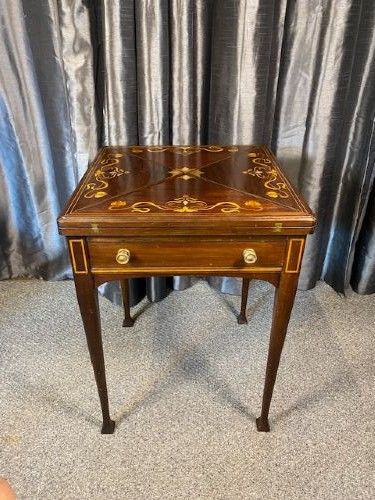
Most examples appear as fold-over card tables, console and card tables, or envelope card tables. These forms bridge the gap between ornamental side tables and functional leisure furniture.
How they were made
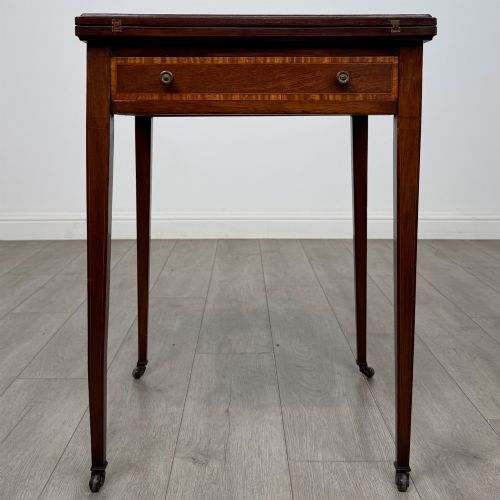
Cabinetmakers utilised solid mahogany and flame mahogany veneer over supporting timber carcasses. Details often include wood inlay and brass hardware, paired with baize lining on the playing surfaces.
Internal engineering varies from simple swing legs to concertina action mechanisms that expand the framework evenly when the top unfolds.
Retail Price Guide 2026
Typical UK retail prices for mahogany gaming table, calculated from the Sellingantiques database of over a million retail prices indexed since 2003. This retail price guide relies exclusively on Sellingantiques data; no external sources or auction records are used, so the figures do not describe the wider market.
Many tables hide subtle coin wells inside, reminding us that eighteenth-century card games involved serious stakes and plenty of shifting fortunes.
What varies in quality
Excellence rests in the crispness of the carving, the symmetry of the flame mahogany veneer, and the seamless operation of the folding or concertina mechanisms. Modest examples rely on straightforward timber framing without elaborate decorative carving.
The choice of secondary timbers and the precision of the hinge work distinguish workshop-produced pieces from standard commercial output.
The Mahogany Gaming Table Glossary
- Concertina action
- An expanding frame mechanism that allows all four legs to move outward simultaneously when the table opens. This complex internal engineering provides exceptional stability during play.
- Fold-over
- A table top hinged in the middle that doubles its footprint when opened out. The folded portion often rests on a swing leg or pivoting rail.
- Flame mahogany
- A distinct veneer figure created by slicing across the bough where it joins the tree trunk. The resulting wavy pattern resembles flickering flames across the surface.
- Baize
- A coarse woollen fabric traditionally used to line gaming surfaces. It provides a soft texture that protects playing cards and dampens the sound of counters.
- Envelope table
- A square Edwardian table featuring four triangular flaps that fold inward like an envelope to reveal the baize surface. The top rotates on its base as it opens.
Frequently Asked Questions
What is a concertina action table?
A concertina action table uses a complex expanding frame that allows all four legs to move outward when the top is unfolded. This design supports the open leaf evenly without needing a single swing leg.
Such mechanisms indicate higher workshop ambition and provide superior stability during card games compared to simpler pivoting designs.
How do I use a fold over table?
To use a fold over table, lift the hinged top leaf and rotate or swing the supporting leg outward to hold it in place. The interior often contains candle corners or shallow wells for coins and counters.
When not in use, fold the leaf back down against the base so the piece functions as a slim console or side table against the wall.
What period do these tables come from?
These tables date from the mid eighteenth century through the Regency era and into the Edwardian period. Georgian and George II examples show clean architectural lines and rich mahogany grain.
Later Victorian and Edwardian pieces often revive earlier Hepplewhite or Chippendale styles while adapting to changing domestic interior fashions.
How can I tell the difference between styles?
Style differences show in the leg profiles, edge moulding, and decorative carving. George II pieces often feature bold cabriole legs with claw and ball feet, while Regency tables lean towards pillar and sabre leg arrangements.
Edwardian revival pieces frequently combine classical proportions with lighter construction and specific opening mechanisms like envelope folds.