
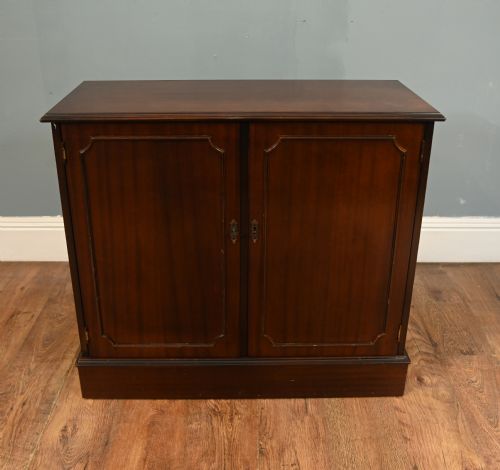


Mahogany Drinks Cupboard
A mahogany drinks cupboard brings functional elegance to a room, storing bottles and glassware with traditional British craftsmanship.
Mahogany Drinks Cupboard
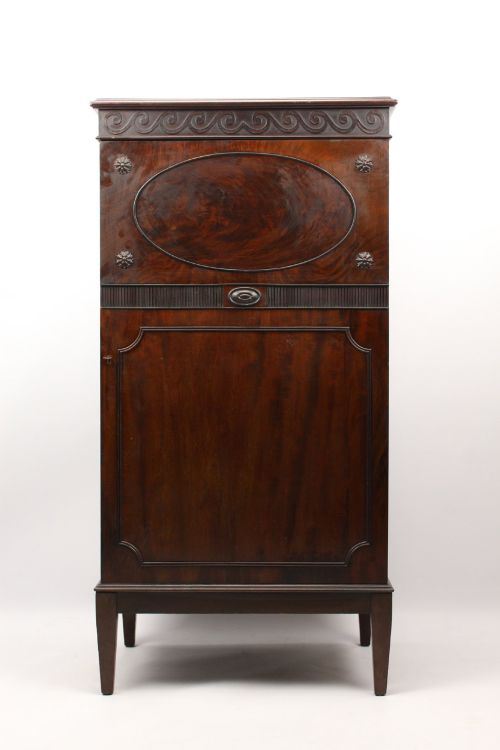
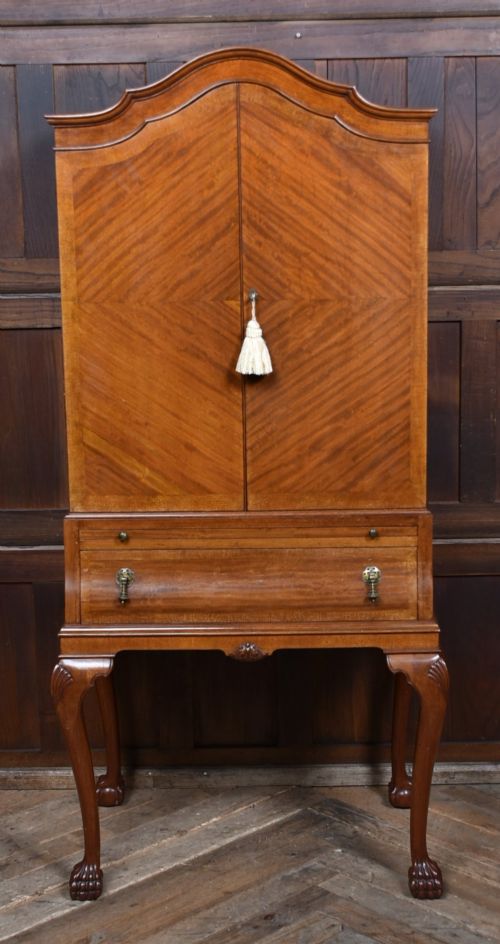
When you search for a mahogany drinks cupboard, you encounter a versatile range of storage forms intended for bottles, glassware, and entertaining accessories. These pieces span several centuries of design, with particular representation from the Georgian, Regency, Victorian, and Edwardian periods.
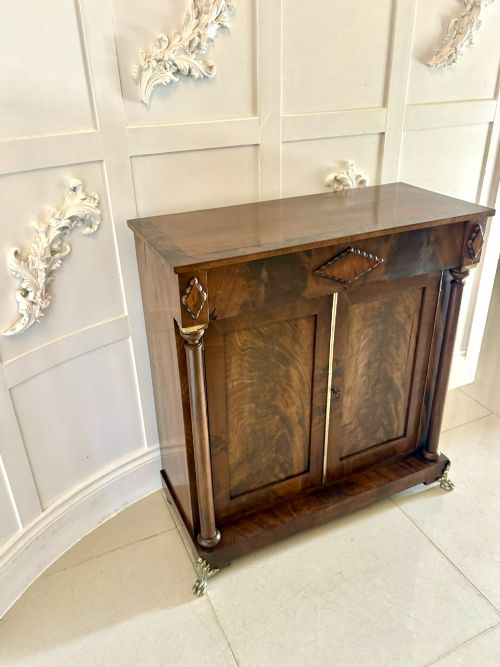
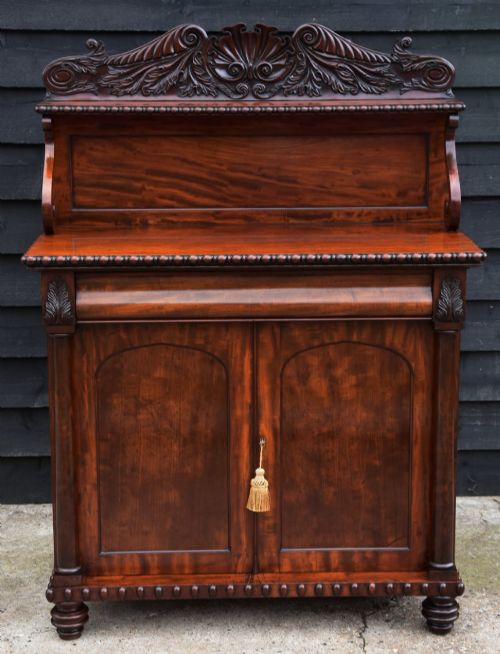
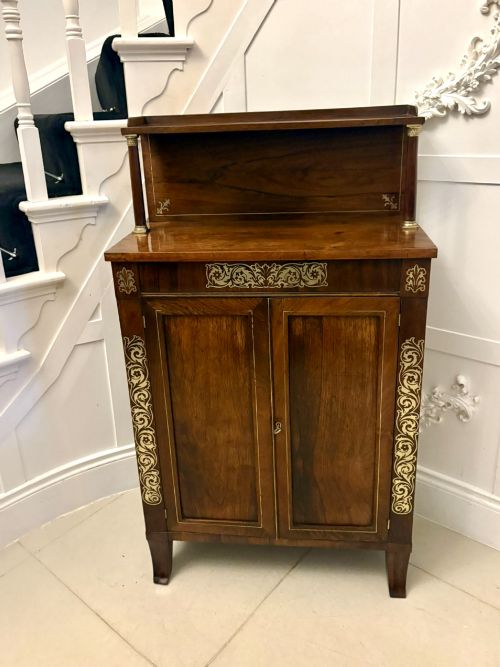
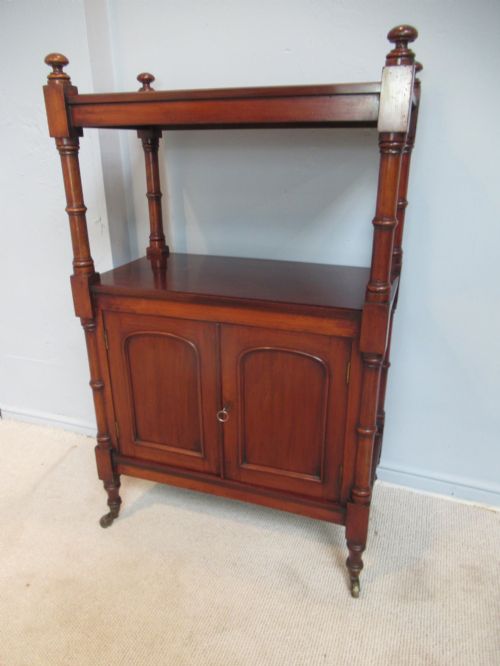
The objects themselves appear under various traditional designations in the evidence, including side cabinets, chiffoniers, cabinets on stands, and wall-hanging corner cupboards. Edwardian and later twentieth-century iterations often lean directly into cocktail and drinks storage, while earlier pieces originally served as chiffoniers or sideboards before finding modern purpose.
You are most likely to meet pieces from the nineteenth and early twentieth centuries on this page, reflecting the enduring popularity of mahogany furniture throughout the Victorian and Edwardian eras. These range from compact wall-hung cupboards to substantial floor-standing cabinets fitted with doors, shelves, and occasionally glazed sections.
What varies in quality
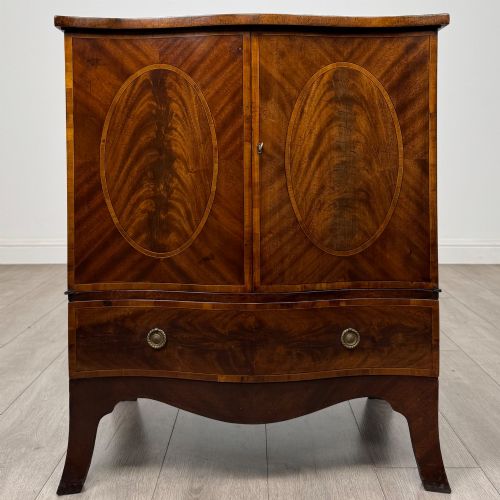
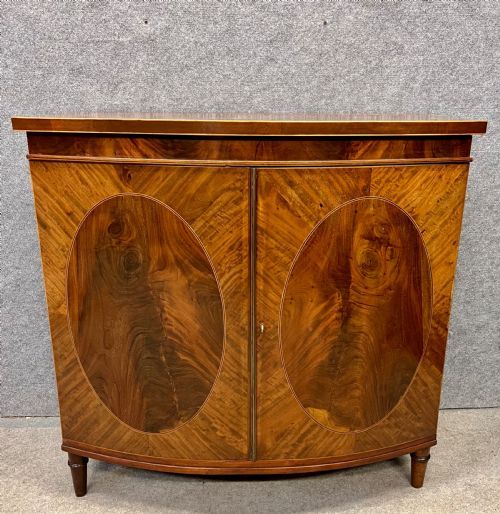
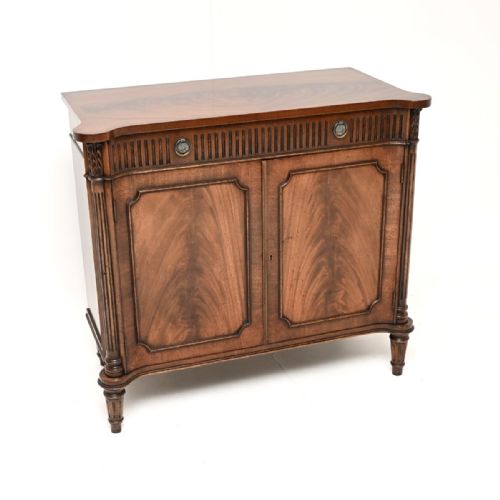
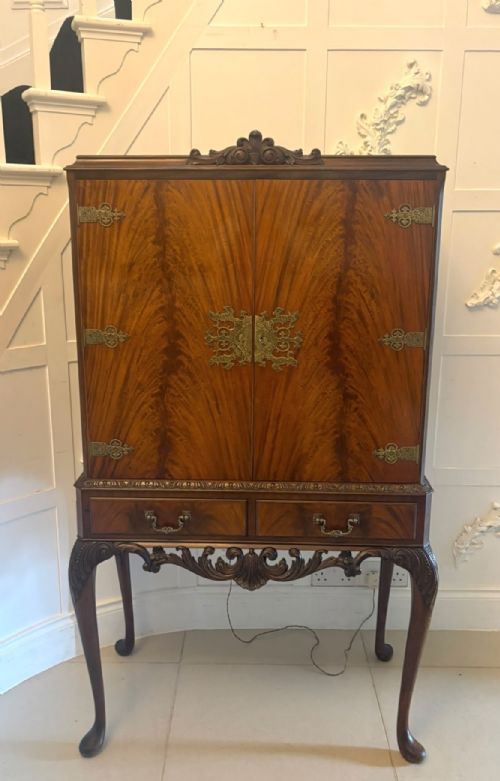
The refinement of the timber selection dictates much of the visual hierarchy, distinguishing plain solid boards from highly figured flame mahogany veneers matched with precision across symmetrical doors. Superior examples display thoughtful proportions and restrained inlay, such as satinwood banding, rather than excessive ornamentation.
Construction integrity separates workshop production from standard output, evident in the tightness of the joinery, the quality of the internal shelving and drawers, and the preservation of original brass hardware. Scale and adaptability also influence standing, with diminutive proportions and versatile fitted interiors commanding particular attention.
Materials recur across solid mahogany, flame mahogany veneer, satinwood inlay, brass hardware, and occasional fitted metal safes.
Denby & Spinks·Gillows·Withers Safe
The Mahogany Drinks Cupboard Glossary
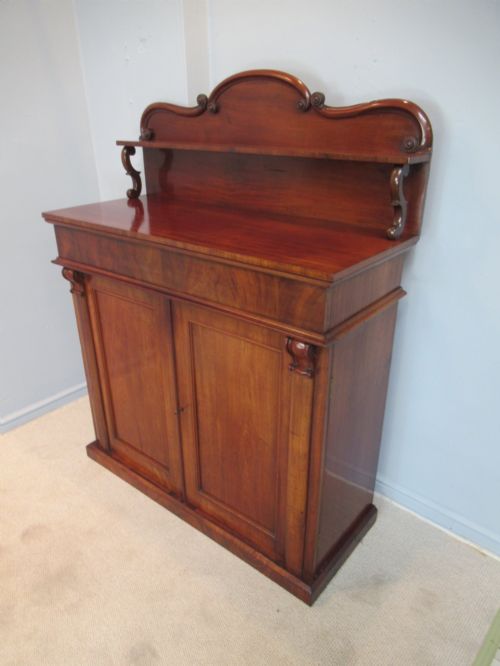
- Chiffonier
- A low sideboard or cabinet, frequently fitted with a shelf back or enclosed lower cupboards, which developed from Regency forms into popular Victorian storage pieces.
- Flame mahogany veneer
- A thin slice of timber cut from the fork of the mahogany tree to produce a dramatic, flame-like grain pattern used across prominent surfaces.
- Demi lune
- Half-moon shaped furniture, typically describing side cabinets and tables designed to sit flush against a wall.
- Cocktail cabinet
- A specialised piece designed specifically for mixing and storing drinks, often emerging in the twentieth century with illuminated interiors and fitted glass storage.
- Pedestal cabinet
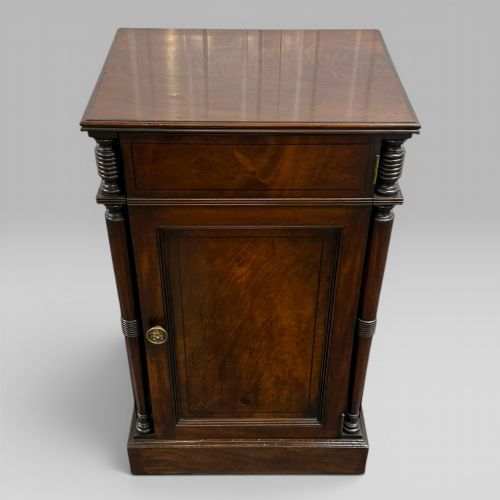
- A single-pedestal or pillar-form storage unit, sometimes incorporating internal safes or specialist compartments as seen in Edwardian office and hall furniture.
Mahogany Drinks Cupboard: Frequently Asked Questions
What period do most mahogany drinks cupboards date from?
The pieces listed across this marketplace span from the eighteenth century through to the mid-twentieth century. Nineteenth-century Regency and Victorian examples appear frequently alongside Edwardian and later revival styles.
Earlier pieces often began life as chiffoniers, side cabinets, or wall-hanging corner cupboards before being adopted for modern drinks storage. Later twentieth-century versions were purpose-built specifically as cocktail cabinets.
How do I tell a chiffonier from a standard drinks cabinet?
A chiffonier is typically a low nineteenth-century sideboard featuring enclosed lower cupboards, sometimes surmounted by a raised shelf back. They were originally designed for dining rooms and living spaces rather than holding bottles.
Purpose-built drinks and cocktail cabinets emerged more prominently in the Edwardian era and the 1920s to 1930s. These often include internal glass shelving, specialised storage for glassware, and drop-down serving flaps.
Are these cupboards suitable for small spaces?
Many of the forms recorded in the evidence are well-suited to compact rooms. Wall-hanging corner cupboards utilise vertical dead space while keeping floor areas entirely clear.
Additionally, several pieces are described as having diminutive proportions, bow fronts, or demi-lune shapes. These shallow configurations allow side cabinets to sit neatly in narrow hallways or alcoves.
What is flame mahogany?
Flame mahogany refers to a specific veneer cut from where a branch joins the main trunk of the tree. This produces a distinctive, undulating grain pattern resembling flickering flames.
Cabinet makers applied these veneers to the primary doors and drawer fronts of better-quality Georgian and Regency furniture. The resulting surface offers striking visual movement that standard solid timber does not produce.