

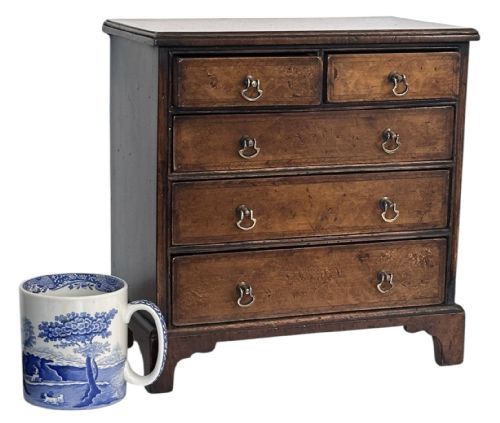


Mahogany Desktop Cabinet
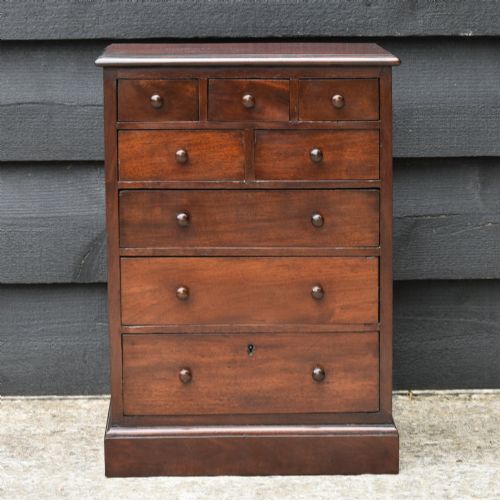
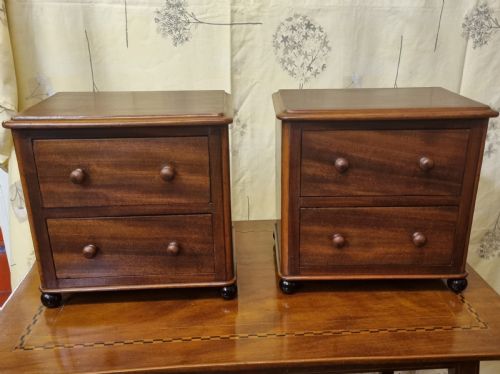
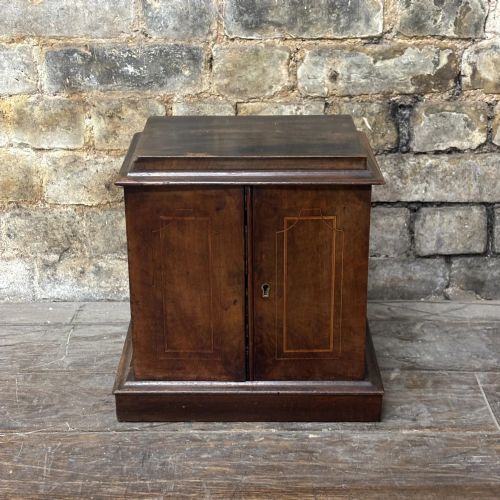
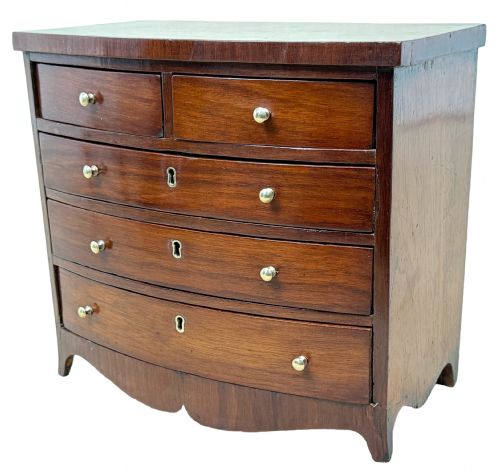
Mahogany desktop cabinet examples range from miniature chests of drawers to stationery boxes, offering compact storage for letters, specimens and valuables.

Mahogany Desktop Cabinet
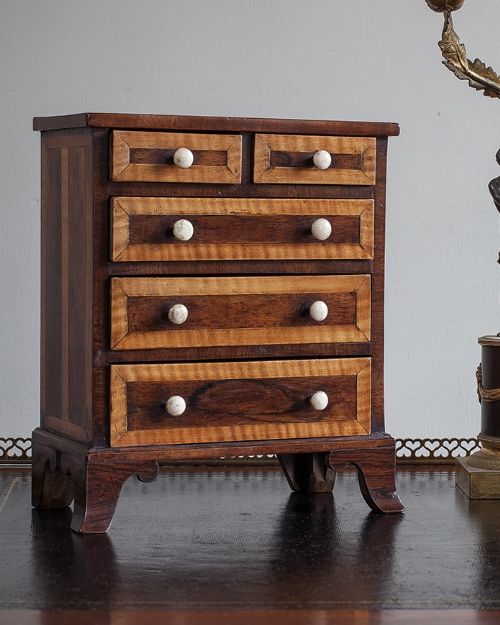
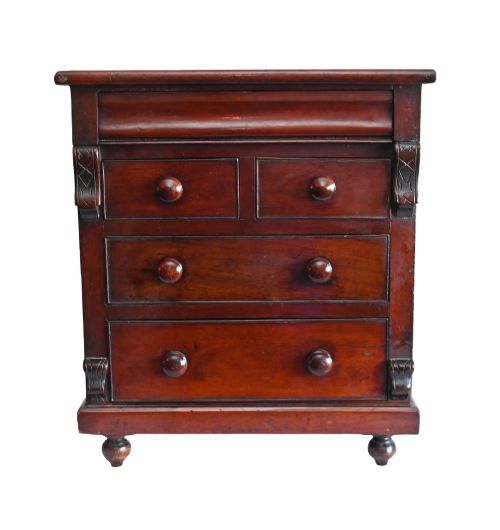
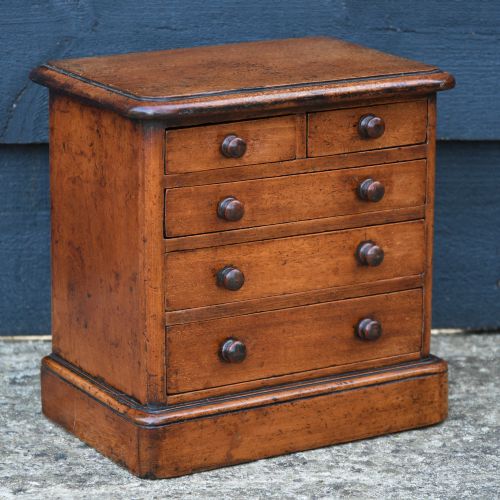
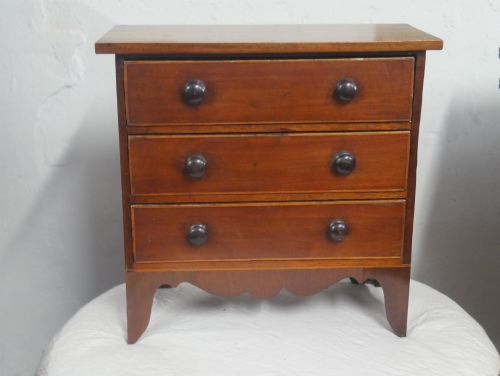
A mahogany desktop cabinet is a small tabletop storage piece designed for practical use in a study, office or drawing room. When searching this phrase, you encounter forms ranging from miniature chests of drawers and apprentice pieces to stationery boxes, specimen cases and counter top display cabinets.
The selections span Georgian, Regency, William IV, Victorian and Edwardian eras. Miniature chests of drawers and stationery cabinets represent the primary versions found on this page.
Makers produced these pieces in various regional styles, including 19th Century Scottish designs alongside English variations. They served specialised roles, housing everything from watchmaker tools and cigars to correspondence and botanical specimens.
Execution and Finishes
Quality rests in the precision of the joinery and the selection of timber. Superior examples exhibit fine grain figures in the mahogany, smooth drawer runners and tight dovetail joints.
The refinement of secondary details separates standard utility pieces from exceptional ones. Finer items incorporate matched brass hardware, delicate inlay work, and a well-preserved patina across the polished wood surfaces.
An unusual Victorian piano desk correspondence box solves the eternal domestic riddle of where to hide unanswered letters.
Short and Mason
The Mahogany Desktop Cabinet Glossary
- Apprentice piece
- A small scale item demonstrating a craftsman's skill before gaining full guild membership. These often take the form of miniature chests of drawers.
- Bowfront
- A convex curved front contour typical of certain Victorian and Georgian miniature chests. This shaping requires skilled woodworking to follow the radius.
- Stationery cabinet
- A tabletop box designed for organising letters, envelopes and writing paper. They frequently feature internal pigeon holes and fall-front writing surfaces.
- Wellington chest
- A tall, narrow set of drawers secured by a locking side pilaster bar. This proprietary locking mechanism protected sensitive contents.
- Barograph
- A recording barometer housed in a mahogany case with a glass cover. It maps atmospheric pressure changes onto a paper chart stored in a dedicated base drawer.
Mahogany Desktop Cabinet: Frequently Asked Questions
What is a mahogany desktop cabinet used for?
These pieces served practical organisational roles in studies, offices and shops. They held correspondence, stationery, jewellery, trade tools and natural history specimens.
Collectors utilise them today for tidy desktop storage or to display small antiques. Their compact proportions allow them to sit easily on top of larger desks and sideboards.
How do I tell an apprentice piece from a standard miniature?
Apprentice pieces represent items created by craftsmen to prove their proficiency to a guild. They replicate full size furniture with exact functional scaling.
Standard miniature chests and cabinets were often produced commercially for domestic use. Both types share careful small scale joinery, making the distinction dependent on documented provenance rather than build quality alone.
What is the difference between a stationery box and a correspondence box?
Stationery boxes generally feature tiered interiors, internal pigeon holes and vertical slots designed to hold various sizes of paper and envelopes. They often have folding or sloping fronts.
Correspondence boxes function similarly but frequently accommodate incoming mail, sealing wax and writing implements. Both variations appear frequently in Victorian and Edwardian mahogany.
How do I date a mahogany desktop cabinet?
Dating relies on observing the prevailing style, construction methods and hardware. Georgian examples typically show clean lines and bracket feet, while Victorian versions incorporate bowfronts, brass drop handles or inlaid decoration.
Later Edwardian pieces often display lighter satinwood contrasts or specialised display glazing. Hardware types, such as cast brass versus stamped brass, offer further chronological clues.