


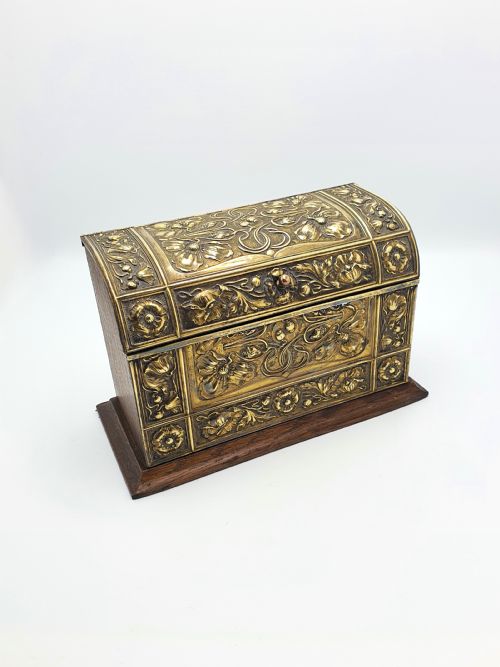


Antique Stationery Chest
An antique stationery chest organises correspondence with fitted drawers, sloping lids, and compartments formed in walnut, mahogany, oak, and rosewood.
Antique Stationery Chest
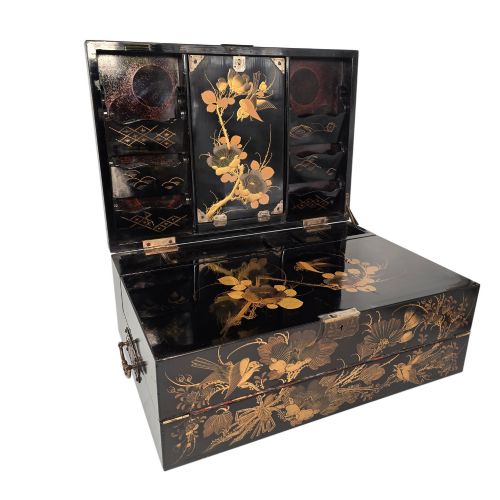
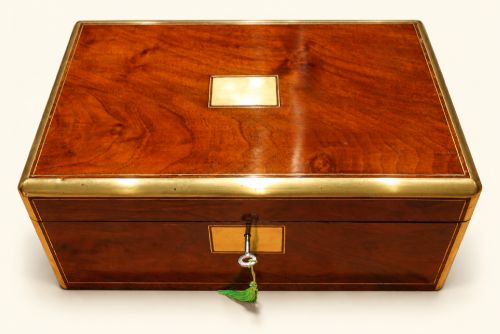
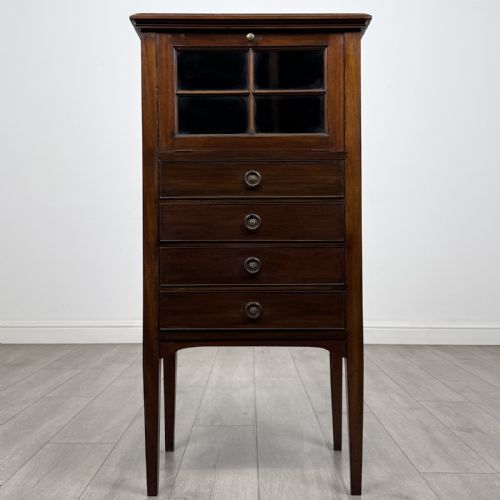
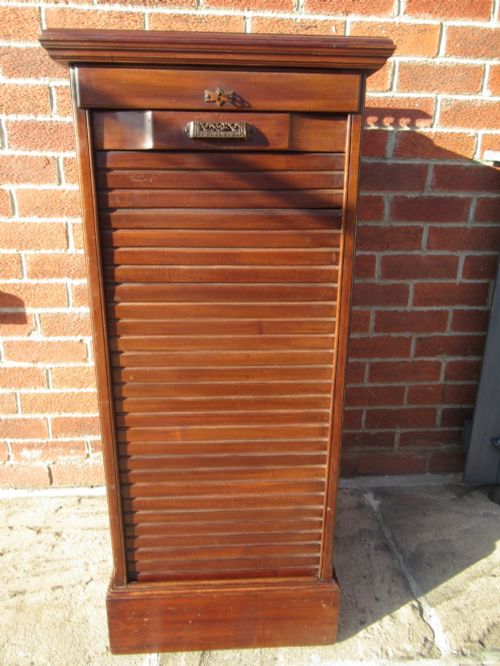
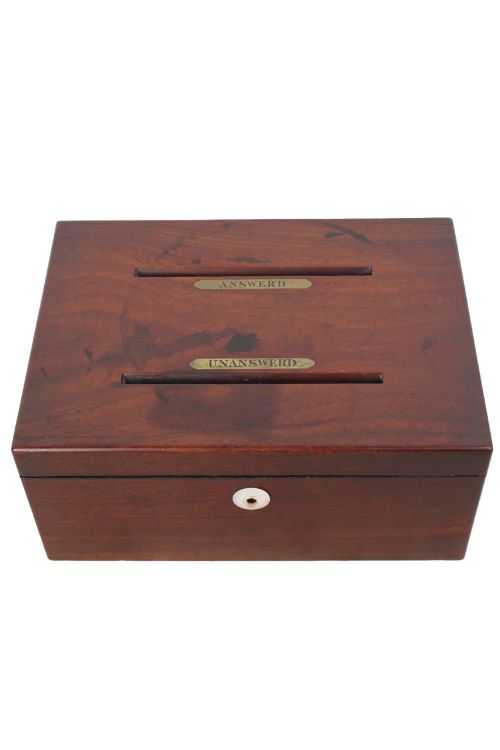
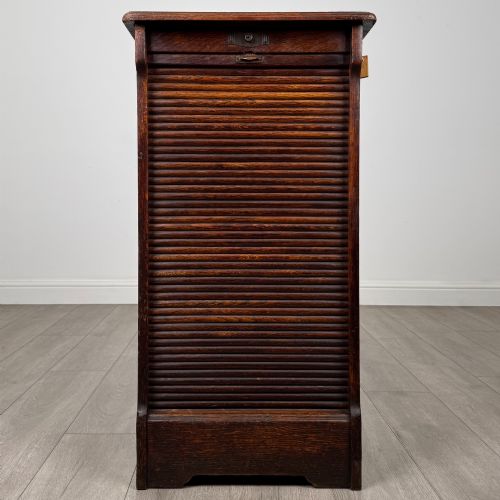
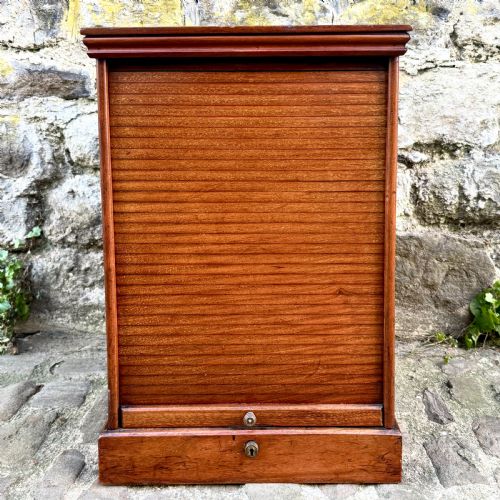
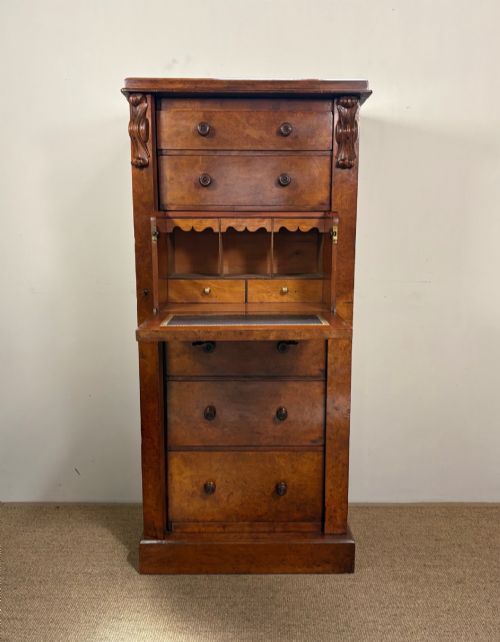
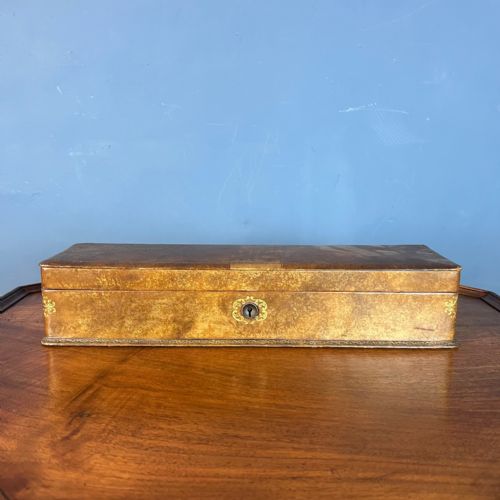
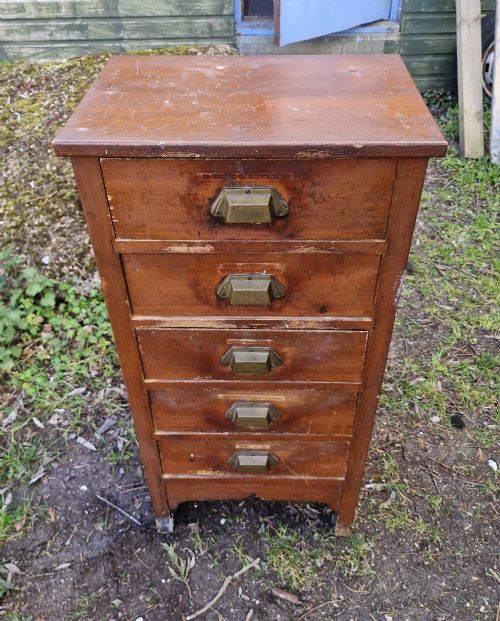
An antique stationery chest encompasses a variety of desk furniture designed to hold letters, documents, and writing implements. The selection includes Victorian country house correspondence letter boxes, Edwardian tambour cabinets with adjustable shelves, and 19th-century rosewood filing cabinets. These pieces range from compact table-top boxes to substantial five-drawer office cabinets fitted with period brass handles.
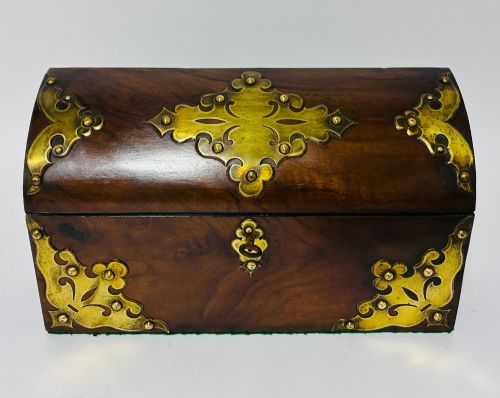
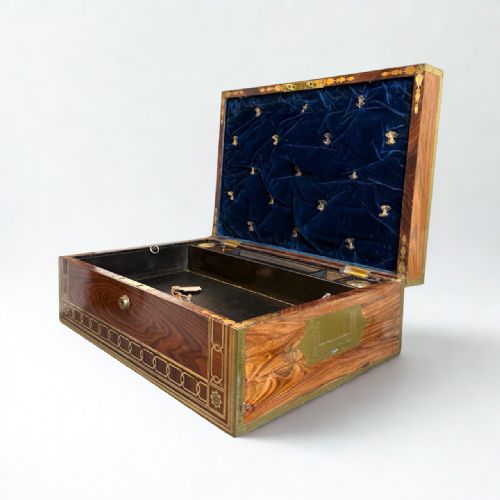
Makers and craftsmen throughout the 18th, 19th, and early 20th centuries produced these items in diverse regional styles. Examples span from Regency coromandel stationery cases and Gothic revival mahogany despatch boxes to Anglo-Indian ebony writing slopes and French mahogany cartonnier filing cabinets. Buyers frequently encounter pieces displaying elaborate marquetry, pollard oak with brass dome tops, or campaign styling with recessed brass mounts.
The functional intent behind each form dictated its internal layout. Document boxes, writing slopes, and letter chests incorporate specific compartments for paper, envelopes, and wax seals, often featuring tooled leather surfaces. Whether utilising a tambour front, a fall-front secretaire, or a sloped lid, these chests reflect the rigorous correspondence habits of past eras.
Materials and construction methods
Cabinet makers utilised dense hardwoods such as mahogany, oak, walnut, and rosewood, alongside exotic materials like coromandel, ebony, and camphor. Surfaces were frequently enhanced with intricate veneer work, brass banding, mother-of-pearl inlay, or tooled leather inserts. Structural integrity relied on traditional joinery, ensuring that heavy document boxes and multi-drawer filing cabinets endured frequent daily handling.
Metalwork played a defining structural and decorative role, featuring flush brass carrying handles, campaign mounts, gilt-brass hinges, and escutcheons. Internal mechanisms such as tambour slats, secret compartments, and sprung writing slopes demonstrate considerable mechanical ingenuity. Finishing techniques involved French polishing and lacquering, preserving the natural grain and deep patination of the timber.
Antique Stationery Chest Retail Price Guide 2026
Typical asking prices for stationery chest among the pieces listed under this phrase on Sellingantiques today, from the lower quarter to the upper quarter. They describe what is for sale here now, not the wider market.
Listings feature 19th-century forms in mahogany, oak, walnut, and rosewood, including tambour cabinets, letter boxes, and campaign writing slopes.
Distinctions in craftsmanship and design
Superior examples distinguish themselves through the choice of timber and the precision of decorative inlays such as marquetry or brass stringing. The integration of mechanical elements, including smoothly operating tambour doors, balanced drop-fronts, and tightly fitted internal partitions, signals higher workshops standards. Original hardware, intact tooled leather, and well-preserved locks with working keys elevate the desirability of a piece.
Regional variations and stylistic purity also influence the standing of an item, such as authentic Gothic revival detailing or crisp Anglo-Indian reeded carving. Lesser pieces may exhibit replacement handles, poor veneer repairs, or simplified interior layouts lacking original inkwells and pen trays. The overall crispness of the carving and the depth of the timber's grain retention separate standard utility boxes from fine exhibition pieces.
The Antique Stationery Chest Glossary
- Tambour
- A flexible sliding shutter formed of narrow vertical strips of wood glued to canvas, allowing access to fitted desk interiors. This mechanism became popular in Edwardian and late 19th-century office furniture.
- Cartonnier
- A set of filing cabinets or stationery compartments designed to hold papers and documents in separate vertical tiers. French examples often incorporate leather-bound drop-front boxes.
- Campaign
- Furniture constructed in sections with recessed brass handles and corner brackets, originally designed for easy dismantling and transport by military officers. These pieces utilise sturdy timbers like camphor or mahogany.
- Secretaire
- A writing cabinet featuring a fall-front drawer or flap that opens to reveal a writing surface and small pigeonholes. It combines storage with a pull-out desk facility.
- Despatch box
- A secure, portable container traditionally used for carrying official documents and state papers. They typically feature robust brass locks and leather-lined interiors.
Antique Stationery Chest: Frequently Asked Questions
What is an antique stationery chest used for?
These chests served to organise writing paper, incoming correspondence, envelopes, and ink supplies in domestic and professional settings.
Today, they function effectively on modern desks or sideboards for storing loose letters, documents, and small collectables.
How do I identify a Victorian stationery box?
Victorian pieces frequently display rich timber grains such as walnut and rosewood, often enhanced with brass mounts, dome tops, or marquetry inlay.
Examining the construction of the interior compartments and the style of the brass hardware helps confirm the mid-to-late 19th-century origin.
Are tambour cabinets difficult to maintain?
Tambour doors rely on fabric backings and wooden slats that require a clean track and gentle operation to prevent binding.
Keeping the mechanism free from dust and applying appropriate furniture wax ensures the sliding slats move smoothly along their curves.