
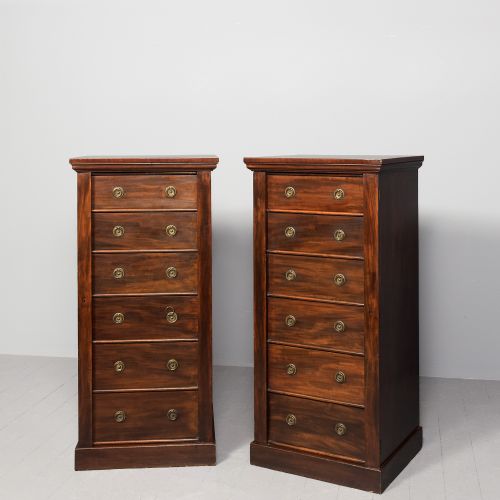


Locking Side Bar
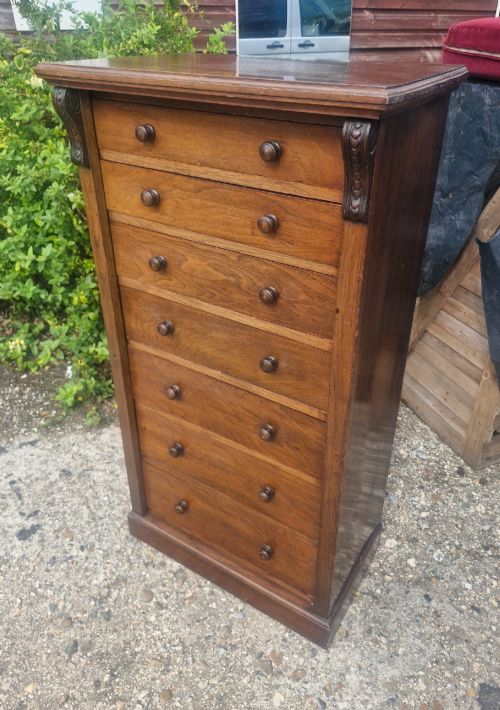
These locking side bar pieces are upright chests of drawers equipped with a hinged locking stile that secures every drawer at once.

Locking Side Bar
A locking side bar typically refers to a Wellington chest or similar vertical drawer cabinet from the nineteenth century, built tall and narrow to maximise storage without taking up much floor space. You will find examples ranging from compact miniature chests and childs chests up to large seven-drawer pieces designed to hold papers, linens, or valuables securely behind a single locking pilaster.
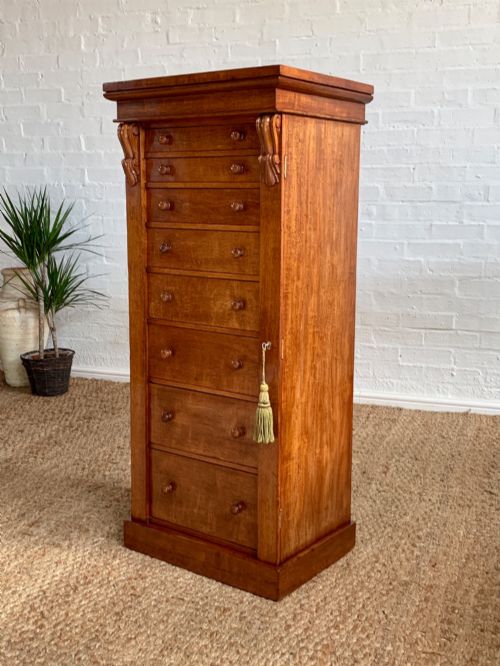
Most pieces seen here date from the Victorian period, spanning the mid-nineteenth century up to around nineteen hundred, alongside occasional Regency influences. These upright chests of drawers frequently feature a hinged side bar on the right or left edge which swings into place over the drawer fronts, secured by a small brass lock.
Materials and construction
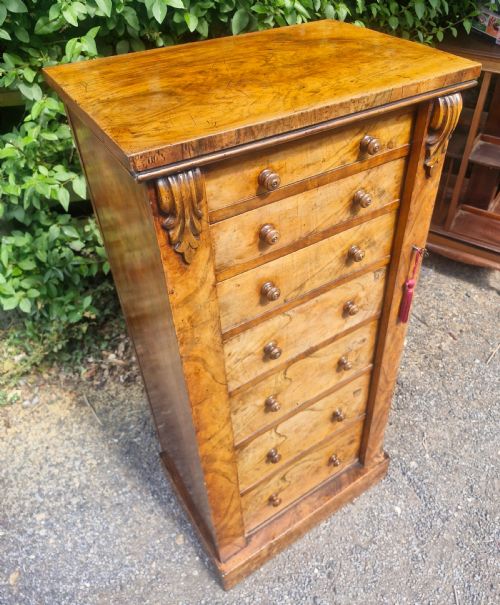
Cabinetmakers constructed these vertical chests using solid timbers and decorative veneers such as mahogany, walnut, figured mahogany, flame mahogany, and pitch pine, often set upon a plinth base with a distinct moulded top. Drawer interiors and secondary woods generally utilise robust construction methods appropriate for heavy daily use, whilst exterior surfaces highlight rich grain patterns.
The defining mechanism relies on a hinged side bar, or locking stile, which fastens against the vertical bank of drawer fronts with a brass lock. When locked, the pivoting bar blocks the drawer lips or handles, preventing any drawer from opening until the bar itself is released by a key.
Miniature versions were made by Victorian apprentices to prove their woodworking skill before joining the guild.
Judging quality in locking side bar cabinets
Quality in these upright chests rests upon the selection of timber figures, such as flame mahogany or figured walnut veneer, and the crispness of the moulded details around the top and plinth. Finer examples display carefully matched grain across all drawer fronts and seamless integration of the hinged side bar when closed.
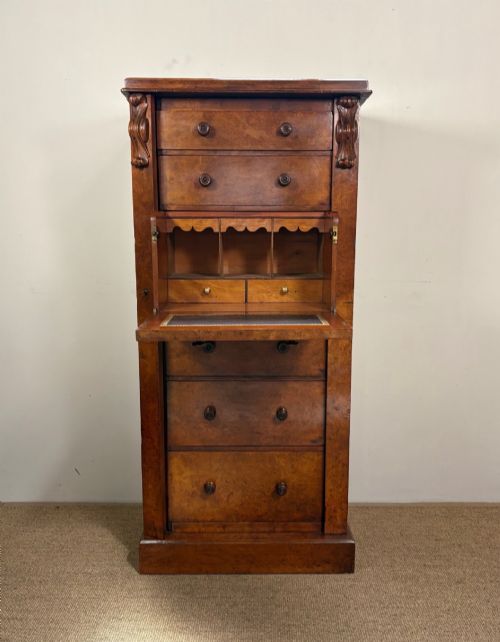
The sophistication of the interior fitments also separates standard pieces from exceptional ones, particularly where a secretaire drawer with fitted pigeonholes or satinbirch secondary woods is included. Smooth operation of the locking stile and the retention of original turned wooden knobs or brass fittings further elevate a piece.
The Locking Side Bar Glossary
- Wellington chest
- A tall, narrow chest of drawers featuring a hinged vertical locking bar on one side that secures all drawers simultaneously. It typically contains six or seven shallow drawers.
- Secretaire
- A desk drawer fitted with a drop-front writing surface concealing small compartments and pigeonholes for correspondence. It integrates into the chest configuration behind the locking mechanism.
- Flame mahogany
- A veneer cut from the fork of a mahogany tree showing a fiery, undulating grain pattern. Cabinetmakers used this on the primary facade of high-status Victorian furniture.
- Plinth base
- The solid lower block or platform upon which a tall chest of drawers stands. It provides visual weight and stability to narrow vertical furniture forms.
- Stile
- A vertical framing member of a door or cabinet edge. In these chests, the locking stile acts as the hinged bar that secures the drawers.
Locking Side Bar: Frequently Asked Questions
What is a locking side bar?
A locking side bar is a hinged vertical wooden pilaster attached to the front edge of a tall chest of drawers. When closed and locked with a key, it secures all the drawers at once.
This security mechanism was originally designed to protect private papers, journals, or valuables stored inside narrow upright cabinets like Wellington chests.
How do you open the drawers?
To access the drawers, you insert a key into the lock on the vertical side bar and turn it to release the catch. The bar then swings outward on its hinges to the side.
Once the bar is swung completely open, each individual drawer can be pulled out freely by its turned wooden knobs.
What periods are these chests from?
The pieces seen here belong predominantly to the Victorian era, dating from the mid-nineteenth century up to around nineteen hundred. You will find variations reflecting Regency influences in their proportions and mouldings.
Nineteenth-century cabinetmakers favoured timber choices like mahogany, walnut, and pitch pine for these tall vertical formats.
Where were they used in the home?
These narrow upright chests were traditionally placed in bedrooms, dressing rooms, or studies where floor space was limited. Their tall profile offered substantial storage capacity in a compact footprint.
Today, they function well in similar domestic spaces as bedside chests, hall cabinets, or dedicated storage for documents and accessories.