




Edwardian Miniature Chest
An edwardian miniature chest offers compact storage for small treasures, combining fine cabinetry with the domestic scale of the early twentieth century.
Edwardian Miniature Chest
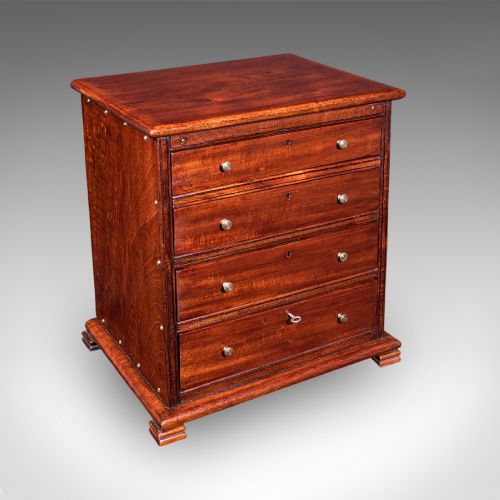
An edwardian miniature chest takes the form of a small-scale drawer unit or cabinet, built to house trinkets, documents, or specimens rather than full-sized garments. These pieces echo the proportions of larger household furniture while serving specialised desk or tabletop functions.
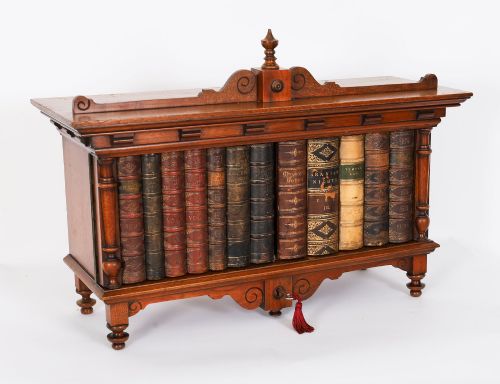
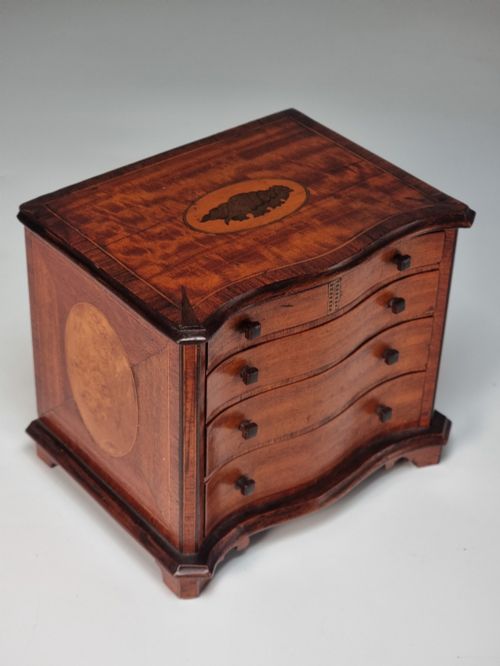
The selections on this page span several decades, featuring Edwardian examples alongside pieces from the Victorian and Regency eras. Forms range from simple miniature chests of drawers to specialised collectors cabinets, calligrapher chests, and compactum wardrobes.
Mahogany and walnut appear frequently as the primary woods, often complemented by satinwood, oak, and brass fittings. Buyers will also encounter specialised items such as milk glass-lined dental cabinets and sterling silver jewellery boxes.
Materials and Construction
Cabinet makers utilised dense hardwoods such as mahogany and walnut to build sturdy frames capable of supporting small, precisely fitted drawers. Satinwood and deal also feature in the construction, providing contrasting grains and lighter interior surfaces.
Decorative elements involve brass handles, mother of pearl inlay, and glass components, requiring careful joinery to fit miniature proportions. Metal fixtures secure doors and drawers, while specific linings like milk glass protect the interior contents.
Edwardian Miniature Chest Retail Price Guide 2026
Typical asking prices for edwardian miniature chest among the pieces listed under this phrase on Sellingantiques today, from the lower quarter to the upper quarter. They describe what is for sale here now, not the wider market.
Listings feature woods such as mahogany, walnut, satinwood, and oak, alongside brass fittings and milk glass.
Judging Quality
Quality rests in the precision of the miniature joinery and the matching of wood grains across small drawer fronts and panels. Finer examples display careful attention to proportion, clean dovetail joints, and well-fitted internal compartments.
The choice of secondary woods and the refinement of brass or inlaid details distinguish standard utility pieces from more ambitious cabinet work. Intricate additions such as mother of pearl inlay or specialised linings elevate the execution of the piece.
A. F. Lloyd, Bideford
The Edwardian Miniature Chest Glossary
- Compactum
- A wardrobe or storage unit designed to hold multiple types of clothing or items efficiently in a restricted space.
- Collectors Cabinet
- A small piece of furniture fitted with shallow drawers specifically for organising stamps, coins, or natural history specimens.
- Satinwood
- A durable, yellowish wood with a lustrous sheen, frequently used for decorative veneers and fine inlay work.
- Serpentine
- A curved shape featuring a convex centre flanked by concave ends, often seen on the fronts of chests of drawers.
- Deal
- A soft timber from pine or fir trees, commonly employed for secondary framing and interior drawer sides.
Edwardian Miniature Chest: Frequently Asked Questions
What were miniature chests used for?
These small pieces served as secure storage for jewellery, writing materials, or small personal valuables on a desk or dressing table. Some specialised versions held natural history specimens, coins, or dental supplies.
Their compact scale allowed owners to keep prized possessions close at hand in domestic or professional settings.
How do I distinguish Edwardian from Victorian pieces?
Edwardian pieces generally display lighter timbers, simpler lines, and less heavy ornamentation than their Victorian predecessors. Victorian examples often feature darker walnut or mahogany with heavier proportions and more pronounced carving.
Examining the construction methods and hardware styles helps clarify the period of manufacture.
Where should I place a miniature chest?
These compact items sit comfortably on top of larger sideboards, desks, or dressing tables where their fine details remain visible. They require minimal surface area while providing functional storage for small items.
Keep them away from direct sunlight and strong heat sources to protect the polished wood surfaces.
Are all miniature chests made of mahogany?
While mahogany and walnut are common, makers also utilised oak, satinwood, and stained deal. The choice of wood often depended on the intended function and the stylistic preferences of the period.
Inlaid materials like mother of pearl and brass hardware frequently accompany these various timber types.