




Mahogany Cutlery Case
These mahogany cutlery case examples are practical containers shaped to hold tableware securely, prized for their figured timber and refined proportions.
Mahogany Cutlery Case
When you search for a mahogany cutlery case, you encounter functional storage pieces designed to protect silver and steel. The selection spans knife boxes, canteens, and fitted boxes from the Georgian, 18th Century, 17th Century, Edwardian, and 19th Century periods.
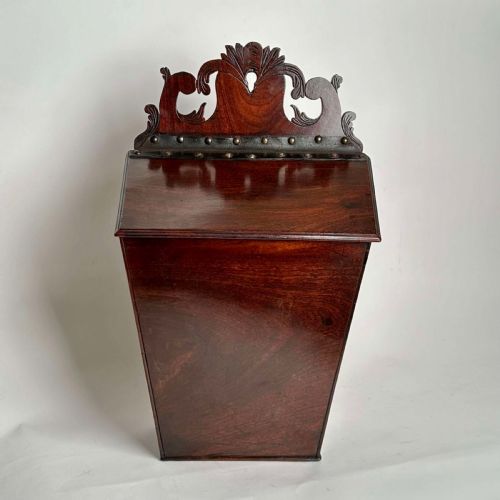
The version you are most likely to meet on this page is the Georgian or George III knife box, typically displaying a sloping lid and serpentine or slanted form. These items originate from periods when dining rooms required specialised containers for cutlery sets.
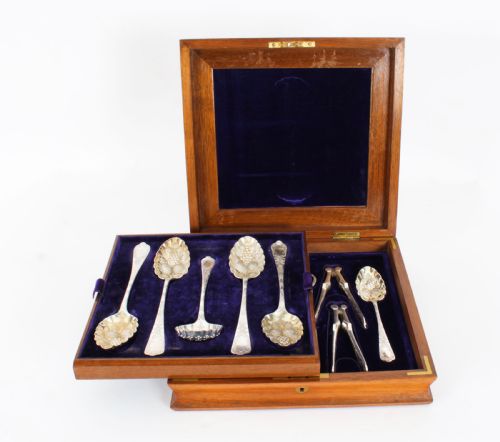
Beyond traditional knife boxes, the listings include canteens and cased fruit sets featuring components with bone handles or metal utensils. Styles range across Georgian, Edwardian, and Victorian eras, reflecting shifting domestic habits over centuries.
Materials and construction
Cabinetmakers constructed these pieces primarily from solid and veneered mahogany, often selecting timber with rich grain patterns. Workshops enhanced the visual depth of the wood using contrasting elements such as boxwood inlay and satinwood details.
Functional hardware played a vital role in construction, incorporating cast brass escutcheons, hinges, and carrying handles. Interiors frequently lined themselves with materials like velvet to cushion delicate cutlery sets, steel knives, and mother of pearl utensils.
Some slant-front boxes served a double life later on, quietly pivoting from holding dinner knives to hiding love letters.
Assessing quality and craftsmanship
The distinction between standard examples and superior pieces rests largely on the choice of timber and the precision of the joinery. Finer boxes display carefully matched mahogany veneers and crisp boxwood inlay rather than plain surfaces.
Proportion and hardware integration separate ordinary containers from exceptional ones. Original brass mounts, well-executed serpentine profiles, and intact interior fittings elevate the standing of a piece within its period.
The Mahogany Cutlery Case Glossary
- Knife box
- A specialised container with a sloping lid designed to hold upright dining knives in slots. These pieces often feature serpentine fronts and brass carrying handles.
- Canteen
- A fitted box or chest built to store a complete set of matching cutlery securely. Examples often contain compartments lined to protect bone handles and silver blades.
- Inlay
- A decorative technique where contrasting woods like boxwood or satinwood are inserted into recesses in the mahogany surface. This method creates geometric or floral patterns.
- Escutcheon
- A protective brass plate surrounding a keyhole on the lid or front of the box. It frequently incorporates a small locking mechanism.
Mahogany Cutlery Case: Frequently Asked Questions
What did they hold?
These containers held specialised dining implements including steel knives, forks, spoons, and fruit sets.
Over time, forms evolved from upright knife boxes to flat canteens designed for larger cased sets of cutlery.
How old are they?
The pieces span multiple eras, with many examples originating from the Georgian and 18th Century periods.
Later items date through the Victorian and Edwardian periods, reflecting changes in dining room storage.
Are interiors original?
Interiors vary between fitted wooden blocks for knives and velvet-lined trays for flatware sets.
Many retain their original internal partitions and hardware, though some have adapted over centuries of use.
How do I use one today?
Collectors utilise these boxes on sideboards for servingware storage or repurpose them as stationery cabinets.
Their fitted interiors and hinged lids suit the display and organisation of small desktop or tabletop items.