




Mahogany Corner Display Unit
These mahogany corner display units maximise neglected room perimeters while displaying treasured objects behind glazed or open shelving.

Mahogany Corner Display Unit
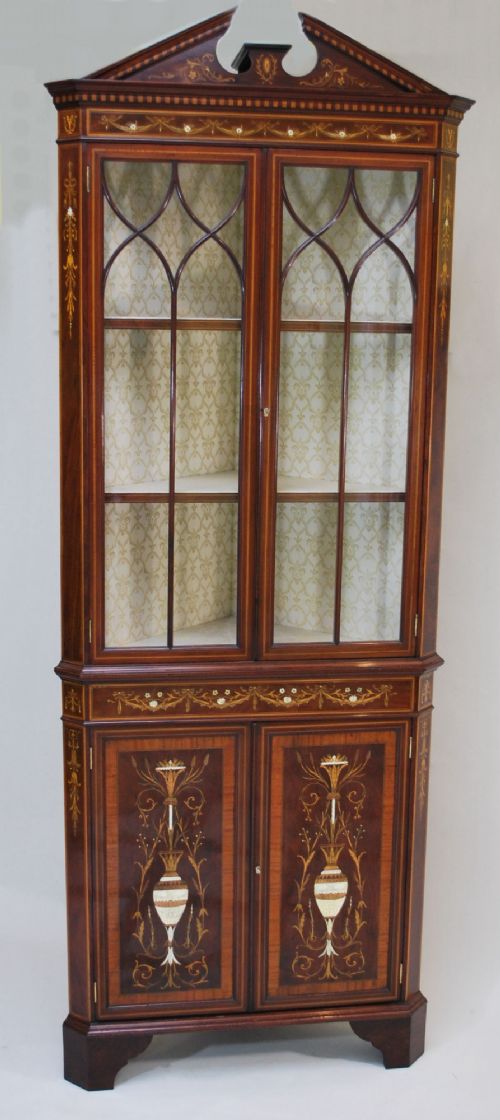
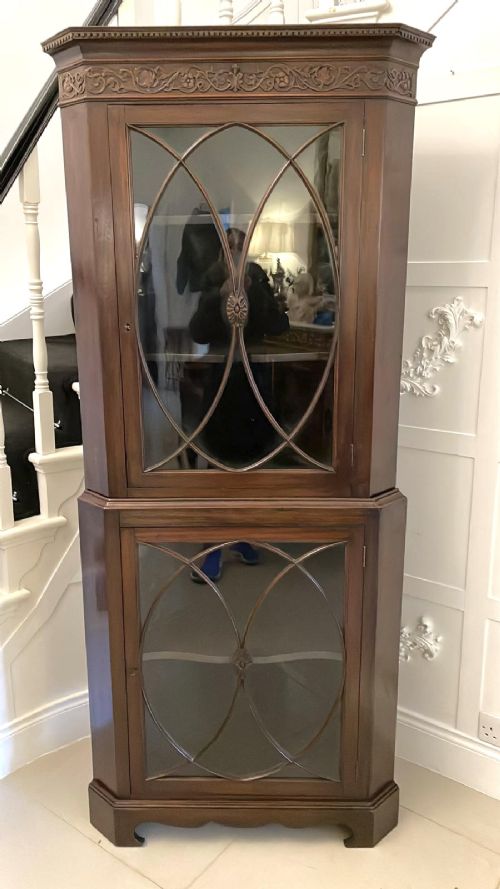
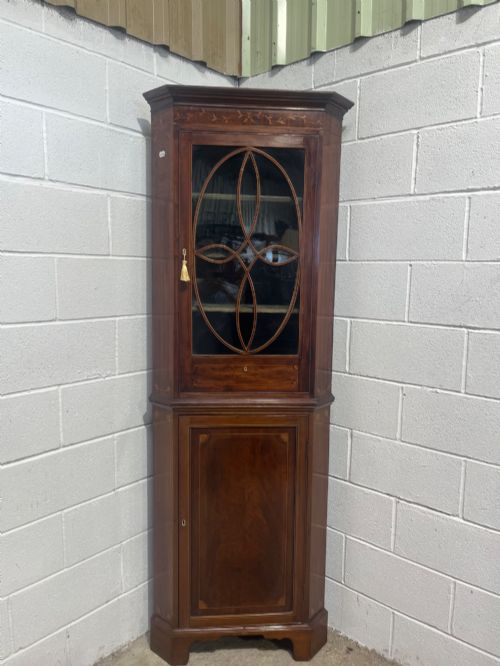
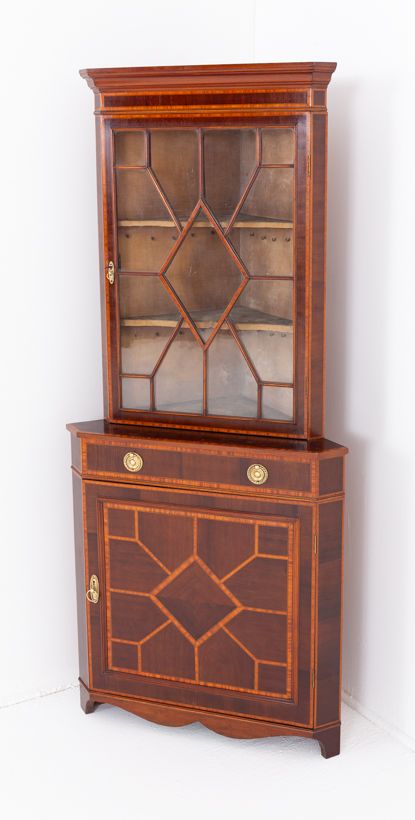
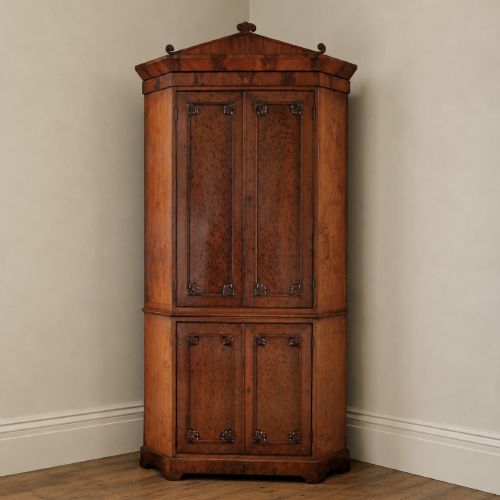
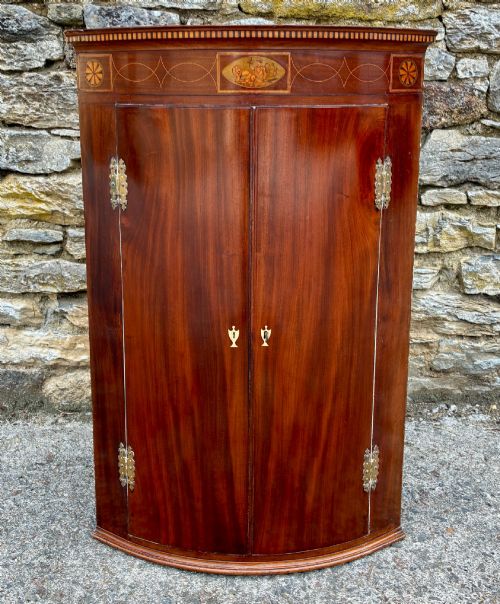
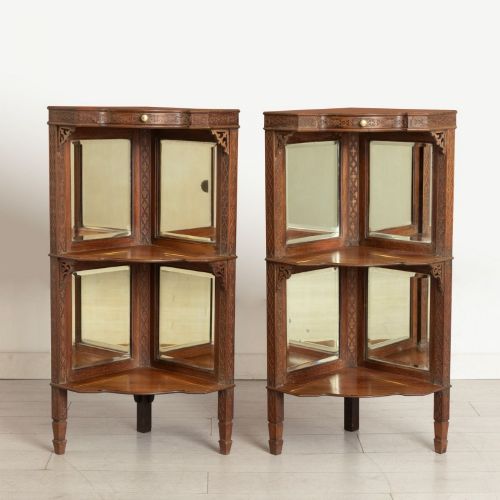
A mahogany corner display unit sits neatly into architectural angles, turning wasted space into a practical showcase for ceramics and glassware. You will encounter floor-standing and wall-hanging variations spanning the eighteenth, nineteenth, and twentieth centuries.
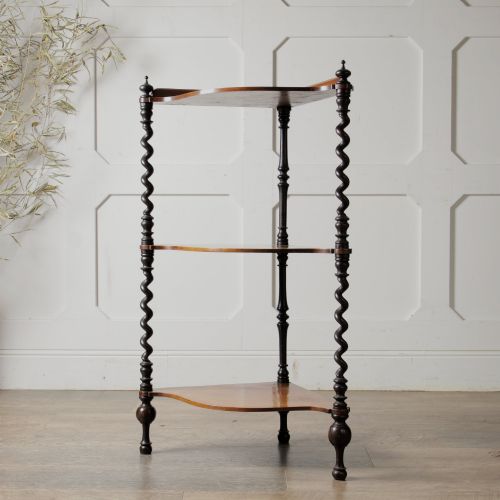
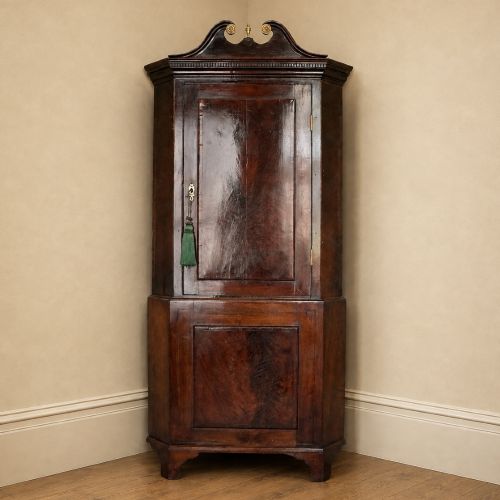
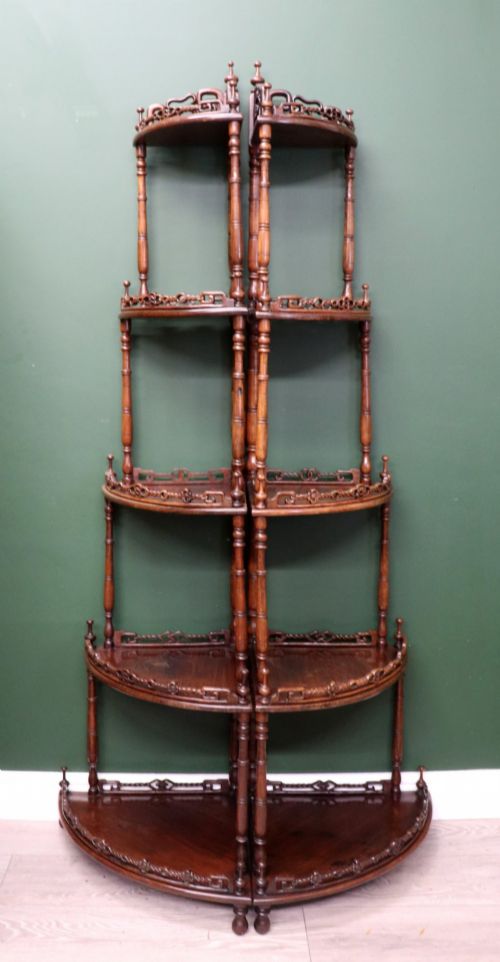
The selection ranges from early Georgian standing cupboards with solid doors to Edwardian glazed cabinets and multi-tiered whatnots. Pieces appear in distinct stylistic iterations, including Sheraton Revival, William IV, and Biedermeier interpretations.
Makers such as Edwards & Roberts and Goodhall, Lamb and Heighway of Manchester produced refined examples. Many variants incorporate bow fronts, broken arch pediments, or multi-tiered open shelving designed specifically for corner placement.
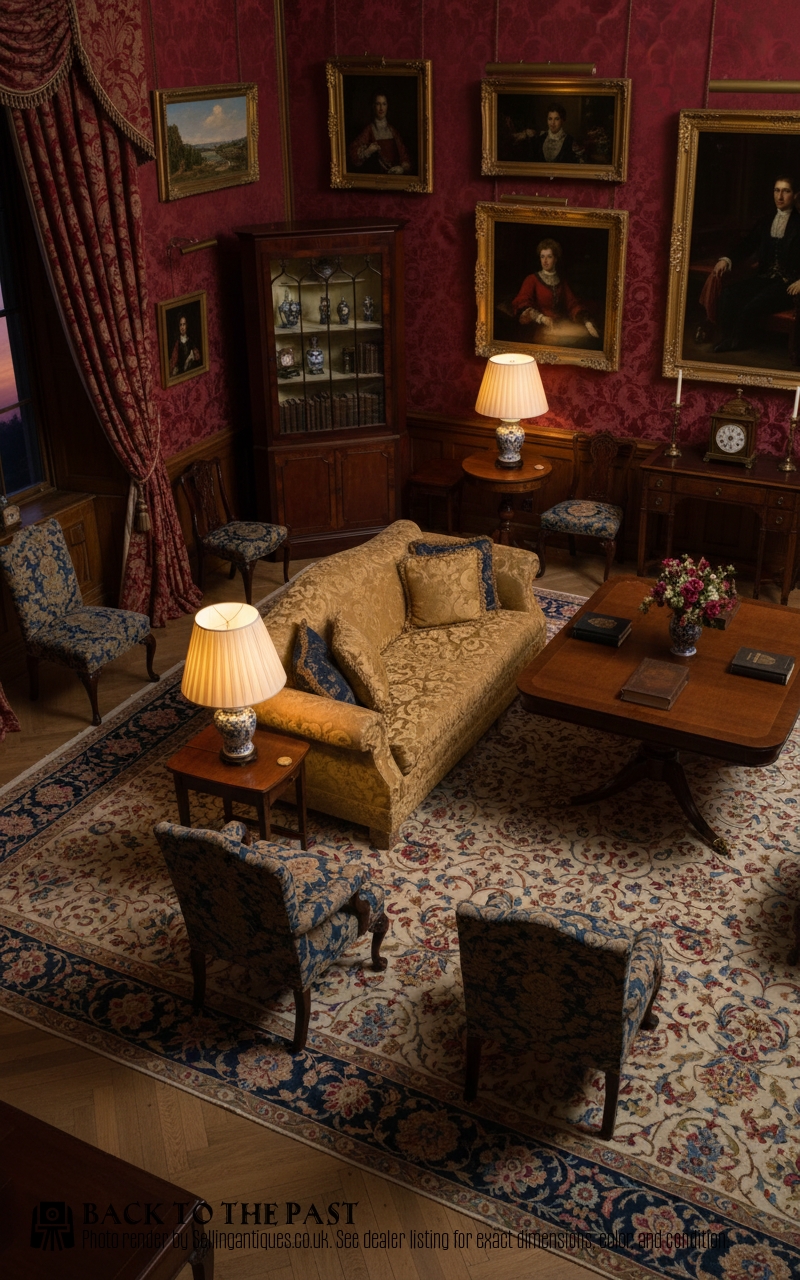
Construction and Materials
Cabinet makers utilised dense mahogany timbers, occasionally incorporating Cuban varieties or plum pudding veneers for rich grain figures. Secondary woods like oak frequently form the internal structures and backingboards of these corner units.
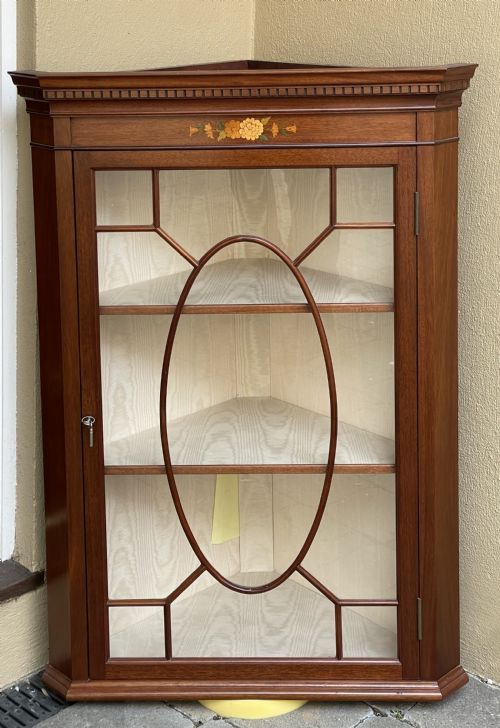
Surface decoration relies on precise joinery and contrasting details, using satinwood and boxwood inlay alongside marquetry panels. Glazing methods include astragal bars dividing glass panes, while brass hardware secures doors and supports shelves.
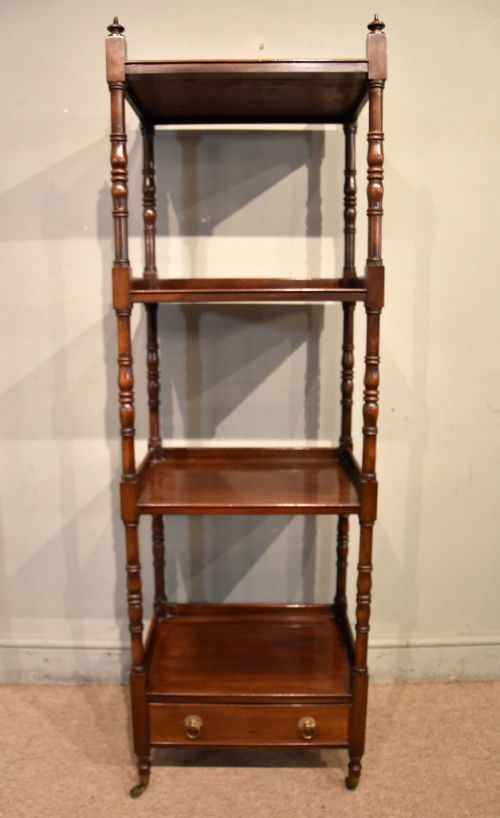
Several Victorian whatnots employ barley twist columns, lending a delightfully jaunty corkscrew energy to an otherwise sensible corner.
Judging Quality
Superior examples display balanced proportions, particularly in bow-fronted or tall standing formats where architectural cornices meet the body harmoniously. The fineness of the satinwood or boxwood inlay and the crispness of carved details distinguish workshop output.
Materials and internal construction reveal standard differences, from plain secondary timbers to figured mahogany surfaces matched across multiple doors. Original glass panes, functioning locks with keys, and balanced shelving tiers indicate careful preservation.
Edwards & Roberts·Goodhall, Lamb and Heighway
The Mahogany Corner Display Unit Glossary
- Astragal glazed
- A method of framing glass panes with wooden mouldings that divide a door into smaller geometrical sections. These bars provide structural support while adding decorative visual rhythm to display doors.
- Whatnot
- An open shelving unit featuring multiple tiers supported by slender upright posts or columns. These pieces were developed to display ornaments, books, and small personal possessions.
- Marquetry
- Decorative veneer work forming intricate pictorial or geometric patterns using diverse wood types and coloured elements. Artisans cut these delicate pieces to fit flush within the primary timber surface.
- Bow front
- A convex curved cabinet front that projects outward from the corner angles. This curved silhouette softens the hard lines of a room corner.
Mahogany Corner Display Unit: Frequently Asked Questions
How do I choose between hanging and standing models?
Hanging corner cabinets suit smaller spaces or rooms where floor area remains at a premium. They attach securely to wall studs at eye level.
Standing units anchor directly to the floor, offering greater storage capacity and often incorporating lower cupboards beneath upper display shelves.
What is a corner whatnot used for?
A corner whatnot provides open, multi-tiered shelving designed to hold collections of small decorative objects, porcelain, or books within a room angle.
Unlike enclosed cupboards, these open structures permit viewing from multiple angles while utilising vertical space in otherwise empty corners.
How do I identify a Georgian style piece?
Georgian and Georgian Revival pieces typically display classical architectural motifs such as dentil cornices, broken arch pediments, and astragal glazed doors.
They rely on proportion and rich mahogany grain rather than heavy surface ornamentation to create an imposing yet balanced visual presence.
Do these cabinets fit modern room corners?
Standard ninety-degree angles accommodate most corner display units, though older walls can occasionally present slight alignment variances.
Measuring the wall depth from the corner outward ensures the cabinet door swings freely without striking adjacent furniture or architraves.