
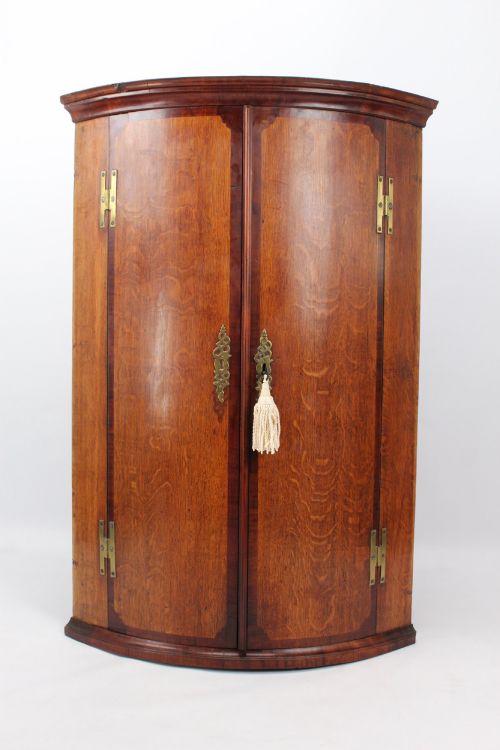
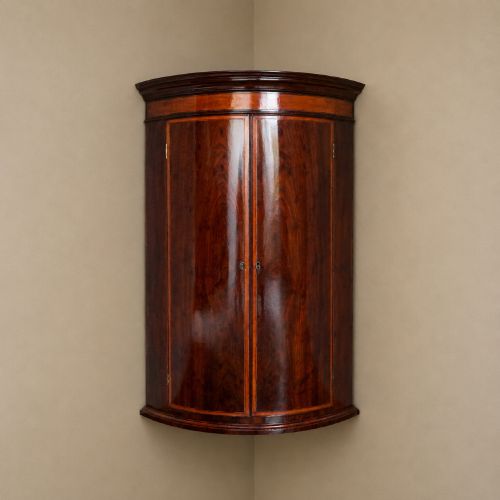
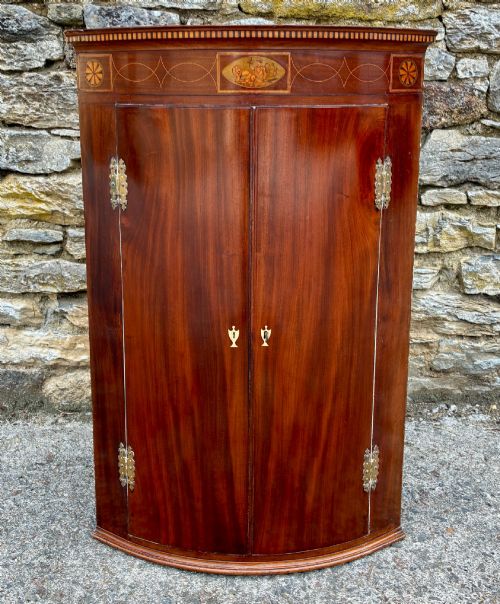
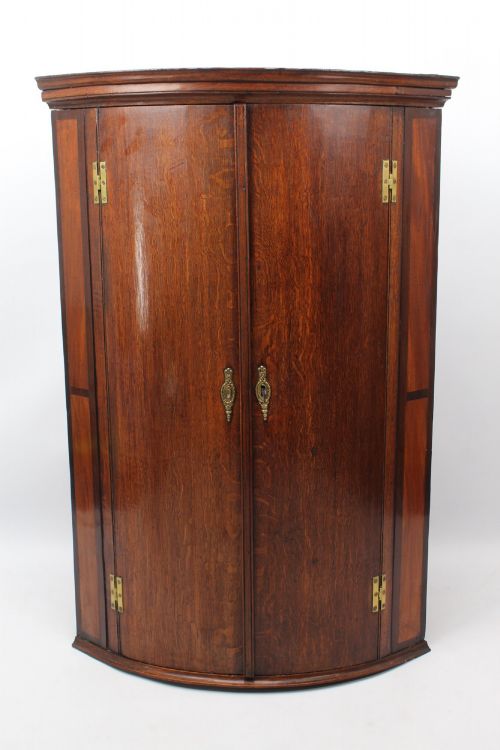
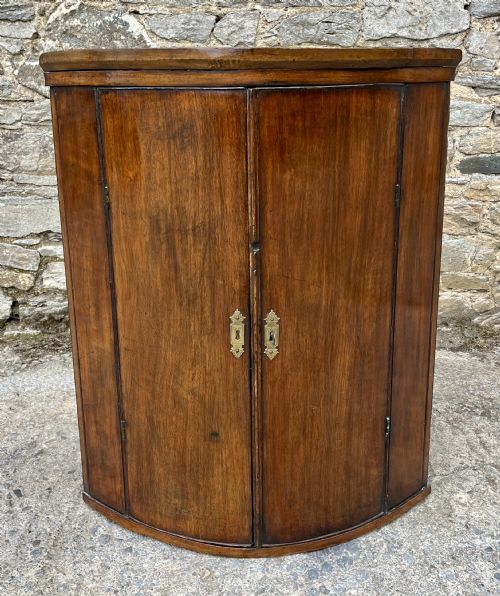
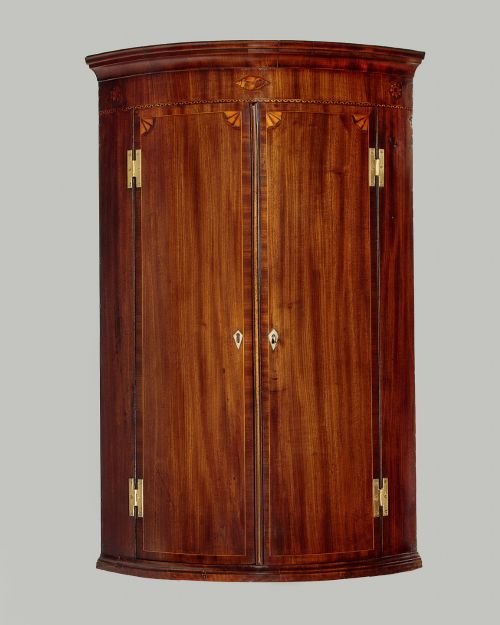
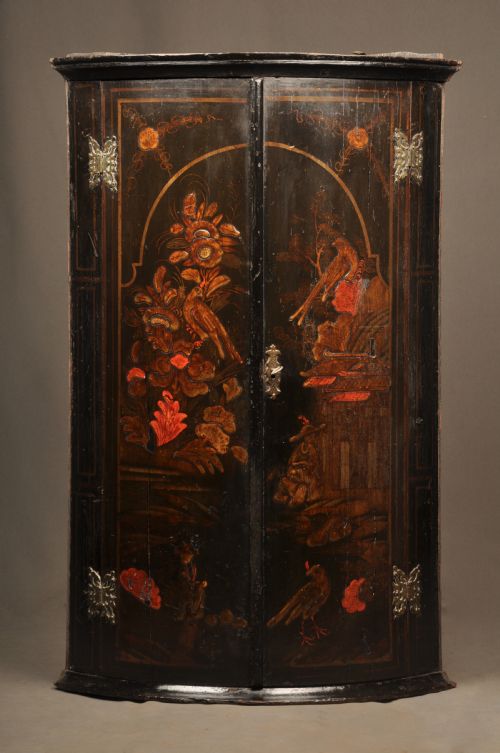
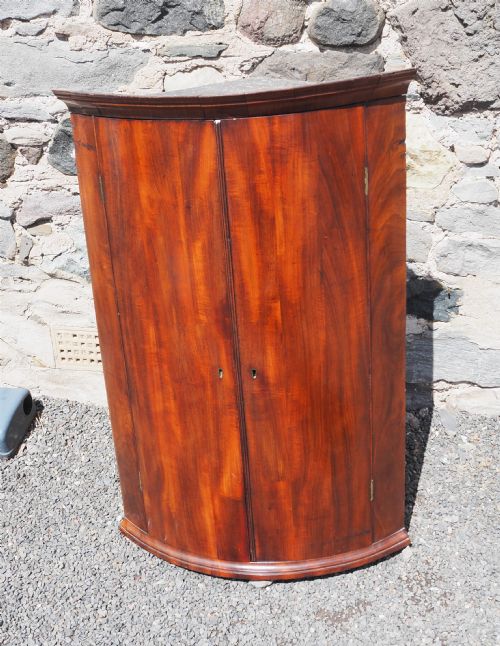

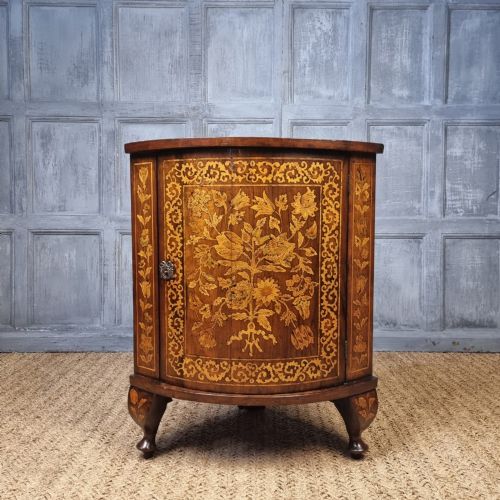


Georgian Bowfront Corner Cupboard
A georgian bowfront corner cupboard curves gracefully into a room, turning unused angles into practical storage.
Georgian Bowfront Corner Cupboard
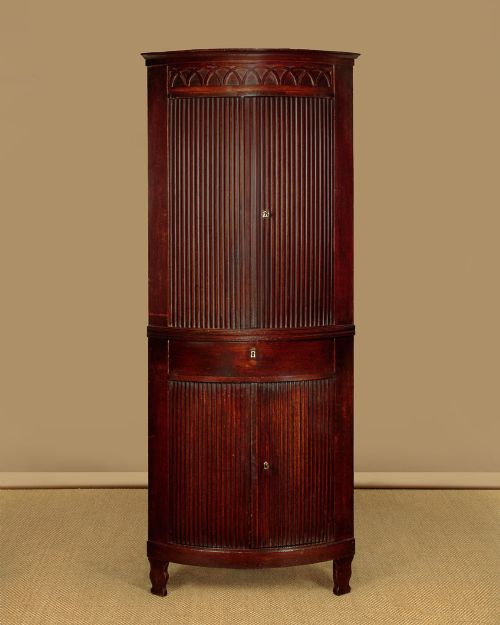
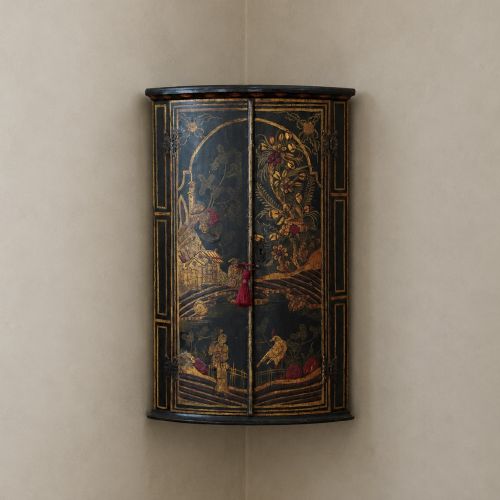
Makers and cabinetmakers constructed these corner units primarily in mahogany and oak, frequently incorporating decorative elements like boxwood inlay, black lacquer, and japanned chinoiserie finishes. Most examples present single doors enclosing interior shelving, though double door and double height formats also appear in the records.
How They Were Made
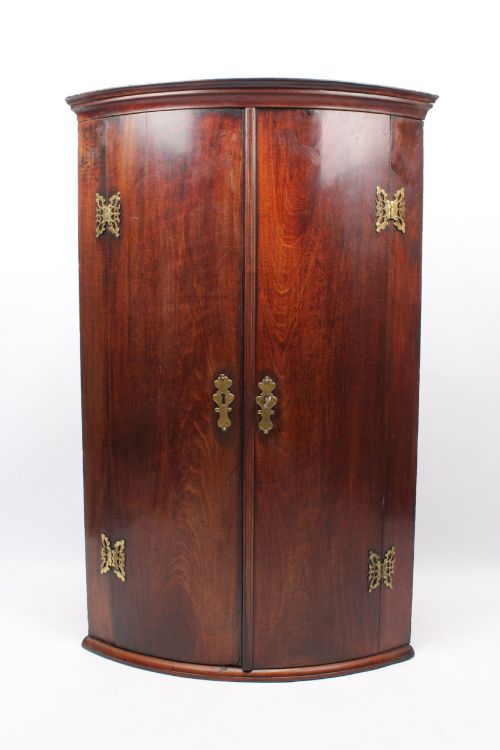
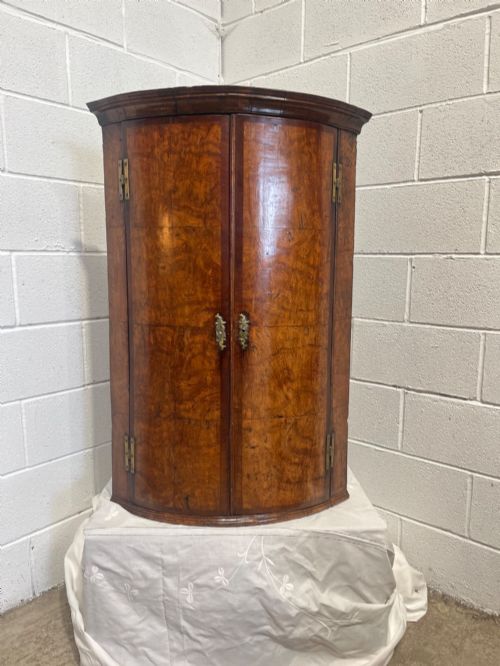
Cabinetmakers utilised solid timbers such as mahogany, oak, and walnut, often selecting specialty woods like plum pudding mahogany, burr oak, and flame mahogany for prominent exterior surfaces. These timbers were shaped to form the signature curved bowfront profile characteristic of the design.
Surface decoration involved intricate techniques including boxwood inlay, marquetry, and japanned chinoiserie painting with black lacquer. Brass hardware such as hinges and escutcheons completed the construction of these corner cabinets.
Plum pudding mahogany derives its festive name from timber figuring that mimics rich Christmas desserts.
What Varies in Quality
The choice of primary timber and secondary wood dictates much of the distinction between standard and superior pieces, with dense plum pudding mahogany or finely figured flame mahogany elevating a cabinet. The execution of decorative techniques like delicate boxwood inlay or hand-painted chinoiserie lacquer demonstrates the skill of the original workshop.
Structural integrity relies on the preservation of the curved bowfront doors and the quality of the timber joints. Pieces retaining their original brass hardware, interior surfaces, and rich natural patina stand apart from heavily restored examples.
The Georgian Bowfront Corner Cupboard Glossary
- Bowfront
- A convex curved cabinet front that projects outward from the corners. This rounded profile softens the rigid geometry typical of standard corner furniture.
- Japanned
- A European imitation of East Asian lacquerwork used on furniture surfaces. This technique involves building up layers of varnish decorated with painted motifs.
- Chinoiserie
- European artistic styles reflecting Chinese decorative motifs and scenes. These designs often feature figures, landscapes, and pavilions rendered in paint or lacquer.
- Plum Pudding Mahogany
- A richly figured timber exhibiting dark circular markings resembling Christmas pudding. Cabinetmakers reserved this prized wood for high-status furniture fronts.
- Escutcheon
- A protective plate surrounding a keyhole. These brass fittings prevent wear on the surrounding wood from repeated key usage.
Georgian Bowfront Corner Cupboard: Frequently Asked Questions
Where were these cupboards placed?
These cabinets were designed specifically to occupy the dead space of interior room corners. Hanging versions secured directly to wall studs, while floor-standing variants anchored firmly against intersecting walls.
Their curved fronts allowed them to project into the room while concealing awkward angles. This placement maximised floor space in smaller eighteenth-century parlours and dining rooms.
How do I distinguish walnut from mahogany?
Walnut typically exhibits a warmer, lighter brown tone with pronounced grain swirls and darker intersecting figure lines. Mahogany tends toward a deeper reddish-brown hue with a tighter, more uniform grain structure.
Specialty variations like plum pudding mahogany display distinct circular cluster patterns across the timber. Examining the interior secondary wood often helps confirm the primary timber identity.
What is the difference between hanging and floor-standing models?
Hanging models attach directly to wall surfaces at eye level or above, featuring sturdy internal brackets for support. Floor-standing variants rest entirely on the ground, occasionally incorporating a separate base or stand.
Floor-standing pieces generally offer greater internal capacity, including double height configurations. Hanging versions provide compact storage without occupying valuable floor area.
How should I care for a lacquered finish?
Lacquered and japanned surfaces require protection from direct sunlight and excessive moisture fluctuations. Gentle dusting with a dry, soft microfibre cloth prevents surface scratching without stripping the historic finish.
Avoid chemical polishes or abrasive cleaners that can damage delicate painted chinoiserie details. Maintaining stable indoor humidity preserves the underlying wood and prevents lacquer cracking.