



Vintage Corner Wall Unit
A vintage corner wall unit solves awkward room layouts by turning unused angles into storage space while anchoring a period interior.
Vintage Corner Wall Unit
A vintage corner wall unit offers a practical method for utilising empty angles in a room, appearing in forms such as corner cupboards, corner cabinets, and corner shelves. These pieces range from substantial 18th century oak and mahogany examples to lighter Edwardian display cabinets and later Arts and Crafts interpretations.
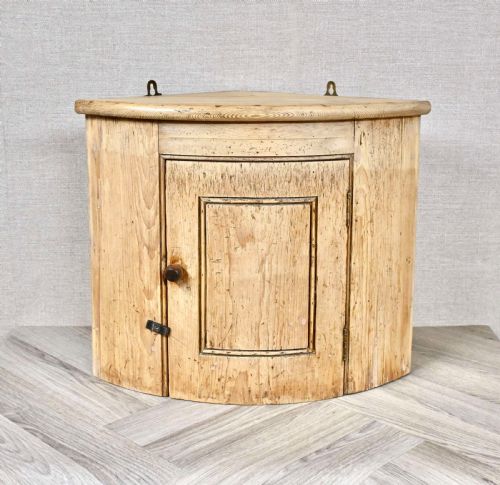
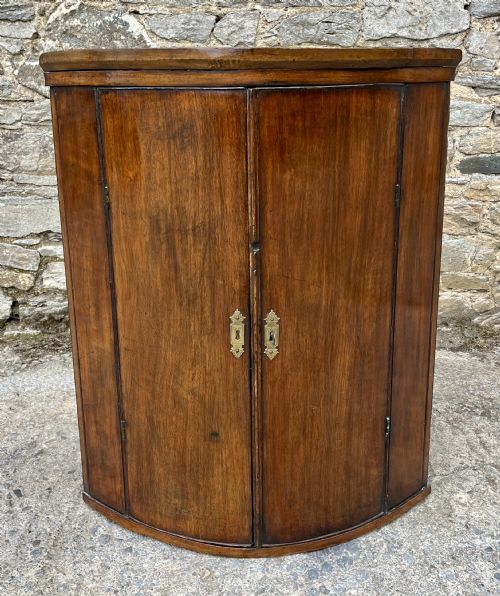
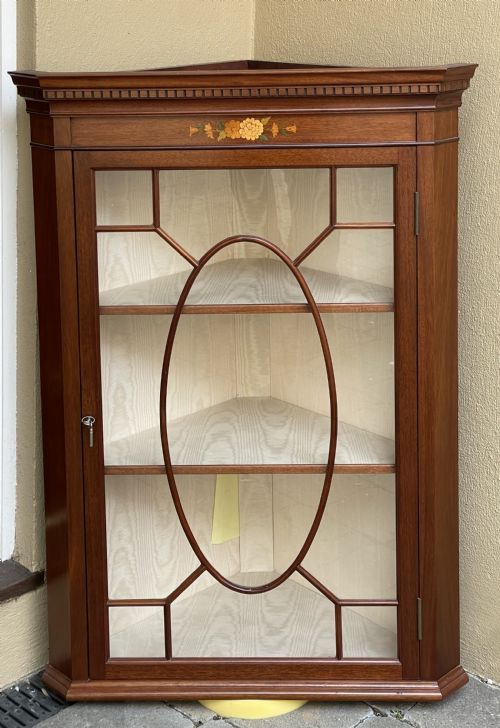
The most common formats on this page are hanging or wall-mounted cupboards designed to fit snugly into a ninety-degree angle, often featuring panelled doors or glazed fronts. Buyers encounter everything from robust rustic farmhouse pine to sophisticated Georgian revival designs with bow fronts.
Period influences span across centuries, showing the enduring appeal of traditional joinery from Georgian, Victorian, and Edwardian eras. Pieces often incorporate architectural mouldings and brass hardware that reflect the specific design vocabulary of their original decade.
Materials and construction
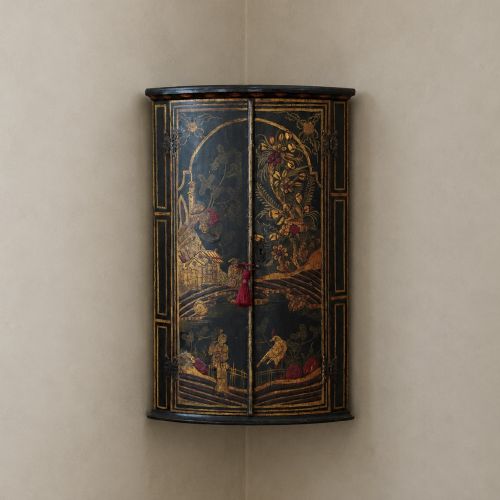
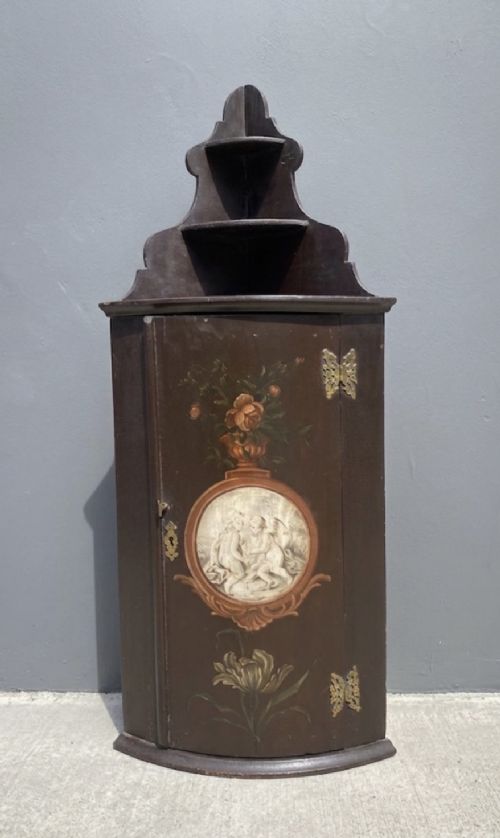
Timbers such as oak, mahogany, and pine form the structural core of these units, selected for their durability and grain. Cabinetmakers utilised solid woods alongside specialised techniques like lacquer and Chinoiserie decoration to achieve decorative painted finishes on select surfaces.
Joinery methods rely on traditional cabinet-making practices suited to wall-hanging weights, including dovetail joints and sturdy internal shelving. Brass hinges, escutcheons, and locks provide both functional support and subtle decorative contrast to the dark hardwoods and painted surfaces.
Listings feature timbers including oak, mahogany, pine, and brass hardware across Georgian, Victorian, and Edwardian periods.
Assessing quality and character
Quality in these units rests upon the crispness of the timber carving, the integrity of the original brass hardware, and the balance of the proportions. Finer examples display meticulous attention to detail in the bow front curvature and the seamless fitting of panelled doors.
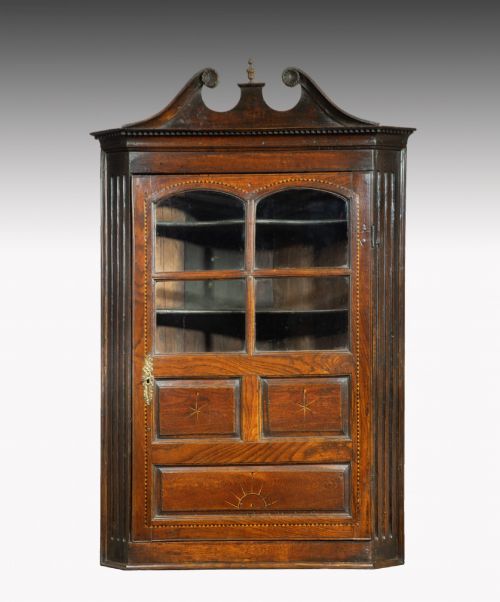
The sophistication of the surface treatment sets exceptional pieces apart, whether through deeply patinated natural mahogany grain or carefully preserved painted Chinoiserie scenes. Original glazing bars and intact period glass further elevate the standing of a wall cabinet.
The Vintage Corner Wall Unit Glossary
- Bow front
- A convex curved cabinet front that projects outward. This popular Georgian shape softens the hard angles of a room.
- Chinoiserie
- European decorative style reflecting Chinese artistic influences. It often appears as hand-painted lacquer scenes on cabinet doors.
- Hanging cupboard
- A wall-mounted storage unit designed to be fixed securely to studs or masonry. These pieces free up valuable floor space.
- Glazed
- Fitted with glass panels in the doors. This allows the contents to be displayed while remaining protected from dust.
Vintage Corner Wall Unit: Frequently Asked Questions
What rooms suit a corner wall unit best?
Dining rooms and kitchens benefit greatly from these units by utilising dead space for china or glassware storage. They also work effectively in hallways and studies to add vertical interest.
Because they draw the eye upward into an angle, they help balance irregular room proportions without crowding the central floor area.
How do I care for antique wood finishes?
Maintain timber surfaces by dusting regularly with a soft, dry cloth and applying natural beeswax sparingly to nourish the grain. Avoid chemical sprays that strip historic patination.
Keep units away from direct heat sources and strong sunlight to prevent the timber from warping or the antique lacquer from cracking over time.
How do I identify a Georgian style unit?
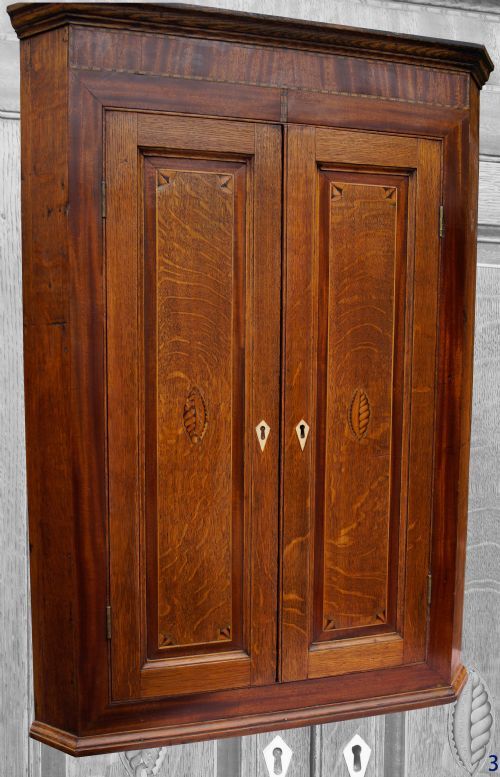
Georgian and revival pieces typically feature balanced proportions, classical architectural mouldings, and rich mahogany or oak timbers. Look for characteristic details like brass H-hinges and fielded panels.
Bow fronts and subtle string inlay work also point directly to the refined aesthetic of 18th century cabinet making traditions.