




Hand Painted Corner Cabinet
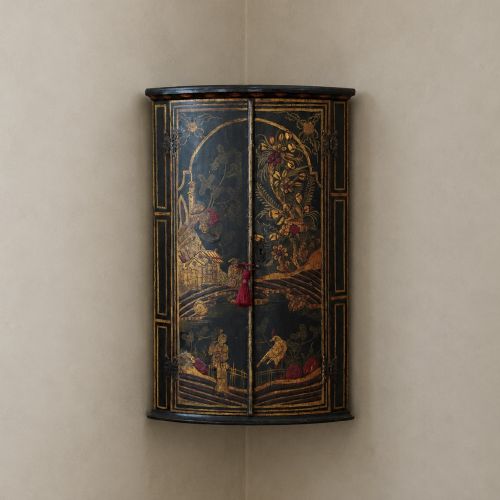
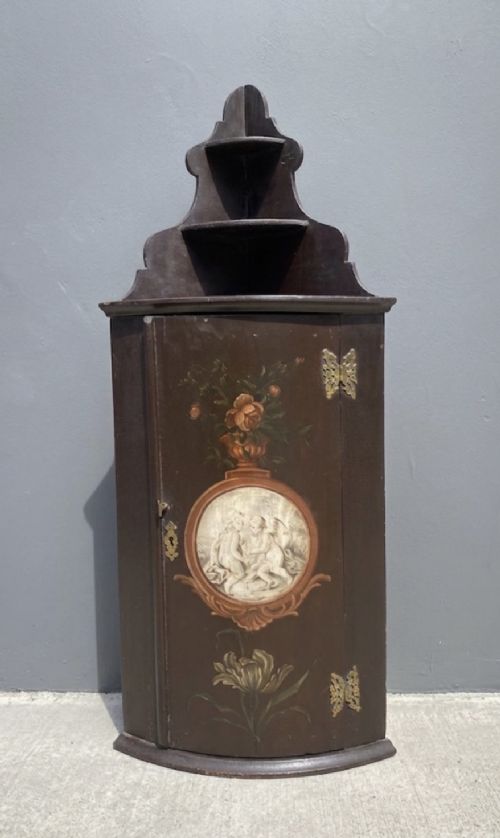
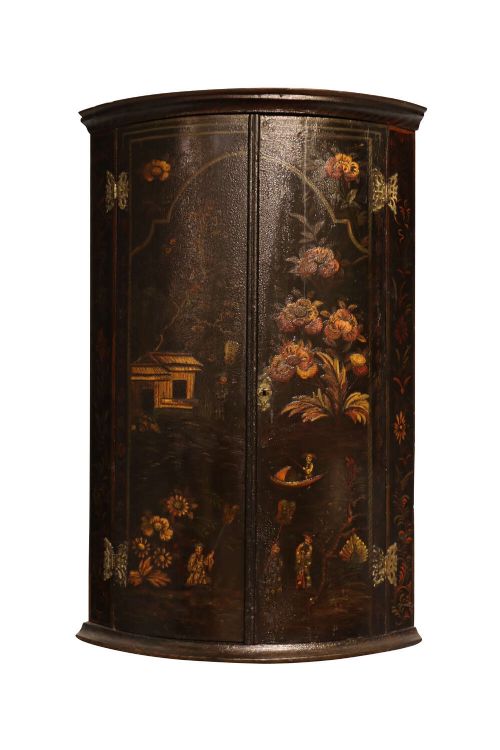
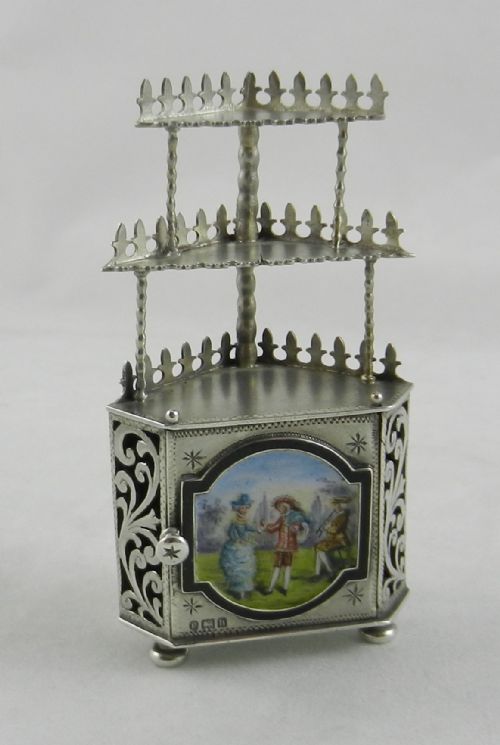
A hand painted corner cabinet turns an awkward angle into a focal point with painted ornament and fitted shelving.
Hand Painted Corner Cabinet
A hand painted corner cabinet fits precisely into a room intersection, making efficient use of floor space while displaying or concealing belongings.
The selections here span the eighteenth, nineteenth, and early twentieth centuries, taking forms such as bowfront cupboards, two-door cabinets, and kitchen cupboards.
Origins stretch from Georgian England to Sweden, Italy, and wider continental Europe, bringing regional painting traditions into domestic interiors.
How they were made
Carpenters constructed carcasses from timber such as pine, oak, and satinwood, shaping them with flat or bowfront profiles to suit room corners.
Surface decoration relies on paint, lacquer, and gilt, often building up Chinoiserie scenes, folk motifs, or fine floral detailing over a dark or light ground.
Iron and brass hardware, including hinges and escutcheons, secures the doors and completes the functional construction of each cupboard.
The listings here feature pieces built from pine, oak, and satinwood, finished with paint, lacquer, gilt, and brass.
What varies in quality
Quality rests upon the skill of the brushwork and the preservation of the original painted or lacquered surface over the centuries.
Proportion and timber selection dictate the architectural presence of the piece, distinguishing restrained vernacular work from refined metropolitan cabinet making.
The Hand Painted Corner Cabinet Glossary
- Bowfront
- A convex, curved cabinet front that projects outward from the corner. This curved profile softens the hard angles of a room.
- Chinoiserie
- European artistic interpretation of Chinese and East Asian motifs, rendered in paint or lacquer. Figures, pagodas, and landscapes typically decorate the surface.
- Gustavian
- The Swedish neoclassical style characterised by pale painted finishes and restrained ornamentation. Pieces from this tradition often feature soft greys and creams.
- Japanning
- European imitation of Japanese and East Asian lacquerwork using layered varnishes and metallic dust. Raised gold details frequently sit against a dark ground.
Hand Painted Corner Cabinet: Frequently Asked Questions
How do I fit a corner cabinet?
Measure the wall depth and the angle of your room corner carefully before selecting a piece. Wall-mounted versions require secure fixing into solid masonry or studs to support the weight.
Freestanding models rest on the floor and often feature internal shelving designed to hold china, books, or glassware securely.
How do I clean painted furniture?
Dust the surface gently with a dry, soft microfiber cloth to prevent dirt accumulation. Avoid harsh chemical cleaners or excessive moisture that can damage aged paint and lacquer.
Professional wax or specialist conservation products can maintain the finish safely if applied sparingly.
Are these cabinets secure?
Original brass and iron locks and latches keep doors closed during daily use. Many period cupboards rely on simple latches rather than modern security locking mechanisms.
Contents remain visible through glass doors on display models, while solid wooden doors conceal stored items entirely.
How do I date an old cupboard?
Examine the timber construction methods, hinge types, and nail marks visible on the interior and backboards. Hand-cut dovetails and older pine or oak indicate eighteenth or nineteenth-century origins.
Painting styles and regional motifs also offer strong clues to the period and country of manufacture.