

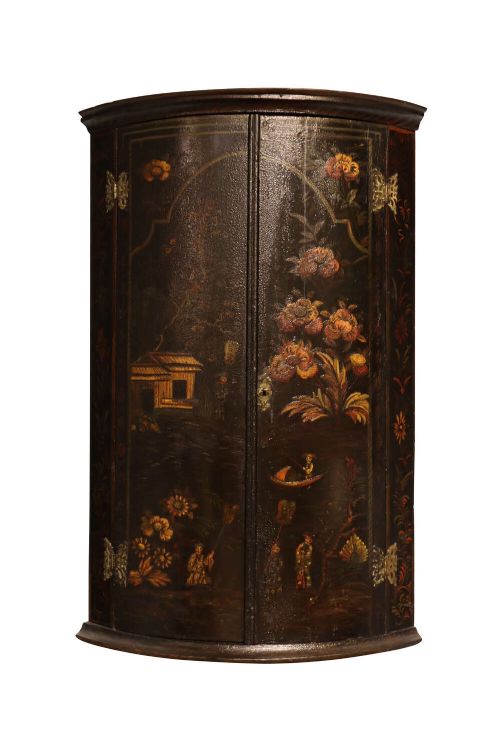


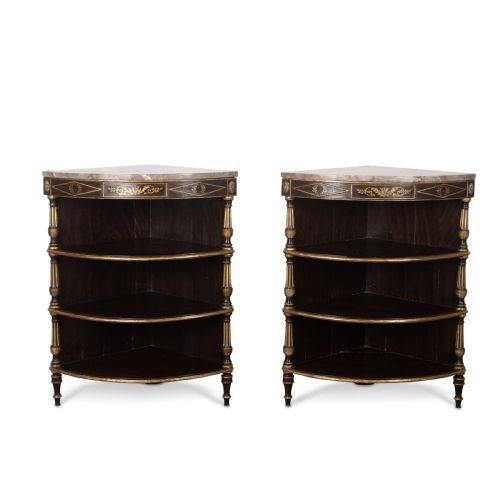


Antique Black Corner Cupboard
An antique black corner cupboard brings depth and period character to a neglected angle of a room.
Antique Black Corner Cupboard
When you search for an antique black corner cupboard, you look at corner cabinets, corner cupboards, and display cabinets designed to fit domestic angles. The pieces available span periods from the eighteenth century, Georgian, and Regency eras through to Victorian, Edwardian, and nineteen-twenty examples.
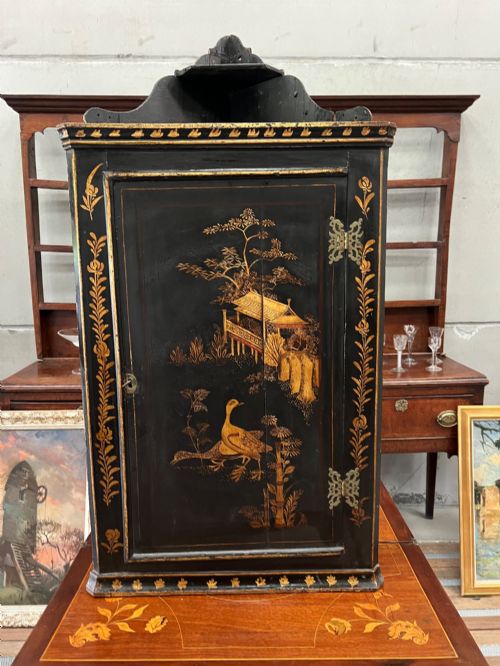
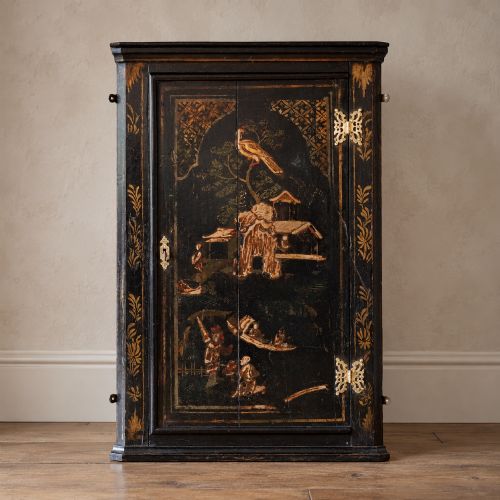
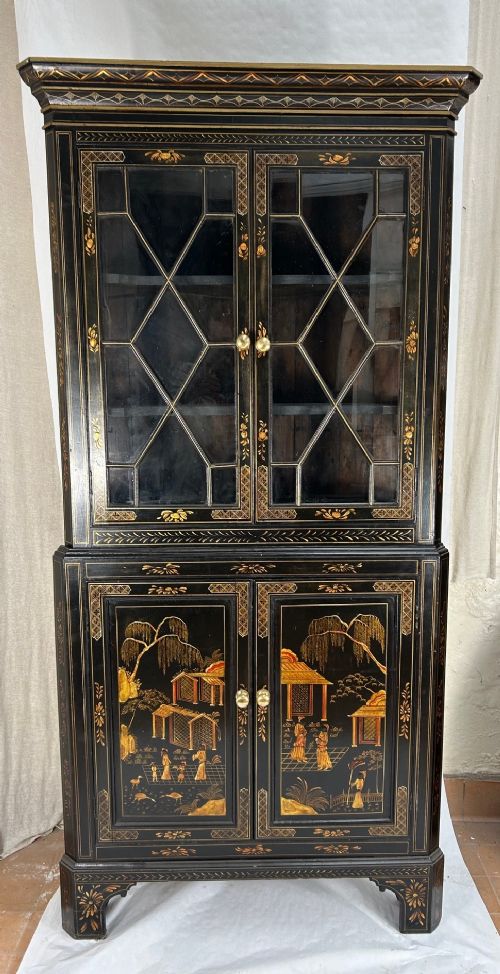
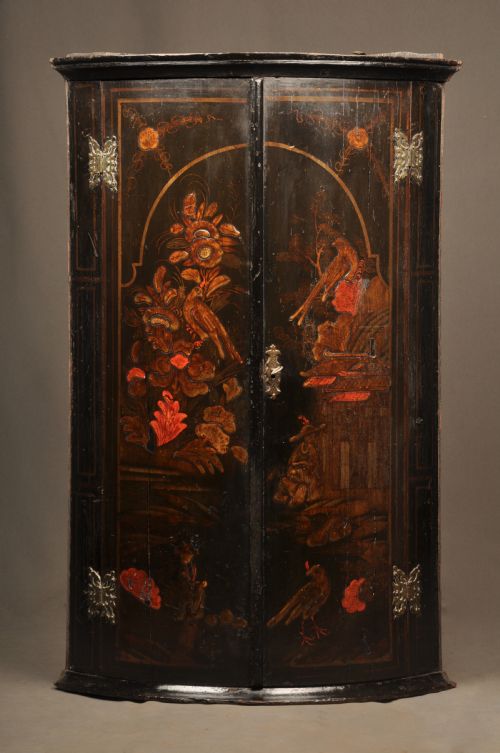
You meet variations in form such as wall-mounted corner cupboards, two-door corner cabinets, and glass-fronted vitrines or display cabinets. The predominant decorative idiom across these forms is Chinoiserie and japanning, alongside plain ebonised finishes and painted wood.
The origin of these cabinets stretches across English workshops and Dutch makers, reflecting domestic storage needs from the seventeen-fifties onwards. Many adopt the architectural proportions of the Georgian period or the decorative curves of Dutch Rococo style.
Materials and construction methods
Carpenters built the carcases of these cupboards using sturdy timber foundations such as pine and softwood, selected to hold heavy panelled doors safely. Secondary woods support the internal shelving, while primary exterior surfaces receive preparation for decorative finishes.
Surface decoration relies upon lacquer, paint, and gold leaf applied to create Chinoiserie scenes of figures, landscapes, and floral motifs. Metalwork details, particularly brass hinges, escutcheons, and mounts, secure the doors and punctuate the dark lacquer grounds.
Antique Black Corner Cupboard Retail Price Guide 2026
Typical asking prices for black corner cupboard among the pieces listed under this phrase on Sellingantiques today, from the lower quarter to the upper quarter. They describe what is for sale here now, not the wider market.
Current listings feature wood, pine, and softwood foundations decorated with lacquer, gold leaf, brass, and glass.
Assessing quality in dark corner storage
The distinction between standard and superior pieces rests upon the execution and depth of the japanned or lacquered surface. Skilled application of gold leaf and built-up lacquer creates raised pictorial details that retain their clarity and contrast over centuries.
Cabinetmaking integrity shows in the precision of the mitred corner joints and the alignment of the door panels within the frame. Quality pieces maintain stable door geometry and retain original brass hardware rather than replacement fittings.
The Antique Black Corner Cupboard Glossary
- Japanning
- European imitation of East Asian lacquerwork, created by building layers of varnish and applying gold leaf designs. This technique defines the surface of many eighteenth-century pieces.
- Chinoiserie
- European theatrical interpretation of Chinese and East Asian artistic motifs, frequently populated by pagodas, figures, and birds. It appears extensively across Georgian cabinet doors.
- Ebonised
- Timber stained or painted to resemble costly ebony wood. This finish provides a dark, uniform surface seen on later pieces.
- Vitrine
- A glass-fronted display cabinet intended for showing porcelain and small objects. These pieces utilise glazed doors to protect contents from dust.
- Escutcheon
- A protective plate surrounding a keyhole, often cast in brass. It serves a functional purpose while adding a metallic accent to the wooden door.
Antique Black Corner Cupboard: Frequently Asked Questions
Where should I place a corner cupboard?
These cabinets suit awkward room junctions that standard rectangular furniture leaves empty. They transform dead space into a focal point without obstructing walkways.
Ensure the wall angles match the ninety-degree or bow-front construction of the cabinet before positioning it.
How do I clean lacquered surfaces?
Dust gently using a dry, soft microfibre cloth to protect the delicate gold leaf and varnish layers. Avoid modern chemical sprays or wet cloths that degrade the historic finish.
Maintain stable room humidity to prevent the timber carcase from expanding and cracking the lacquer.
Are these cupboards good for display?
Many examples feature interior shelving shaped to hold porcelain, glassware, or small collections securely. Glazed doors on vitrines allow visibility while keeping items enclosed.
Solid-door cupboards conceal tableware and linens while providing robust storage capacity.
How do I distinguish eighteenth-century pieces?
Look for hand-beveled timber panels, traditional joinery methods, and authentic hand-mixed lacquer grounds showing age-related craquelure. Eighteenth-century examples often display deep Chinoiserie detailing executed with genuine gold leaf.
Later Edwardian and nineteen-twenty iterations typically use simpler mechanical processes and cleaner, uniform paint applications.