



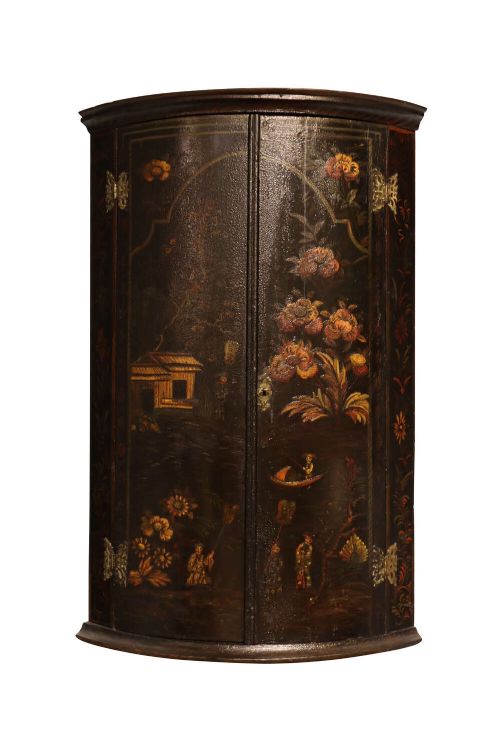


Gold Lacquer Cupboard
A gold lacquer cupboard brings rich surface detail and depth to a room, ranging from corner cabinets to grand pieces on stands.
Gold Lacquer Cupboard
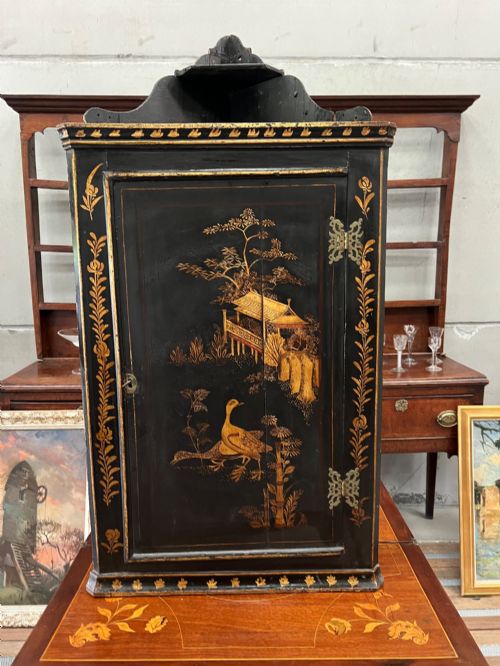
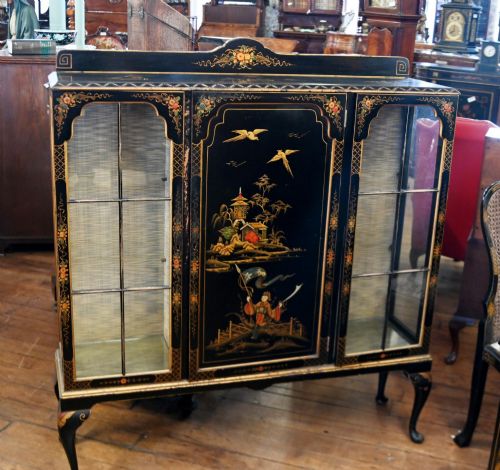
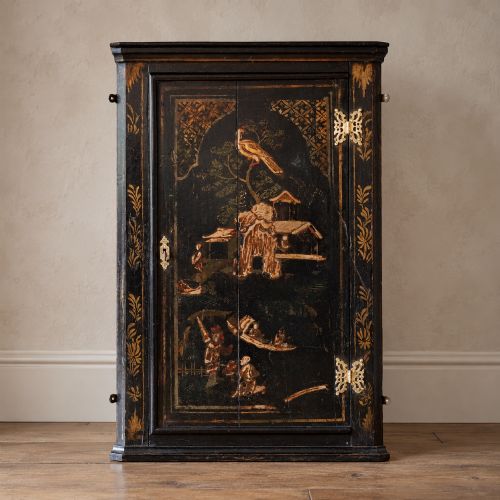
When searching for a gold lacquer cupboard, buyers encounter a diverse selection of forms including corner cabinets, display cabinets, side cabinets, and cabinets on stands. These pieces span centuries of craftsmanship, connecting British, French, Italian, and Asian traditions.
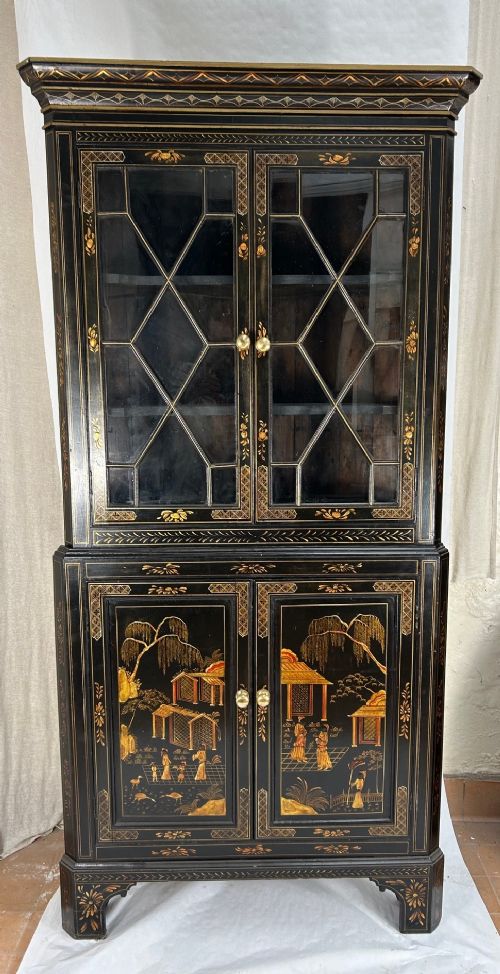
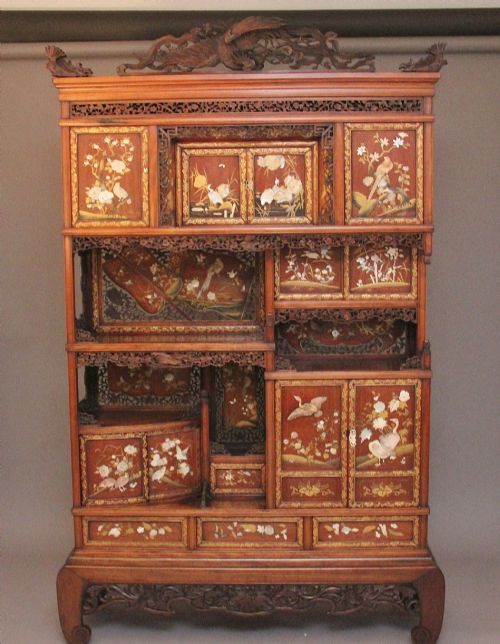
The most common versions on this page are Chinoiserie corner cupboards and Japanese Meiji period cabinets. Georgian and Regency pieces demonstrate the European fascination with Japanned and pen-work decoration.
Form follows function across these items, offering enclosed storage, glass-fronted vitrines, and tabletop displays. Each variant adapts the lustrous finish to different domestic settings.
How they were made
Maker's workshops built these structures primarily from wood, pine, and specialist substrates suited to receiving layered finishes. Artisans applied successive coats of lacquer, building a smooth base for intricate detailing.
Gilding, gold leaf, and ormolu mounts added metallic brilliance to the dark lacquer surfaces. Brass hardware and glass panels completed the assembly, integrating structural joinery with decorative metalwork.
Gold Lacquer Cupboard Retail Price Guide 2026
Typical asking prices for gold lacquer cupboard among the pieces listed under this phrase on Sellingantiques today, from the lower quarter to the upper quarter. They describe what is for sale here now, not the wider market.
Some cocktail cabinets hide their glittering lacquer finishes behind plain doors, saving the golden spectacle entirely for the evening pour.
What varies in quality
The sophistication of the painted and gilded imagery defines the upper tier of these cabinets. Finely rendered figures, landscapes, and floral motifs display a precision that lesser examples lack.
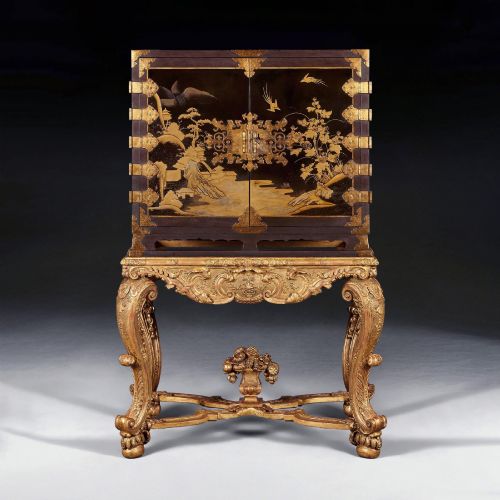
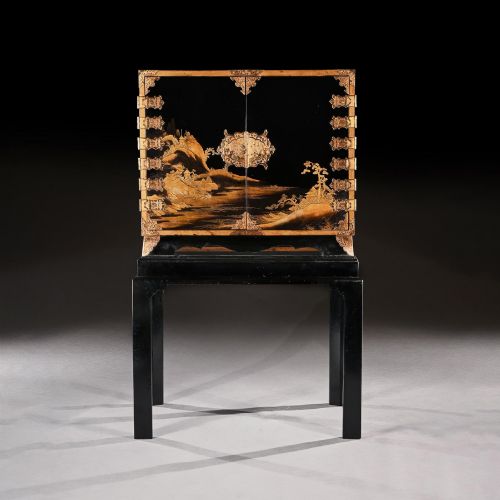
The integration of the cabinet with its stand, particularly in pieces originating from the seventeenth and eighteenth centuries, dictates much of the visual harmony. Ormolu mounts and original brass hardware further separate standard production from exceptional works.
François Linke
The Gold Lacquer Cupboard Glossary
- Japanned
- European imitation of East Asian lacquerwork using specialised varnishes and metallic dust. This finish gained popularity during the Georgian and Regency periods on cabinets and corner cupboards.
- Chinoiserie
- European artistic style reflecting Chinese motifs and landscapes. It frequently appears on eighteenth-century and Edwardian display cabinets.
- Ormolu
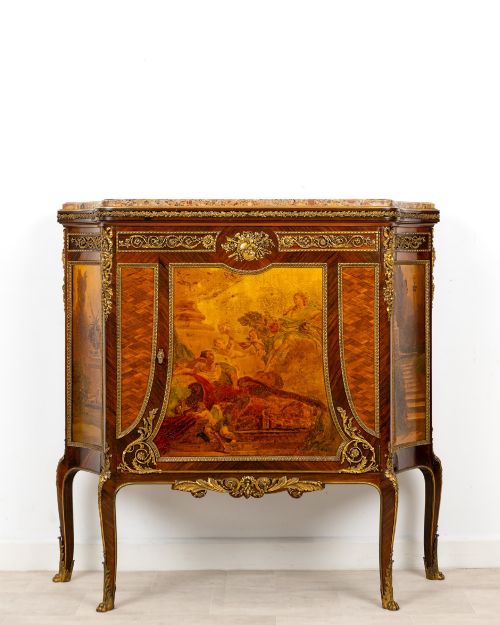
- Gilded bronze used for decorative mounts and feet. Makers employed it to accent French and nineteenth-century side cabinets.
- Vernis Martin
- Simulated Japanese lacquer developed in France during the eighteenth century. It distinguishes specific vitrines and side cabinets.
- Shodona
- Japanese tabletop or freestanding display cabinet with staggered shelving. These feature prominently among Meiji period pieces.
Gold Lacquer Cupboard: Frequently Asked Questions
What is a gold lacquer cupboard?
A gold lacquer cupboard is a storage or display piece finished with glossy resin layers and detailed with metallic leaf or paint. These cabinets range from compact wall-hung corner units to substantial pieces on elaborate stands.
Originating across various European and Asian traditions, they combine functional storage with intricate decorative storytelling.
How do I date a lacquer cabinet?
Dating relies on examining the structural timber, the style of the base or stand, and the specific decorative motifs used. Eighteenth-century pieces often feature distinct Japanned finishes, while Meiji period items display characteristic Japanese craftsmanship.
Hardware styles and construction methods also help place a cabinet within Georgian, Regency, or later Victorian eras.
Where should I place a corner cupboard?
A corner cupboard utilises unused room angles, turning dead space into a focal point for the interior. Wall-mounted versions suit compact rooms, while floor-standing corner cabinets anchor larger living areas.
Their reflective lacquer surfaces help bounce light into darker corners of a traditional interior.
How do I care for lacquer furniture?
Lacquer requires gentle dusting with a soft, dry cloth to protect the glossy surface from micro-scratches. Avoid placing these cabinets in direct sunlight or near sudden heat sources that might affect the wood and finish.
Maintaining stable room humidity preserves the integrity of both the timber substrate and the delicate gilding.