
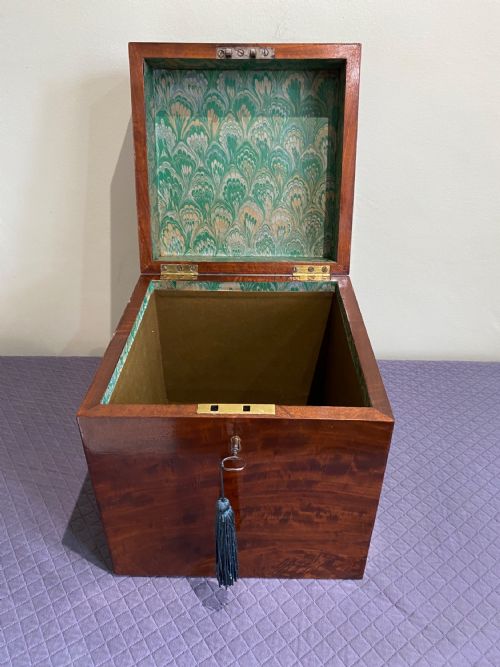
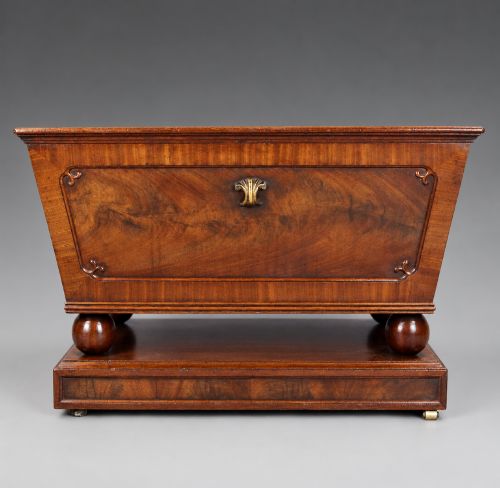
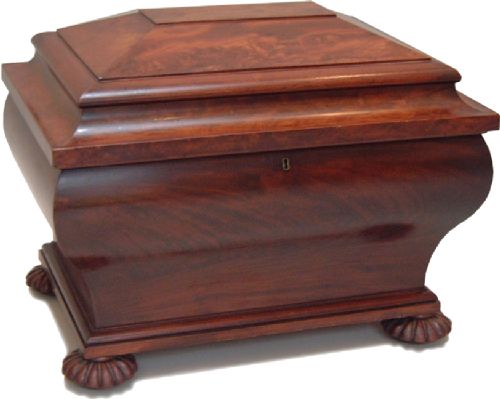
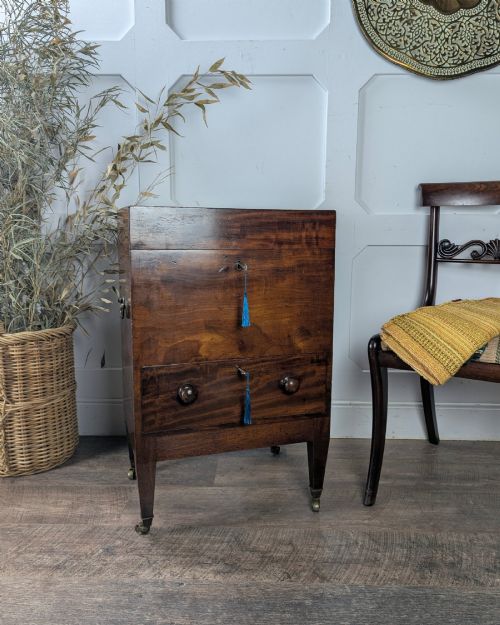
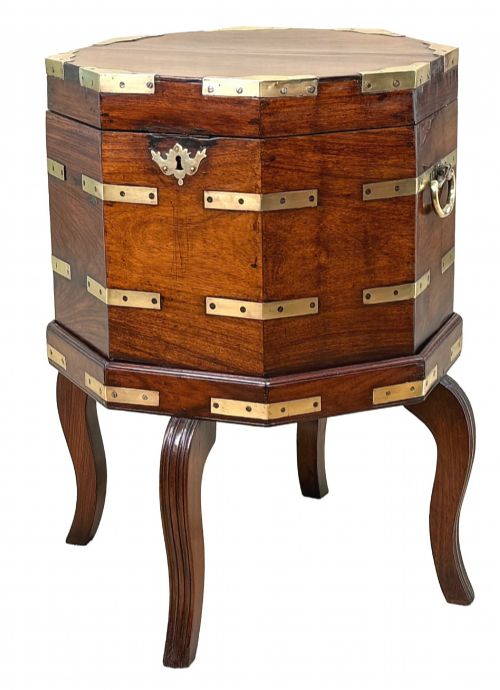
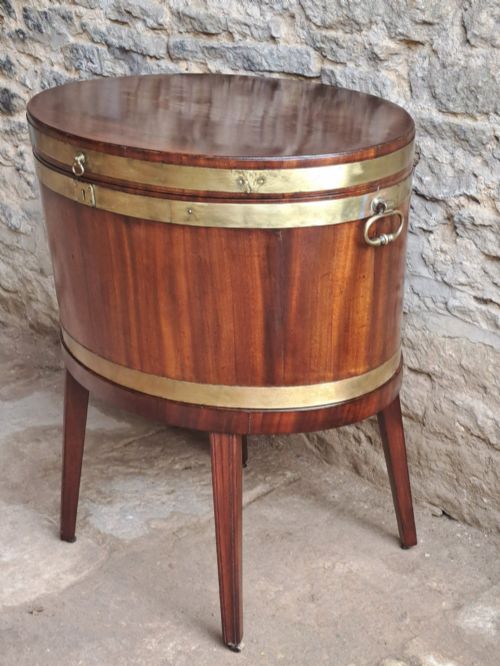

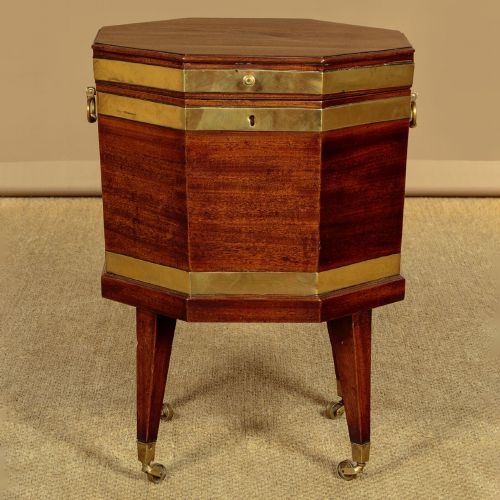
Mahogany Cellarette Chest
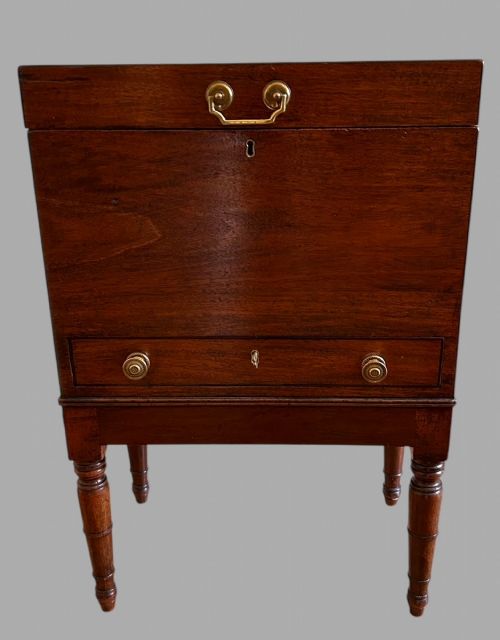
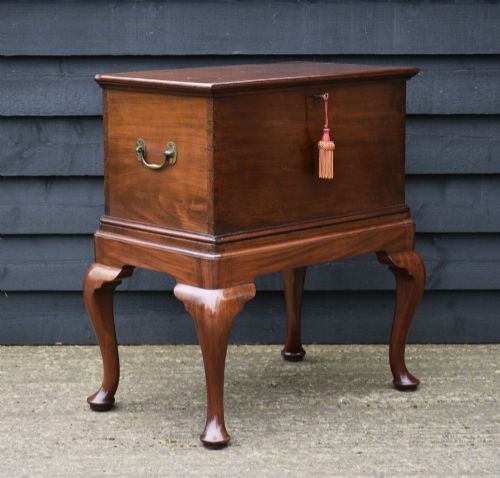
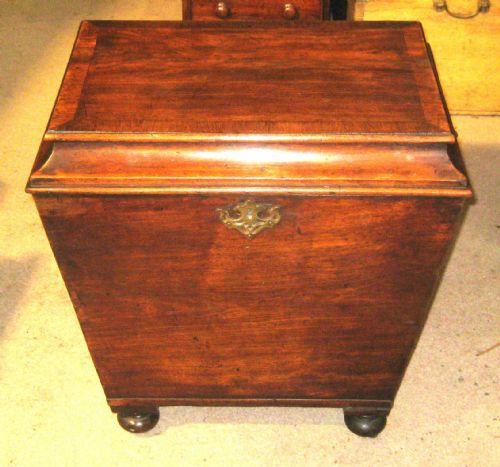
Mahogany cellarette chest pieces are robust drinks storage boxes built to keep wine cool near the dining table.
What mahogany cellarette chest items are
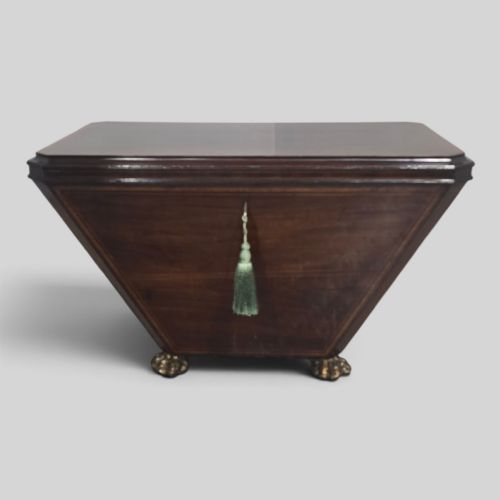
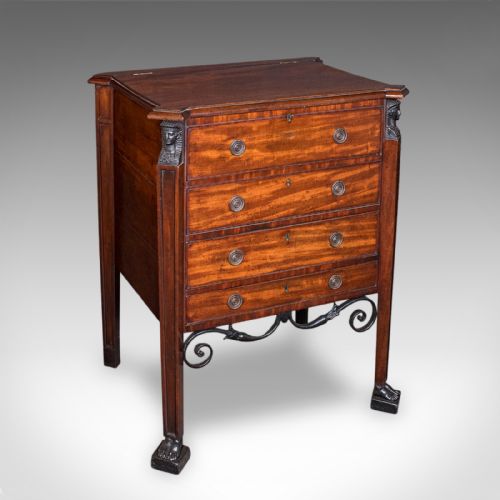
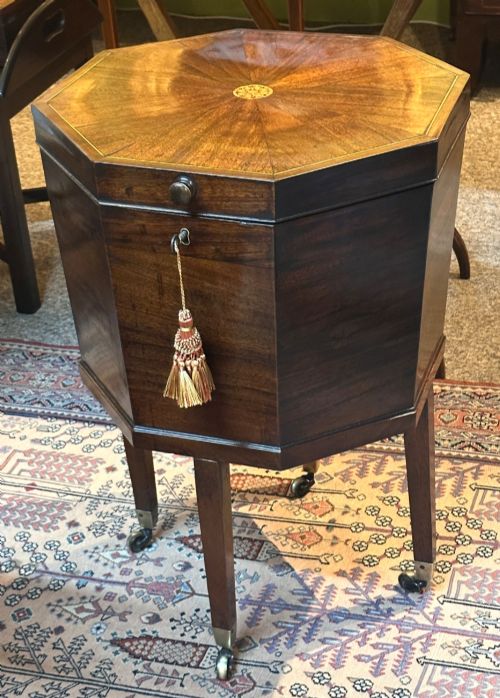
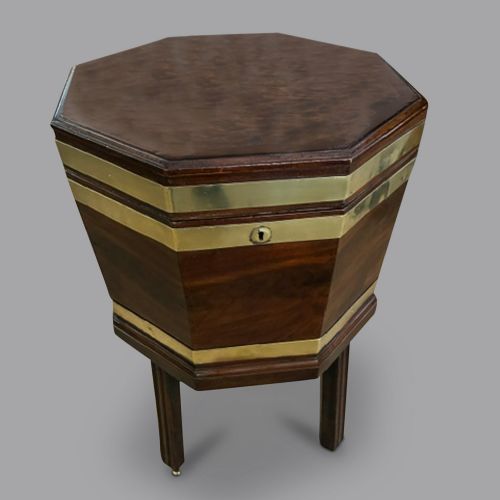
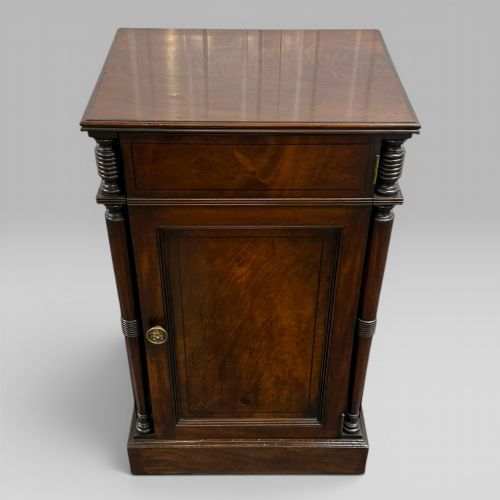
When you search for mahogany cellarette chest, you are looking at substantial drinks receptacles designed to hold vintage bottles and ice in formal dining rooms. These pieces appear in forms ranging from sarcophagus wine coolers to side cabinets and simple storage boxes.
The versions you are most likely to meet on this page date predominantly from the Regency period, alongside examples from the eighteenth century, the Victorian era, and the Sheraton Revival of eighteen ninety. They combine practical cellar storage with the formal cabinet-making standards of their respective eras.
Makers shaped these items using timbers such as mahogany, walnut, and satinwood, frequently augmenting the primary wood with brass and metal fittings. Their origins span English and Irish workshops, reflecting varied regional interpretations of formal dining furniture.
How they were made
Cabinet-makers constructed these cellarettes using dense tropical hardwoods, notably mahogany and walnut, chosen for structural stability and rich grain patterns. Satinwood also appears as a contrasting timber, particularly in later revival pieces.
Metal components, including brass handles, bands, and internal linings, were integrated to manage ice and heavy bottles of wine. These metallic additions provided both functional reinforcement and decorative contrast against the dark timber surfaces.
Listings here span the eighteenth century, Regency, William IV, Victorian eras, and eighteen ninety.
What varies in quality
The distinction between standard examples and superior pieces rests on the selection of timber figures and the precision of the joinery. Cabinet-makers who utilised finely figured mahogany and executed tight corner joints produced pieces that retained their structural integrity and visual depth.
The quality of the metal mounts and internal fittings also defines the tier of the piece. Heavy cast brass handles and well-fitted interior partitions indicate a higher grade of manufacture intended for affluent dining environments.
Gillingtons
The Mahogany Cellarette Chest Glossary
- Cellarette
- A lockable container used for storing wine bottles near the dining table before service. It often contained lead lining to hold ice.
- Sarcophagus
- A monumental chest form with a sloping lid, popular during the Regency period for large wine coolers. The shape mimics ancient stone coffins.
- Satinwood
- A lustrous, yellow-brown hardwood utilised for veneer and decorative inlay on finer furniture pieces. It provides a bright contrast to darker timbers.
- Regency
- A style period dating from the early nineteenth century characterised by classical restraint and archaeological influence. Furniture from this era often incorporates bold architectural forms.
Frequently Asked Questions
What is a mahogany cellarette chest?
A mahogany cellarette chest is a specialised piece of dining room furniture designed to hold and cool wine bottles. These storage boxes served affluent households during formal meals.
They appear in distinct forms, including sarcophagus shapes and side cabinets, utilising timbers such as mahogany, walnut, and satinwood.
How were they used in the past?
These chests sat in the dining room, filled with ice and bottles to keep wine at the correct temperature for guests. Servants accessed the contents during dinner without needing to fetch bottles from the cellar.
Their heavy construction and internal metal linings made them practical for handling melting ice and heavy glass containers.
How do I date a cellarette?
Dating relies on stylistic markers, timber choice, and construction techniques associated with periods like the Regency or the Victorian era. Earlier pieces often display robust classical proportions.
Later revival items, such as those from eighteen ninety, incorporate lighter woods like satinwood while mimicking earlier historical forms.
Where should I place one at home?
These chests function well as standalone statement pieces in dining rooms or living spaces, often serving as side tables or display surfaces. Their substantial presence suits traditional or eclectic interiors.
Keep them away from direct heat sources to protect the polished mahogany and walnut surfaces from drying out.