
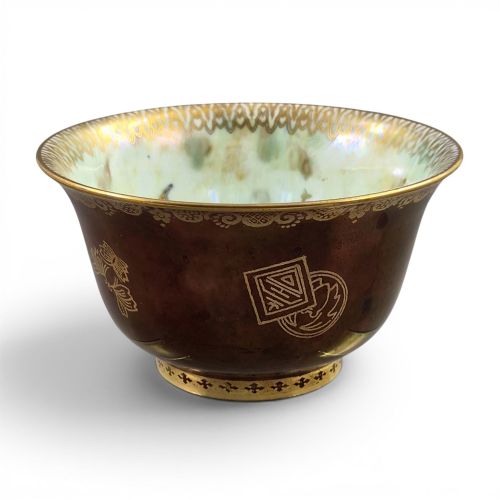
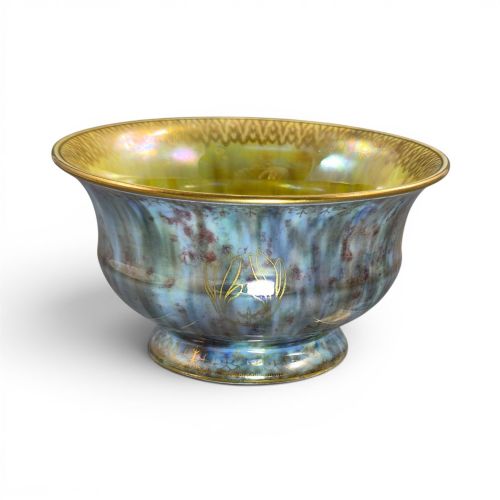
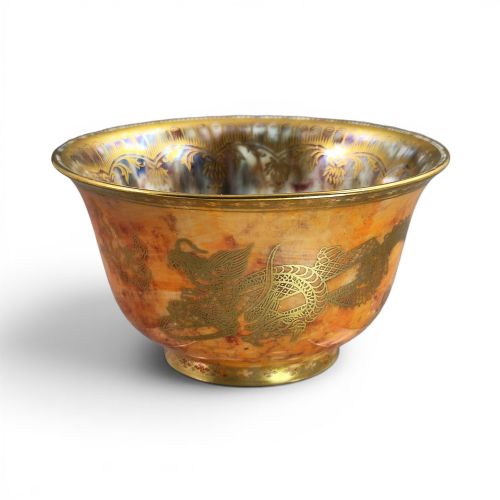


Lustreware Porcelain Bowl
These pieces of lustreware porcelain bowl selection bring iridescent glaze and intricate fantasy scenes to your collection, mostly dating from the Edwardian era.
Lustreware Porcelain Bowl
A lustreware porcelain bowl is a decorative ceramic vessel finished with a metallic glaze that catches the light with an iridescent sheen. When you search for a lustreware porcelain bowl, you encounter striking vessels originating primarily from the Edwardian period and the 1910s to 1920s. These pieces encompass various forms including standard bowls, octagonal bowls, miniature cups, and jug and bowl sets.
The majority of these pieces showcase complex decorative motifs rather than plain surfaces. Common subjects include dragons, butterflies, hummingbirds, and fantastical fairyland scenes rendered in vivid colour palettes. Most examples found here stem from British production, particularly associated with innovative ceramic design of the early twentieth century.
How they were made
Makers utilised porcelain and bone china as the primary ceramic bodies for these vessels, providing a smooth, bright white foundation for the decoration. Artisans applied a specialised lustre glaze containing metallic elements that reacted during the firing process to produce a shimmering, pearl-like or metallic surface finish. This technique required precise kiln control to achieve the characteristic rainbow sheen across the ceramic body.
Detailing frequently involved the application of gold leaf, gilt, and intricate hand-painted motifs layered over the metallic glaze. Painters built up complex scenes by combining multiple enamel colours with metallic pigments before a final fixing fire. The integration of gold gilt highlights added depth and contrast to the iridescent background colours.
Listings feature porcelain and bone china bodies finished with metallic glaze, gold leaf, and lustre glaze.
What varies in quality
Quality in these ceramics depends heavily on the complexity and precision of the painted imagery across the glaze. Pieces featuring elaborate fantasy landscapes, multiple mythical creatures, and dense patterning represent the upper tier of design. The crispness of the transfer printing combined with hand-painted enamel and gold leaf detailing dictates the visual richness of the object.
The depth and uniformity of the lustre glaze itself also differentiate standard items from exceptional ones. A successful metallic glaze displays vibrant, shifting colours without dull patches or murky pooling. Furthermore, unusual structural forms such as octagonal bowls or miniature variations demand greater technical skill in moulding and firing than simple round shapes.
Daisy Makeig-Jones·James Hodgkiss·Wedgwood·Shelley
The Lustreware Porcelain Bowl Glossary
- Lustre Glaze
- A type of ceramic glaze containing metallic salts that produce an iridescent, reflective surface upon firing. It creates the signature shimmering effect seen on these decorative bowls.
- Fairyland
- A whimsical decorative theme featuring goblins, elves, and mythical settings popularized on early twentieth-century ceramics. This style showcases intricate storytelling across the body of the vessel.
- Octagonal
- Having eight sides and eight angles in the cross-section of the vessel. This geometric moulding provides a structured canvas for panels of patterned decoration.
- Bone China
- A type of soft-paste porcelain containing bone ash, resulting in high mechanical strength and milky translucency. It serves as a fine base for intricate enamel painting.
- Gilt
- Finely ground gold or a substitute applied to the surface of the ceramic for decoration. It provides bright metallic accents that frame the central imagery.
Lustreware Porcelain Bowl: Frequently Asked Questions
What periods do these bowls come from?
These ceramic pieces primarily date from the Edwardian era and the 1910s to 1920s. Production during this window reflects distinct stylistic shifts from traditional Edwardian aesthetics toward Art Nouveau and Art Deco designs.
Collectors will notice that the bulk of these items concentrate around the middle of the second decade of the twentieth century. The dates reflect a brief period of intense artistic experimentation with metallic glazes and fantasy themes.
How were these bowls used?
These vessels served primarily as decorative objects for display in domestic interiors rather than for utilitarian dining purposes. Their intricate lustre surfaces and detailed pictorial scenes were intended to catch the light on mantelpieces, sideboards, or display cabinets.
Smaller examples such as miniature cups and bowls functioned as cabinet pieces to showcase the technical skill of the pottery. Jug and bowl sets provided ornamental display options for bedroom washstands during the early twentieth century.
How do I care for a lustre bowl?
Display these ceramic pieces away from direct sunlight to prevent any fading of the delicate enamel colours over time. Dust them gently with a soft, dry cloth rather than using liquid cleaners or chemical solutions.
Avoid abrasive sponges or washing them in a sink, as the overglaze gold leaf and metallic finishes can easily wear away. Handle the vessels by the body rather than delicate rims or handles to protect the glaze.
How do I identify Art Nouveau styles?
Art Nouveau designs on these ceramics feature flowing, organic lines inspired by natural forms such as plants, flowers, and insect wings. The ornamentation avoids rigid symmetry in favour of whip-like curves and dynamic, sweeping motifs.
Look for stylised representations of natural elements integrated seamlessly into the iridescent glaze background. This aesthetic flourished around the turn of the century before transitioning into geometric Art Deco patterns.