
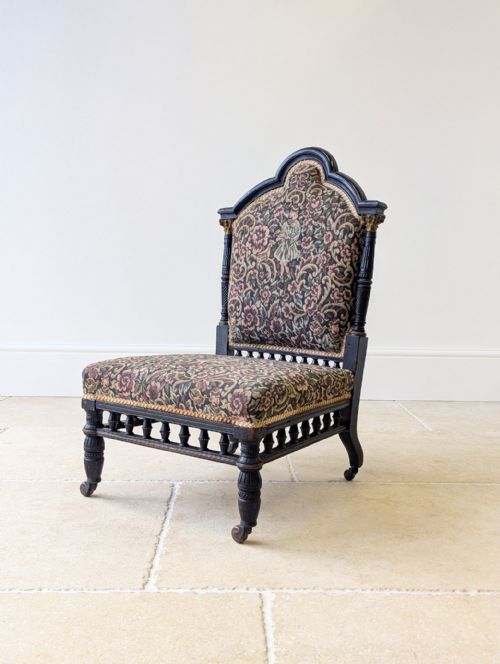
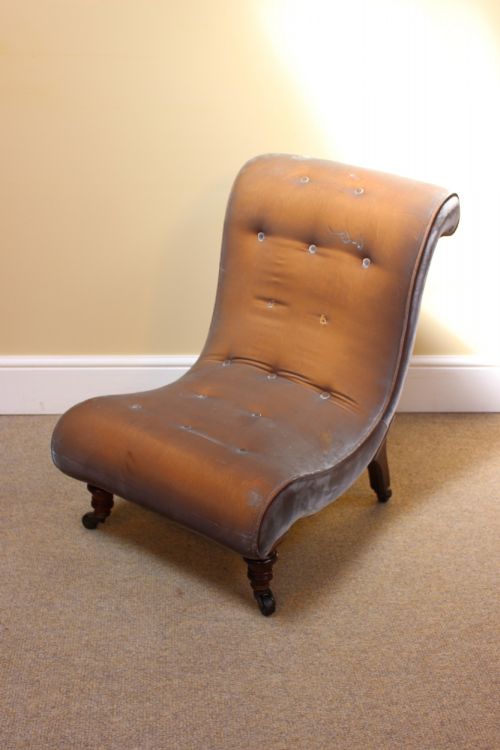
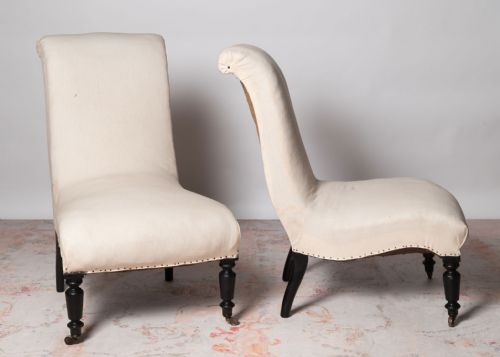
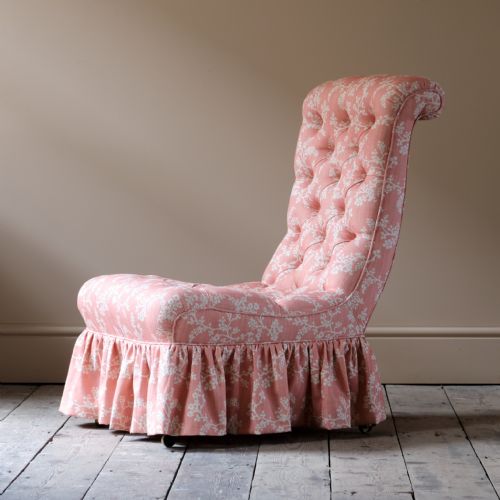



Low Armless Chair
A low armless chair offers a low-slung, compact seat designed for comfortable lounging or dressing in nineteenth-century and Edwardian interiors.
Low Armless Chair
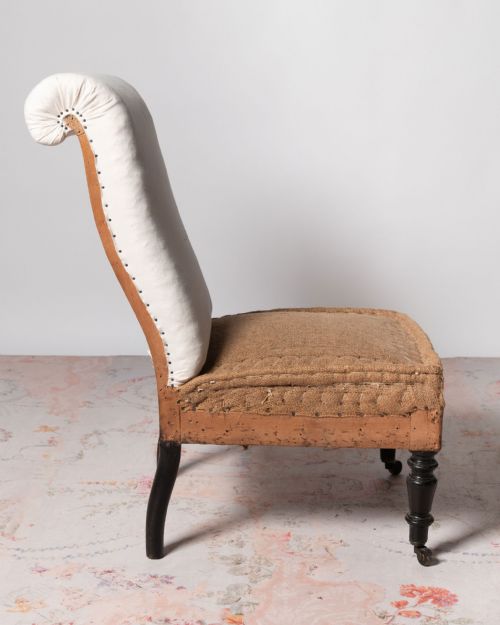
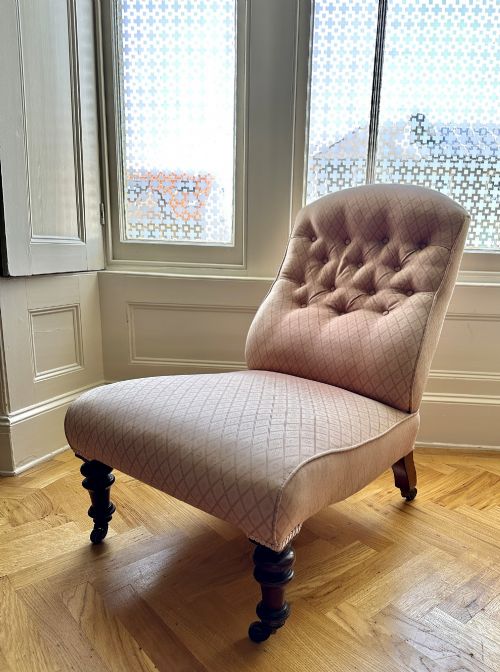
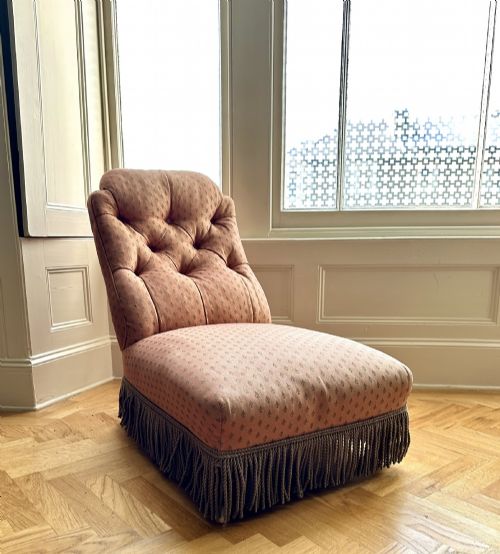
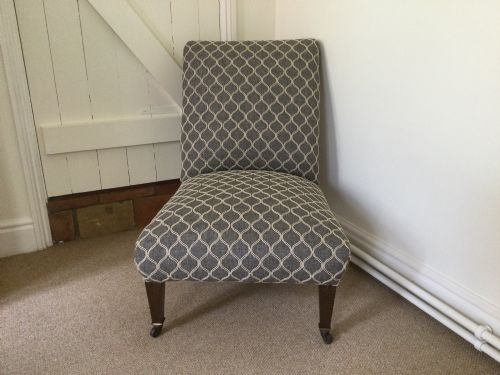
A low armless chair encompasses forms such as slipper chairs, nursing chairs, salon chairs, and bedroom chairs dating from the nineteenth century through the Edwardian era. These compact seats sit close to the floor, historically designed to facilitate tasks like putting on footwear or tending to infants.
You will most frequently encounter nineteenth-century Victorian and French styles on this page, often featuring walnut, mahogany, or ebonised wood frames. Many examples display upholstered button backs, scroll backs, or decorative fringes.
Makers such as Gillows, Hindley and Sons, and Howard and Sons appear among these listings, alongside numerous unmarked pieces from the Victorian and Edwardian periods.
How They Were Made
Frames are constructed from hardwoods including walnut, mahogany, oak, and rosewood, sometimes ebonised and decorated with gilt details or supported by brass elements and castors. These structural woods provide the necessary strength for compact, low-profile seating.
Upholstery relies on traditional fabrics such as velvet, carpet, and various contemporary or period-appropriate upholstery materials, often finished with button backs or fringe trims. Joinery and carving techniques reflect nineteenth-century and Edwardian cabinet-making standards.
Listings feature nineteenth-century and Edwardian pieces, including walnut, mahogany, and ebonised wood frames with velvet and fabric upholstery.
What Varies in Quality
Quality reveals itself in the crispness of the wood carving, the elegance of the cabriole or bobbin legs, and the integrity of the frame construction. Pieces produced by documented firms like Howard and Sons or Gillows often demonstrate superior joinery and refined proportions compared to anonymous workshop output.
The sophistication of the upholstery work, the authenticity of the surviving fabric or fringe, and the harmony of the overall silhouette distinguish finer salon and nursing chairs from simpler utility seating.
Gillows·Hindley and Sons·Howard and Sons
The Low Armless Chair Glossary
- Slipper chair
- A low-seated, armless chair historically used in bedrooms for changing shoes. These pieces sit close to the floor for added comfort.
- Nursing chair
- A low-profile chair designed to allow mothers to feed infants with ease. They often feature padded button backs and generous upholstery.
- Ebonised wood
- Timber treated with a dark finish to imitate expensive ebony. This technique was popular in nineteenth-century aesthetic movement furniture.
- Cabriole leg
- A furniture leg featuring a double curve, typically arching outward and then tapering inward toward the foot. This shape draws inspiration from animal limbs.
- Button back
- An upholstery style where depressions are created in the padding by pulling buttons deep into the stuffing. This method secures the internal materials and creates a tufted pattern.
Low Armless Chair: Frequently Asked Questions
What is a low armless chair?
A low armless chair is a compact, low-slung seat originating mainly from the nineteenth century and the Edwardian period. These pieces include slipper and nursing chairs designed for bedrooms and parlours.
Their short stature and lack of arms made them practical for specific domestic tasks like dressing or nursing infants.
How do I date a low armless chair?
Dating relies on examining the timber frame, leg style, and upholstery techniques used in the construction. Victorian and Edwardian examples often feature walnut, mahogany, or ebonised wood with distinct carved details.
Attribution is also aided by maker marks or stamps when the piece originates from established workshops like Howard and Sons.
Where were these chairs used?
These chairs were primarily placed in bedrooms, dressing rooms, and intimate sitting salons. Their compact dimensions suited private domestic spaces rather than formal dining rooms.
Today, they function well as accent chairs in modern living spaces or bedrooms.
What is the difference between a slipper and nursing chair?
Slipper chairs historically sat very low to the ground to assist with putting on footwear in the bedroom. Nursing chairs served a similar low profile but were often upholstered with button backs to support mothers feeding infants.
In practice, makers and sellers often use both terms interchangeably for nineteenth-century low seating.