


Louis XVI Study Desk
A louis xvi study desk brings restrained neoclassical elegance to a room, offering fine proportions and classical mounts.
Louis XVI Study Desk
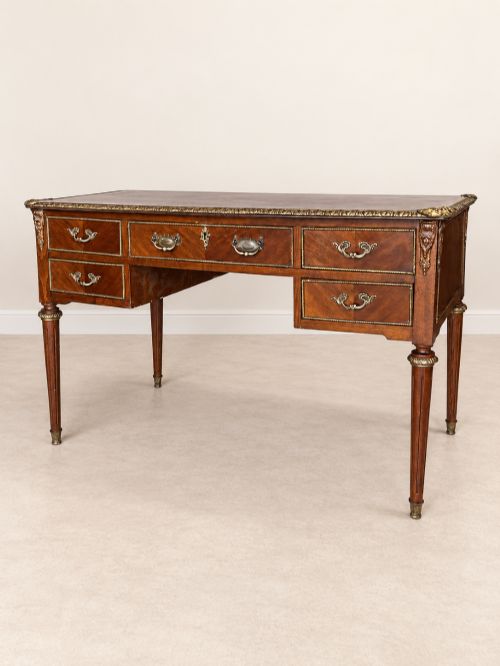
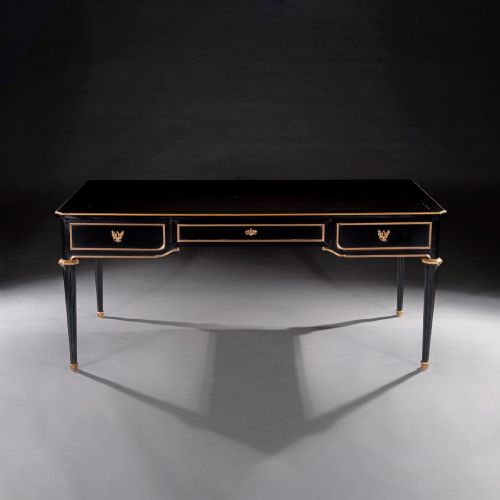
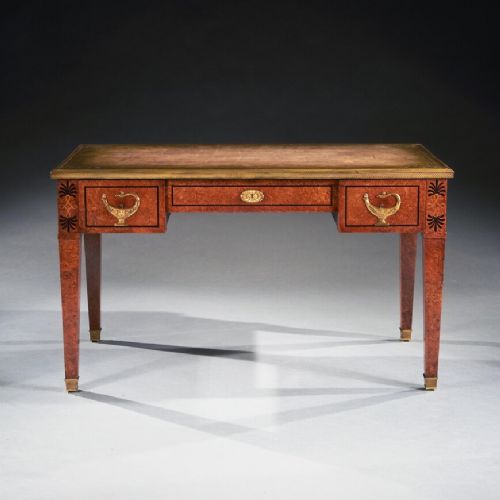
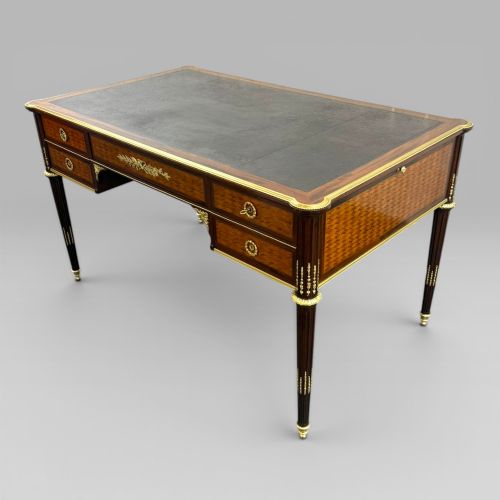
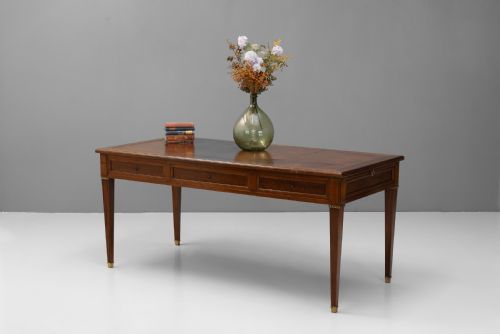
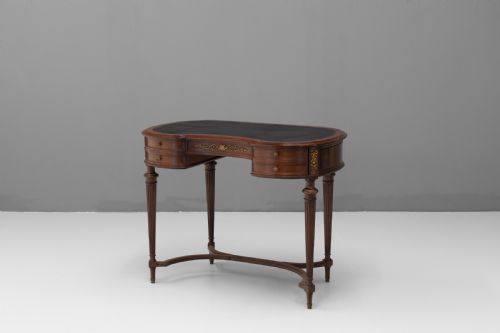
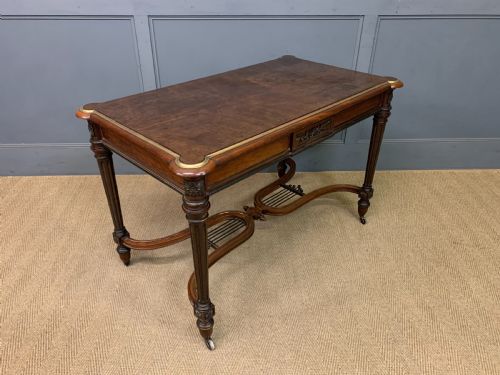
A louis xvi study desk combines classical symmetry with refined proportions, typically manifesting as a bureau plat or writing table designed for domestic scholarship. These pieces draw on French neoclassical design principles, favouring straight tapered legs and rectilinear carcases over curved rococo excess.
The versions most commonly found here originate from the nineteenth and early twentieth centuries, spanning revival periods from eighteen hundred onwards. Makers of these later iterations closely imitated eighteenth-century models, utilising rich veneers and classical brass mounts to recreate the aristocratic French aesthetic.
How they were made
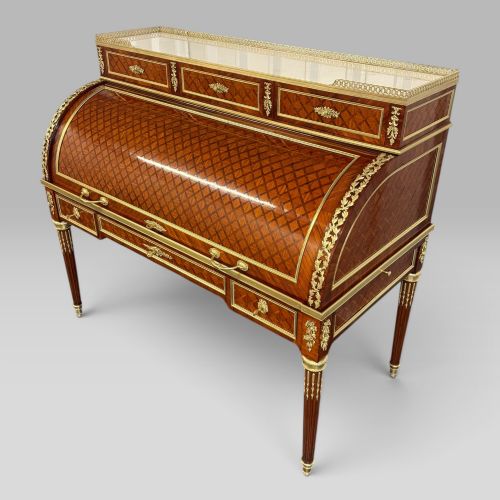
Cabinetmakers built these desks using solid structural timbers such as mahogany and walnut, overlaid with decorative veneers including kingwood, amboyna, and satine in intricate parquetry arrangements. Leather inserts commonly form the writing surface, often tooled with gilt borders.
Cast bronze hardware, frequently finished with ormolu gilding, accents the corners, legs, and aprons, while brass mouldings edge the writing surfaces. Ebonised wood appears alongside traditional timber finishes to achieve contrasting tones.
Architects sometimes utilised specialised tables featuring tilting surfaces to draft plans before the invention of modern drawing boards.
What varies in quality
The refinement of the cast bronze ormolu mounts distinguishes superior examples from simpler workshops, with chased details showing crispness and depth rather than soft contours. Cabinetmaking skill reveals itself in the precision of the parquetry and the seamless integration of drawer linings.
Material selection dictates the upper tier of the range, where choice exotic veneers and well-preserved tooled leather surfaces remain intact. The architectural integrity of the frame and the proportion of the tapering legs also govern the overall execution.
François Linke·Donald Ross
The Louis XVI Study Desk Glossary
- Bureau plat
- A freestanding writing table with a rectangular top and drawers in the frieze, typically finished on all sides for placement in the centre of a room. This form serves as the primary shape for study desks.
- Ormolu
- Gilded bronze applied to furniture as decorative mounts, feet, and handles, highly prized for its rich golden lustre. The technique requires mercury gilding on older pieces or electroplating on later revivals.
- Parquetry
- Geometric patterns formed by fitted wood veneers laid onto a carcase, creating visual texture on desk tops and drawer fronts. Cabinetmakers used contrasting timbers to accentuate the design.
- Neoclassical
- A style drawing inspiration from classical antiquity, characterised by straight lines, symmetry, and restrained ornamentation. It provides the foundational aesthetic for louis xvi design.
- Satine
- A lustrous reddish-brown timber used as a veneer in fine cabinet work, bringing warmth and subtle grain variation to decorative panels.
Louis XVI Study Desk: Frequently Asked Questions
Where should I place a louis xvi study desk?
These desks are designed to stand away from walls, with finished backs that allow placement in the centre of a study or library. Their classical symmetry commands attention from any angle.
Ensure adequate natural light falls across the leather writing surface, avoiding direct sunlight that could dry out the delicate veneers.
How do I care for the leather top?
The leather insert benefits from occasional treatment with a neutral leather balm to keep the material supple and prevent cracking along the folds. Avoid using harsh chemical cleaners near the gilt tooling.
Keep writing surfaces free from excessive moisture by using coasters and blotters during daily use.
Are these desks suitable for daily work?
Most period writing tables provide a stable surface for contemporary reading and writing, though kneehole heights vary compared to modern office furniture. Checking the clearance ensures comfortable daily seating.
Drawer spaces accommodate modern stationery while preserving the traditional character of the piece.
How do I distinguish revival pieces from earlier work?
Nineteenth-century revival pieces often employ mechanical saw-cut veneers and standardised mount castings that differ slightly from eighteenth-century hand-cut methods. Timber shrinkage patterns and secondary woods inside the drawers offer further clues.
Examining the construction techniques of the carcase reveals the working methods of the period workshop.