
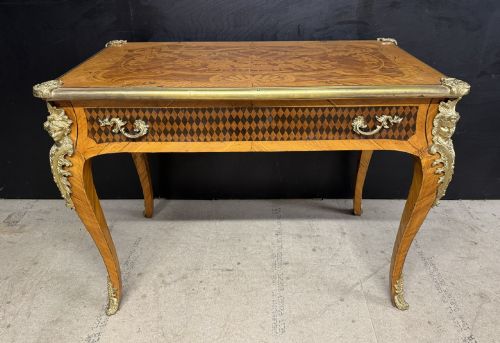
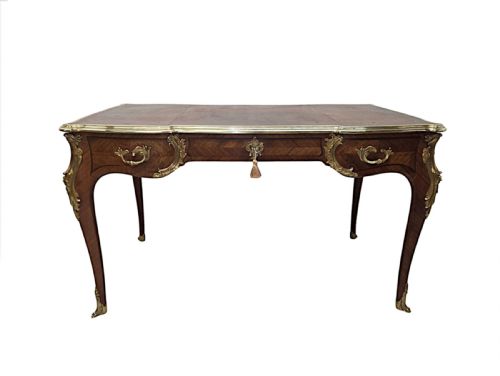
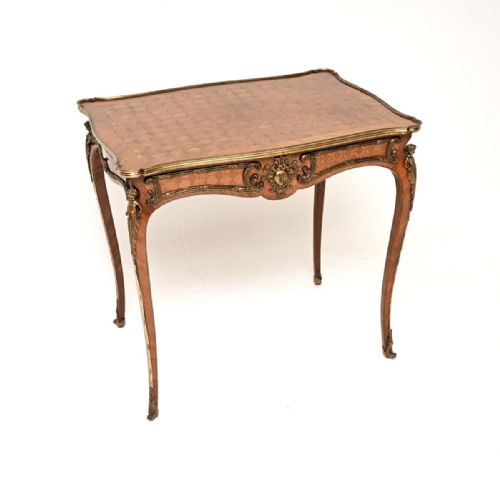
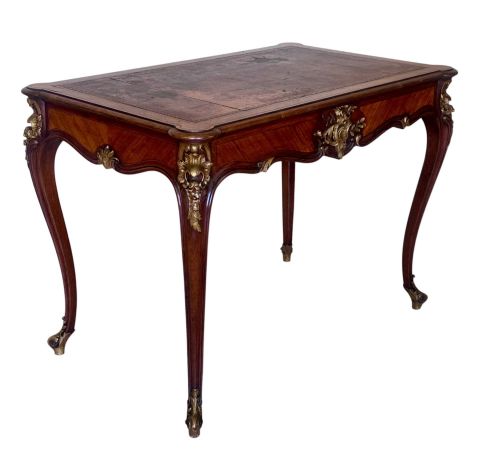
Parquetry Bureau Plat
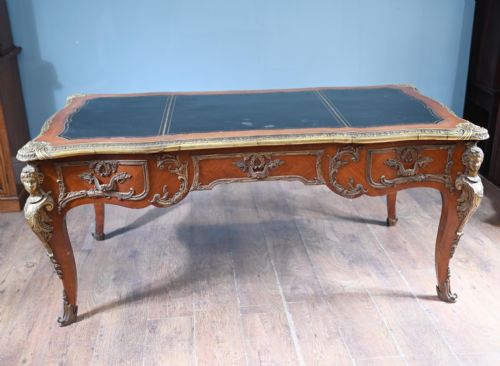
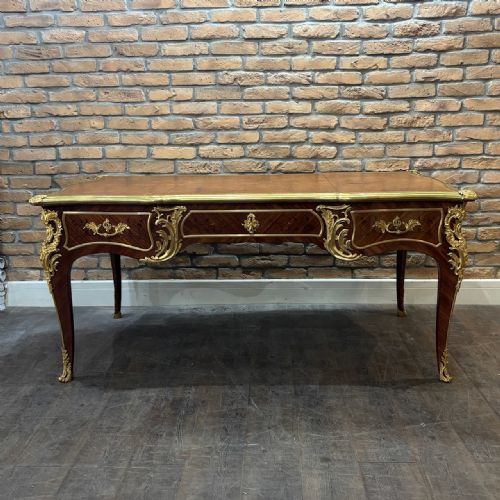
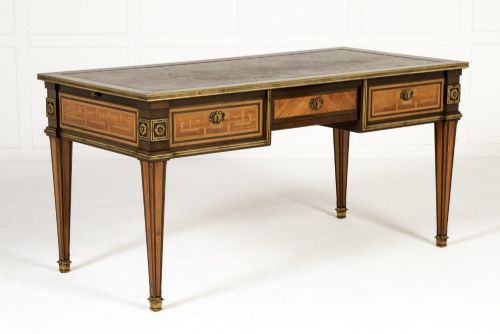
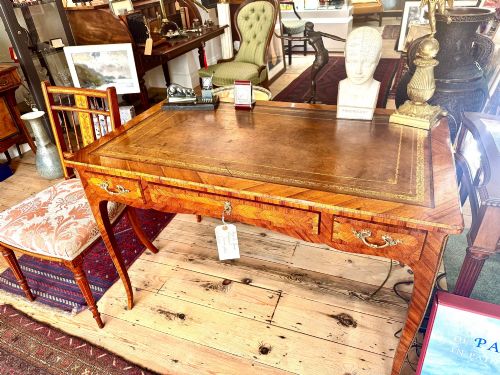
A parquetry bureau plat is a freestanding writing table designed to anchor a room, bringing geometric wood veneers and gilt mounts to your study.
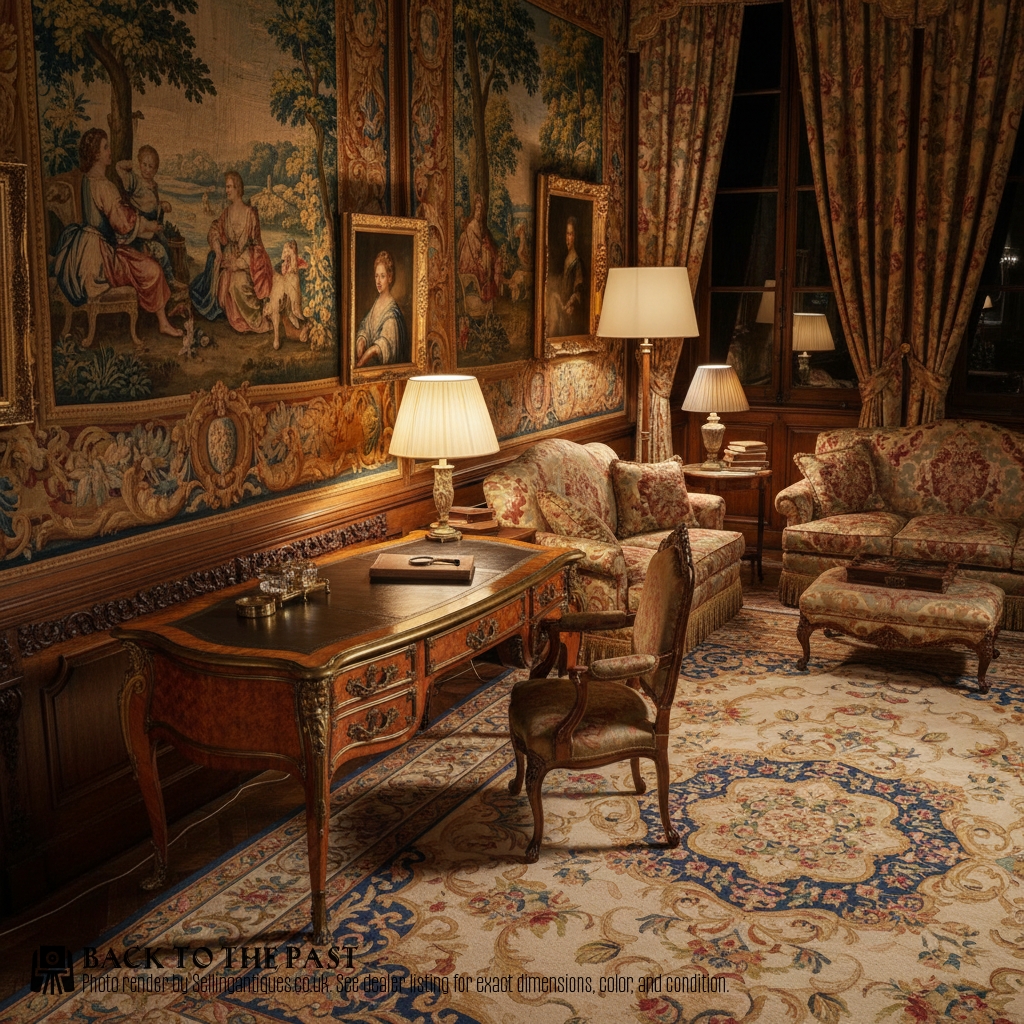
Parquetry Bureau Plat
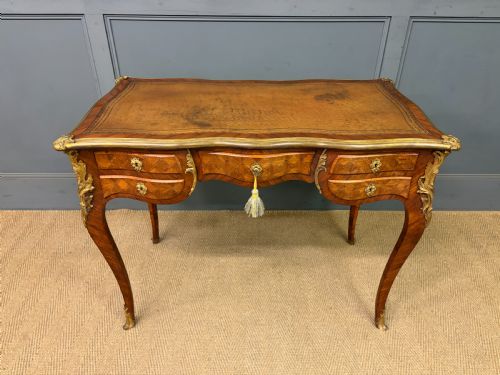
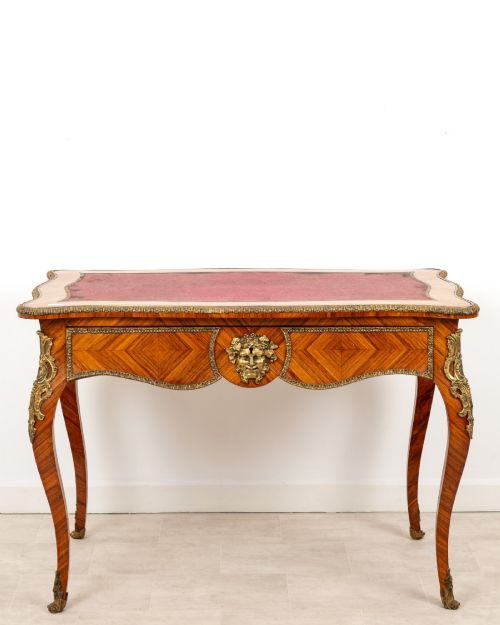
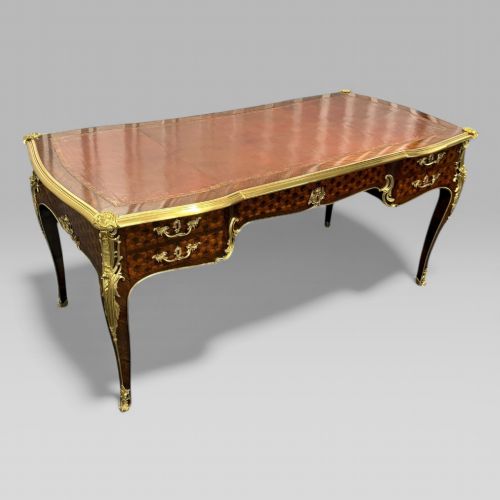
A parquetry bureau plat is a flat-topped writing table that stands away from the wall, finished on all sides for placement in the centre of a room. When you search for this phrase, you find freestanding desks primarily shaped by French cabinet-making traditions of the eighteenth and nineteenth centuries.
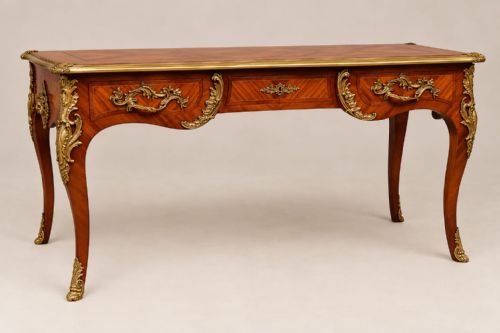
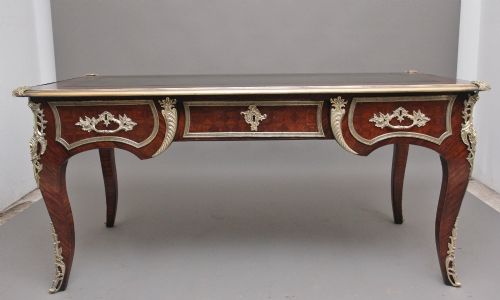
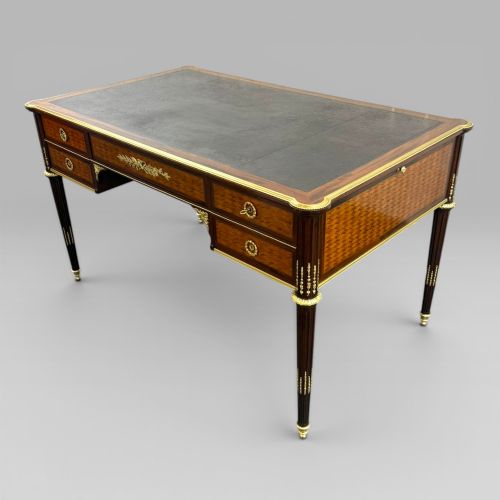
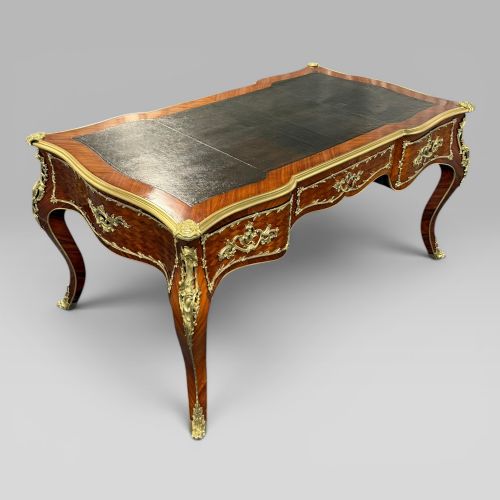
The versions most common on this page date from the nineteenth century, drawing heavily on Louis XV and Louis XVI revivals. They combine geometric wood veneer patterns with gilt bronze mounts and inset leather writing surfaces.
Forms range from compact ladies writing desks to large library tables and centre tables. Most examples originate from French workshops, though nineteenth-century English makers also produced interpretations of these continental forms.
How They Were Made
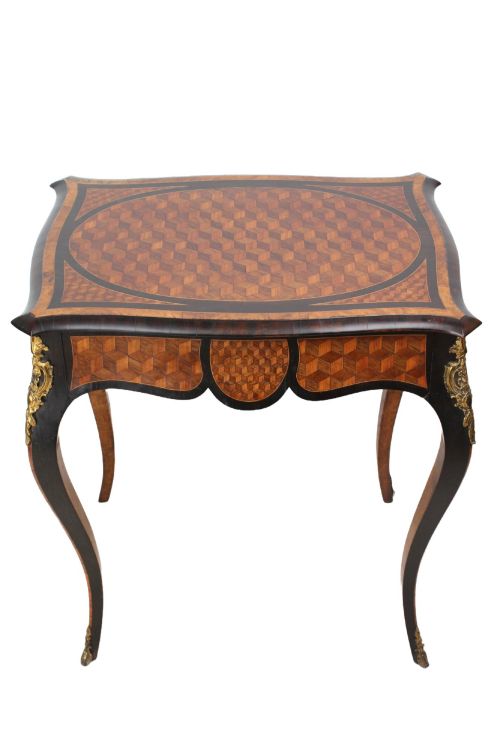
Cabinetmakers constructed these writing tables using dense hardwoods like kingwood, walnut, rosewood and tulipwood over sturdy carcases. They applied precision-cut geometric veneers in parquetry patterns across the top and sides.
Mounts and sabots cast in ormolu and gilt bronze were chased and applied to protect and ornament vulnerable corners and legs. Inset leather writing surfaces, frequently tooled with gilt borders, completed the upper working area.
Periods represented span from the eighteenth century through the Regency, Victorian and Edwardian eras up to the nineteen-forties.
What Varies in Quality
The standard of a bureau plat rests on the crispness of its cast ormolu mounts and the precision of the parquetry geometry. Finer workshops employed master bronze-workers whose mounts show deep chiselling and distinct relief rather than soft, commercial casting.
Timber selection dictates the visual depth of the piece, with quartersawn kingwood and contrasting tulipwood creating richer tonal variation. The integration of the drawers, the weight of the timber and the finish of the secondary woods inside reveal the original tier of production.
JAS Shoolbred·CH. Jeanselme & Co·François Linke·Wassmuss of Paris
The Parquetry Bureau Plat Glossary
- Parquetry
- Geometric mosaic woodwork formed by small pieces of veneer arranged in patterns like cubes or herringbone. This technique decorates the flat surfaces of desks and tables.
- Bureau plat
- A freestanding writing table fitted with drawers beneath a leather-lined top. It differs from a bureau bookcase by lacking a superstructure.
- Ormolu
- Gilt bronze mounts applied to furniture for both structural protection and decoration. The technique involves treating metal with a mercury and gold amalgam before firing.
- Kingwood
- A dense, heavy South American timber prized for its rich violet-brown colouring and striking dark figuring. Makers utilised it extensively in high-status nineteenth-century French furniture.
- Sabot
- A metal mount fitted to the foot of a table leg to prevent wear and damage. They are commonly cast in ormolu to match the corner mounts and handles.
Parquetry Bureau Plat: Frequently Asked Questions
Where do I place a bureau plat?
These tables are designed to sit in the middle of a room rather than against a wall because the back is finished with the same care as the front.
Position yours where light falls across the leather writing surface from the side, allowing you to appreciate the parquetry from every angle.
How do I care for the leather top?
The writing surface is typically lined with goatskin or cowhide that has been hand-tooled with gold leaf. Keep it away from direct sunlight and treat it occasionally with a neutral leather balm to prevent drying.
Avoid using modern chemical cleaners or placing hot cups directly on the hide.
Are these desks suitable for daily work?
Most antique writing tables offer adequate space for modern writing tasks, though kneehole heights vary significantly between smaller ladies desks and grand library tables.
Check the clearance beneath the central drawer before pairing the desk with a standard office chair.
How do I distinguish Louis XV from Louis XVI style?
Louis XV pieces feature asymmetrical curves, serpentine outlines and exuberant rococo ormolu mounts. The legs curve outward and taper gracefully toward the floor.
Louis XVI furniture introduces neoclassical restraint, straight tapered fluted legs, and symmetrical geometric parquetry patterns inspired by architectural ruins.