



Louis XVI Bureau Plat
These pieces of louis xvi bureau plat offer freestanding elegance and refined workspace styling for the home.
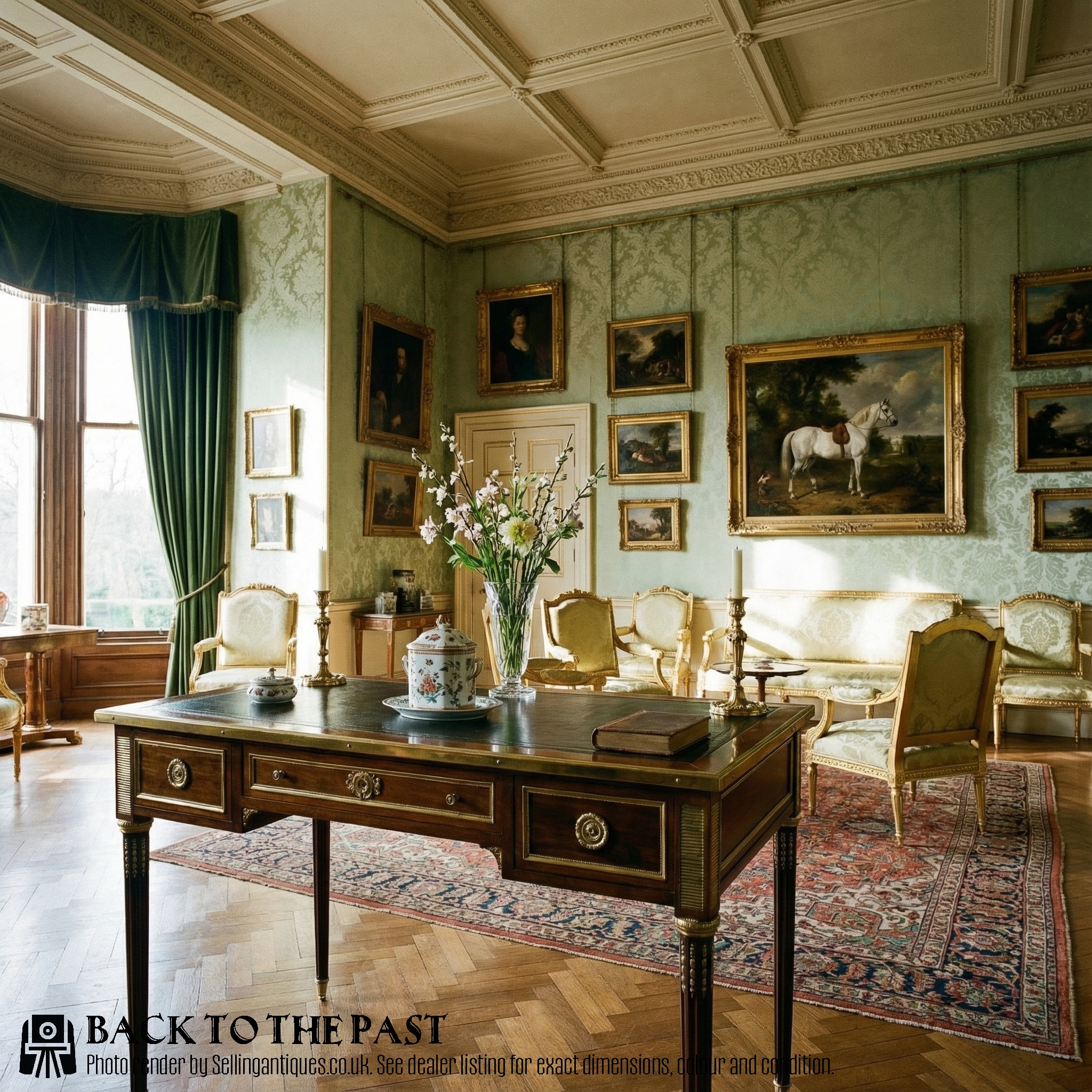
What a louis xvi bureau plat is
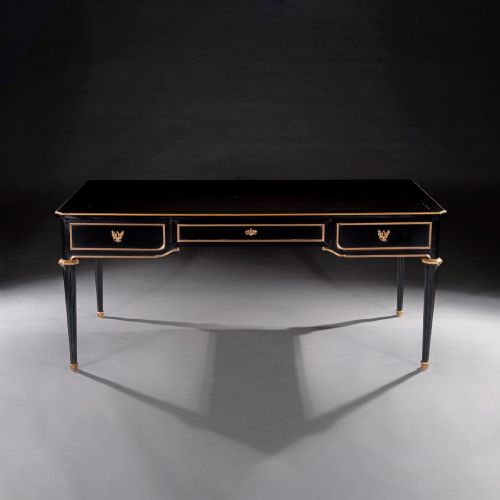
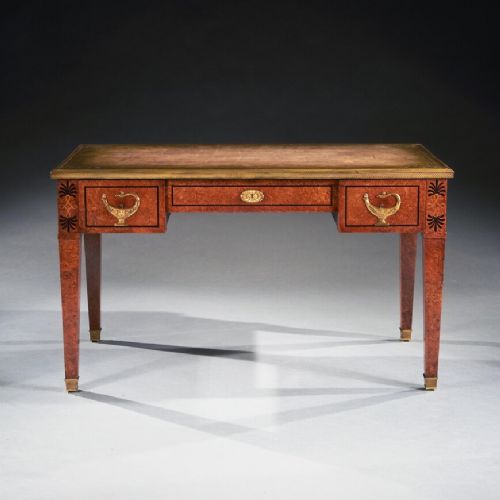
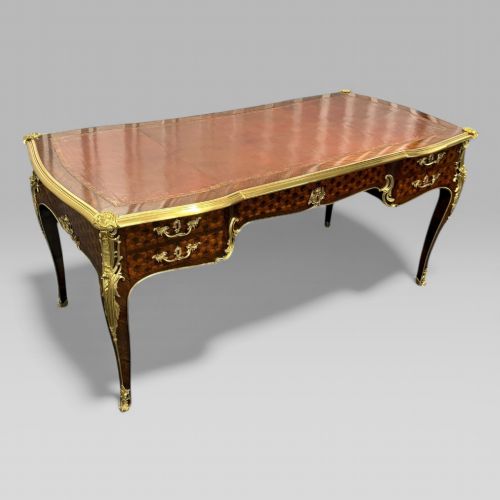
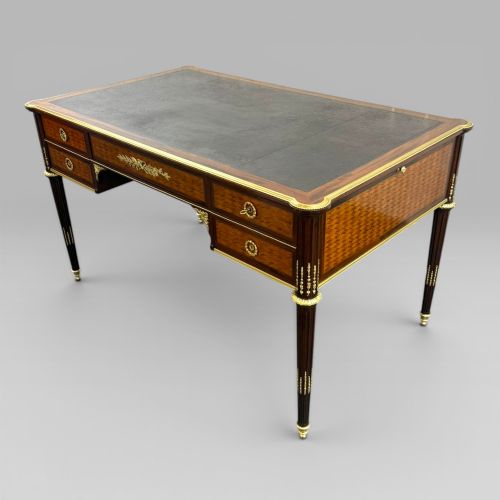
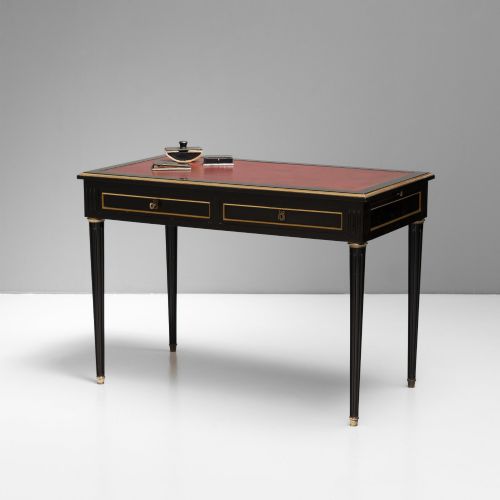
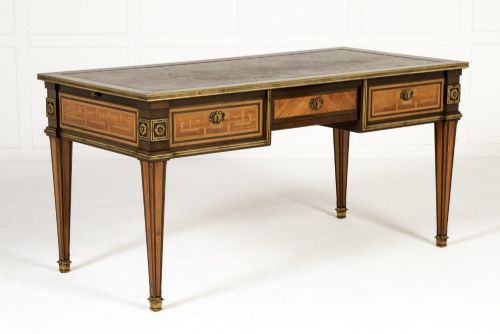
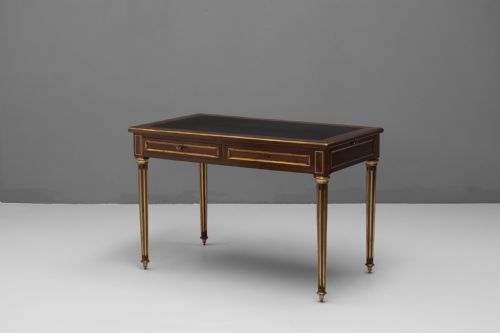
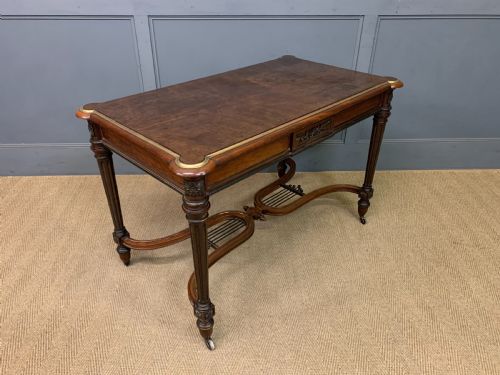
A louis xvi bureau plat is a freestanding writing table designed to sit away from the wall, featuring a dedicated writing surface often inset with leather. These desks draw from French 18th-century classicism, characterised by restrained lines and formal proportion.
Most examples found here date from the nineteenth century, including Revival pieces and items from 1880, alongside a 1910 maker-stamped piece. They appear as writing desks, writing tables, side tables, and centre tables.
Makers and workshops across France and England produced these tables, adopting the Louis XVI style and Louis XVI revival vocabulary. The form serves primarily as a writing desk or a decorative centre table within a room.
Materials and construction
Construction relies on timber foundations of mahogany, kingwood, satine, ebony, and walnut, often enhanced by parquetry and inlay work. Tops frequently incorporate tooled leather writing surfaces surrounded by wooden borders.
Mounts and decorative details utilise gilt bronze, ormolu, and brass, fixed to the corners, friezes, and legs. Marble tops and wooden sabots also appear on specific forms, completing the cabinetmaker's decorative scheme.
Retail Price Guide 2026
Typical UK retail prices for louis xvi bureau plat, calculated from the Sellingantiques database of over a million retail prices indexed since 2003. This retail price guide relies exclusively on Sellingantiques data; no external sources or auction records are used, so the figures do not describe the wider market.
Some nineteenth-century makers designed these exact writing tables to double as dressing or sewing tables when the mood struck.
Distinctions in quality
Quality rests in the crispness of the gilt bronze and ormolu mounts, where hand-chasing defines the foliate and classical motifs. The precision of the parquetry and timber selection, such as figured mahogany or kingwood, further separates standard production from workshop masterpieces.
Attribution to makers like François Linke, Paul Sormani, Alphonse Tahan, or Fournier elevates a piece through documented craftsmanship and signature bronze work. The integration of structural elements, from leather tooling to drawer construction, dictates the standing of each desk.
François Linke·Paul Sormani·Fournier·Alphonse Tahan
The Louis XVI Bureau Plat Glossary
- Bureau plat
- A freestanding flat-topped writing table with drawers in the frieze, designed to be viewed from all sides.
- Ormolu
- Gilt bronze mounted onto furniture as decorative enrichment, highly characteristic of French cabinetmaking.
- Parquetry
- Geometric patterns of wood veneer laid down on a carcass to form decorative surfaces.
- Sabot
- A metal mount fitted to the foot of a furniture leg to protect the timber and provide ornament.
- Frieze
- The horizontal band running directly beneath the top surface of the desk, often housing drawers.
Frequently Asked Questions
How do I date a bureau plat?
Dating relies on examining the timber construction, hardware fixings, and secondary woods used inside the drawers. Most pieces on this page originate from the nineteenth century, reflecting revival periods rather than the original eighteenth-century reign.
Maker stamps, brass signatures, and specific casting techniques on the ormolu mounts help narrow the decade of production, as seen in pieces dated to 1880, 1910, or the Victorian era.
Where should I place a bureau plat?
These tables belong in spaces where they can be viewed from multiple angles, such as the middle of a study, library, or drawing room. Because the back and sides feature identical or complementary ornamentation to the front, pushing the desk against a wall hides its primary decorative asset.
Ensure adequate clearance around the piece for chairs and movement to maintain the intended freestanding arrangement.
What is the difference between a desk and a bureau plat?
A standard desk often includes a superstructure with pigeonholes and drawers rising above the writing surface, or sits flush against a wall. A bureau plat maintains a completely flat, unobstructed top surface raised on legs.
The bureau plat prioritises a clean silhouette and accessible workspace from a seated position without vertical compartments.